Solar PV Export Timeliness Rises via Western Land-Sea Corridor
On April 30, 2026, China’s industrial economic information network reported that Shaanxi (+73.7%), Hainan (+38.5%), and Chongqing (+34.3%) posted the highest quarterly foreign trade growth rates nationally — driven primarily by accelerated operations of the Western Land-Sea New Passage and improved logistics efficiency for solar photovoltaic (PV) modules bound for ASEAN markets. This development directly affects solar manufacturing, cross-border logistics, regional trade services, and ASEAN-based distribution channels.
Event Overview
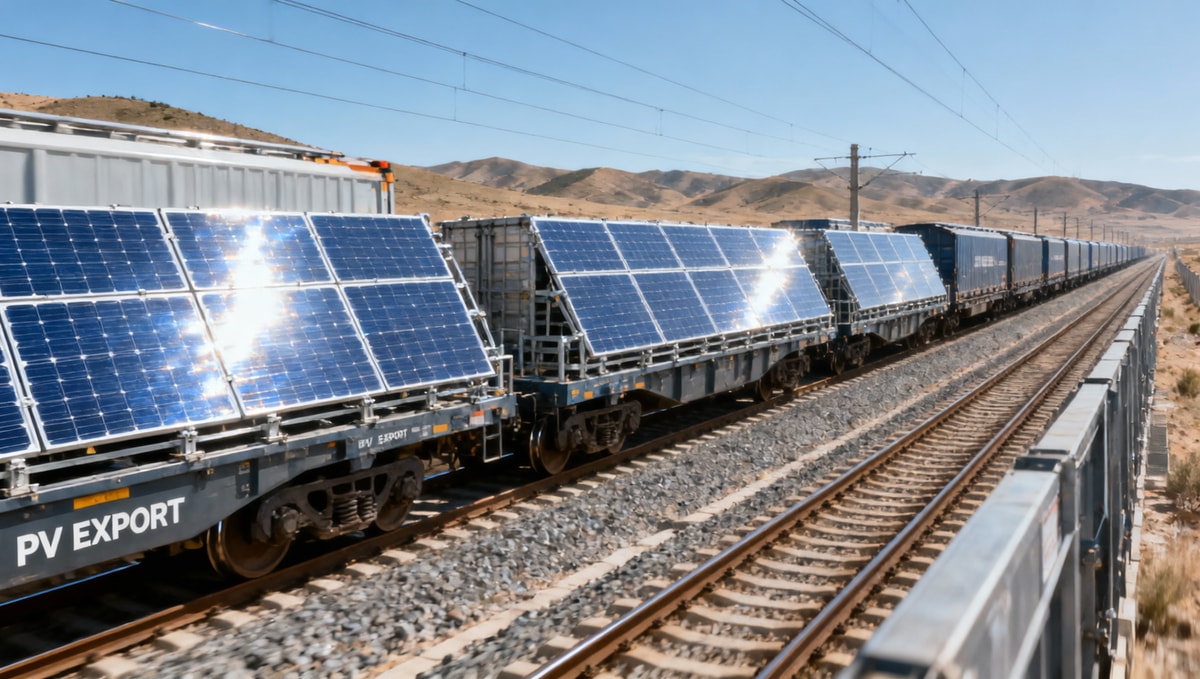
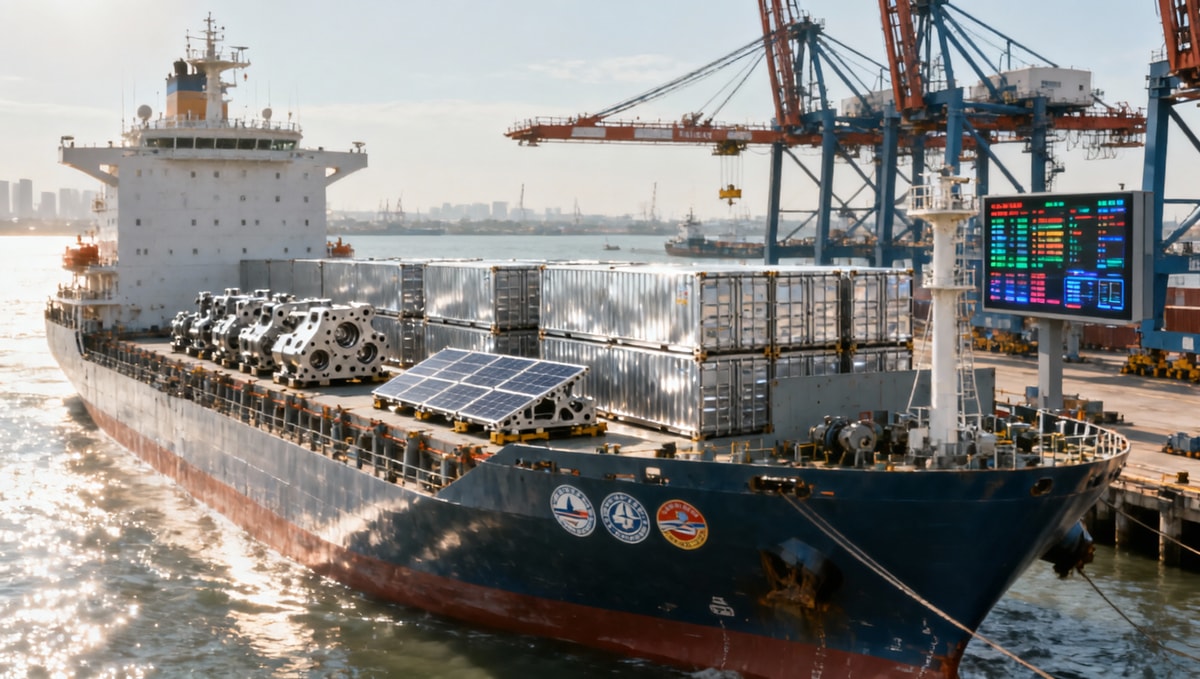
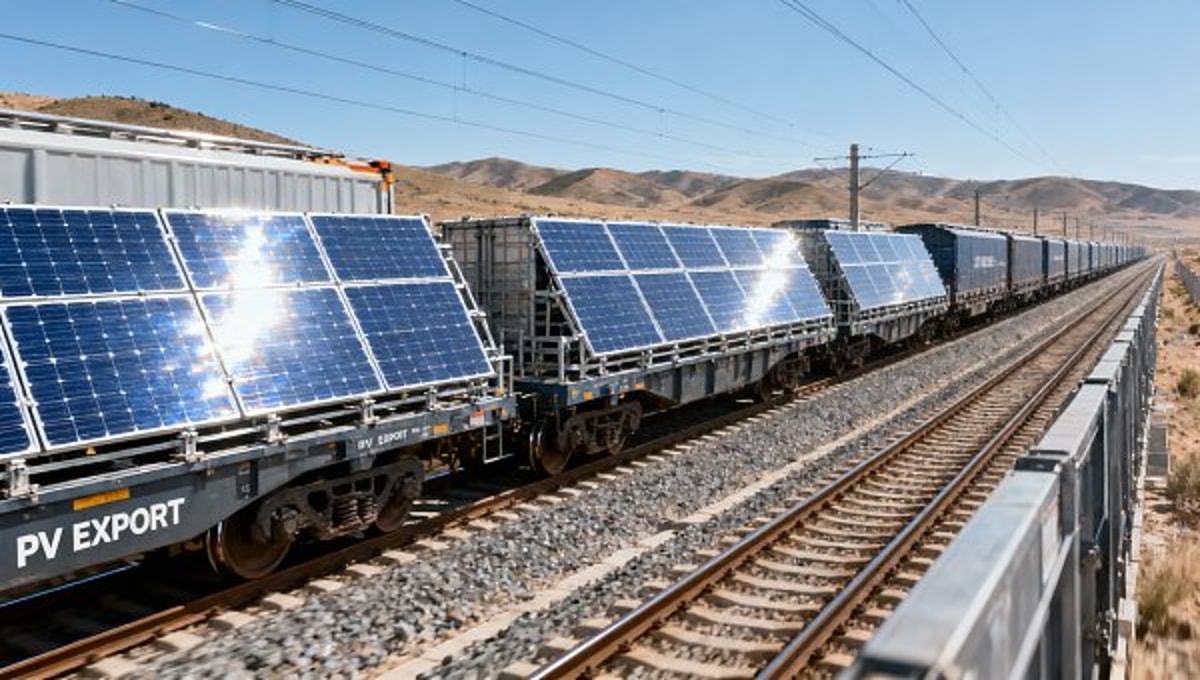
On April 30, 2026, China Industrial Economic Information Network disclosed that in Q1 2026, Shaanxi’s, Hainan’s, and Chongqing’s foreign trade volumes grew by 73.7%, 38.5%, and 34.3% year-on-year respectively — the top three provincial-level growth rates nationwide. This performance is attributed to a 40% increase in frequency of Western Land-Sea New Passage freight trains and the commissioning of a dedicated photovoltaic container yard at Qinzhou Port. As a result, average transit time for Chinese solar PV modules shipped to Vietnam and Thailand via this corridor decreased from 22 days to 15.5 days.
Industries Affected
Direct Exporters of Solar PV Modules
Exporters headquartered in or operating through Shaanxi, Chongqing, or Hainan benefit from shorter lead times and more predictable scheduling. The reduced transit window supports just-in-time delivery to ASEAN distributors ahead of peak installation seasons, potentially improving order conversion and reducing demurrage or storage costs at destination ports.
Supply Chain & Logistics Service Providers
Firms offering inland rail consolidation, port handling, customs brokerage, or multimodal coordination along the Western Land-Sea New Passage route face increased demand — particularly for PV-specific documentation, temperature- or shock-sensitive handling protocols, and real-time container tracking. The launch of the Qinzhou PV-dedicated yard signals infrastructure specialization, which may shift service expectations toward faster turnaround and higher equipment compatibility standards.
ASEAN-Based Distributors & EPC Contractors
Distributors in Vietnam and Thailand experience tighter inventory cycles due to faster replenishment. This allows better alignment with local solar project timelines but also raises pressure on demand forecasting accuracy and working capital planning — especially where payment terms lag shipment dates.
Regional Trade Facilitation Entities
Local commerce bureaus, export promotion agencies, and bonded logistics park operators in Shaanxi, Chongqing, and Hainan are likely adjusting support priorities — including preferential warehousing, streamlined inspection procedures, or coordinated train slot allocation — to sustain momentum in high-growth export categories like PV components.
What Relevant Enterprises or Practitioners Should Focus On
Monitor official updates on corridor capacity expansion and seasonal scheduling adjustments
The 40% train frequency increase and Qinzhou PV yard activation are confirmed operational changes; however, future scalability — such as additional dedicated yards, expanded intermodal connections, or off-peak surcharge policies — remains subject to further announcements from National Development and Reform Commission (NDRC) and China State Railway Group.
Track transit time consistency and documentation requirements for PV shipments
While average transit time has shortened to 15.5 days, actual performance may vary by consignment size, container type, or customs clearance efficiency at Qinzhou or border crossings. Exporters should benchmark current shipment records against historical data and verify whether new documentation (e.g., PV-specific commodity codes or packaging certifications) is required under updated port handling protocols.
Assess inventory buffer strategies for ASEAN market entry
With faster replenishment, distributors may reduce safety stock levels — but only if demand forecasting models incorporate both seasonal installation patterns and potential upstream delays (e.g., module cell shortages or inland transport bottlenecks). A revised buffer strategy should be stress-tested against worst-case 15–20 day variability rather than relying solely on the new average.
Align internal procurement and production planning with corridor booking lead times
Rail slot availability may now tighten due to increased PV volume. Manufacturers should confirm current booking windows (e.g., 5–7 days prior to departure), reserve slots early for high-priority shipments, and coordinate with logistics partners on contingency options — such as partial air-freight bridging — should rail capacity constraints emerge during peak months.
Editorial Perspective / Industry Observation
Observably, this update reflects an infrastructure-led improvement in cross-border logistics performance — not a broad-based policy shift or tariff change. It is best understood as an operational signal: enhanced physical connectivity is beginning to translate into measurable time savings for a specific product category (solar PV modules) moving along a defined corridor (Western Land-Sea New Passage) to a targeted region (mainland ASEAN). Analysis shows the impact is currently concentrated among exporters using this route and their downstream logistics and distribution partners — rather than representing a systemic transformation across all China–ASEAN trade flows. From an industry perspective, sustained monitoring is warranted because corridor utilization trends may influence future investment decisions in inland logistics hubs, port-side value-added services, and regional inventory network design.
Conclusion
This development underscores how targeted infrastructure upgrades — rather than macroeconomic or regulatory shifts — can meaningfully reshape supply chain dynamics for time-sensitive, high-volume exports like solar PV modules. It does not indicate a nationwide trade acceleration, nor does it imply automatic benefits for non-PV cargo or non-corridor routes. Instead, it highlights a localized, functionally specific improvement whose strategic value lies in its repeatability: if transit time reduction proves scalable to other products or corridors, it could inform broader supply chain resilience planning. For now, it is more accurately interpreted as a validated logistics optimization — not a structural market inflection point.
Information Source
Main source: China Industrial Economic Information Network (as of April 30, 2026).
Note: Ongoing observation is recommended for updates on corridor-wide capacity allocation, Qinzhou Port’s PV yard throughput metrics, and ASEAN import compliance adjustments related to solar module shipments.
Get weekly intelligence in your inbox.
No noise. No sponsored content. Pure intelligence.
 May 02, 2026China’s '15th Five-Year Plan' Prioritizes Low-Altitude Economy, Boosting Warehouse Robotics ExportsChina’s '15th Five-Year Plan' Prioritizes Low-Altitude Economy, Boosting Warehouse Robotics Exports
 May 02, 2026Q1 2026 Industrial Profits +15.5%; CNC Machining Capacity Utilization RisesQ1 2026 Industrial Profits +15.5%; CNC Machining Capacity Utilization Rises
 May 02, 2026China Opens Green Channel for Smart Home Exporters with Int'l CertsChina Opens Green Channel for Smart Home Exporters with Int'l Certs
 May 02, 2026Solar PV Export Timeliness Rises via Western Land-Sea CorridorSolar PV Export Timeliness Rises via Western Land-Sea Corridor
 May 02, 2026UAE Tops Global AI Hub Ranking; Demand Rises for Chinese FA SolutionsUAE Tops Global AI Hub Ranking; Demand Rises for Chinese FA Solutions
 May 02, 2026ADB Raises Vietnam GDP Forecast to 7.2% for 2026ADB Raises Vietnam GDP Forecast to 7.2% for 2026
") May 02, 2026China’s Trade SaaS Export Standards Updated (2026–2030)China’s Trade SaaS Export Standards Updated (2026–2030)
May 02, 2026China’s Trade SaaS Export Standards Updated (2026–2030)China’s Trade SaaS Export Standards Updated (2026–2030) May 02, 2026World's First 10,000-Car PCTC Delivered in GuangzhouWorld's First 10,000-Car PCTC Delivered in Guangzhou
 May 02, 2026China’s 5-Dept Battery Recycling Traceability Rule Affects ESS ExportsChina’s 5-Dept Battery Recycling Traceability Rule Affects ESS Exports
 May 02, 2026WeChat Pay QR Integration for 5 Countries: Eases Cross-Border ProcurementWeChat Pay QR Integration for 5 Countries: Eases Cross-Border Procurement
 May 01, 2026Beijing’s New E-Bike Rules Trigger Dual-Certification Demand for China’s Swappable Battery CabinetsBeijing’s New E-Bike Rules Trigger Dual-Certification Demand for China’s Swappable Battery Cabinets
 May 01, 2026GNA’s GEO Service Assessment Elevates AI Search as Digital Procurement Metric for Chinese ExportersGNA’s GEO Service Assessment Elevates AI Search as Digital Procurement Metric for Chinese Exporters
 May 01, 20262026 China Cycle Expo: Chinese EPS Systems Achieve UL 2849:2026 Full Certification2026 China Cycle Expo: Chinese EPS Systems Achieve UL 2849:2026 Full Certification
 May 01, 2026GB 42236-2026 Enforces EV Charger Efficiency & Overload Protection from May 2026GB 42236-2026 Enforces EV Charger Efficiency & Overload Protection from May 2026
 May 01, 2026GB/T 43790-2026 Drone EMC Standard Effective May 2026GB/T 43790-2026 Drone EMC Standard Effective May 2026
 May 01, 20262026 Foshan Tanzhou Auto Industry Expo Opens2026 Foshan Tanzhou Auto Industry Expo Opens
 May 01, 2026China’s New Hazardous Chemicals Safety Law Takes Effect May 2026China’s New Hazardous Chemicals Safety Law Takes Effect May 2026
 May 01, 2026New Maritime and Fisheries Laws Take Effect May 1, 2026New Maritime and Fisheries Laws Take Effect May 1, 2026
 May 01, 2026Supply Chain Automation Works Best Where Delays RepeatSupply Chain Automation Works Best Where Delays Repeat
 May 01, 2026High Strength Steel Forgings: What Should Be Tested First?High Strength Steel Forgings: What Should Be Tested First?
 May 01, 2026Automotive Steel Forging: Cost Pressure vs Part ReliabilityAutomotive Steel Forging: Cost Pressure vs Part Reliability
 May 01, 2026Why High Durability Steel Forgings Fail Earlier Than ExpectedWhy High Durability Steel Forgings Fail Earlier Than Expected
 May 01, 2026Construction Aluminum Extrusions: Which Finish Lasts Longer?Construction Aluminum Extrusions: Which Finish Lasts Longer?
 May 01, 2026Lightweight Aluminum Extrusions: Where Savings Really HappenLightweight Aluminum Extrusions: Where Savings Really Happen
 May 01, 2026Aerospace Aluminum Extrusions Need More Than Low WeightAerospace Aluminum Extrusions Need More Than Low Weight
 May 01, 2026Precision Lathe Turning Problems That Show Up After AssemblyPrecision Lathe Turning Problems That Show Up After Assembly
 May 01, 2026High Precision Lathe Turning: Tolerance Claims to VerifyHigh Precision Lathe Turning: Tolerance Claims to Verify