ADB Raises Vietnam GDP Forecast to 7.2% for 2026
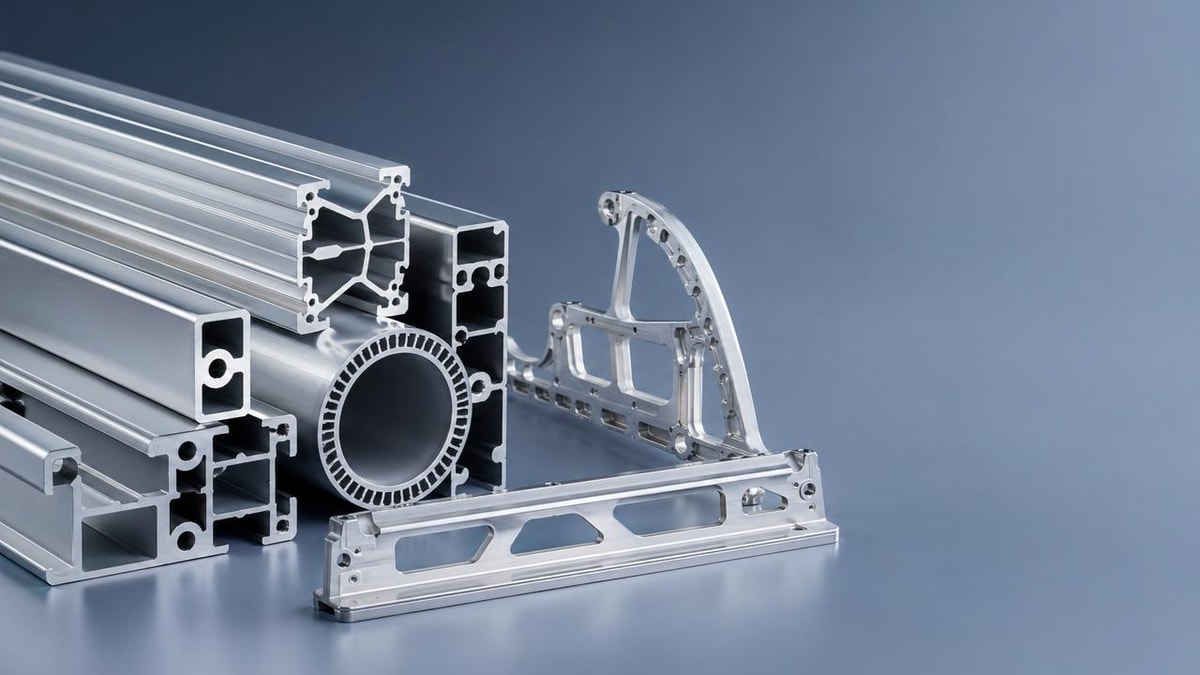
On April 24, 2026, the Asian Development Bank (ADB) revised upward its GDP growth forecast for Vietnam to 7.2% for 2026 — a development with measurable implications for Chinese exporters of industrial materials, particularly steel, aluminum extrusions, and engineering plastics.
Event Overview
On April 24, 2026, the Asian Development Bank published a report upgrading Vietnam’s 2026 GDP growth projection to 7.2%. The revision reflects accelerated manufacturing investment and expanded production capacity in photovoltaic and electronics assembly sectors. According to the report, this momentum has already extended upstream: Chinese industrial materials exporters reported a 23% month-on-month increase in orders for construction materials and structural components destined for Vietnam in April 2026; average lead times recovered to 45–60 days.
Industries Affected
Direct Exporters of Industrial Materials
Chinese manufacturers supplying steel, aluminum extrusions, and engineering plastics to Vietnamese downstream fabricators are directly affected. Rising order volumes signal strengthened demand from Vietnam’s expanding manufacturing base — especially in infrastructure-supporting and assembly-line-essential components.
Raw Material Procurement Entities
Firms sourcing iron ore, bauxite derivatives, or polymer feedstocks for export-oriented material production may experience increased pressure on input cost stability and supply continuity, as order ramp-ups compress planning windows and amplify sensitivity to upstream price volatility.
Contract Manufacturers & Tier-2 Component Suppliers
Domestic Chinese contract manufacturers producing semi-finished structural parts (e.g., frames, enclosures, mounting brackets) for Vietnamese electronics or solar equipment OEMs face higher volume expectations. Their capacity utilization, quality control consistency, and documentation compliance (e.g., RoHS, REACH) become more operationally critical.
Distribution & Logistics Service Providers
Freight forwarders, customs brokers, and bonded warehousing operators handling China–Vietnam industrial material shipments see renewed volume traction. Shorter lead times (45–60 days) imply tighter scheduling discipline, greater emphasis on documentation accuracy, and heightened need for real-time shipment visibility.
What Enterprises and Practitioners Should Monitor and Act On
Track official policy signals from both ADB and Vietnam’s Ministry of Planning and Investment
The ADB’s forecast is forward-looking and conditional. Subsequent updates — including revisions to Vietnam’s FDI inflow projections, infrastructure spending plans, or sector-specific incentives — will clarify whether the 7.2% growth trajectory remains anchored in executable policy.
Monitor order composition by end-use segment and material grade
A 23% MoM order increase is aggregate data. Analysis shows that gains are concentrated in mid-grade structural steel and standard-series aluminum extrusions — not high-end alloys or specialty polymers. Companies should avoid overgeneralizing demand strength across all product tiers.
Distinguish between short-term order surge and sustainable procurement patterns
Observably, the April rebound follows a period of extended lead times (>90 days), suggesting backlog clearance rather than pure new demand. Current more favorable delivery windows (45–60 days) reflect restored operational rhythm — not necessarily structural expansion in buyer inventory buffers.
Prepare supply chain contingencies for key inputs and shipping lanes
Given tightening lead times and rising order frequency, firms should verify alternative suppliers for critical raw materials and pre-negotiate space allocation with core ocean carriers serving the South China Sea corridor — especially for consolidated LCL shipments.
Editorial Perspective / Industry Observation
This update is better understood as a reinforcing signal — not yet a fully realized outcome. From an industry perspective, the ADB’s revised forecast validates observed transactional momentum in the China–Vietnam industrial materials corridor, but does not confirm broad-based, self-sustaining growth across all subsectors. It reflects continued regional value-chain consolidation, where Vietnam’s manufacturing acceleration remains materially dependent on imported foundational inputs. Sustained monitoring is warranted: if subsequent quarterly trade data from Vietnam’s General Statistics Office confirms sequential growth in imports of steel products, aluminum profiles, and thermoplastic resins, the signal strengthens. Until then, it remains a directional indicator — one that merits operational attention, not strategic repositioning.

In summary, the ADB’s 7.2% GDP forecast for Vietnam in 2026 serves as a timely confirmation of near-term demand resilience in China’s industrial materials export channel to Vietnam — particularly for standardized structural and assembly-enabling materials. It does not indicate systemic transformation in sourcing behavior or a shift away from just-in-time procurement norms. Rather, it reflects cyclical reinforcement within an already entrenched regional production architecture. For stakeholders, the current situation is best interpreted as a reaffirmation of existing trade dynamics — not a pivot point.
Source: Asian Development Bank (ADB), April 24, 2026 report. Note: Vietnam’s actual 2026 GDP performance and import statistics remain subject to official release and ongoing verification.
Get weekly intelligence in your inbox.
No noise. No sponsored content. Pure intelligence.
 May 02, 2026China’s '15th Five-Year Plan' Prioritizes Low-Altitude Economy, Boosting Warehouse Robotics ExportsChina’s '15th Five-Year Plan' Prioritizes Low-Altitude Economy, Boosting Warehouse Robotics Exports
 May 02, 2026Q1 2026 Industrial Profits +15.5%; CNC Machining Capacity Utilization RisesQ1 2026 Industrial Profits +15.5%; CNC Machining Capacity Utilization Rises
 May 02, 2026China Opens Green Channel for Smart Home Exporters with Int'l CertsChina Opens Green Channel for Smart Home Exporters with Int'l Certs
 May 02, 2026Solar PV Export Timeliness Rises via Western Land-Sea CorridorSolar PV Export Timeliness Rises via Western Land-Sea Corridor
 May 02, 2026UAE Tops Global AI Hub Ranking; Demand Rises for Chinese FA SolutionsUAE Tops Global AI Hub Ranking; Demand Rises for Chinese FA Solutions
 May 02, 2026ADB Raises Vietnam GDP Forecast to 7.2% for 2026ADB Raises Vietnam GDP Forecast to 7.2% for 2026
") May 02, 2026China’s Trade SaaS Export Standards Updated (2026–2030)China’s Trade SaaS Export Standards Updated (2026–2030)
May 02, 2026China’s Trade SaaS Export Standards Updated (2026–2030)China’s Trade SaaS Export Standards Updated (2026–2030) May 02, 2026World's First 10,000-Car PCTC Delivered in GuangzhouWorld's First 10,000-Car PCTC Delivered in Guangzhou
 May 02, 2026China’s 5-Dept Battery Recycling Traceability Rule Affects ESS ExportsChina’s 5-Dept Battery Recycling Traceability Rule Affects ESS Exports
 May 02, 2026WeChat Pay QR Integration for 5 Countries: Eases Cross-Border ProcurementWeChat Pay QR Integration for 5 Countries: Eases Cross-Border Procurement
 May 01, 2026Beijing’s New E-Bike Rules Trigger Dual-Certification Demand for China’s Swappable Battery CabinetsBeijing’s New E-Bike Rules Trigger Dual-Certification Demand for China’s Swappable Battery Cabinets
 May 01, 2026GNA’s GEO Service Assessment Elevates AI Search as Digital Procurement Metric for Chinese ExportersGNA’s GEO Service Assessment Elevates AI Search as Digital Procurement Metric for Chinese Exporters
 May 01, 20262026 China Cycle Expo: Chinese EPS Systems Achieve UL 2849:2026 Full Certification2026 China Cycle Expo: Chinese EPS Systems Achieve UL 2849:2026 Full Certification
 May 01, 2026GB 42236-2026 Enforces EV Charger Efficiency & Overload Protection from May 2026GB 42236-2026 Enforces EV Charger Efficiency & Overload Protection from May 2026
 May 01, 2026GB/T 43790-2026 Drone EMC Standard Effective May 2026GB/T 43790-2026 Drone EMC Standard Effective May 2026
 May 01, 20262026 Foshan Tanzhou Auto Industry Expo Opens2026 Foshan Tanzhou Auto Industry Expo Opens
 May 01, 2026China’s New Hazardous Chemicals Safety Law Takes Effect May 2026China’s New Hazardous Chemicals Safety Law Takes Effect May 2026
 May 01, 2026New Maritime and Fisheries Laws Take Effect May 1, 2026New Maritime and Fisheries Laws Take Effect May 1, 2026
 May 01, 2026Supply Chain Automation Works Best Where Delays RepeatSupply Chain Automation Works Best Where Delays Repeat
 May 01, 2026High Strength Steel Forgings: What Should Be Tested First?High Strength Steel Forgings: What Should Be Tested First?
 May 01, 2026Automotive Steel Forging: Cost Pressure vs Part ReliabilityAutomotive Steel Forging: Cost Pressure vs Part Reliability
 May 01, 2026Why High Durability Steel Forgings Fail Earlier Than ExpectedWhy High Durability Steel Forgings Fail Earlier Than Expected
 May 01, 2026Construction Aluminum Extrusions: Which Finish Lasts Longer?Construction Aluminum Extrusions: Which Finish Lasts Longer?
 May 01, 2026Lightweight Aluminum Extrusions: Where Savings Really HappenLightweight Aluminum Extrusions: Where Savings Really Happen
 May 01, 2026Aerospace Aluminum Extrusions Need More Than Low WeightAerospace Aluminum Extrusions Need More Than Low Weight
 May 01, 2026Precision Lathe Turning Problems That Show Up After AssemblyPrecision Lathe Turning Problems That Show Up After Assembly
 May 01, 2026High Precision Lathe Turning: Tolerance Claims to VerifyHigh Precision Lathe Turning: Tolerance Claims to Verify