What to Check Before Buying Wearable ECG Monitors
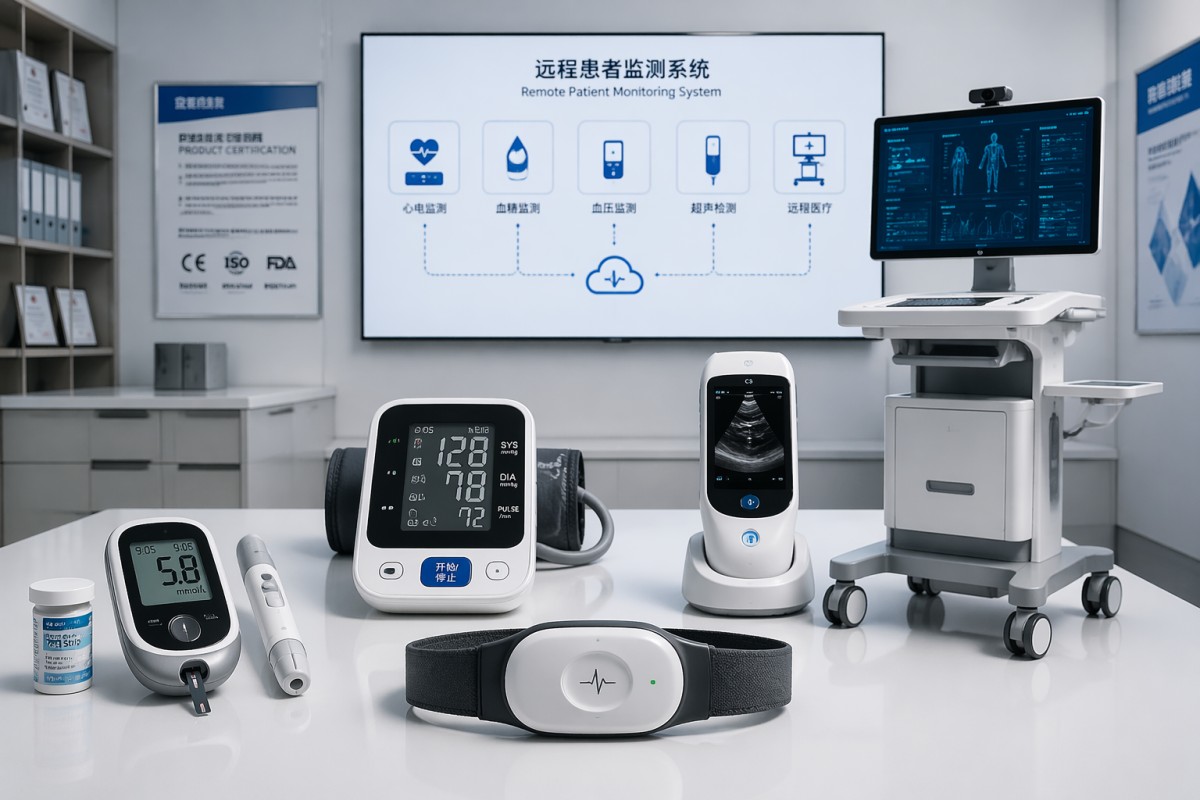
Before investing in wearable ECG monitors, buyers should assess clinical accuracy, data security, battery life, comfort, and platform compatibility. For procurement teams evaluating remote patient monitoring solutions alongside smart glucometers, digital blood pressure monitors, portable ultrasound scanners, and telemedicine carts, a structured checklist reduces risk and improves long-term value. This guide highlights the most important factors to compare before making a confident purchase decision.
In B2B healthcare technology procurement, wearable ECG monitors are rarely evaluated as standalone devices. They are usually part of a broader remote patient monitoring stack that must connect clinical workflows, patient usability, cybersecurity controls, reimbursement logic, and service support. That makes pre-purchase due diligence especially important for procurement managers, quality teams, distributors, and enterprise decision-makers.
A poor selection can create downstream issues within 3 to 12 months, including weak signal quality, low patient adherence, frequent charging complaints, limited software interoperability, and high support costs. A disciplined buying checklist helps teams compare options more objectively and avoid choosing a device based only on price or marketing claims.
Clinical Performance and Measurement Reliability
The first question in any wearable ECG monitor purchase is simple: how dependable is the signal in real-world use? Procurement teams should review whether the device captures single-lead, multi-lead, spot-check, or continuous ECG data, and whether its intended use matches the care setting. A consumer wellness wearable is not automatically suitable for clinical monitoring, discharge follow-up, or chronic disease management.
Accuracy should be assessed across more than one condition. Motion artifacts, dry skin, perspiration, poor patch adhesion, and irregular positioning can all affect data quality. In practice, signal stability over 24 to 72 hours matters more than a short demonstration in a controlled environment. Operators should also check whether the device can maintain readable output during daily activities such as walking, sleeping, or home-based recovery.
For quality and safety teams, it is useful to separate three evaluation layers: raw waveform quality, algorithm performance, and alert relevance. A monitor may capture acceptable waveforms but still generate too many false positives if the software is poorly tuned. Excessive false alerts can burden clinicians, delay escalation, and reduce confidence in the platform.
Key reliability checks before vendor shortlisting
- Confirm whether the device supports continuous monitoring, intermittent recording, or event-triggered capture, and match that to the target care pathway.
- Ask for artifact handling details, including motion resistance, electrode stability, and expected reapplication frequency over 1 to 7 days.
- Review alert categories such as atrial fibrillation indication, bradycardia, tachycardia, pause detection, or symptom-linked ECG capture.
- Check whether the vendor provides validation summaries, clinician review workflows, and documented thresholds for alarm generation.
A useful comparison method is to score each product against application-specific needs. For example, outpatient cardiology, post-acute monitoring, corporate wellness screening, and telemedicine-supported chronic care each require different signal, workflow, and wear-time expectations.
The table below outlines practical criteria that buyers can use to compare clinical performance across shortlisted wearable ECG monitors.
The strongest wearable ECG monitor is not always the one with the most features. The better choice is the device that produces consistent, interpretable data under the actual operating conditions your patients and care teams will face.
Data Security, Privacy, and Platform Integration
Once clinical performance is acceptable, the next major checkpoint is data handling. Wearable ECG monitors generate sensitive physiological information, and that data often moves through mobile apps, cloud dashboards, clinician portals, and third-party integration layers. If security architecture is weak, one device purchase can introduce organization-wide compliance and operational risk.
Enterprise buyers should map the full data pathway in 4 steps: capture, transmission, storage, and access. It is not enough to hear that data is “encrypted.” Teams should ask whether encryption applies in transit and at rest, how user authentication is managed, how audit logs are stored, and whether role-based permissions can separate clinicians, administrators, technical support, and distributors.
Integration is equally important. A wearable ECG monitor that cannot connect cleanly with electronic health record workflows, remote patient monitoring dashboards, or broader telehealth ecosystems may create manual workarounds. In many procurement projects, a device that appears 10% cheaper can produce much higher total operating cost if nurses or technicians must export files manually, reconcile patient IDs, or re-enter results into multiple systems.
Questions for IT, compliance, and procurement teams
- Does the platform support standardized data exchange methods or API access for integration into existing care systems?
- Can data be segmented by facility, region, or business unit for multi-site deployments across 5 to 50 locations?
- How quickly can user permissions be updated when staff roles change or distributors are onboarding new accounts?
- What is the vendor’s policy for incident response, backup frequency, and system recovery after service interruption?
Interoperability should also be evaluated alongside adjacent devices. Many healthcare technology buyers are not selecting wearable ECG monitors alone. They are comparing broader monitoring ecosystems that may also include smart glucometers, digital blood pressure monitors, portable ultrasound scanners, and telemedicine carts. A unified platform can reduce onboarding time, training overhead, and support complexity.
The following table helps procurement teams compare security and integration readiness in a more operational way.
When two devices offer similar ECG performance, platform strength often becomes the deciding factor. For enterprise deployments, smooth data flow and secure administration usually deliver more long-term value than a low initial unit cost.
Battery Life, Wearability, and Patient Adherence
Battery performance is one of the most underestimated factors in wearable ECG monitor procurement. If a device requires charging every 12 to 24 hours, adherence can drop quickly, especially among older users, post-discharge patients, and busy outpatient populations. Procurement teams should compare actual operating life under continuous monitoring, Bluetooth transmission, and app sync conditions rather than relying only on brochure claims.
Comfort is equally critical. A monitor intended to be worn for 3, 5, or 7 days must not create skin irritation, sleep disturbance, or cumbersome daily routines. Even small design choices such as patch material, strap adjustment range, device weight, and water-resistance level can determine whether patients complete the monitoring period successfully.
For operators and project managers, adherence metrics should be discussed before purchase. Ask vendors how they define successful wear time, incomplete sessions, and device return compliance. A device with excellent ECG capability but weak patient adherence may underperform in large-scale remote programs.
Practical signs of strong wearability
- Wear time supports the intended monitoring duration without frequent charging interruptions.
- Application or patch replacement can be handled in fewer than 3 steps by patients or home-care staff.
- The monitor remains stable during light exercise, sleep, and routine hygiene activities.
- Instructions are clear enough for multilingual, multi-age patient populations in real deployment settings.
Common purchasing mistake
One frequent error is prioritizing feature count over wearability. A monitor with advanced alerts, multi-parameter tracking, and detailed dashboards may still fail if patients stop wearing it after 48 hours. In remote patient monitoring programs, comfort and consistency often matter as much as technical sophistication.
Another overlooked point is replacement logistics. If adhesive patches, charging accessories, or disposable components need replenishment every 7 to 14 days, distributors and procurement teams must account for stocking, shipping, and training. The device cost alone does not reflect the full operational burden.
The best wearable ECG monitor for enterprise use is usually the one patients can tolerate, staff can explain in under 10 minutes, and support teams can maintain without excessive follow-up.
Procurement, Total Cost of Ownership, and Vendor Support
B2B buying decisions should evaluate more than unit price. Total cost of ownership for wearable ECG monitors includes software licensing, onboarding, accessories, integration work, device replacement rates, training, technical support, and return logistics. Over a 12- to 24-month period, these factors can significantly change the business case.
Procurement teams should request a clear cost structure with at least 5 categories: hardware, software, implementation, consumables, and service support. This is especially important when comparing direct manufacturers, regional distributors, and white-label partners. A lower hardware quote may hide recurring fees in cloud access, dashboard seats, or analytics modules.
Service capability also matters. Ask how long onboarding usually takes, whether technical training is remote or on-site, what replacement timelines apply for defective units, and how firmware updates are handled. For multi-country or multi-facility deployments, support responsiveness can have a direct effect on uptime and stakeholder satisfaction.
Procurement checklist for commercial evaluation
The table below provides a practical purchasing framework for evaluating cost and vendor readiness before contract approval.
Commercial evaluation should also include pilot planning. A 30- to 90-day pilot with defined success metrics can reveal operational issues early, such as poor app usability, incomplete patient onboarding, or excessive support tickets. This approach gives finance approvers and executive sponsors more confidence before full-scale rollout.
Minimum support elements to request
- A documented onboarding plan with timeline, responsibilities, and training format.
- A service escalation matrix covering technical, clinical workflow, and logistics issues.
- Clear replacement and return procedures for failed or non-performing devices.
- Guidance for expansion into additional sites, channels, or distribution markets.
In many cases, the right vendor is the one that can support adoption over time, not just ship hardware quickly. Reliable service structure is often what separates a successful monitoring program from an expensive pilot that never scales.
Implementation Risks, Common Mistakes, and Buyer FAQ
Even a well-specified wearable ECG monitor can underperform if implementation planning is weak. Common rollout failures include unclear patient selection, no ownership of alert review, poor user training, and incompatible data routing. These are not device-only problems; they are deployment design problems that should be addressed before purchase approval.
A practical implementation model often includes 3 phases: pilot validation, workflow adjustment, and scaled deployment. During the pilot, teams should measure not only data quality but also onboarding completion rate, average daily wear time, support request volume, and clinician review time per patient. These metrics help determine whether the solution is operationally viable.
Distributors and channel partners should also assess packaging, local language materials, replacement accessory availability, and return handling. In cross-border supply environments, small logistical gaps can delay deployments by 2 to 6 weeks.
FAQ: How do you choose between a patch-style and wrist-based wearable ECG monitor?
Patch-style devices often provide more stable ECG capture for continuous monitoring over several days, while wrist-based products may offer better comfort and user familiarity for spot checks or lighter engagement programs. The right choice depends on whether the goal is arrhythmia detection, post-discharge follow-up, or general remote monitoring convenience.
FAQ: What deployment size justifies a formal pilot?
If the program involves more than 25 to 50 patients, multiple departments, or integration with existing digital health systems, a formal pilot is advisable. A structured pilot reduces rework and gives procurement, clinical, and finance stakeholders comparable evidence before contract expansion.
FAQ: Which metrics should procurement teams prioritize?
The most practical metrics are signal reliability, effective wear duration, recharge frequency, alert relevance, integration effort, support response time, and 12-month operating cost. These indicators translate technical performance into business impact more clearly than generic product claims.
Mistakes worth avoiding
- Selecting a wearable ECG monitor without validating compatibility with broader remote patient monitoring workflows.
- Assuming advertised battery life reflects real use under continuous sync and active notifications.
- Ignoring accessory replenishment and patient reapplication burden in long-duration programs.
- Evaluating only device cost instead of total ownership over 1 to 2 years.
For organizations building stronger digital care pathways, wearable ECG monitors should be evaluated as a long-term operational asset. The most successful purchases balance clinical reliability, secure data architecture, patient adherence, and scalable vendor support.
A confident buying decision starts with a structured comparison of performance, security, usability, and total cost. For procurement teams, distributors, and healthcare technology leaders, that approach reduces implementation risk and improves long-term return. To explore more healthcare technology sourcing insights, compare connected monitoring solutions, or discuss a tailored evaluation framework, contact TradeNexus Pro to learn more solutions and get a customized plan.
Get weekly intelligence in your inbox.
No noise. No sponsored content. Pure intelligence.
 Apr 29, 2026USITC Launches Section 337 Investigation into Chinese Wi-Fi 7 RF ModulesUSITC Launches Section 337 Investigation into Chinese Wi-Fi 7 RF Modules
 Apr 29, 2026Côte d'Ivoire Launches $500M Grid Storage Tender, Chinese BESS Fast-TrackedCôte d'Ivoire Launches $500M Grid Storage Tender, Chinese BESS Fast-Tracked
 Apr 29, 2026Morocco Enforces IEC 61427-2:2025 PV Mounting Certification from Q3 2026Morocco Enforces IEC 61427-2:2025 PV Mounting Certification from Q3 2026
 Apr 29, 2026UAE Becomes Global AI Hub: New CE-ADAS+ Path for Chinese Smart Industrial EquipmentUAE Becomes Global AI Hub: New CE-ADAS+ Path for Chinese Smart Industrial Equipment
 Apr 29, 2026Red Sea Crisis: Suez Canal Fees Up 12%, China-Europe Rail Premium at 35%Red Sea Crisis: Suez Canal Fees Up 12%, China-Europe Rail Premium at 35%
 Apr 29, 2026TÜV Rheinland Launches Fast-Track Certification for Chinese Warehouse RobotsTÜV Rheinland Launches Fast-Track Certification for Chinese Warehouse Robots
 Apr 29, 2026Vietnam's SMT Expansion Drives CNC Fixture Export DelaysVietnam's SMT Expansion Drives CNC Fixture Export Delays
![]() Apr 29, 2026NEOM Smart Infrastructure Phase II Opens Bidding: Chinese PV Mounting & BESS Pre-QualifiedNEOM Smart Infrastructure Phase II Opens Bidding: Chinese PV Mounting & BESS Pre-Qualified
Apr 29, 2026NEOM Smart Infrastructure Phase II Opens Bidding: Chinese PV Mounting & BESS Pre-QualifiedNEOM Smart Infrastructure Phase II Opens Bidding: Chinese PV Mounting & BESS Pre-Qualified Apr 29, 2026EU Enforces Battery Passport for Energy Storage Imports from July 2026EU Enforces Battery Passport for Energy Storage Imports from July 2026
 Apr 29, 2026Maine Bans New >20MW Data Centers — AI Hardware Delivery ImpactedMaine Bans New >20MW Data Centers — AI Hardware Delivery Impacted
 Apr 28, 2026Suez Canal Fee Hike & China-Europe Rail Premium: Q2 2026 ImpactSuez Canal Fee Hike & China-Europe Rail Premium: Q2 2026 Impact
 Apr 28, 2026TÜV Rheinland Launches Fast-Track Certification for Chinese Warehouse RobotsTÜV Rheinland Launches Fast-Track Certification for Chinese Warehouse Robots
 Apr 28, 2026EU Enforces Battery Passport Rule for Chinese ESS Exports from 2027EU Enforces Battery Passport Rule for Chinese ESS Exports from 2027
 Apr 28, 2026ADB Raises Vietnam GDP Forecast to 7.2%: SMT & Precision Fixture Demand RisesADB Raises Vietnam GDP Forecast to 7.2%: SMT & Precision Fixture Demand Rises
 Apr 28, 2026US ITC Launches Section 337 Investigation into Chinese Wi-Fi 7 RF FEMsUS ITC Launches Section 337 Investigation into Chinese Wi-Fi 7 RF FEMs
 Apr 28, 2026Côte d'Ivoire Opens $500M Power Tender: Chinese BESS Get Fast-Track AccessCôte d'Ivoire Opens $500M Power Tender: Chinese BESS Get Fast-Track Access
 Apr 28, 2026BP’s Algeria East Basin Permit Spurs Valve Demand, Lead Times Extend to 18 WeeksBP’s Algeria East Basin Permit Spurs Valve Demand, Lead Times Extend to 18 Weeks
") Apr 28, 2026Vietnam Mandates V-Trust for Smart Appliances Export (July 2026)Vietnam Mandates V-Trust for Smart Appliances Export (July 2026)
Apr 28, 2026Vietnam Mandates V-Trust for Smart Appliances Export (July 2026)Vietnam Mandates V-Trust for Smart Appliances Export (July 2026) Apr 28, 2026Morocco Enforces PV Mounting Structure Certification from Q3 2026Morocco Enforces PV Mounting Structure Certification from Q3 2026
 Apr 28, 2026UAE Establishes AI Hub Status, Opens CE-ADAS+ Pathway for Chinese Smart Industrial EquipmentUAE Establishes AI Hub Status, Opens CE-ADAS+ Pathway for Chinese Smart Industrial Equipment
 Apr 27, 2026Algeria’s Oil & Steel FDI Push Opens Valve, Corrosion-Resistant Material OrdersAlgeria’s Oil & Steel FDI Push Opens Valve, Corrosion-Resistant Material Orders
 Apr 27, 2026Azerbaijan’s New PV Mounting Standard Opens Path for Chinese SuppliersAzerbaijan’s New PV Mounting Standard Opens Path for Chinese Suppliers
 Apr 27, 2026Fitch Cuts East Africa Growth Forecasts, Raises Cross-Border Trade RisksFitch Cuts East Africa Growth Forecasts, Raises Cross-Border Trade Risks
 Apr 27, 2026ADB Raises Vietnam GDP Forecast to 7.2% on Electronics Export GrowthADB Raises Vietnam GDP Forecast to 7.2% on Electronics Export Growth
 Apr 27, 2026Maine Halts Large Data Centers: AI Server Export ImpactMaine Halts Large Data Centers: AI Server Export Impact
 Apr 27, 2026OFID $500M for Côte d'Ivoire: Boost to Factory Automation & Warehouse RoboticsOFID $500M for Côte d'Ivoire: Boost to Factory Automation & Warehouse Robotics
 Apr 27, 2026Morocco Ranks 4th in EU Energy Aid to AfricaMorocco Ranks 4th in EU Energy Aid to Africa