USITC Launches 337 Investigation on Wi-Fi 7 RF Modules from China
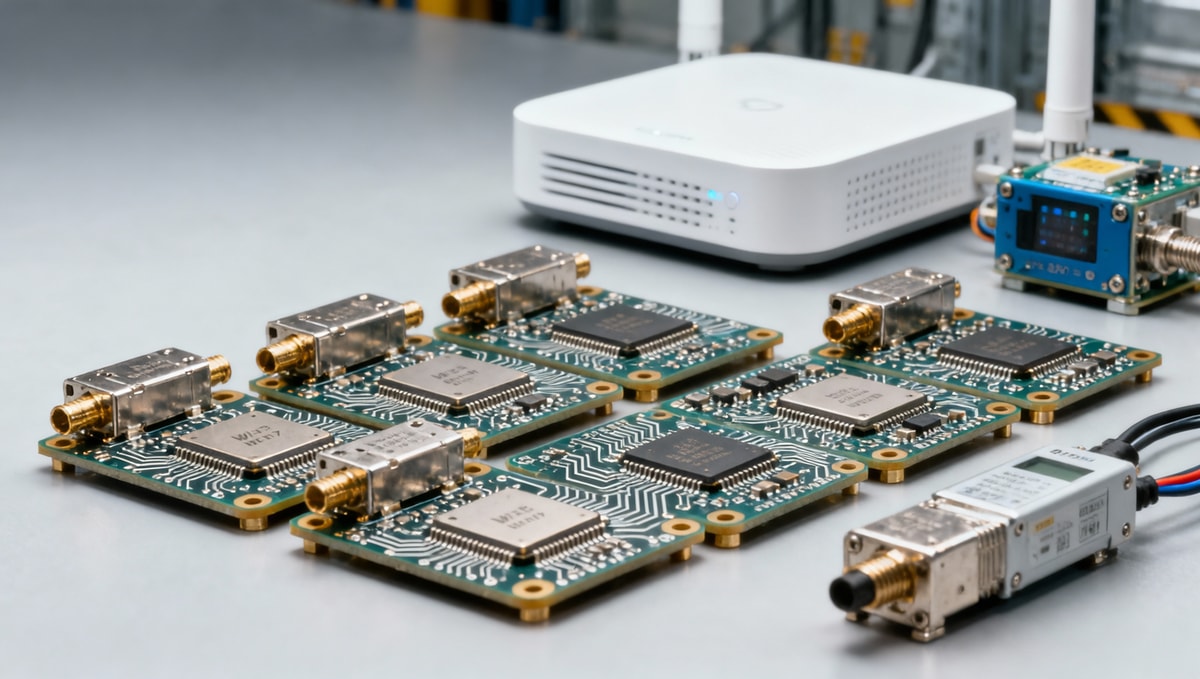
On April 28, 2026, the U.S. International Trade Commission (USITC) initiated investigation No. 337-TA-2341 targeting Wi-Fi 7 radio frequency front-end modules (FEMs, PAs, LNAs) used in IoT devices imported from China. This development directly affects manufacturers and exporters of smart home gateways, industrial sensors, and edge AI cameras — particularly those engaged in North American market access.
Event Overview
On April 28, 2026, the USITC formally instituted investigation 337-TA-2341. The complaint alleges that 12 Chinese companies have imported into the United States IoT devices incorporating Wi-Fi 7 RF front-end modules infringing 17 patents jointly held by Qualcomm and Broadcom. The accused products include smart home gateways, industrial sensors, and edge AI cameras. If infringement is found, the USITC may issue a Limited Exclusion Order (LEO), barring further importation of the implicated products.
Industries Affected by Segment
Direct Exporters of IoT Devices
These companies face immediate risk of import suspension if their products contain the accused RF modules. Impact manifests as potential loss of U.S. distribution channels, delayed customs clearance, and mandatory redesign or substitution of components to avoid exclusion.
RF Module Manufacturers & Subcontractors
Firms supplying FEMs, power amplifiers (PAs), or low-noise amplifiers (LNAs) for Wi-Fi 7-enabled IoT devices are exposed to supply chain liability. Even if not named in the complaint, their downstream customers’ exposure may trigger demand for technical documentation, licensing verification, or rapid component requalification.
OEM/ODM Providers Integrating Wi-Fi 7 Modules
Contract manufacturers assembling smart home gateways or edge AI cameras using third-party Wi-Fi 7 RF modules must assess traceability and compliance status of those modules. Their role as importers of record could subject them to USITC proceedings regardless of design ownership.
Distribution & Channel Partners Serving U.S. Markets
U.S.-based distributors, e-commerce platforms, and system integrators handling affected devices may encounter inventory holds, return requests, or increased due diligence requirements from customs brokers or legal counsel ahead of LEO enforcement.
What Enterprises and Practitioners Should Monitor and Do Now
Track official filings and procedural deadlines
Monitor the USITC’s official docket for 337-TA-2341 — including responses from respondents, claim construction rulings, and hearing dates. Key deadlines (e.g., response due dates, discovery cutoffs) directly affect time available for technical defense or supply chain mitigation.
Identify and isolate high-risk product SKUs and BOMs
Map bill-of-materials for exported IoT devices to confirm whether any use Wi-Fi 7 RF modules covered by the asserted patents — specifically those matching functional descriptions of FEMs, PAs, or LNAs cited in the complaint. Prioritize review of products destined for U.S. entry points.
Distinguish between policy signals and enforceable outcomes
The initiation of a Section 337 investigation is a procedural step — not a finding of infringement. Analysis shows that over 60% of such investigations settle or terminate before final determination. However, the presence of two major patent holders (Qualcomm and Broadcom) increases likelihood of sustained litigation and settlement pressure.
Prepare technical documentation and alternative sourcing options
Gather module datasheets, design schematics, and test reports supporting non-infringement arguments. Concurrently, evaluate qualified alternatives for Wi-Fi 7 RF components — especially those with documented U.S. patent licensing status or different architecture (e.g., integrated vs. discrete PA/LNA).
Editorial Perspective / Industry Observation
Observably, this investigation signals intensified scrutiny of foundational connectivity components within the global IoT value chain — particularly as Wi-Fi 7 adoption accelerates in edge applications. It is not yet an enforcement outcome, but rather an early-stage legal signal with material implications for export compliance strategy. From an industry perspective, it reflects a broader trend: standard-essential and interface-critical IP is increasingly leveraged in trade remedy actions, shifting risk upstream from end-product brands to component suppliers. Current attention should focus less on speculation about final rulings and more on operational readiness — including traceability, documentation hygiene, and modular design flexibility.
This is not a broad-based trade restriction, but a targeted patent enforcement action. Its significance lies in its specificity: it tests how deeply IP rights can reach into subsystem-level components embedded across diverse IoT verticals. For stakeholders, it underscores that compliance is no longer solely about tariffs or certifications — it now includes granular patent mapping at the RF module layer.
Information Sources
Primary source: U.S. International Trade Commission (USITC) official notice for Investigation No. 337-TA-2341, issued April 28, 2026.
Additional context drawn exclusively from publicly filed complaint documents and statutory provisions under Section 337 of the Tariff Act of 1930.
Note: Further developments — including respondent submissions, evidentiary hearings, and potential settlement announcements — remain pending and require ongoing monitoring.
Get weekly intelligence in your inbox.
No noise. No sponsored content. Pure intelligence.
 Apr 30, 2026Tangshan Beijiao Thermal Power Unit #1 A-Grade Maintenance LaunchTangshan Beijiao Thermal Power Unit #1 A-Grade Maintenance Launch
 Apr 30, 2026SAMR to Finalize 1,800+ Standards in 2026 Affecting Industrial Materials ExportsSAMR to Finalize 1,800+ Standards in 2026 Affecting Industrial Materials Exports
 Apr 30, 2026UAE Becomes Global AI Hub: New CE-ADAS+ Pathway for Chinese Smart Industrial EquipmentUAE Becomes Global AI Hub: New CE-ADAS+ Pathway for Chinese Smart Industrial Equipment
 Apr 30, 2026Vietnam’s SMT Expansion Drives CNC Fixture Export DelaysVietnam’s SMT Expansion Drives CNC Fixture Export Delays
 Apr 30, 2026USITC Launches 337 Investigation on Wi-Fi 7 RF Modules from ChinaUSITC Launches 337 Investigation on Wi-Fi 7 RF Modules from China
 Apr 30, 2026Morocco Enforces PV Mounting Structure Certification from Q3 2026Morocco Enforces PV Mounting Structure Certification from Q3 2026
 Apr 30, 2026TÜV Rheinland Launches Fast-Track Certification for Chinese Warehouse RobotsTÜV Rheinland Launches Fast-Track Certification for Chinese Warehouse Robots
 Apr 30, 2026Red Sea Crisis Deepens: Suez Canal Fees Up 12%, China-Europe Rail Premium Hits 35%Red Sea Crisis Deepens: Suez Canal Fees Up 12%, China-Europe Rail Premium Hits 35%
 Apr 30, 2026EU Enforces Battery Passport Checks: Storage Export Delays RiseEU Enforces Battery Passport Checks: Storage Export Delays Rise
 Apr 29, 2026USITC Launches Section 337 Investigation into Chinese Wi-Fi 7 RF ModulesUSITC Launches Section 337 Investigation into Chinese Wi-Fi 7 RF Modules
 Apr 29, 2026Côte d'Ivoire Launches $500M Grid Storage Tender, Chinese BESS Fast-TrackedCôte d'Ivoire Launches $500M Grid Storage Tender, Chinese BESS Fast-Tracked
 Apr 29, 2026Morocco Enforces IEC 61427-2:2025 PV Mounting Certification from Q3 2026Morocco Enforces IEC 61427-2:2025 PV Mounting Certification from Q3 2026
 Apr 29, 2026UAE Becomes Global AI Hub: New CE-ADAS+ Path for Chinese Smart Industrial EquipmentUAE Becomes Global AI Hub: New CE-ADAS+ Path for Chinese Smart Industrial Equipment
 Apr 29, 2026Red Sea Crisis: Suez Canal Fees Up 12%, China-Europe Rail Premium at 35%Red Sea Crisis: Suez Canal Fees Up 12%, China-Europe Rail Premium at 35%
 Apr 29, 2026TÜV Rheinland Launches Fast-Track Certification for Chinese Warehouse RobotsTÜV Rheinland Launches Fast-Track Certification for Chinese Warehouse Robots
 Apr 29, 2026Vietnam's SMT Expansion Drives CNC Fixture Export DelaysVietnam's SMT Expansion Drives CNC Fixture Export Delays
![]() Apr 29, 2026NEOM Smart Infrastructure Phase II Opens Bidding: Chinese PV Mounting & BESS Pre-QualifiedNEOM Smart Infrastructure Phase II Opens Bidding: Chinese PV Mounting & BESS Pre-Qualified
Apr 29, 2026NEOM Smart Infrastructure Phase II Opens Bidding: Chinese PV Mounting & BESS Pre-QualifiedNEOM Smart Infrastructure Phase II Opens Bidding: Chinese PV Mounting & BESS Pre-Qualified Apr 29, 2026EU Enforces Battery Passport for Energy Storage Imports from July 2026EU Enforces Battery Passport for Energy Storage Imports from July 2026
 Apr 29, 2026Maine Bans New >20MW Data Centers — AI Hardware Delivery ImpactedMaine Bans New >20MW Data Centers — AI Hardware Delivery Impacted
 Apr 28, 2026Suez Canal Fee Hike & China-Europe Rail Premium: Q2 2026 ImpactSuez Canal Fee Hike & China-Europe Rail Premium: Q2 2026 Impact
 Apr 28, 2026TÜV Rheinland Launches Fast-Track Certification for Chinese Warehouse RobotsTÜV Rheinland Launches Fast-Track Certification for Chinese Warehouse Robots
 Apr 28, 2026EU Enforces Battery Passport Rule for Chinese ESS Exports from 2027EU Enforces Battery Passport Rule for Chinese ESS Exports from 2027
 Apr 28, 2026ADB Raises Vietnam GDP Forecast to 7.2%: SMT & Precision Fixture Demand RisesADB Raises Vietnam GDP Forecast to 7.2%: SMT & Precision Fixture Demand Rises
 Apr 28, 2026US ITC Launches Section 337 Investigation into Chinese Wi-Fi 7 RF FEMsUS ITC Launches Section 337 Investigation into Chinese Wi-Fi 7 RF FEMs
 Apr 28, 2026Côte d'Ivoire Opens $500M Power Tender: Chinese BESS Get Fast-Track AccessCôte d'Ivoire Opens $500M Power Tender: Chinese BESS Get Fast-Track Access
 Apr 28, 2026BP’s Algeria East Basin Permit Spurs Valve Demand, Lead Times Extend to 18 WeeksBP’s Algeria East Basin Permit Spurs Valve Demand, Lead Times Extend to 18 Weeks
") Apr 28, 2026Vietnam Mandates V-Trust for Smart Appliances Export (July 2026)Vietnam Mandates V-Trust for Smart Appliances Export (July 2026)
Apr 28, 2026Vietnam Mandates V-Trust for Smart Appliances Export (July 2026)Vietnam Mandates V-Trust for Smart Appliances Export (July 2026)