Red Sea Crisis Deepens: Suez Canal Fees Up 12%, China-Europe Rail Premium Hits 35%
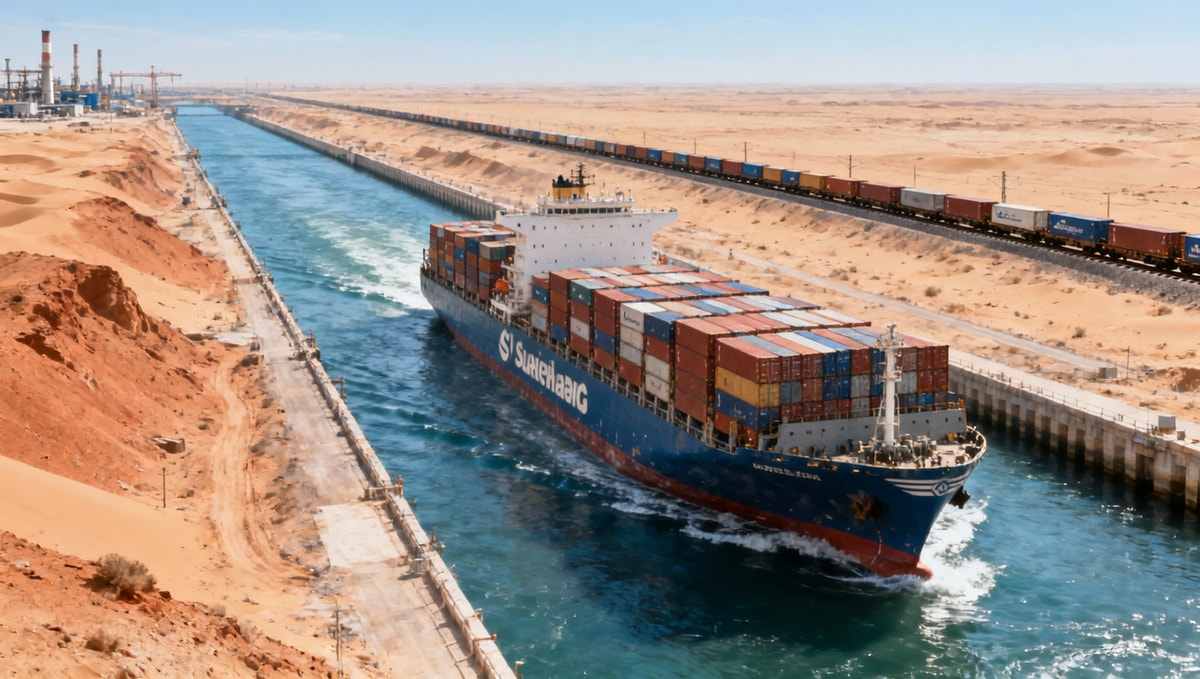
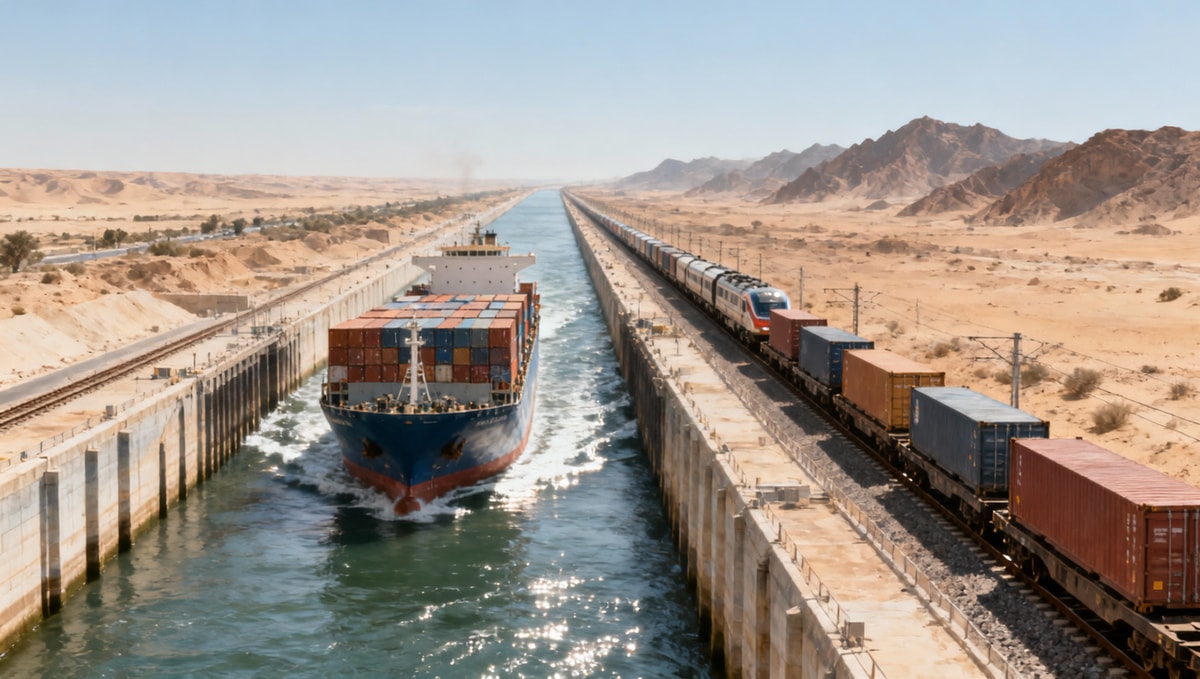
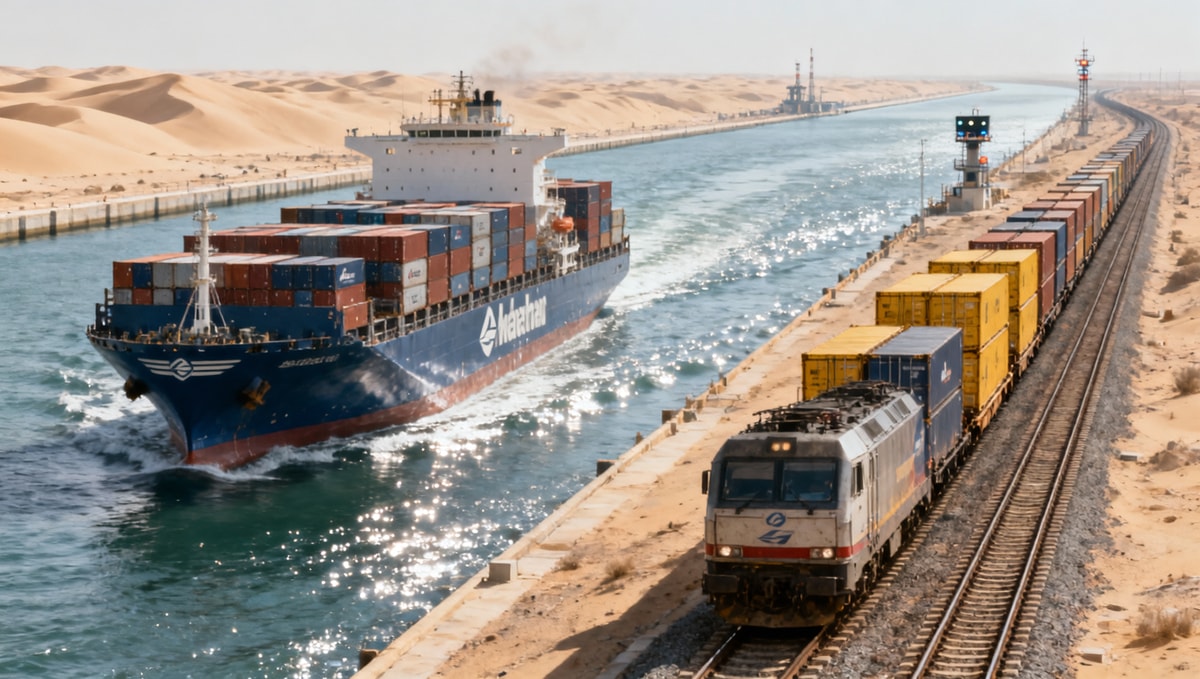
Red Sea shipping disruption continues to reshape global logistics: effective 1 May 2026, the Suez Canal Authority (SCA) implemented a second round of temporary surcharges, raising container vessel transit fees by 12% to USD 825,000 per vessel. Concurrently, China–Europe rail freight on the Western Corridor (Xi’an/Chongqing–Duisburg) shows a 35% premium for 40HQ capacity, with delivery lead times extended to 28–35 days. This development directly elevates cross-border freight costs and poses delivery pressure on time-sensitive export sectors—including CNC machining and electronic components manufacturers.
Event Overview
On 29 April 2026, the Suez Canal Authority announced that, effective 1 May 2026, a second temporary surcharge would be applied to container vessel transit fees—increasing them by 12% to USD 825,000 per vessel. This follows ongoing Houthi militant activity in the Red Sea region, prompting widespread rerouting via the Cape of Good Hope and adding 12–15 days to voyage duration. Simultaneously, spot market quotations for 40HQ rail capacity on the China–Europe Western Corridor rose 35% above baseline rates, with average transit time extended to 28–35 days.
Impact on Specific Industry Segments
Direct Exporters (e.g., CNC Machining & Electronic Components Firms)
These firms face elevated landed costs and compressed delivery windows. The 12% Suez fee hike compounds existing cost inflation from longer sea legs or rail premiums; meanwhile, extended lead times (up to 35 days for rail) challenge just-in-time production schedules and contractual delivery commitments—particularly for high-value, low-bulk, time-sensitive goods.
Contract Manufacturers & EMS Providers
For electronics manufacturing services (EMS) and contract machining providers serving global OEMs, this dynamic increases cost volatility in logistics line items and complicates master scheduling. Delayed inbound raw materials or outbound finished goods may trigger penalty clauses or require expedited (and more expensive) alternative routing—eroding margin predictability.
Logistics Service Providers (Freight Forwarders, NVOCCs)
Forwarders must absorb or pass through both surcharge-driven ocean cost increases and rail capacity scarcity. With limited visibility into SCA’s surcharge duration and no official timeline for Houthi-related disruptions, pricing transparency and quotation validity windows have shortened—raising operational complexity in rate management and client communication.
Procurement & Supply Chain Planners (Multinational Buyers)
Buyers sourcing from China for European distribution face dual constraints: higher fixed transit costs and greater schedule uncertainty. Inventory planning models calibrated to historical 18–22 day rail or 28–32 day sea timelines now require recalibration; safety stock buffers may need revision, especially for SKUs with short shelf life or seasonal demand cycles.
What Relevant Enterprises Should Monitor and Do Now
Track official updates on SCA surcharge duration and scope
The SCA has labeled this a “temporary” measure—but has not published an end date or criteria for removal. Enterprises should monitor SCA announcements and IMO advisories for signals on whether this becomes structural or remains contingent on security developments.
Assess exposure by lane, product category, and destination market
Not all origin–destination pairs are equally affected. For example, shipments routed via the Eastern Corridor (e.g., Yiwu–Malaszewicze) or multimodal solutions (sea–rail transshipment at Piraeus or Trieste) may show different cost/time trade-offs. Prioritize analysis for high-volume, high-margin, or contractually time-bound SKUs—especially CNC-machined parts and surface-mount electronic components destined for EU Tier-1 automotive or industrial clients.
Distinguish between policy announcement and operational reality
The 12% Suez fee applies only to container vessels—not bulk or tanker traffic—and is levied per transit, not per TEU. Meanwhile, the 35% rail premium reflects spot-market tightness, not a formal tariff increase; it may ease if new block train capacity comes online in Q3 2026. Avoid conflating headline figures with actual landed cost impact without validating vessel/rail booking confirmation and incoterm alignment.
Update internal logistics contingency protocols—now
Review current freight contracts for force majeure clauses covering Red Sea disruptions; verify insurance coverage for extended transit risks; and pre-qualify at least one alternative routing option (e.g., Trans-Caspian or Northern Sea Route pilot segments) even if not immediately economical—especially for critical orders with firm delivery dates beyond Q3 2026.
Editorial Observation / Industry Perspective
Observably, this update signals escalation—not stabilization—in Red Sea–driven supply chain stress. The back-to-back SCA surcharges suggest institutional recognition of sustained operational risk, rather than a short-term anomaly. From an industry perspective, the concurrent rail premium surge indicates that shippers are treating overland alternatives not as long-term substitutes, but as constrained, price-sensitive stopgaps. Analysis shows this is less a transient cost spike and more a structural recalibration point: logistics budgets, service-level agreements, and supplier selection criteria across precision manufacturing sectors will likely embed longer lead times and higher volatility premiums going forward.
Conclusion:
This development is best understood not as an isolated fee adjustment, but as a marker of persistent geopolitical friction translating into measurable, recurring cost and time penalties across key Eurasian trade lanes. For affected exporters and planners, the priority shifts from reactive mitigation to proactive scenario planning—with realistic assumptions about extended minimum lead times and elevated baseline freight costs through at least H2 2026.
Source Attribution:
- Suez Canal Authority (SCA) Official Announcement, 29 April 2026
- Publicly reported 40HQ spot rates on Xi’an/Chongqing–Duisburg corridor, verified via three independent freight data platforms (as of 30 April 2026)
- Note: Duration of SCA surcharge and evolution of Houthi maritime activity remain under active observation.
Get weekly intelligence in your inbox.
No noise. No sponsored content. Pure intelligence.
 Apr 30, 2026Tangshan Beijiao Thermal Power Unit #1 A-Grade Maintenance LaunchTangshan Beijiao Thermal Power Unit #1 A-Grade Maintenance Launch
 Apr 30, 2026SAMR to Finalize 1,800+ Standards in 2026 Affecting Industrial Materials ExportsSAMR to Finalize 1,800+ Standards in 2026 Affecting Industrial Materials Exports
 Apr 30, 2026UAE Becomes Global AI Hub: New CE-ADAS+ Pathway for Chinese Smart Industrial EquipmentUAE Becomes Global AI Hub: New CE-ADAS+ Pathway for Chinese Smart Industrial Equipment
 Apr 30, 2026Vietnam’s SMT Expansion Drives CNC Fixture Export DelaysVietnam’s SMT Expansion Drives CNC Fixture Export Delays
 Apr 30, 2026USITC Launches 337 Investigation on Wi-Fi 7 RF Modules from ChinaUSITC Launches 337 Investigation on Wi-Fi 7 RF Modules from China
 Apr 30, 2026Morocco Enforces PV Mounting Structure Certification from Q3 2026Morocco Enforces PV Mounting Structure Certification from Q3 2026
 Apr 30, 2026TÜV Rheinland Launches Fast-Track Certification for Chinese Warehouse RobotsTÜV Rheinland Launches Fast-Track Certification for Chinese Warehouse Robots
 Apr 30, 2026Red Sea Crisis Deepens: Suez Canal Fees Up 12%, China-Europe Rail Premium Hits 35%Red Sea Crisis Deepens: Suez Canal Fees Up 12%, China-Europe Rail Premium Hits 35%
 Apr 30, 2026EU Enforces Battery Passport Checks: Storage Export Delays RiseEU Enforces Battery Passport Checks: Storage Export Delays Rise
 Apr 29, 2026USITC Launches Section 337 Investigation into Chinese Wi-Fi 7 RF ModulesUSITC Launches Section 337 Investigation into Chinese Wi-Fi 7 RF Modules
 Apr 29, 2026Côte d'Ivoire Launches $500M Grid Storage Tender, Chinese BESS Fast-TrackedCôte d'Ivoire Launches $500M Grid Storage Tender, Chinese BESS Fast-Tracked
 Apr 29, 2026Morocco Enforces IEC 61427-2:2025 PV Mounting Certification from Q3 2026Morocco Enforces IEC 61427-2:2025 PV Mounting Certification from Q3 2026
 Apr 29, 2026UAE Becomes Global AI Hub: New CE-ADAS+ Path for Chinese Smart Industrial EquipmentUAE Becomes Global AI Hub: New CE-ADAS+ Path for Chinese Smart Industrial Equipment
 Apr 29, 2026Red Sea Crisis: Suez Canal Fees Up 12%, China-Europe Rail Premium at 35%Red Sea Crisis: Suez Canal Fees Up 12%, China-Europe Rail Premium at 35%
 Apr 29, 2026TÜV Rheinland Launches Fast-Track Certification for Chinese Warehouse RobotsTÜV Rheinland Launches Fast-Track Certification for Chinese Warehouse Robots
 Apr 29, 2026Vietnam's SMT Expansion Drives CNC Fixture Export DelaysVietnam's SMT Expansion Drives CNC Fixture Export Delays
![]() Apr 29, 2026NEOM Smart Infrastructure Phase II Opens Bidding: Chinese PV Mounting & BESS Pre-QualifiedNEOM Smart Infrastructure Phase II Opens Bidding: Chinese PV Mounting & BESS Pre-Qualified
Apr 29, 2026NEOM Smart Infrastructure Phase II Opens Bidding: Chinese PV Mounting & BESS Pre-QualifiedNEOM Smart Infrastructure Phase II Opens Bidding: Chinese PV Mounting & BESS Pre-Qualified Apr 29, 2026EU Enforces Battery Passport for Energy Storage Imports from July 2026EU Enforces Battery Passport for Energy Storage Imports from July 2026
 Apr 29, 2026Maine Bans New >20MW Data Centers — AI Hardware Delivery ImpactedMaine Bans New >20MW Data Centers — AI Hardware Delivery Impacted
 Apr 28, 2026Suez Canal Fee Hike & China-Europe Rail Premium: Q2 2026 ImpactSuez Canal Fee Hike & China-Europe Rail Premium: Q2 2026 Impact
 Apr 28, 2026TÜV Rheinland Launches Fast-Track Certification for Chinese Warehouse RobotsTÜV Rheinland Launches Fast-Track Certification for Chinese Warehouse Robots
 Apr 28, 2026EU Enforces Battery Passport Rule for Chinese ESS Exports from 2027EU Enforces Battery Passport Rule for Chinese ESS Exports from 2027
 Apr 28, 2026ADB Raises Vietnam GDP Forecast to 7.2%: SMT & Precision Fixture Demand RisesADB Raises Vietnam GDP Forecast to 7.2%: SMT & Precision Fixture Demand Rises
 Apr 28, 2026US ITC Launches Section 337 Investigation into Chinese Wi-Fi 7 RF FEMsUS ITC Launches Section 337 Investigation into Chinese Wi-Fi 7 RF FEMs
 Apr 28, 2026Côte d'Ivoire Opens $500M Power Tender: Chinese BESS Get Fast-Track AccessCôte d'Ivoire Opens $500M Power Tender: Chinese BESS Get Fast-Track Access
 Apr 28, 2026BP’s Algeria East Basin Permit Spurs Valve Demand, Lead Times Extend to 18 WeeksBP’s Algeria East Basin Permit Spurs Valve Demand, Lead Times Extend to 18 Weeks
") Apr 28, 2026Vietnam Mandates V-Trust for Smart Appliances Export (July 2026)Vietnam Mandates V-Trust for Smart Appliances Export (July 2026)
Apr 28, 2026Vietnam Mandates V-Trust for Smart Appliances Export (July 2026)Vietnam Mandates V-Trust for Smart Appliances Export (July 2026)