Morocco Enforces PV Mounting Structure Certification from Q3 2026
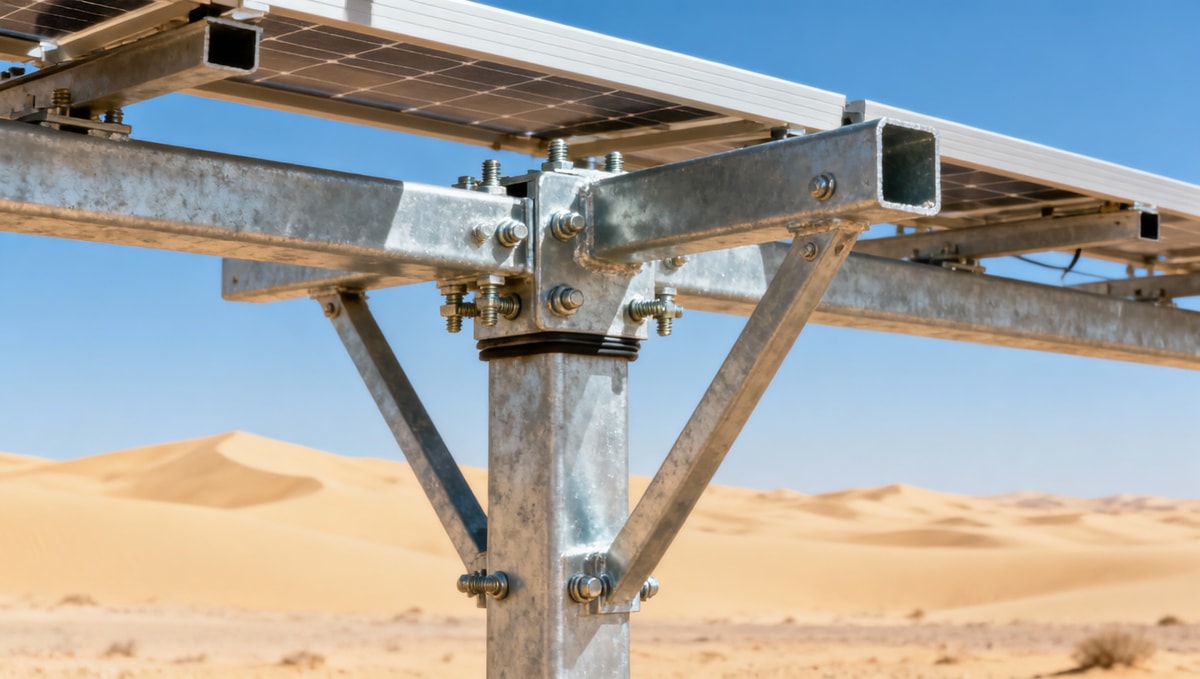
Morocco’s Ministry of Energy has introduced a mandatory certification requirement for solar photovoltaic (PV) mounting structures, effective 1 July 2026. The regulation targets manufacturers, exporters, and project integrators supplying to Moroccan utility-scale solar initiatives—including the NOOR Midelt hybrid CSP-PV complex—and signals a tightening of technical compliance standards in North Africa’s fastest-growing solar market.
Event Overview
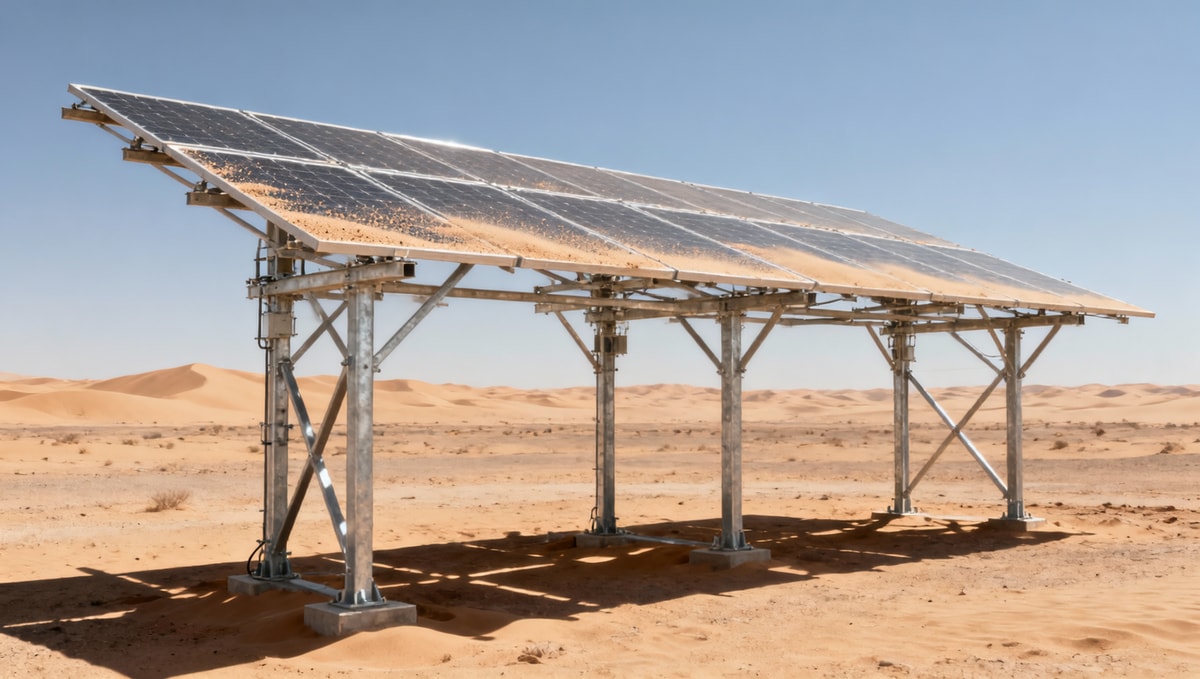
On 28 April 2026, Morocco’s Ministry of Energy issued Administrative Order No. 2026-117, mandating that all imported and domestically installed solar PV mounting systems comply with a localized version of IEC 61427-2:2025 starting 1 July 2026. The localized testing requirements focus on three environmental stressors: sand-dust load cycling (≥5,000 cycles), salt mist corrosion (ISO 9223 C5-M class), and high-temperature deformation (60°C for 1,000 hours). Certification reports must be issued by laboratories accredited under China’s CNAS (China National Accreditation Service) or equivalent national accreditation bodies recognized by Morocco’s regulatory authority.
Industries Affected
Direct Exporters of PV Mounting Structures
Chinese manufacturers exporting fixed-tilt, single-axis, or tracker-based mounting systems to Morocco will face immediate compliance barriers if their current test reports do not cover the three specified environmental parameters—or were issued by non-CNAS-accredited labs. Non-compliant products will be excluded from customs clearance and pre-qualification for major tenders such as NOOR Midelt Phase II.
Component and Raw Material Suppliers
Suppliers of aluminum extrusions, galvanized steel components, fasteners, and anti-corrosion coatings used in PV mounting systems may experience revised specification requests from downstream fabricators. Demand for C5-M–rated coatings and sand-abrasion–resistant surface treatments is likely to rise, potentially affecting procurement lead times and material cost structures.
Engineering, Procurement & Construction (EPC) Contractors
EPC firms bidding on Moroccan solar projects must now verify third-party certification status at the sub-system level—not just structural design approval. This adds a new layer to technical documentation submission and may delay bid preparation unless certified suppliers are engaged early in the design phase.
Testing and Certification Service Providers
Laboratories offering IEC 61427-2 testing—particularly those with CNAS accreditation and proven capability in sand-dust cycling and C5-M salt fog chambers—may see increased demand from Chinese exporters preparing for the 2026 deadline. However, only reports issued by labs formally accepted by Moroccan authorities will be valid; bilateral recognition status remains unconfirmed.
Key Considerations and Recommended Actions
Monitor official implementation guidance from Moroccan authorities
The Administrative Order references IEC 61427-2:2025 but introduces localization criteria not present in the base standard. Stakeholders should track any technical circulars or interpretation notes issued by Morocco’s Direction de l’Énergie Renouvelable et de l’Efficacité Énergétique (DEREE) before Q3 2026, especially regarding test lab acceptance procedures and transitional arrangements.
Verify CNAS lab scope and Moroccan recognition status
Not all CNAS-accredited labs hold the full test capability required—particularly for 5,000-cycle sand-dust loading per IEC 60068-2-68. Exporters should confirm both the lab’s accreditation scope (certificate number and validity) and whether its reports have been previously accepted in Moroccan public tenders.
Align product qualification timelines with NOOR Midelt procurement cycles
NOOR Midelt Phase II tender documents are expected to reference this regulation explicitly. Companies targeting this project should complete full certification—including test report issuance and notarized translation—no later than Q2 2026 to meet pre-bid qualification deadlines.
Review supply chain documentation for traceability
Certification applies to the final mounted system, not individual components. Manufacturers must ensure batch-level traceability between certified test units and production lots, including material certifications (e.g., aluminum alloy grade, zinc coating thickness), welding procedure qualifications, and assembly process records.
Editorial Perspective / Industry Observation
Observably, this regulation reflects Morocco’s strategic shift from volume-driven solar deployment toward resilience-focused infrastructure standards—particularly for arid, coastal sites where sand abrasion and salt corrosion accelerate structural degradation. Analysis shows the timing aligns with the ramp-up of NOOR Midelt’s integrated dispatchable solar generation, suggesting the rule serves both technical reliability and local industrial policy goals. From an industry perspective, it functions less as an isolated compliance hurdle and more as an early indicator of similar localization requirements likely to emerge in other MENA markets with comparable environmental conditions. Current evidence does not confirm whether parallel rules will apply to trackers versus fixed-tilt systems—but the specification’s emphasis on cyclic sand loading implies particular scrutiny of moving parts and bearing interfaces.
It is more accurate to interpret this development as a binding technical signal rather than a finalized enforcement outcome: while the legal effective date is fixed, practical implementation—including lab recognition, document validation, and inspector training—remains subject to administrative capacity building over the next 15 months.
Conclusion: This regulation marks a step-change in technical entry requirements for PV mounting systems in Morocco—not merely a paperwork update, but a material and performance benchmark aligned with long-term asset durability. For stakeholders, it underscores the growing importance of environmental adaptation in global solar hardware standards. The current situation is best understood as a structured transition period, where proactive alignment with the localized IEC 61427-2:2025 requirements offers competitive advantage—not just compliance assurance.
Information Source: Morocco Ministry of Energy, Administrative Order No. 2026-117 (issued 28 April 2026); IEC 61427-2:2025 Edition 2.0; ISO 9223:2012 Corrosivity Categories. Note: Recognition status of specific CNAS-accredited laboratories by Moroccan authorities remains pending official confirmation and is subject to ongoing observation.
Get weekly intelligence in your inbox.
No noise. No sponsored content. Pure intelligence.
 Apr 30, 2026Tangshan Beijiao Thermal Power Unit #1 A-Grade Maintenance LaunchTangshan Beijiao Thermal Power Unit #1 A-Grade Maintenance Launch
 Apr 30, 2026SAMR to Finalize 1,800+ Standards in 2026 Affecting Industrial Materials ExportsSAMR to Finalize 1,800+ Standards in 2026 Affecting Industrial Materials Exports
 Apr 30, 2026UAE Becomes Global AI Hub: New CE-ADAS+ Pathway for Chinese Smart Industrial EquipmentUAE Becomes Global AI Hub: New CE-ADAS+ Pathway for Chinese Smart Industrial Equipment
 Apr 30, 2026Vietnam’s SMT Expansion Drives CNC Fixture Export DelaysVietnam’s SMT Expansion Drives CNC Fixture Export Delays
 Apr 30, 2026USITC Launches 337 Investigation on Wi-Fi 7 RF Modules from ChinaUSITC Launches 337 Investigation on Wi-Fi 7 RF Modules from China
 Apr 30, 2026Morocco Enforces PV Mounting Structure Certification from Q3 2026Morocco Enforces PV Mounting Structure Certification from Q3 2026
 Apr 30, 2026TÜV Rheinland Launches Fast-Track Certification for Chinese Warehouse RobotsTÜV Rheinland Launches Fast-Track Certification for Chinese Warehouse Robots
 Apr 30, 2026Red Sea Crisis Deepens: Suez Canal Fees Up 12%, China-Europe Rail Premium Hits 35%Red Sea Crisis Deepens: Suez Canal Fees Up 12%, China-Europe Rail Premium Hits 35%
 Apr 30, 2026EU Enforces Battery Passport Checks: Storage Export Delays RiseEU Enforces Battery Passport Checks: Storage Export Delays Rise
 Apr 29, 2026USITC Launches Section 337 Investigation into Chinese Wi-Fi 7 RF ModulesUSITC Launches Section 337 Investigation into Chinese Wi-Fi 7 RF Modules
 Apr 29, 2026Côte d'Ivoire Launches $500M Grid Storage Tender, Chinese BESS Fast-TrackedCôte d'Ivoire Launches $500M Grid Storage Tender, Chinese BESS Fast-Tracked
 Apr 29, 2026Morocco Enforces IEC 61427-2:2025 PV Mounting Certification from Q3 2026Morocco Enforces IEC 61427-2:2025 PV Mounting Certification from Q3 2026
 Apr 29, 2026UAE Becomes Global AI Hub: New CE-ADAS+ Path for Chinese Smart Industrial EquipmentUAE Becomes Global AI Hub: New CE-ADAS+ Path for Chinese Smart Industrial Equipment
 Apr 29, 2026Red Sea Crisis: Suez Canal Fees Up 12%, China-Europe Rail Premium at 35%Red Sea Crisis: Suez Canal Fees Up 12%, China-Europe Rail Premium at 35%
 Apr 29, 2026TÜV Rheinland Launches Fast-Track Certification for Chinese Warehouse RobotsTÜV Rheinland Launches Fast-Track Certification for Chinese Warehouse Robots
 Apr 29, 2026Vietnam's SMT Expansion Drives CNC Fixture Export DelaysVietnam's SMT Expansion Drives CNC Fixture Export Delays
![]() Apr 29, 2026NEOM Smart Infrastructure Phase II Opens Bidding: Chinese PV Mounting & BESS Pre-QualifiedNEOM Smart Infrastructure Phase II Opens Bidding: Chinese PV Mounting & BESS Pre-Qualified
Apr 29, 2026NEOM Smart Infrastructure Phase II Opens Bidding: Chinese PV Mounting & BESS Pre-QualifiedNEOM Smart Infrastructure Phase II Opens Bidding: Chinese PV Mounting & BESS Pre-Qualified Apr 29, 2026EU Enforces Battery Passport for Energy Storage Imports from July 2026EU Enforces Battery Passport for Energy Storage Imports from July 2026
 Apr 29, 2026Maine Bans New >20MW Data Centers — AI Hardware Delivery ImpactedMaine Bans New >20MW Data Centers — AI Hardware Delivery Impacted
 Apr 28, 2026Suez Canal Fee Hike & China-Europe Rail Premium: Q2 2026 ImpactSuez Canal Fee Hike & China-Europe Rail Premium: Q2 2026 Impact
 Apr 28, 2026TÜV Rheinland Launches Fast-Track Certification for Chinese Warehouse RobotsTÜV Rheinland Launches Fast-Track Certification for Chinese Warehouse Robots
 Apr 28, 2026EU Enforces Battery Passport Rule for Chinese ESS Exports from 2027EU Enforces Battery Passport Rule for Chinese ESS Exports from 2027
 Apr 28, 2026ADB Raises Vietnam GDP Forecast to 7.2%: SMT & Precision Fixture Demand RisesADB Raises Vietnam GDP Forecast to 7.2%: SMT & Precision Fixture Demand Rises
 Apr 28, 2026US ITC Launches Section 337 Investigation into Chinese Wi-Fi 7 RF FEMsUS ITC Launches Section 337 Investigation into Chinese Wi-Fi 7 RF FEMs
 Apr 28, 2026Côte d'Ivoire Opens $500M Power Tender: Chinese BESS Get Fast-Track AccessCôte d'Ivoire Opens $500M Power Tender: Chinese BESS Get Fast-Track Access
 Apr 28, 2026BP’s Algeria East Basin Permit Spurs Valve Demand, Lead Times Extend to 18 WeeksBP’s Algeria East Basin Permit Spurs Valve Demand, Lead Times Extend to 18 Weeks
") Apr 28, 2026Vietnam Mandates V-Trust for Smart Appliances Export (July 2026)Vietnam Mandates V-Trust for Smart Appliances Export (July 2026)
Apr 28, 2026Vietnam Mandates V-Trust for Smart Appliances Export (July 2026)Vietnam Mandates V-Trust for Smart Appliances Export (July 2026)