Vietnam’s SMT Expansion Drives CNC Fixture Export Delays
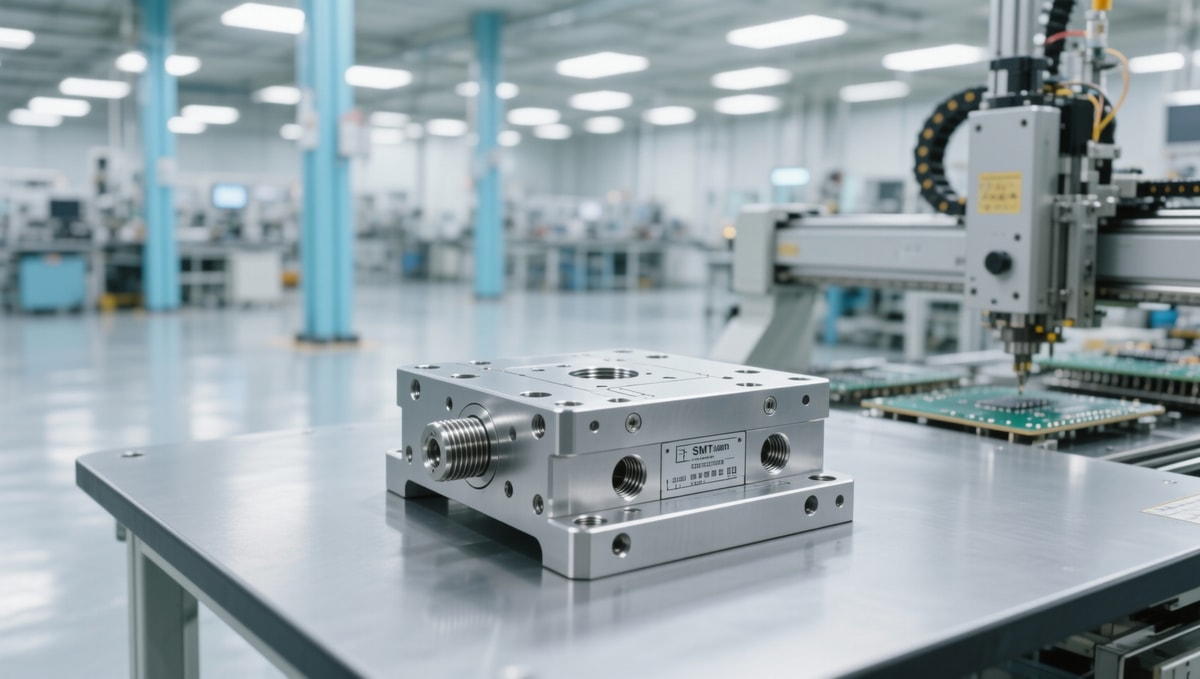
According to Vietnam’s Ministry of Industry and Trade (MOIT), electronic assembly capacity in Vietnam surged 37% year-on-year in Q1 2026, triggering a 62% rise in SMT placement machine imports. This development has intensified demand for high-precision CNC-machined fixtures — including feeder trays, nozzle holders, and reel covers — prompting Chinese manufacturers to extend standard lead times to 12 weeks. Electronics manufacturing services (EMS), contract manufacturers, precision tooling suppliers, and global procurement teams should monitor supply chain responsiveness, regional capacity shifts, and trade logistics implications.
Event Overview
On April 27, 2026, Vietnam’s Ministry of Industry and Trade reported that electronic assembly output in the country increased by 37% YoY in Q1 2026. Concurrently, SMT pick-and-place machine imports rose by 62% over the same period. The MOIT attributed this growth to expanded production lines serving global electronics brands. As a result, demand for CNC-machined precision fixtures — specifically feeder trays, nozzle holders, and reel covers — has risen sharply. Chinese leading fixture manufacturers confirmed order backlogs have extended delivery timelines to 12 weeks; some customers are shifting to lower-customization, generic alternatives.
Industries Affected
Direct Trade Enterprises
Export-oriented CNC fixture manufacturers in China face compressed capacity and longer quotation-to-fulfillment cycles. The impact manifests as delayed shipment confirmations, tighter margin pressure from expedited logistics, and increased negotiation complexity with international buyers seeking guaranteed lead times.
Raw Material Procurement Firms
Suppliers of aerospace-grade aluminum alloys, hardened stainless steels, and specialty coatings used in fixture fabrication may experience uneven demand spikes — particularly for grades meeting IPC-A-610 or ISO 9001 traceability requirements. Order batching and material certification lead times could become new bottlenecks.
Electronics Contract Manufacturers (CMs) & EMS Providers
CMs operating in Vietnam — especially those supporting Tier-1 OEMs in consumer electronics and automotive electronics — are encountering longer wait times for line-ready tooling. This delays new product introductions (NPI), increases reliance on interim manual handling solutions, and raises risk exposure during ramp-up phases.
Supply Chain Service Providers
Fulfillment centers, customs brokers, and freight forwarders handling cross-border shipments of precision fixtures between China and Vietnam report higher volume volatility and more frequent urgent air-freight requests. Documentation accuracy — especially for HS codes covering ‘jigs and fixtures for surface-mount technology’ (e.g., HS 8486.90) — is increasingly critical to avoid port delays.
What Relevant Enterprises Should Monitor and Do Now
Track official updates on Vietnam’s electronics investment incentives
Vietnam’s MOIT and Ministry of Planning and Investment regularly issue quarterly investment reports and policy amendments affecting import duties on capital equipment. Current fixture delays correlate with broader SMT infrastructure expansion — any revision to preferential tax treatment for local assembly could further accelerate equipment and tooling demand.
Assess exposure to specific fixture categories and geographies
Feeder trays and reel covers account for ~68% of reported fixture order volume (per manufacturer feedback cited in MOIT briefing). Companies sourcing from Guangdong and Jiangsu-based CNC shops should prioritize visibility into sub-tier capacity allocation — not just headline lead times — as bottlenecking occurs at secondary finishing and metrology verification stages.
Validate operational readiness for alternative sourcing pathways
Some customers are adopting generic or semi-custom fixtures to mitigate delays. Analysis shows these alternatives typically incur 15–22% higher long-term cost-of-ownership due to reduced repeatability and higher changeover time. Firms should audit current NPI schedules against available fixture lead times — and pre-qualify at least one secondary supplier capable of delivering certified fixtures within ≤8 weeks under accelerated terms.
Prepare documentation and communication protocols for procurement escalation
With lead times now extending to 12 weeks, procurement teams must align engineering, planning, and logistics functions early. Observably, companies introducing formal ‘fixture readiness gates’ into their new-product launch checklists — requiring fixture PO issuance before finalizing SMT program files — are experiencing fewer line-stop incidents.
Editorial Observation / Industry Perspective
This dynamic is better understood as an early-stage signal of structural realignment — not merely a temporary supply crunch. The 12-week lead time reflects cumulative constraints across design validation, multi-axis CNC scheduling, and dimensional inspection capacity — not just raw order volume. From an industry perspective, it highlights how China’s entrenched position in precision non-standard machining continues to underpin global electronics scalability, even amid regional manufacturing diversification. What makes this noteworthy is not the delay itself, but the fact that no near-term regional alternative has emerged to absorb the surge in demand for certified, application-specific fixtures. Continued monitoring is warranted — especially for changes in Vietnamese import classification rules or domestic fixture pilot initiatives.
Ultimately, this episode underscores a persistent reality: high-mix, low-volume precision tooling remains a tightly coupled, geography-constrained enabler of electronics mass production. It is less about ‘shortage’ and more about capacity architecture — where lead time extension signals upstream capacity saturation rather than downstream demand weakness.
Information Sources: Vietnam Ministry of Industry and Trade (MOIT), official press release dated April 27, 2026. Note: Lead time data and customer adaptation patterns are based on statements from unnamed Chinese CNC fixture manufacturers cited in the MOIT briefing. Further developments in Vietnamese local fixture manufacturing initiatives remain under observation.
Get weekly intelligence in your inbox.
No noise. No sponsored content. Pure intelligence.
 Apr 30, 2026Tangshan Beijiao Thermal Power Unit #1 A-Grade Maintenance LaunchTangshan Beijiao Thermal Power Unit #1 A-Grade Maintenance Launch
 Apr 30, 2026SAMR to Finalize 1,800+ Standards in 2026 Affecting Industrial Materials ExportsSAMR to Finalize 1,800+ Standards in 2026 Affecting Industrial Materials Exports
 Apr 30, 2026UAE Becomes Global AI Hub: New CE-ADAS+ Pathway for Chinese Smart Industrial EquipmentUAE Becomes Global AI Hub: New CE-ADAS+ Pathway for Chinese Smart Industrial Equipment
 Apr 30, 2026Vietnam’s SMT Expansion Drives CNC Fixture Export DelaysVietnam’s SMT Expansion Drives CNC Fixture Export Delays
 Apr 30, 2026USITC Launches 337 Investigation on Wi-Fi 7 RF Modules from ChinaUSITC Launches 337 Investigation on Wi-Fi 7 RF Modules from China
 Apr 30, 2026Morocco Enforces PV Mounting Structure Certification from Q3 2026Morocco Enforces PV Mounting Structure Certification from Q3 2026
 Apr 30, 2026TÜV Rheinland Launches Fast-Track Certification for Chinese Warehouse RobotsTÜV Rheinland Launches Fast-Track Certification for Chinese Warehouse Robots
 Apr 30, 2026Red Sea Crisis Deepens: Suez Canal Fees Up 12%, China-Europe Rail Premium Hits 35%Red Sea Crisis Deepens: Suez Canal Fees Up 12%, China-Europe Rail Premium Hits 35%
 Apr 30, 2026EU Enforces Battery Passport Checks: Storage Export Delays RiseEU Enforces Battery Passport Checks: Storage Export Delays Rise
 Apr 29, 2026USITC Launches Section 337 Investigation into Chinese Wi-Fi 7 RF ModulesUSITC Launches Section 337 Investigation into Chinese Wi-Fi 7 RF Modules
 Apr 29, 2026Côte d'Ivoire Launches $500M Grid Storage Tender, Chinese BESS Fast-TrackedCôte d'Ivoire Launches $500M Grid Storage Tender, Chinese BESS Fast-Tracked
 Apr 29, 2026Morocco Enforces IEC 61427-2:2025 PV Mounting Certification from Q3 2026Morocco Enforces IEC 61427-2:2025 PV Mounting Certification from Q3 2026
 Apr 29, 2026UAE Becomes Global AI Hub: New CE-ADAS+ Path for Chinese Smart Industrial EquipmentUAE Becomes Global AI Hub: New CE-ADAS+ Path for Chinese Smart Industrial Equipment
 Apr 29, 2026Red Sea Crisis: Suez Canal Fees Up 12%, China-Europe Rail Premium at 35%Red Sea Crisis: Suez Canal Fees Up 12%, China-Europe Rail Premium at 35%
 Apr 29, 2026TÜV Rheinland Launches Fast-Track Certification for Chinese Warehouse RobotsTÜV Rheinland Launches Fast-Track Certification for Chinese Warehouse Robots
 Apr 29, 2026Vietnam's SMT Expansion Drives CNC Fixture Export DelaysVietnam's SMT Expansion Drives CNC Fixture Export Delays
![]() Apr 29, 2026NEOM Smart Infrastructure Phase II Opens Bidding: Chinese PV Mounting & BESS Pre-QualifiedNEOM Smart Infrastructure Phase II Opens Bidding: Chinese PV Mounting & BESS Pre-Qualified
Apr 29, 2026NEOM Smart Infrastructure Phase II Opens Bidding: Chinese PV Mounting & BESS Pre-QualifiedNEOM Smart Infrastructure Phase II Opens Bidding: Chinese PV Mounting & BESS Pre-Qualified Apr 29, 2026EU Enforces Battery Passport for Energy Storage Imports from July 2026EU Enforces Battery Passport for Energy Storage Imports from July 2026
 Apr 29, 2026Maine Bans New >20MW Data Centers — AI Hardware Delivery ImpactedMaine Bans New >20MW Data Centers — AI Hardware Delivery Impacted
 Apr 28, 2026Suez Canal Fee Hike & China-Europe Rail Premium: Q2 2026 ImpactSuez Canal Fee Hike & China-Europe Rail Premium: Q2 2026 Impact
 Apr 28, 2026TÜV Rheinland Launches Fast-Track Certification for Chinese Warehouse RobotsTÜV Rheinland Launches Fast-Track Certification for Chinese Warehouse Robots
 Apr 28, 2026EU Enforces Battery Passport Rule for Chinese ESS Exports from 2027EU Enforces Battery Passport Rule for Chinese ESS Exports from 2027
 Apr 28, 2026ADB Raises Vietnam GDP Forecast to 7.2%: SMT & Precision Fixture Demand RisesADB Raises Vietnam GDP Forecast to 7.2%: SMT & Precision Fixture Demand Rises
 Apr 28, 2026US ITC Launches Section 337 Investigation into Chinese Wi-Fi 7 RF FEMsUS ITC Launches Section 337 Investigation into Chinese Wi-Fi 7 RF FEMs
 Apr 28, 2026Côte d'Ivoire Opens $500M Power Tender: Chinese BESS Get Fast-Track AccessCôte d'Ivoire Opens $500M Power Tender: Chinese BESS Get Fast-Track Access
 Apr 28, 2026BP’s Algeria East Basin Permit Spurs Valve Demand, Lead Times Extend to 18 WeeksBP’s Algeria East Basin Permit Spurs Valve Demand, Lead Times Extend to 18 Weeks
") Apr 28, 2026Vietnam Mandates V-Trust for Smart Appliances Export (July 2026)Vietnam Mandates V-Trust for Smart Appliances Export (July 2026)
Apr 28, 2026Vietnam Mandates V-Trust for Smart Appliances Export (July 2026)Vietnam Mandates V-Trust for Smart Appliances Export (July 2026)