Common Placement Mistakes That Limit SCARA Robot Accuracy
Even high-performance scara robots can underdeliver when small placement errors are built into the process. For project managers and engineering leads, issues like misaligned fixtures, unstable surfaces, and poor part orientation can quietly reduce repeatability, slow throughput, and increase rework. This article outlines the most common placement mistakes that limit SCARA robot accuracy and how to correct them before they impact production results.
Why a checklist approach matters before blaming the robot
In many automation projects, SCARA robot accuracy problems are first reported as programming issues, servo drift, or end-effector inconsistency. Yet in a large share of real production cells, the root cause is more basic: the robot is being asked to pick, place, or assemble from a layout that was never engineered for stable motion. For project leaders managing startup timelines of 4 to 12 weeks, this distinction matters because placement errors can consume commissioning time without improving actual process capability.
A checklist-based review helps teams isolate the highest-impact variables early. Instead of adjusting path speed, acceleration, and teaching points repeatedly, engineering teams can verify whether the robot base, feeder location, part presentation, and support structure are fundamentally compatible with the required tolerance band. In many light assembly environments, a target repeatability window may be in the range of ±0.01 mm to ±0.05 mm at the robot specification level, but achieved process accuracy will be worse if placement conditions are unstable.
For procurement and project management roles, this also affects cost control. A robot cell that misses takt by 8% to 15% because of poor placement planning may trigger secondary spending on fixture redesign, external vibration damping, or additional vision compensation. The more efficient path is to review the physical setup as a system, not as a standalone robot purchase.
First-pass checks to complete before process debugging
- Confirm whether the SCARA robot base is mounted on a rigid structure that does not flex under peak acceleration or repetitive cycle loading.
- Verify the distance between the robot origin and key pick-and-place points, especially if the process uses 70% to 90% of the robot’s horizontal reach.
- Check whether incoming parts arrive in a repeatable orientation within a known tolerance range rather than a visually acceptable but mechanically inconsistent position.
- Review fixture datums, not just clamp strength, because offset stack-up often starts at the locating surfaces rather than at the gripper.
- Compare required process accuracy with actual line conditions, including floor vibration, pneumatic shock, and thermal variation across the shift.
Using this type of pre-debug checklist is especially useful in advanced manufacturing and smart electronics applications, where SCARA robots often perform high-frequency handling cycles of 20 to 60 picks per minute. At those speeds, even a small fixture shift or table resonance can show up as a measurable quality problem within the first production hour.
Core placement mistakes that most often reduce SCARA robot accuracy
The most common placement mistakes are rarely dramatic. They are usually small decisions made during layout, machine integration, or line balancing. The issue is that SCARA robots are designed for fast, planar motion, so they can amplify poor placement logic rather than mask it. If the process depends on narrow insertion windows, adhesive placement paths, or consistent connector alignment, these mistakes become expensive very quickly.
The checklist below highlights the errors that project teams should prioritize during design review, FAT preparation, and early ramp-up. These points are relevant across multiple sectors, from electronics assembly and medical device subassembly to packaging and light industrial handling.
The table provides a practical review framework for identifying how physical placement decisions influence SCARA robot accuracy in production.
A useful takeaway is that each issue affects both accuracy and utilization. A SCARA robot can still complete a cycle while slowly accumulating process risk, which is why these problems often escape notice until defect rates rise or line speed is increased.
Mistake 1: placing the robot on an unstable or shared structure
A common shortcut in integrated cells is mounting SCARA robots on machine frames that were designed for enclosure support rather than dynamic stiffness. If the same platform also carries bowl feeders, conveyors, presses, or indexing devices, vibration can transfer directly into the robot base. Even if the movement is not visible, repeated micron-level motion can affect fine assembly or adhesive dispensing paths.
Project teams should test the base under actual cycle conditions, not only static installation checks. A rigid mount that performs acceptably at 20 cycles per minute may begin to resonate at 45 cycles per minute. This is particularly relevant in smart electronics lines where SCARA robots handle compact components with small mating features and low tolerance for angular error.
Best practice is to separate the robot from major impact loads, reinforce the support column or table, and recheck positional variation over a sample run of at least 30 continuous cycles. If deviations increase as speed rises, the placement structure deserves review before any software tuning.
Mistake 2: using the far end of the work envelope for precision tasks
Not all points in the robot’s range are equal from a process standpoint. While SCARA robots are valued for speed and compact footprint, critical operations become harder to stabilize when the part is placed near the outer edge of reach. Arm extension increases sensitivity to compliance, payload shift, and motion settling time.
A simple planning rule is to reserve the most accuracy-sensitive work for the middle portion of the reachable area wherever practical. If insertion or alignment happens in the outer 15% to 20% of the horizontal envelope, teams should review whether relocating trays, nests, or transfer points can improve the geometry. In many cases, a 100 mm to 200 mm layout change produces better results than additional controls complexity.
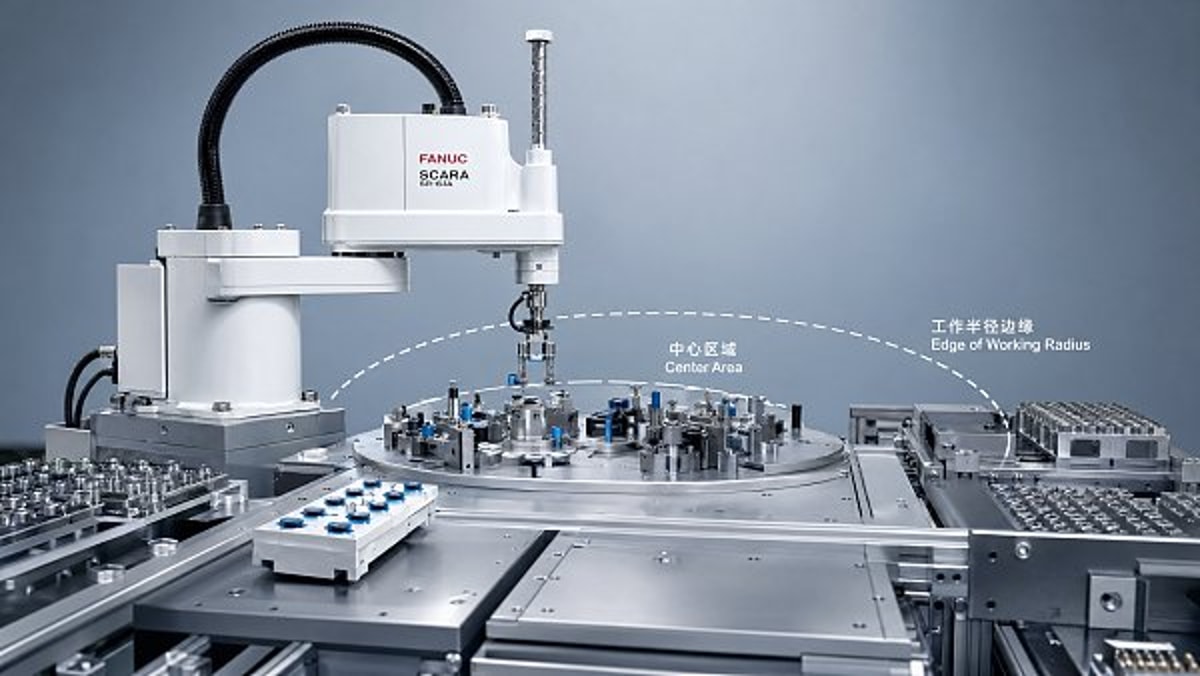
This mistake often appears during retrofit projects, where SCARA robots are added into existing footprints with limited space. In those situations, planners should model actual working points, not just nominal reach circles, and verify where the highest-precision actions occur relative to the robot’s mechanical center.
A practical inspection checklist for fixtures, part presentation, and orientation
Once the base and reach geometry are reviewed, the next priority is the part itself. Many SCARA robot accuracy complaints trace back to inconsistent part presentation. If the component arrives with variable rotation, inconsistent height, or unsupported surfaces, the robot may repeat its programmed move correctly while still missing the true target condition.
This is especially important for project managers coordinating multiple suppliers. A robot integrator may assume fixed-position input, while a feeder supplier may define acceptable variation differently. Without a shared standard for orientation and location repeatability, the process inherits uncertainty from day one.
Fixture and presentation checklist
- Confirm that every fixture uses intentional datums rather than relying on wall contact or operator loading habits.
- Measure whether part height variation stays within the process allowance, especially when vacuum pickup or press-fit insertion is involved.
- Check for rocking, bounce, or unsupported corners after the part lands in the nest.
- Verify orientation repeatability in degrees, not by visual acceptance alone; even 1 to 2 degrees can matter in connector or label placement work.
- Review whether the gripper contact points are amplifying minor orientation differences during pickup.
For high-mix environments, these checks should be repeated across at least 3 to 5 representative part variants. A fixture that performs well with one housing geometry may become unstable when another part version shifts the center of gravity or changes the contact area. SCARA robots are fast enough to expose those inconsistencies immediately.
Common symptoms that point to presentation error rather than robot error
- Rejects happen more often at one feeder lane, one tray pocket pattern, or one side of the fixture.
- Accuracy worsens after changeovers even though robot programs are unchanged.
- The same SCARA robot performs well on dry runs but drifts during live production with real parts.
- Cycle time increases because extra dwell, slower descent, or repeated approach moves are added to compensate.
When these signs appear, teams should inspect the handoff condition upstream. In many assembly cells, improving part orientation by a small margin reduces both defect frequency and robot dwell time, which can recover several seconds per cycle over a full production hour.
The next table can be used during line reviews to distinguish whether a SCARA robot accuracy issue is likely caused by fixture placement, part presentation, or layout geometry.
This type of symptom-based diagnosis speeds up troubleshooting because it connects performance issues to physical causes. For project managers, it also creates a more objective basis for supplier discussions and corrective action planning.
Scenario-specific risks that engineering leads often overlook
Some placement mistakes are universal, but others depend on application type. A SCARA robot used for electronics placement will not face exactly the same layout risks as one used in packaging, medical device handling, or precision dispensing. That is why a generic acceptance test can miss the actual source of field performance loss.
The goal here is not to overcomplicate the project. It is to make sure the review checklist matches the process. A line that runs 2 shifts, changes over twice per day, and processes multiple SKUs needs a different placement discipline than a stable single-product cell.
Application-based review points
In electronics and smart assembly, part orientation and Z-height consistency are often the first risks to review. Thin substrates, compact connectors, and delicate lead-in features mean that a small angular mismatch can create visible defects or hidden reliability issues. If parts are supplied in trays, audit tray flatness and pocket consistency over a full batch rather than relying on one sample.
In healthcare technology manufacturing, handling compliance and cleanliness constraints can change fixture design choices. Soft-contact or limited-contact fixtures may reduce contamination risk, but they can also reduce positional stability. Where SCARA robots perform assembly or loading in controlled environments, teams should balance cleanliness goals with a stable datum strategy and repeatable loading method.
In packaging or light logistics applications, speed tends to dominate. Here, unstable conveyor transitions, inconsistent product spacing, and flexible packaging surfaces often matter more than nominal robot spec. If products arrive with gap variation above the process allowance, the robot may still hit programmed coordinates while missing the actual package centerline.
Risk reminders for multi-supplier projects
- Do not assume the feeder supplier and robot integrator are working to the same tolerance language.
- Define measurement points for part position, rotation, and support condition before FAT, not after startup.
- Review wear items such as nests, pins, and pads after the first 100,000 to 500,000 cycles if the cell runs at high frequency.
- Include maintenance access in the layout so operators do not introduce fixture shift during cleaning or changeover.
These checks are valuable in global sourcing programs as well. A cell may pass acceptance in one plant but struggle elsewhere because of floor conditions, utility quality, operator practice, or local fixture fabrication differences. For that reason, SCARA robots should be evaluated as part of the total process environment.
Execution plan: how to correct placement mistakes before they affect output
Correcting SCARA robot accuracy issues does not always require a full redesign. In many cases, a staged action plan can restore performance with manageable effort. The key is to fix the physical causes in the right order so the team does not spend days adjusting software to compensate for a weak mechanical baseline.
A practical sequence is to start with base rigidity and working envelope position, then move to fixture datums, then part orientation, and finally motion tuning. This order reflects the reality that robot programming can only stabilize a process that is already mechanically repeatable. If the incoming part location shifts beyond the acceptable window every 10 or 20 cycles, no amount of fine teaching will create sustainable accuracy.
Recommended corrective workflow
- Document the failure pattern by cycle count, station, SKU, and speed setting so the issue is measurable rather than anecdotal.
- Inspect base mounting, frame stiffness, and nearby vibration sources under actual operating conditions.
- Map all critical pick and place points against the robot’s preferred working zone and identify edge-of-reach tasks.
- Audit fixture datums, stop surfaces, and wear points using repeated sample runs, ideally over 30 to 50 parts minimum.
- Check incoming orientation and height consistency from trays, conveyors, or feeders before retuning robot paths.
- Only after mechanical corrections are made should the team optimize speed, acceleration, settle time, or vision offsets.
For project managers, this workflow also helps align responsibilities. Mechanical teams can own mounting and fixturing, process engineers can define acceptance thresholds, and automation teams can finalize motion only after upstream variables are stable. That structure reduces repeated troubleshooting loops and shortens the time to reliable output.
What to prepare before speaking with an automation partner
If your team is evaluating SCARA robots for a new line or trying to improve an existing cell, prepare a focused information pack. Include part dimensions, target cycle time, payload, required placement tolerance, changeover frequency, fixture concept, and available installation footprint. Also note whether the cell shares a frame with other dynamic equipment and whether product orientation is fixed or variable.
It is useful to provide at least three additional details: the expected production volume per shift, the number of part variants, and any special compliance constraints such as clean handling, static sensitivity, or adhesive cure timing. These inputs allow a more realistic discussion of whether the issue lies with the robot selection, the placement layout, or the total process design.
For many industrial buyers, the right question is not simply which SCARA robot is faster. It is which setup will maintain process accuracy at the intended duty cycle over time, with practical maintenance and repeatable operator handling. That is the level of review that protects throughput and quality simultaneously.
Why choose us for SCARA robot project insight and next-step planning
TradeNexus Pro supports project managers, sourcing leaders, and engineering decision-makers who need more than surface-level automation content. Our focus is on actionable industrial intelligence across advanced manufacturing, smart electronics, healthcare technology, green energy, and supply chain systems. When SCARA robots are being considered for new capacity, retrofit projects, or process improvement, decision quality depends on understanding the physical and commercial variables together.
We help teams frame the right discussions before capital is committed or troubleshooting costs escalate. That includes reviewing key application parameters, comparing layout constraints, identifying likely placement-related risks, and preparing clearer supplier conversations around tolerance expectations, fixture assumptions, delivery timing, and integration readiness.
If you need support with SCARA robots, contact us to discuss parameter confirmation, application fit, fixture and placement considerations, product selection direction, lead time expectations, customized project scenarios, sample evaluation support, or quotation communication. A well-prepared review at the start can prevent avoidable accuracy loss later and help your automation investment deliver stable production results.
Get weekly intelligence in your inbox.
No noise. No sponsored content. Pure intelligence.
 May 02, 2026China’s '15th Five-Year Plan' Prioritizes Low-Altitude Economy, Boosting Warehouse Robotics ExportsChina’s '15th Five-Year Plan' Prioritizes Low-Altitude Economy, Boosting Warehouse Robotics Exports
 May 02, 2026Q1 2026 Industrial Profits +15.5%; CNC Machining Capacity Utilization RisesQ1 2026 Industrial Profits +15.5%; CNC Machining Capacity Utilization Rises
 May 02, 2026China Opens Green Channel for Smart Home Exporters with Int'l CertsChina Opens Green Channel for Smart Home Exporters with Int'l Certs
 May 02, 2026Solar PV Export Timeliness Rises via Western Land-Sea CorridorSolar PV Export Timeliness Rises via Western Land-Sea Corridor
 May 02, 2026UAE Tops Global AI Hub Ranking; Demand Rises for Chinese FA SolutionsUAE Tops Global AI Hub Ranking; Demand Rises for Chinese FA Solutions
 May 02, 2026ADB Raises Vietnam GDP Forecast to 7.2% for 2026ADB Raises Vietnam GDP Forecast to 7.2% for 2026
") May 02, 2026China’s Trade SaaS Export Standards Updated (2026–2030)China’s Trade SaaS Export Standards Updated (2026–2030)
May 02, 2026China’s Trade SaaS Export Standards Updated (2026–2030)China’s Trade SaaS Export Standards Updated (2026–2030) May 02, 2026World's First 10,000-Car PCTC Delivered in GuangzhouWorld's First 10,000-Car PCTC Delivered in Guangzhou
 May 02, 2026China’s 5-Dept Battery Recycling Traceability Rule Affects ESS ExportsChina’s 5-Dept Battery Recycling Traceability Rule Affects ESS Exports
 May 02, 2026WeChat Pay QR Integration for 5 Countries: Eases Cross-Border ProcurementWeChat Pay QR Integration for 5 Countries: Eases Cross-Border Procurement
 May 01, 2026Beijing’s New E-Bike Rules Trigger Dual-Certification Demand for China’s Swappable Battery CabinetsBeijing’s New E-Bike Rules Trigger Dual-Certification Demand for China’s Swappable Battery Cabinets
 May 01, 2026GNA’s GEO Service Assessment Elevates AI Search as Digital Procurement Metric for Chinese ExportersGNA’s GEO Service Assessment Elevates AI Search as Digital Procurement Metric for Chinese Exporters
 May 01, 20262026 China Cycle Expo: Chinese EPS Systems Achieve UL 2849:2026 Full Certification2026 China Cycle Expo: Chinese EPS Systems Achieve UL 2849:2026 Full Certification
 May 01, 2026GB 42236-2026 Enforces EV Charger Efficiency & Overload Protection from May 2026GB 42236-2026 Enforces EV Charger Efficiency & Overload Protection from May 2026
 May 01, 2026GB/T 43790-2026 Drone EMC Standard Effective May 2026GB/T 43790-2026 Drone EMC Standard Effective May 2026
 May 01, 20262026 Foshan Tanzhou Auto Industry Expo Opens2026 Foshan Tanzhou Auto Industry Expo Opens
 May 01, 2026China’s New Hazardous Chemicals Safety Law Takes Effect May 2026China’s New Hazardous Chemicals Safety Law Takes Effect May 2026
 May 01, 2026New Maritime and Fisheries Laws Take Effect May 1, 2026New Maritime and Fisheries Laws Take Effect May 1, 2026
 May 01, 2026Supply Chain Automation Works Best Where Delays RepeatSupply Chain Automation Works Best Where Delays Repeat
 May 01, 2026High Strength Steel Forgings: What Should Be Tested First?High Strength Steel Forgings: What Should Be Tested First?
 May 01, 2026Automotive Steel Forging: Cost Pressure vs Part ReliabilityAutomotive Steel Forging: Cost Pressure vs Part Reliability
 May 01, 2026Why High Durability Steel Forgings Fail Earlier Than ExpectedWhy High Durability Steel Forgings Fail Earlier Than Expected
 May 01, 2026Construction Aluminum Extrusions: Which Finish Lasts Longer?Construction Aluminum Extrusions: Which Finish Lasts Longer?
 May 01, 2026Lightweight Aluminum Extrusions: Where Savings Really HappenLightweight Aluminum Extrusions: Where Savings Really Happen
 May 01, 2026Aerospace Aluminum Extrusions Need More Than Low WeightAerospace Aluminum Extrusions Need More Than Low Weight
 May 01, 2026Precision Lathe Turning Problems That Show Up After AssemblyPrecision Lathe Turning Problems That Show Up After Assembly
 May 01, 2026High Precision Lathe Turning: Tolerance Claims to VerifyHigh Precision Lathe Turning: Tolerance Claims to Verify