AI Boom Drives Data Center Power Demand, Liquid Cooling Gains Urgency
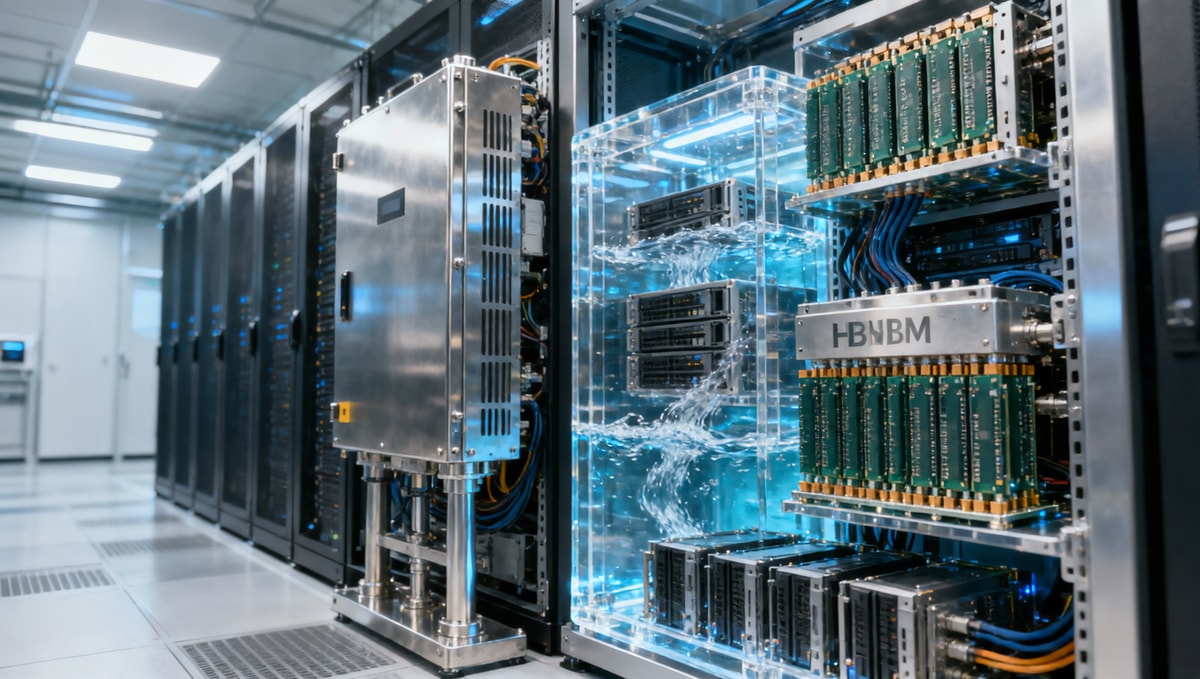
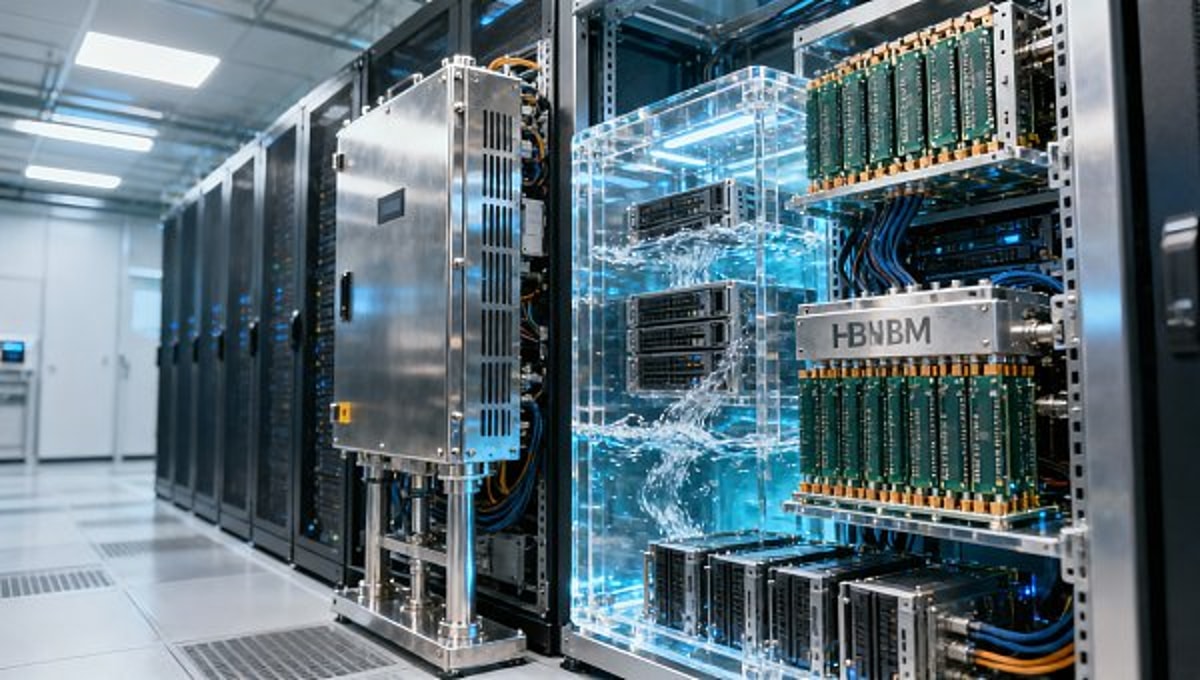
AI-driven acceleration in data center deployment — particularly for AI servers — is intensifying global electricity demand and exposing grid capacity constraints. With AI server rollouts scaling rapidly toward 2026, power availability has become the top site-selection criterion for new computing infrastructure, per the World Economic Forum. This shift is directly fueling surging demand for liquid cooling solutions, especially in North America and the Middle East, where new AI-focused data centers are placing concentrated orders for Chinese-made CDUs (cold-plate), immersion cooling cabinets, and HBM-specific thermal modules for AI servers — with delivery lead times now extended to 14–18 weeks. Electronic components and industrial materials suppliers in China must closely track progress on UL/IEC 62368-3 thermal safety certification alignment.
Event Overview
By 2026, global deployment of AI servers is accelerating significantly. The World Economic Forum identifies ‘electricity accessibility’ as the leading factor in data center location decisions. As a result, new intelligent computing centers in North America and the Middle East are procuring Chinese-sourced liquid cooling units — including cold-plate CDUs, immersion cooling cabinets, and AI server–specific HBM thermal modules — at scale. Current order lead times for these items range from 14 to 18 weeks. Chinese suppliers of electronic components and industrial materials are advised to monitor alignment with UL/IEC 62368-3 thermal safety certification requirements.
Impact on Specific Industry Segments
Direct Exporters of Thermal Management Hardware
These enterprises supply CDUs, immersion cabinets, and HBM cooling modules to overseas data center developers and system integrators. They face increased order volume but also extended production and logistics cycles. Impact manifests as tighter capacity planning, heightened pressure on certification readiness, and greater scrutiny of thermal safety compliance across target markets.
Raw Material and Subcomponent Procurement Firms
Firms sourcing base materials (e.g., dielectric fluids, cold-plate alloys, vapor chamber wicks) or subassemblies (e.g., pumps, quick-disconnect fittings, temperature sensors) are affected indirectly but critically. Rising demand for liquid cooling hardware increases upstream pull on qualified, certified inputs — especially those meeting IEC 62368-3 thermal stress thresholds. Supply chain visibility and material traceability are becoming more consequential.
Contract Manufacturers and System Integrators
Manufacturers assembling complete liquid-cooled AI server racks or turnkey cooling systems face compressed integration timelines amid extended component lead times. Their impact centers on schedule risk, BOM cost volatility, and increased validation effort required for thermal safety compliance across multiple subsystems — particularly when integrating third-party HBM cooling modules.
Supply Chain & Certification Support Providers
Third-party labs, certification consultants, and logistics coordinators supporting thermal hardware exports are seeing elevated demand for IEC/UL 62368-3 pre-assessment, test coordination, and documentation review — especially for multi-jurisdictional deployments (e.g., U.S. + GCC). Lead time extension signals growing complexity in cross-border compliance handoffs.
What Relevant Enterprises Should Monitor and Act On
Track certification alignment status for UL/IEC 62368-3 — not just completion, but scope coverage
Analysis shows that UL/IEC 62368-3 applies specifically to audio/video, ICT, and business equipment with enhanced thermal hazard evaluation — including liquid-cooled electronics operating under sustained high-power loads. Suppliers should verify whether their current test reports cover full operational envelope (e.g., pump failure modes, fluid degradation, dry-run scenarios), not just nominal conditions.
Monitor procurement patterns in North America and the Middle East — not just volume, but specification granularity
Observably, recent tenders from Gulf-based sovereign AI initiatives and U.S. hyperscaler-affiliated colos emphasize not only cooling capacity (kW/rack), but also fluid compatibility, leak detection integration, and serviceability under live-load conditions. These details increasingly appear in RFQs — indicating technical due diligence is shifting earlier in the sourcing cycle.
Distinguish between policy-level recognition and actual procurement traction
From industry perspective, the World Economic Forum’s designation of ‘electricity accessibility’ as the top siting factor reflects strategic consensus — not yet binding regulation. Actual infrastructure investment decisions remain driven by utility interconnection feasibility, PPA terms, and local permitting timelines. Enterprises should avoid conflating this signal with immediate regulatory mandates.
Prepare for extended component lead times by reviewing buffer stock policies and supplier diversification
Current lead times of 14–18 weeks suggest systemic capacity strain — not isolated bottlenecks. Analysis shows this reflects concurrent demand surges across pump manufacturers, dielectric fluid producers, and precision-machined cold-plate fabricators. Proactive engagement with Tier-2 suppliers and dual-sourcing strategies for non-standard components is becoming operationally necessary.
Editorial Perspective / Industry Observation
This development is better understood as an infrastructure inflection point than a short-term procurement spike. Observably, it marks the first time thermal management — historically treated as a secondary mechanical subsystem — is shaping core site selection logic at the national level. That shift elevates liquid cooling from an optional efficiency upgrade to a foundational enabler of AI compute scalability. It does not yet represent a fully mature market, however: certification pathways remain fragmented, fluid standards lack harmonization, and grid-level power delivery mechanisms (e.g., dedicated substations, microgrids) are still evolving regionally. Continuous monitoring of utility interconnection frameworks and certification body guidance updates is therefore essential — not as preparatory steps, but as operational prerequisites.
Conclusion
AI’s computational intensity is no longer merely a chip design challenge — it is reshaping energy infrastructure planning, supply chain resilience, and product safety certification priorities. This trend underscores a structural dependency: scalable AI deployment is contingent on parallel advances in power delivery and thermal management. Rather than signaling imminent market saturation or regulatory enforcement, it reflects an ongoing realignment — one where thermal performance, electrical reliability, and certification rigor are now inseparable dimensions of data center readiness.
Information Sources
Main source: World Economic Forum public reporting on data center siting criteria (2024–2025); verified commercial intelligence on CDU/immersion cabinet procurement trends in North America and the Middle East; publicly reported lead time extensions from multiple Chinese thermal hardware exporters (Q2 2024).
Items under ongoing observation: Progress of UL/IEC 62368-3 adoption timelines across GCC national standards bodies; formal inclusion of liquid cooling safety clauses in U.S. utility interconnection agreements.
Get weekly intelligence in your inbox.
No noise. No sponsored content. Pure intelligence.
 May 03, 2026AI Boom Drives Data Center Power Demand, Liquid Cooling Gains UrgencyAI Boom Drives Data Center Power Demand, Liquid Cooling Gains Urgency
 May 03, 2026Low-Altitude Economy in China's 15th Five-Year Plan Boosts Warehouse Robotics ExportsLow-Altitude Economy in China's 15th Five-Year Plan Boosts Warehouse Robotics Exports
 May 03, 2026EU REACH Adds 5 Organotin Compounds to SVHC List for ElectronicsEU REACH Adds 5 Organotin Compounds to SVHC List for Electronics
 May 03, 2026Western Land-Sea Expressway Boosts Solar PV Exports to ASEANWestern Land-Sea Expressway Boosts Solar PV Exports to ASEAN
 May 03, 2026Southeast Asia Smart Home E-commerce Grows 27.4% Amid New Matter 1.3+ Certification RulesSoutheast Asia Smart Home E-commerce Grows 27.4% Amid New Matter 1.3+ Certification Rules
 May 03, 2026FDA Updates IVD Software Guidance: AI Diagnostic Tools Require Independent Algorithm ValidationFDA Updates IVD Software Guidance: AI Diagnostic Tools Require Independent Algorithm Validation
 May 03, 2026Global Methanol EV Ecosystem Alliance LaunchedGlobal Methanol EV Ecosystem Alliance Launched
 May 03, 2026Vietnam GDP Growth Forecast Raised to 7.2% for 2026Vietnam GDP Growth Forecast Raised to 7.2% for 2026
 May 03, 2026UAE Emerges as Global AI Hub, Driving Demand for AI-Quality Inspection SystemsUAE Emerges as Global AI Hub, Driving Demand for AI-Quality Inspection Systems
 May 03, 2026OFID $500M Funding for Côte d'Ivoire Energy ProjectsOFID $500M Funding for Côte d'Ivoire Energy Projects
 May 03, 20265 Axis Milling Machines for Automotive: Buy New or Retrofit?5 Axis Milling Machines for Automotive: Buy New or Retrofit?
 May 03, 2026What to Check Before Sourcing OEM Machined Parts from IndiaWhat to Check Before Sourcing OEM Machined Parts from India
 May 03, 2026Why Sheet Metal Bending Machine Price Varies So MuchWhy Sheet Metal Bending Machine Price Varies So Much
 May 03, 2026Plastic Injection Molding Process Guide for Common Defect ControlPlastic Injection Molding Process Guide for Common Defect Control
 May 03, 2026Smart Manufacturing Technology Trends Reshaping Factory UpgradesSmart Manufacturing Technology Trends Reshaping Factory Upgrades
 May 03, 2026Automotive Die Casting Parts and the Hidden Cost of PorosityAutomotive Die Casting Parts and the Hidden Cost of Porosity
 May 03, 2026Assembly Line Robots: Flexibility Can Matter More Than SpeedAssembly Line Robots: Flexibility Can Matter More Than Speed
 May 03, 2026Smart Manufacturing in Energy: Which Upgrades Pay Back FasterSmart Manufacturing in Energy: Which Upgrades Pay Back Faster
 May 03, 2026Why Robotics Integration Fails After a Successful DemoWhy Robotics Integration Fails After a Successful Demo
 May 03, 2026How to Spot a Reliable Precision Components ManufacturerHow to Spot a Reliable Precision Components Manufacturer
 May 03, 2026Sheet Metal Bending Machine Specifications That Affect AccuracySheet Metal Bending Machine Specifications That Affect Accuracy
 May 03, 2026Oil and Gas Fabrication: Where Material Mismatch Gets ExpensiveOil and Gas Fabrication: Where Material Mismatch Gets Expensive
 May 03, 2026Construction Fabrication Delays Often Start at the Drawing StageConstruction Fabrication Delays Often Start at the Drawing Stage
 May 03, 2026Industrial Robotics Maintenance Guide for Fewer Surprise StopsIndustrial Robotics Maintenance Guide for Fewer Surprise Stops
 May 03, 2026Smart Manufacturing Technology Benefits Beyond Labor SavingsSmart Manufacturing Technology Benefits Beyond Labor Savings
 May 03, 2026Defense Components Need More Than Tight TolerancesDefense Components Need More Than Tight Tolerances
 May 03, 2026How to Vet a Die Casting Parts Supplier in MexicoHow to Vet a Die Casting Parts Supplier in Mexico