Western Land-Sea Expressway Boosts Solar PV Exports to ASEAN
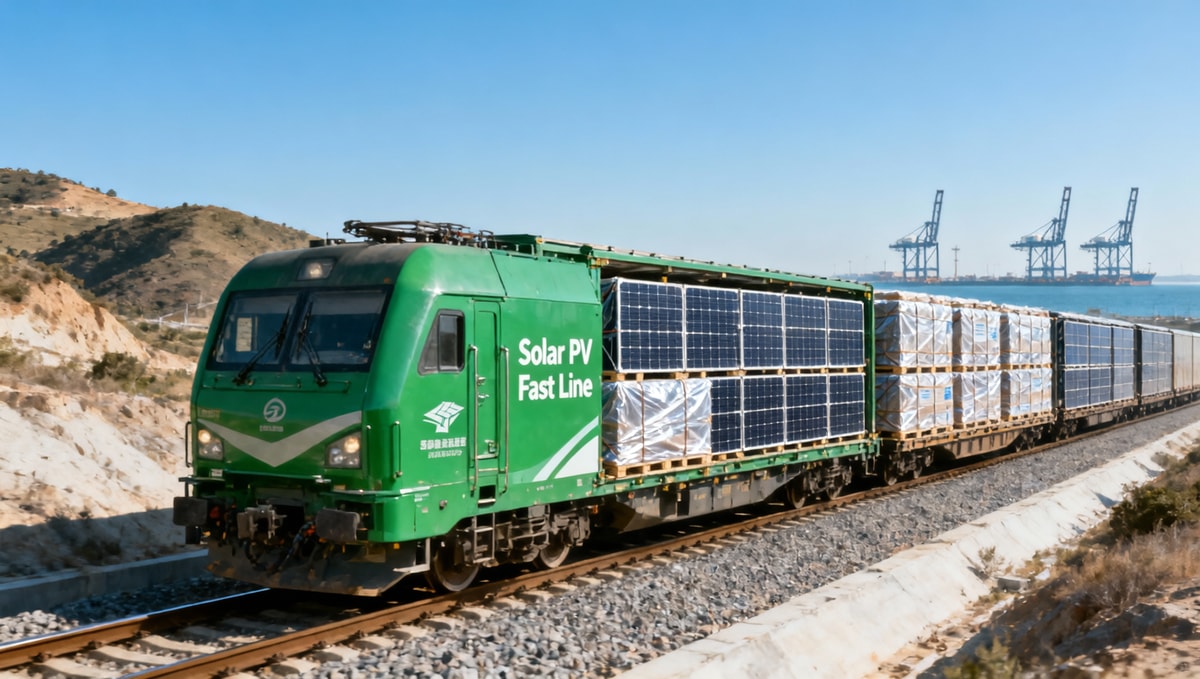
On April 1, 2026, the Western Land-Sea New Passage launched its dedicated 'Solar PV Fast Line', cutting transit time for photovoltaic module shipments from Chongqing to Bangkok via Qinzhou to 9 days — a 30% improvement over conventional river-sea intermodal transport. This development directly affects solar PV exporters, packaging suppliers, logistics providers, and ASEAN-market-focused supply chain operators.
Event Overview
According to the latest operational bulletin released by Guangxi Beibu Gulf Port Group, effective April 1, 2026, the Western Land-Sea New Passage has increased frequency of its dedicated solar PV train service and implemented integrated customs clearance. The Chongqing–Qinzhou–Bangkok PV express train now achieves a total transit time of 9 days. The corridor currently serves 87% of China’s top-tier solar PV export enterprises. Compliance with the ASEAN Packing Standard 2026 edition — specifically its moisture resistance and vibration testing requirements for module packaging — is mandatory for participation.
Industries Affected
Direct Exporters (Solar PV Module Manufacturers)
These enterprises are directly impacted because the shortened lead time improves order responsiveness and inventory turnover for ASEAN-bound shipments. However, compliance with ASEAN Packing Standard 2026 is now a gatekeeping requirement — non-compliant packaging may result in shipment rejection or delays at destination ports.
Packaging Suppliers & Designers
They face immediate technical and certification implications: existing packaging designs must be revalidated against the 2026 edition’s updated vibration and humidity test protocols. This may require material adjustments, structural redesign, or third-party lab verification — all potentially affecting unit cost and lead time for packaging procurement.
Logistics & Multimodal Service Providers
Service providers operating on the Western Land-Sea New Passage route must align documentation, handling procedures, and quality checks with the new ‘PV fast line’ standards. Integration of customs clearance workflows and adherence to standardized packaging verification steps become operationally critical — deviations risk disrupting the 9-day schedule guarantee.
ASEAN Market Distributors & Importers
For downstream channel partners in ASEAN countries, faster and more predictable inland-to-port transit enables tighter demand planning and reduced safety stock. However, they must verify that incoming shipments meet the 2026 packing standard — especially if acting as the formal importer of record — to avoid post-arrival inspection delays or regulatory penalties.
What Enterprises Should Monitor and Act On
Confirm packaging compliance status against ASEAN Packing Standard 2026
Manufacturers and packaging vendors should obtain official test reports verifying compliance with the moisture resistance and vibration performance criteria specified in the 2026 edition. Relying on prior certifications or legacy test data is no longer sufficient.
Review current logistics contracts and SLAs for alignment with the 9-day transit window
Exporters and forwarders should audit whether existing service agreements include enforceable time-in-transit commitments, penalty clauses for missed windows, and clear responsibilities for packaging-related delays — particularly those arising from non-compliance verification failures.
Monitor updates from Guangxi Beibu Gulf Port Group and ASEAN national customs authorities
While the April 1, 2026 launch is confirmed, implementation details — such as phased enforcement timelines, exemption mechanisms for transitional shipments, or clarification on ‘87% coverage’ scope — remain subject to further official guidance. Stakeholders should subscribe to official notices rather than assume uniform application across all ASEAN destinations.
Validate documentation readiness for integrated customs clearance
Companies must ensure electronic data interchange (EDI) systems, commercial invoices, packing lists, and origin declarations are pre-configured to support the new one-stop clearance process. Inconsistent or incomplete documentation remains a primary cause of clearance bottlenecks — even on accelerated routes.
Editorial Perspective / Industry Observation
Observably, this initiative signals a shift from infrastructure expansion to service standardization along the Western Land-Sea New Passage. The 30% reduction in transit time is meaningful only when paired with enforceable packaging and procedural harmonization — suggesting that future corridor competitiveness will hinge less on raw speed and more on regulatory predictability and cross-border process integration. Analysis shows the 87% adoption rate reflects strong early uptake but does not imply universal readiness; many mid-tier exporters may still lack validated packaging or certified logistics partners. This is better understood as an operational benchmark being set — not yet a fully matured trade norm.
From an industry perspective, the move elevates packaging from a logistical detail to a strategic compliance layer. It also reframes inland rail corridors not merely as cost alternatives to sea freight, but as time-guaranteed, standards-aligned channels — provided participants meet defined technical thresholds. Continuous monitoring is warranted, as ASEAN member states may introduce divergent interpretations or enforcement timelines for the 2026 packing standard.
Concluding, this development represents a concrete step toward synchronized regional supply chain governance — but one that demands proactive adaptation, not passive adoption. It is best interpreted not as a broad market opportunity, but as a targeted operational inflection point for companies actively shipping solar PV modules to ASEAN via China’s western corridor.
Source: Guangxi Beibu Gulf Port Group — Operational Bulletin, April 2026.
Noted for ongoing observation: Enforcement scope of ASEAN Packing Standard 2026 across individual ASEAN member states; potential revisions to the ‘87% coverage’ metric in future bulletins.
Get weekly intelligence in your inbox.
No noise. No sponsored content. Pure intelligence.
 May 03, 2026AI Boom Drives Data Center Power Demand, Liquid Cooling Gains UrgencyAI Boom Drives Data Center Power Demand, Liquid Cooling Gains Urgency
 May 03, 2026Low-Altitude Economy in China's 15th Five-Year Plan Boosts Warehouse Robotics ExportsLow-Altitude Economy in China's 15th Five-Year Plan Boosts Warehouse Robotics Exports
 May 03, 2026EU REACH Adds 5 Organotin Compounds to SVHC List for ElectronicsEU REACH Adds 5 Organotin Compounds to SVHC List for Electronics
 May 03, 2026Western Land-Sea Expressway Boosts Solar PV Exports to ASEANWestern Land-Sea Expressway Boosts Solar PV Exports to ASEAN
 May 03, 2026Southeast Asia Smart Home E-commerce Grows 27.4% Amid New Matter 1.3+ Certification RulesSoutheast Asia Smart Home E-commerce Grows 27.4% Amid New Matter 1.3+ Certification Rules
 May 03, 2026FDA Updates IVD Software Guidance: AI Diagnostic Tools Require Independent Algorithm ValidationFDA Updates IVD Software Guidance: AI Diagnostic Tools Require Independent Algorithm Validation
 May 03, 2026Global Methanol EV Ecosystem Alliance LaunchedGlobal Methanol EV Ecosystem Alliance Launched
 May 03, 2026Vietnam GDP Growth Forecast Raised to 7.2% for 2026Vietnam GDP Growth Forecast Raised to 7.2% for 2026
 May 03, 2026UAE Emerges as Global AI Hub, Driving Demand for AI-Quality Inspection SystemsUAE Emerges as Global AI Hub, Driving Demand for AI-Quality Inspection Systems
 May 03, 2026OFID $500M Funding for Côte d'Ivoire Energy ProjectsOFID $500M Funding for Côte d'Ivoire Energy Projects
 May 03, 20265 Axis Milling Machines for Automotive: Buy New or Retrofit?5 Axis Milling Machines for Automotive: Buy New or Retrofit?
 May 03, 2026What to Check Before Sourcing OEM Machined Parts from IndiaWhat to Check Before Sourcing OEM Machined Parts from India
 May 03, 2026Why Sheet Metal Bending Machine Price Varies So MuchWhy Sheet Metal Bending Machine Price Varies So Much
 May 03, 2026Plastic Injection Molding Process Guide for Common Defect ControlPlastic Injection Molding Process Guide for Common Defect Control
 May 03, 2026Smart Manufacturing Technology Trends Reshaping Factory UpgradesSmart Manufacturing Technology Trends Reshaping Factory Upgrades
 May 03, 2026Automotive Die Casting Parts and the Hidden Cost of PorosityAutomotive Die Casting Parts and the Hidden Cost of Porosity
 May 03, 2026Assembly Line Robots: Flexibility Can Matter More Than SpeedAssembly Line Robots: Flexibility Can Matter More Than Speed
 May 03, 2026Smart Manufacturing in Energy: Which Upgrades Pay Back FasterSmart Manufacturing in Energy: Which Upgrades Pay Back Faster
 May 03, 2026Why Robotics Integration Fails After a Successful DemoWhy Robotics Integration Fails After a Successful Demo
 May 03, 2026How to Spot a Reliable Precision Components ManufacturerHow to Spot a Reliable Precision Components Manufacturer
 May 03, 2026Sheet Metal Bending Machine Specifications That Affect AccuracySheet Metal Bending Machine Specifications That Affect Accuracy
 May 03, 2026Oil and Gas Fabrication: Where Material Mismatch Gets ExpensiveOil and Gas Fabrication: Where Material Mismatch Gets Expensive
 May 03, 2026Construction Fabrication Delays Often Start at the Drawing StageConstruction Fabrication Delays Often Start at the Drawing Stage
 May 03, 2026Industrial Robotics Maintenance Guide for Fewer Surprise StopsIndustrial Robotics Maintenance Guide for Fewer Surprise Stops
 May 03, 2026Smart Manufacturing Technology Benefits Beyond Labor SavingsSmart Manufacturing Technology Benefits Beyond Labor Savings
 May 03, 2026Defense Components Need More Than Tight TolerancesDefense Components Need More Than Tight Tolerances
 May 03, 2026How to Vet a Die Casting Parts Supplier in MexicoHow to Vet a Die Casting Parts Supplier in Mexico