Plastic Injection Molding Process Guide for Common Defect Control
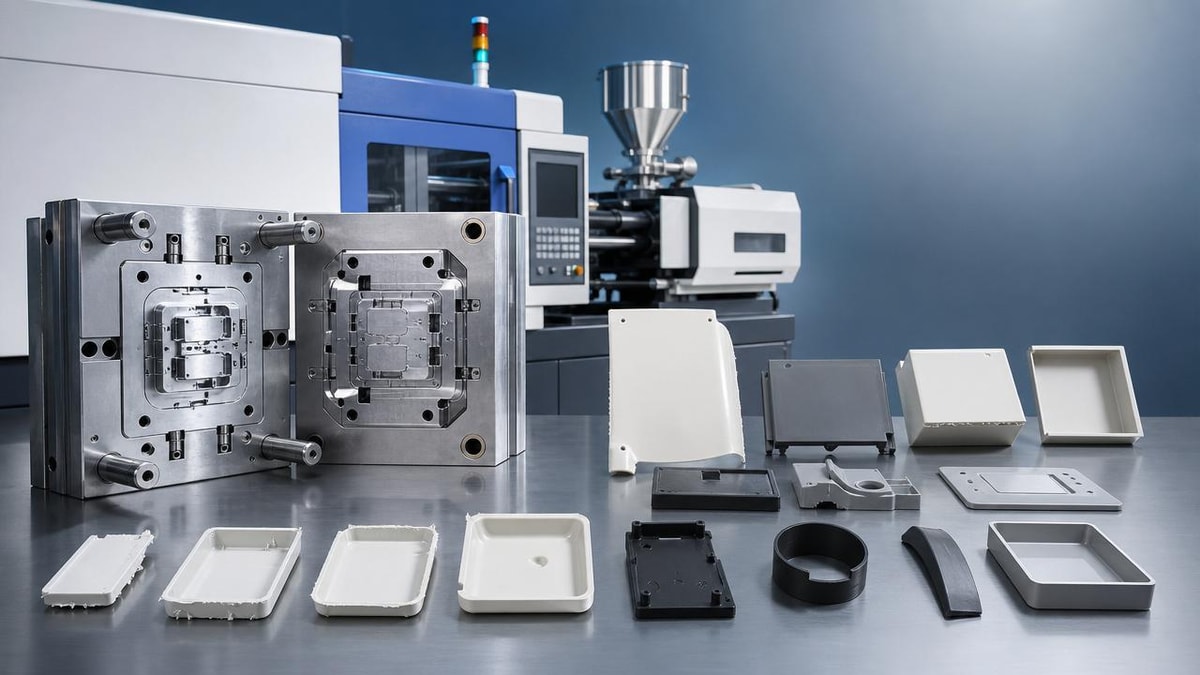
This plastic injection molding process guide helps operators identify, prevent, and correct the most common molding defects before they affect quality, cycle time, or production cost. From short shots and flash to sink marks and warpage, understanding the root causes behind each issue is essential for stable output. Use this practical overview to improve process control, reduce scrap, and support more consistent part performance on the shop floor.
For most operators, the real question is not what injection molding is, but why a good part suddenly turns bad when material, mold, and machine all seem unchanged. In practice, common defects usually come from a small number of process-control problems: inconsistent fill, poor packing, unstable cooling, trapped gas, moisture, or uncontrolled clamp and venting conditions.
This guide focuses on those practical causes and the operator actions that matter most. Rather than treating each defect as an isolated problem, it explains how to read defect patterns, connect them to machine settings and mold behavior, and make corrections in a controlled sequence. That is the fastest way to reduce scrap without creating new problems elsewhere in the cycle.
What operators need from a plastic injection molding process guide
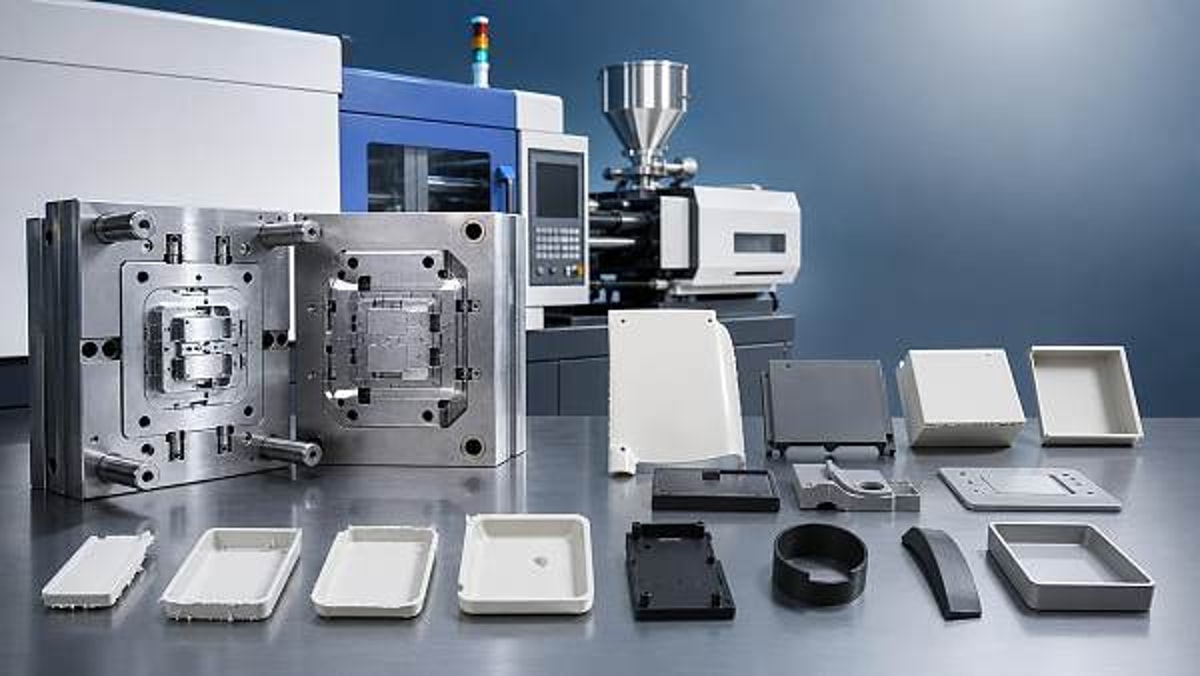
A useful plastic injection molding process guide should help operators answer three immediate shop-floor questions: what defect is happening, what is the most likely root cause, and what should be adjusted first. If those three answers are clear, troubleshooting becomes faster, more repeatable, and less dependent on trial and error.
Operators usually care most about stable output, low reject rates, and avoiding machine downtime caused by repeated adjustments. They need practical indicators such as where the defect appears, whether it changes by cavity or by cycle, and whether the issue starts during filling, packing, cooling, or ejection. These clues are more valuable than broad theory because they point directly to action.
The most helpful content, therefore, is not a generic overview of molding science. It is a step-by-step way to isolate defect causes, prioritize settings, and avoid overcorrection. In this article, the priority is defect control, process stability, and clear troubleshooting logic. General background on molding technology is intentionally kept brief.
Start with a stable process before chasing individual defects
Before adjusting for any specific defect, confirm that the baseline process is stable. Many defect investigations fail because the machine is already drifting. Check that material lot, drying conditions, barrel temperatures, mold temperature, cycle time, screw recovery, cushion, and clamp force are consistent. If any of these are changing, defect symptoms can be misleading.
Operators should also verify that the part is being evaluated consistently. Compare parts from the same cavity, after the same cooling time, under the same lighting and measurement method. A warpage complaint, for example, may be an inspection variation rather than a process shift. Good defect control starts with consistent observation.
One of the best habits is to document the approved process window. Record the normal range for injection speed, transfer position, holding pressure, hold time, back pressure, screw speed, mold temperature, and cooling time. When a defect appears, compare the current cycle against that reference first. That often reveals the issue before any major adjustment is made.
It also helps to think in process stages. Filling defects often relate to flow resistance, speed, venting, or melt temperature. Packing defects usually tie back to hold pressure, hold time, gate freeze, and wall thickness variation. Cooling and ejection defects often involve mold temperature imbalance, insufficient cooling, or stress built into the part during earlier stages.
How to control short shots without creating new problems
Short shots occur when the cavity does not completely fill. Operators often see missing edges, incomplete ribs, or unformed end sections, especially in thin-wall or long-flow parts. The root cause is simple in principle: the plastic stops flowing before the cavity is full. The difficult part is determining why.
Start by asking whether the problem is caused by insufficient shot volume, poor flow, premature freezing, trapped air, or a mechanical restriction. Check cushion and shot size first. If the machine cannot deliver enough melt consistently, no downstream adjustment will solve the issue.
Next, review injection speed and melt temperature. If speed is too low, the flow front may cool and freeze before reaching the end of fill. If melt or mold temperature is too low, viscosity stays high and flow length becomes limited. Raising speed or temperature can improve fill, but do so gradually and monitor for flash, burn marks, or gloss variation.
Venting is another common cause. A cavity may appear to need more pressure when the real problem is trapped air. If the short shot repeatedly occurs at the same end-of-fill location, suspect venting first. Air resistance can stop the melt front even when pressure settings seem adequate.
Operators should also check the gate, runner, and nozzle for restrictions. A partially blocked gate can mimic a low-pressure condition. If the defect is cavity-specific in a multicavity mold, flow balance or cavity venting is more likely than a machine setting issue.
How to reduce flash while protecting fill and dimensions
Flash happens when molten plastic escapes at the parting line, vents, inserts, ejector locations, or shutoff areas. It is often treated as a simple pressure problem, but the root cause can come from several directions: excessive injection pressure, too much holding pressure, high melt temperature, poor clamp force, worn mold surfaces, or local vent and shutoff damage.
The first step is to identify when the flash forms. If it appears during filling, high injection speed or pressure may be forcing melt into weak sealing areas. If it appears mainly during packing, holding pressure or hold time may be too aggressive after the cavity is already full.
Reduce the process only in a controlled sequence. Lower peak fill pressure by optimizing speed profile, then review transfer position, then reduce holding pressure if dimensional and cosmetic requirements allow. Avoid dropping settings too fast, because a flash problem can quickly turn into short shots or sink marks.
Clamp force should be checked, but operators should not assume more tonnage is always the answer. If the mold or parting surfaces are damaged, extra clamp force may not eliminate flash and can even increase mold wear. If flash is localized in one area, inspect that mold condition before making large machine changes.
High material temperature can also contribute by lowering viscosity too much. If flash worsens together with stringing, splay, or excessive drool, review barrel temperatures and residence time. Sometimes the real fix is improved thermal control rather than pressure reduction alone.
Why sink marks and voids point to packing or part design limits
Sink marks usually appear as shallow surface depressions over thick sections, ribs, bosses, or transition zones. Voids are internal gaps caused by shrinkage inside the part. Both defects often indicate that the part did not receive enough effective packing before the gate froze, even if fill looked complete.
Operators should first examine part geometry. Thick sections cool slower than surrounding walls and shrink more. If the part design creates large mass differences, process changes can reduce but not always eliminate sinks. That distinction matters because it prevents endless adjustment when the true limit is in the mold or product design.
For process control, check holding pressure, hold time, gate size, and melt temperature. If gate freeze occurs too early, extra hold time adds no benefit. One practical test is part weight. Increase hold time in small steps and see when weight stops increasing. That point usually indicates effective gate freeze, and adding more hold time beyond it wastes cycle time.
If sink marks remain after hold optimization, review mold and melt temperature. Slightly higher melt temperature may improve packing flow into local thick areas, but if temperature is too high, overall shrinkage can increase. Mold temperature balance also matters because uneven cooling can make some sections pack and freeze differently from others.
In many cases, reducing sink marks requires a combined approach: improve packing window, slow local cooling imbalance, and if possible, revise rib-to-wall ratios or boss thickness in the part design. Operators may not control the design, but understanding design sensitivity helps them set realistic process expectations.
How to fix warpage by separating fill, pack, and cooling causes
Warpage is one of the most frustrating defects because the part may look acceptable when ejected but fail dimensional checks later. The basic cause is uneven shrinkage. The challenge is determining whether that uneven shrinkage came from orientation during filling, nonuniform packing, cooling imbalance, or stress release after ejection.
Start with the direction of distortion. A part bending toward one side often indicates a temperature difference across the mold halves or across the part geometry. Twisting may point to asymmetrical flow orientation or unbalanced shrinkage through the cavity.
Cooling is frequently the main factor. Check mold temperature circuits, flow rates, blocked channels, and actual surface temperature consistency. If one side of the tool runs hotter, the part will shrink differently even with perfect filling. In many cases, warpage improves more from cooling balance than from pressure changes.
Packing should be reviewed next. Uneven gate locations or early gate freeze in one area can create differential density across the part. Higher holding pressure may improve dimensions in one zone while increasing stress in another. That is why warpage should be tested with measured adjustments, not broad increases.
Ejection timing also matters. If the part is too hot or not sufficiently supported during ejection, it may deform mechanically and never recover. Extending cooling time, lowering ejection force, or improving part support can solve a “warpage” issue that is actually post-mold deformation.
How to handle burn marks, splay, weld lines, and bubbles efficiently
Some defects appear different but are linked by a smaller set of causes than operators expect. Burn marks usually result from trapped gas compressed and overheated at the end of fill. Splay often points to moisture, volatiles, contamination, or shear-related material degradation. Weld lines form where flow fronts meet and fail to fuse strongly. Bubbles can come from moisture, trapped gas, or shrinkage voids depending on their location and timing.
Burn marks should direct attention to venting and injection speed profile first. If the melt races into a sealed end region, air compression can scorch the part. Reducing speed in the final fill stage or improving venting is often more effective than lowering temperature alone.
Splay should trigger a material-handling check before machine changes. Confirm resin drying temperature, drying time, hopper exposure, and material contamination. If the resin is hygroscopic, even a correct machine setup cannot overcome poor drying discipline. When splay is silver and streak-like from the gate outward, moisture is a strong suspect.
Weld lines are not always cosmetic only. In load-bearing parts, they may become a strength concern. Operators can often improve weld line quality with higher melt temperature, appropriate mold temperature, and optimized speed to maintain flow-front temperature when streams meet. But if venting is poor at the meeting point, appearance and strength may still suffer.
For bubbles, distinguish between internal voids and surface gas entrapment. Internal bubbles in thick sections usually suggest shrinkage and poor packing. Surface-level gas bubbles may indicate moisture, trapped air, or decomposition. The corrective path depends on this distinction, so visual inspection alone is sometimes not enough.
A practical defect-troubleshooting sequence operators can follow every time
When a new defect appears, avoid changing several settings at once. A controlled sequence reduces confusion and protects process knowledge. Start by confirming whether the problem is stable, random, cavity-specific, startup-related, or material-lot-related. This narrows the search immediately.
Then locate the process stage where the defect most likely begins. Incomplete fill, hesitation marks, and weak welds usually start in filling. Sink and void issues usually come from packing or gate freeze. Warpage, sticking, and post-ejection distortion often point to cooling or ejection. Burn marks may start with venting but become visible during fill completion.
Make one adjustment at a time and define a measurable result. For example, if increasing hold time, monitor part weight and sink depth. If changing mold temperature, track warpage direction and cycle stability. If adjusting injection speed, watch whether the defect moves, intensifies, or changes form. That pattern gives more information than a simple pass/fail judgment.
It is also important to know when not to keep adjusting. If the process requires extreme settings to control one defect, the issue may be mold wear, poor venting, gate imbalance, material mismatch, or a design limitation. Recognizing this early saves machine time and prevents operators from being blamed for a problem outside normal processing control.
Process discipline that prevents recurring defects
The best defect control does not happen during firefighting. It happens when startup, material handling, parameter lockout, and process documentation are consistent every shift. Many recurring molding defects are not caused by lack of technical knowledge, but by weak process discipline around drying, purge practice, setup verification, and change control.
Operators benefit from simple visual standards for each defect, approved setup sheets with upper and lower parameter limits, and clear escalation rules for mold, machine, or material issues. If a short shot appears only after a dryer alarm or a flash issue appears only after mold maintenance, those links should be captured and shared, not rediscovered each time.
Data trends are also powerful. Tracking reject type by cavity, machine, material lot, and time of shift can reveal recurring patterns that are invisible during a single troubleshooting event. For production teams, that turns this plastic injection molding process guide from a one-time reference into a repeatable control method.
On advanced manufacturing floors, stable molding increasingly depends on combining operator judgment with disciplined data collection. The operator still makes the first diagnosis, but faster decisions come from having a reliable record of what changed, what was tested, and what actually solved the defect.
Conclusion: defect control begins with process logic, not guesswork
For operators, the most effective way to improve part quality is to stop treating each molding defect as an isolated mystery. Short shots, flash, sink marks, voids, warpage, burns, splay, and weld line issues all connect back to a manageable set of variables: fill behavior, packing effectiveness, cooling balance, venting, material condition, and mold integrity.
A strong plastic injection molding process guide should help you read those connections quickly. Start with process stability, identify the stage where the defect begins, and make controlled adjustments with measurable checks. That approach reduces scrap, protects cycle time, and builds a more reliable molding window.
In daily production, the goal is not just to fix the current bad part. It is to understand why the process moved so the same defect does not return on the next shift, the next lot, or the next tool run. When operators troubleshoot with that mindset, defect control becomes a repeatable production advantage rather than a constant reactive task.
Get weekly intelligence in your inbox.
No noise. No sponsored content. Pure intelligence.
 May 03, 20265 Axis Milling Machines for Automotive: Buy New or Retrofit?5 Axis Milling Machines for Automotive: Buy New or Retrofit?
 May 03, 2026What to Check Before Sourcing OEM Machined Parts from IndiaWhat to Check Before Sourcing OEM Machined Parts from India
 May 03, 2026Why Sheet Metal Bending Machine Price Varies So MuchWhy Sheet Metal Bending Machine Price Varies So Much
 May 03, 2026Plastic Injection Molding Process Guide for Common Defect ControlPlastic Injection Molding Process Guide for Common Defect Control
 May 03, 2026Smart Manufacturing Technology Trends Reshaping Factory UpgradesSmart Manufacturing Technology Trends Reshaping Factory Upgrades
 May 03, 2026Automotive Die Casting Parts and the Hidden Cost of PorosityAutomotive Die Casting Parts and the Hidden Cost of Porosity
 May 03, 2026Assembly Line Robots: Flexibility Can Matter More Than SpeedAssembly Line Robots: Flexibility Can Matter More Than Speed
 May 03, 2026Smart Manufacturing in Energy: Which Upgrades Pay Back FasterSmart Manufacturing in Energy: Which Upgrades Pay Back Faster
 May 03, 2026Why Robotics Integration Fails After a Successful DemoWhy Robotics Integration Fails After a Successful Demo
 May 03, 2026How to Spot a Reliable Precision Components ManufacturerHow to Spot a Reliable Precision Components Manufacturer
 May 03, 2026Sheet Metal Bending Machine Specifications That Affect AccuracySheet Metal Bending Machine Specifications That Affect Accuracy
 May 03, 2026Oil and Gas Fabrication: Where Material Mismatch Gets ExpensiveOil and Gas Fabrication: Where Material Mismatch Gets Expensive
 May 03, 2026Construction Fabrication Delays Often Start at the Drawing StageConstruction Fabrication Delays Often Start at the Drawing Stage
 May 03, 2026Industrial Robotics Maintenance Guide for Fewer Surprise StopsIndustrial Robotics Maintenance Guide for Fewer Surprise Stops
 May 03, 2026Smart Manufacturing Technology Benefits Beyond Labor SavingsSmart Manufacturing Technology Benefits Beyond Labor Savings
 May 03, 2026Defense Components Need More Than Tight TolerancesDefense Components Need More Than Tight Tolerances
 May 03, 2026How to Vet a Die Casting Parts Supplier in MexicoHow to Vet a Die Casting Parts Supplier in Mexico
 May 03, 2026Food Processing Automation Systems and the Cost of DowntimeFood Processing Automation Systems and the Cost of Downtime
 May 03, 20265 Axis Milling for Aerospace: When Extra Precision Is Worth It5 Axis Milling for Aerospace: When Extra Precision Is Worth It
 May 03, 2026How OEM Medical Equipment Parts Affect Validation TimelinesHow OEM Medical Equipment Parts Affect Validation Timelines
 May 03, 2026Packaging Robotics Integration Problems That Slow CommissioningPackaging Robotics Integration Problems That Slow Commissioning
 May 03, 2026What Causes Rework in OEM Aerospace Machined PartsWhat Causes Rework in OEM Aerospace Machined Parts
 May 03, 2026Choosing Sheet Metal Bending Services in Europe Without DelaysChoosing Sheet Metal Bending Services in Europe Without Delays
 May 03, 2026Die Casting Parts for Electronics: Tolerance or Heat Control?Die Casting Parts for Electronics: Tolerance or Heat Control?
 May 03, 2026Marine Metal Fabrication Mistakes That Raise Corrosion RiskMarine Metal Fabrication Mistakes That Raise Corrosion Risk
 May 03, 2026When Welding Robots Improve Quality More Than ThroughputWhen Welding Robots Improve Quality More Than Throughput
 May 03, 2026Medical Device Molding Machines: What Specs Matter MostMedical Device Molding Machines: What Specs Matter Most