How OEM Medical Equipment Parts Affect Validation Timelines
Validation schedules in healthcare manufacturing can shift quickly when sourcing decisions overlook part consistency, documentation, or supplier responsiveness. For project leaders managing risk, OEM machined parts for medical equipment play a direct role in testing accuracy, compliance readiness, and change control efficiency. This article explores how part quality and supplier alignment can either compress or delay validation timelines.
Why validation risk looks different across project scenarios
For engineering project leaders, validation is rarely delayed by one dramatic failure. More often, timelines slip because small sourcing issues accumulate: one drawing revision is unclear, one batch has dimensional drift, one material certificate arrives late, or one supplier cannot explain a process deviation fast enough for a quality review. In each case, OEM machined parts for medical equipment become more than purchased components. They become schedule drivers.
The impact is not identical in every business scenario. A new product introduction has different pressure points than a design transfer. A low-volume surgical device program requires a different supplier response model than a high-volume diagnostic platform. A project under aggressive submission timelines may tolerate higher unit cost for stronger documentation control, while a mature product line may prioritize repeatable throughput. That is why project managers should not ask only, “Can this supplier make the part?” The better question is, “Can this supplier support validation in this specific scenario?”
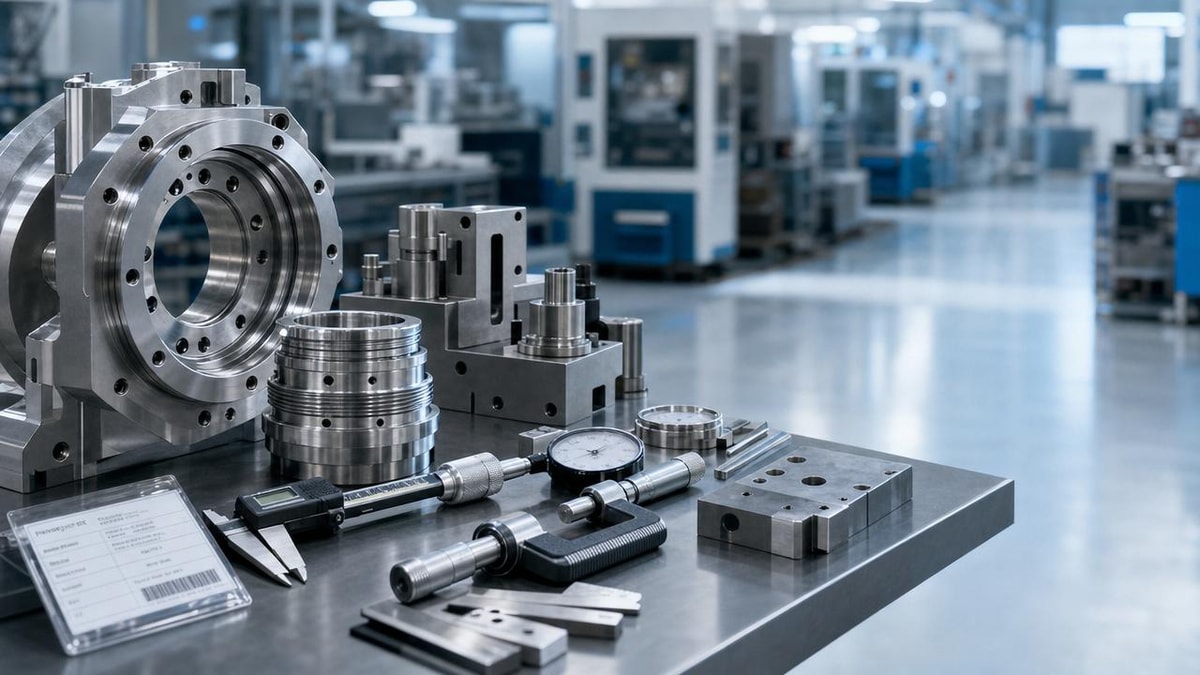
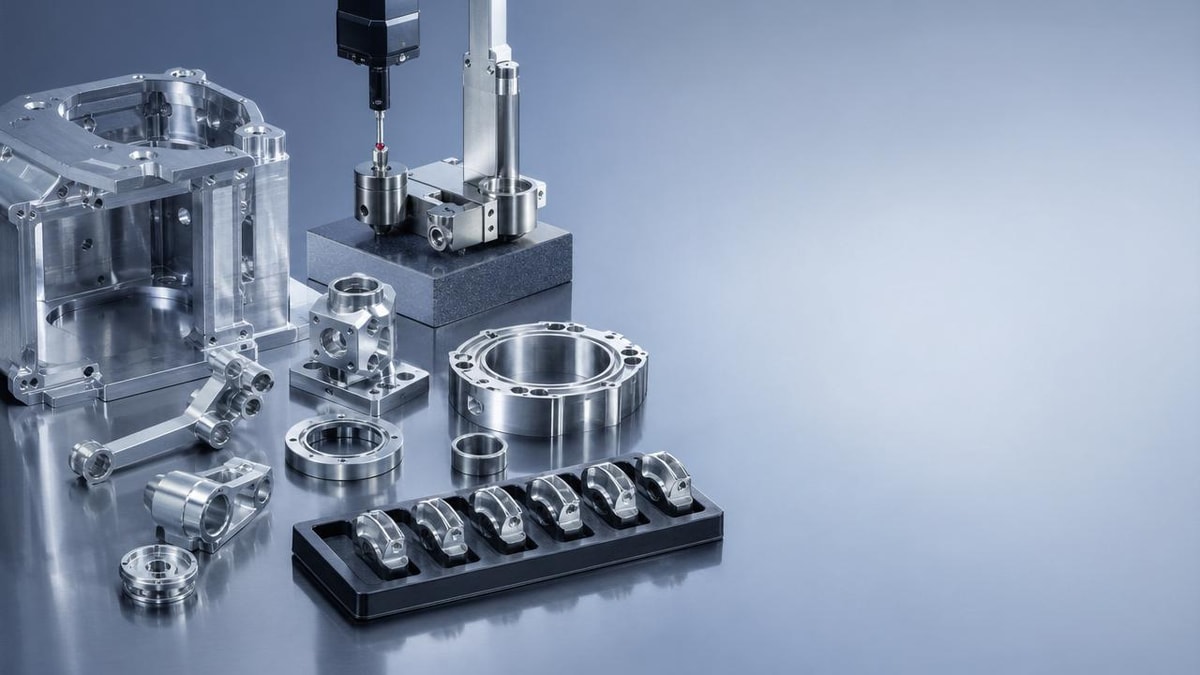
When evaluating OEM machined parts for medical equipment, the most relevant factors usually include process capability, traceability, revision discipline, inspection depth, and responsiveness during nonconformance review. These factors shape first article approval, IQ/OQ/PQ readiness, protocol execution, and final release confidence.
Scenario map: where OEM part choices most often affect validation timelines
The table below helps project owners connect sourcing conditions to validation risk. It is especially useful when comparing suppliers for OEM machined parts for medical equipment across programs with different speed, compliance, and scale requirements.
This scenario lens matters because the same machine shop can appear qualified on paper yet still be poorly aligned to a project’s validation exposure. Project success depends on fit, not only capability.
Scenario 1: New product introduction needs speed without uncontrolled variation
In new product introduction, timelines are often compressed by commercial targets, investor expectations, or launch commitments. Teams may assume that quick-turn machining is enough. In reality, fast delivery only helps if the OEM machined parts for medical equipment are dimensionally stable and backed by clean documentation. If engineering samples differ from pilot units, validation protocols may need revision, test results may become difficult to compare, and root-cause work can consume weeks.
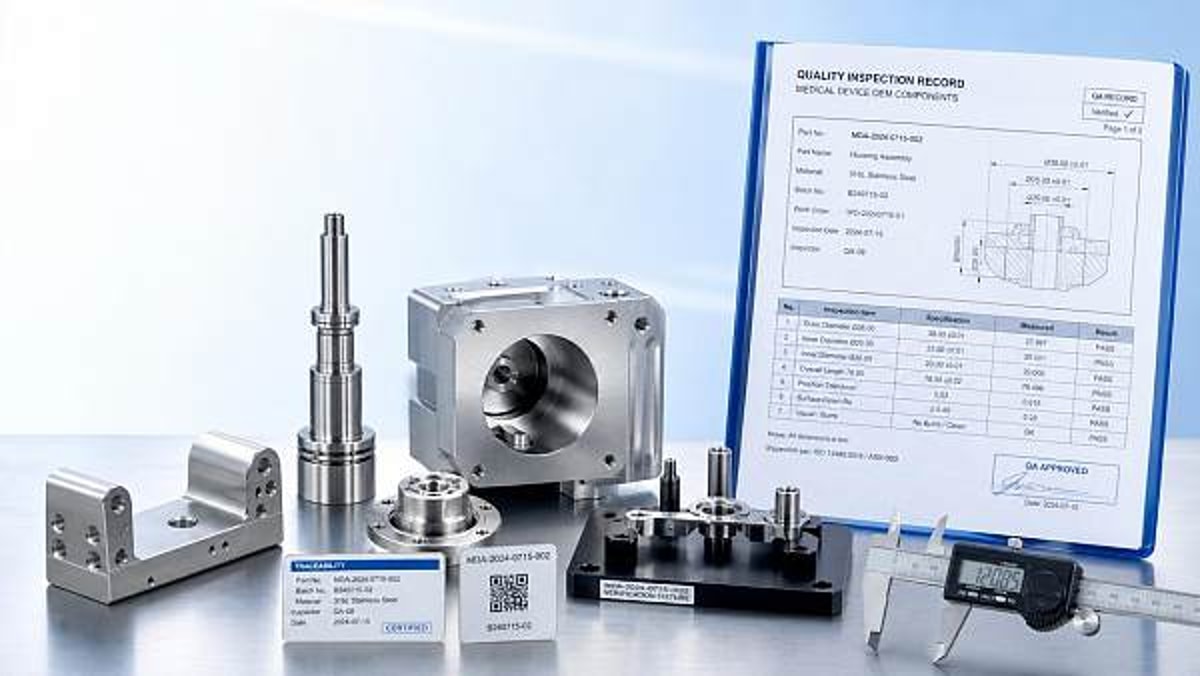
For this scenario, project managers should look for suppliers that can support iterative design changes while maintaining disciplined version control. A supplier should be able to confirm which drawing revision was used, what tooling or fixturing changed, and whether inspection criteria were updated. This is especially important for housings, brackets, precision shafts, and fluid-path related machined parts that influence fit, function, or sterility-adjacent assembly performance.
A practical rule is simple: if a supplier cannot clearly document what changed between prototype and pilot lots, the validation team will eventually pay for that ambiguity.
Scenario 2: Design transfer projects depend on process comparability
Design transfer is one of the most sensitive phases for OEM machined parts for medical equipment because the source of delay is often not obvious until qualification testing starts. A part can meet nominal dimensions but still create validation friction if the production process differs from what development assumed. Surface finish variation, burr formation, cleaning differences, or fixture-induced distortion may not appear critical at first, yet they can affect assembly consistency and downstream test outcomes.
In this setting, project leaders should prioritize suppliers that understand transfer packages, risk files, and process characterization. The right partner should be prepared to share process flow details, gauge methods, first article inspection reports, and evidence that critical-to-quality features are controlled at production speed. When documentation arrives late or incomplete, quality approval slows, engineering asks for additional studies, and the transfer window narrows.
A common mistake is selecting a supplier based on prototype performance alone. Transfer validation is a production question, not only a sample-part question.
Scenario 3: Supplier change and dual sourcing can trigger hidden revalidation work
Many procurement teams pursue alternate sources to improve continuity or cost. That strategy is sensible, but for project owners it introduces a new challenge: even if the print stays the same, the manufacturing route may not. Different CNC programs, raw material lots, deburring methods, passivation practices, or inspection systems can create a meaningful quality delta. That is why OEM machined parts for medical equipment require more than a dimensional comparison when a new source is introduced.
This scenario is especially important in regulated healthcare technology, where any undocumented process shift can affect compliance arguments. Project leaders should ask whether the alternate supplier can provide side-by-side data, material traceability, and evidence of equivalent process controls. If not, a sourcing decision intended to reduce business risk may expand validation scope and delay implementation.
The safest path is to define equivalence criteria early. That may include dimensional capability, cosmetic acceptance, cleaning standards, packaging controls, and response time for deviation investigations. Without those criteria, teams often discover too late that “same part number” does not mean “same validation effort.”
Scenario 4: Commercial scale-up exposes whether the supplier can hold the line
A supplier that performs well at ten units per week may struggle at one thousand. During scale-up, the validation risk shifts from engineering uncertainty to operational consistency. OEM machined parts for medical equipment used in pumps, analyzers, imaging support systems, and patient-monitoring assemblies often become bottlenecks when capacity expands faster than process discipline.
For project managers, this means evaluating not just technical skill but execution maturity. Can the supplier maintain inspection frequency at volume? Are critical dimensions monitored statistically? Is there preventive maintenance for key equipment? Are secondary processes controlled internally or outsourced? If capacity is added through subcontracting without robust change control, validated assumptions can erode quickly.
In scale-up scenarios, timeline protection often comes from operational transparency. Suppliers that communicate machine loading, lot segregation, training status, and contingency plans help teams defend schedules before issues become formal deviations.
How different stakeholders judge suitability in real projects
The same source of OEM machined parts for medical equipment may be evaluated differently by each function. Understanding those internal differences helps project leaders align decisions faster.
The best sourcing decisions usually happen when these viewpoints are combined before validation begins, not after a nonconformance appears.
Common scenario misjudgments that extend validation timelines
Assuming dimensional pass equals validation readiness
A part that passes inspection can still create risk if surface condition, cleanliness, marking, or packaging are inconsistent. Validation depends on full-use performance, not isolated dimensions.
Treating documentation as an afterthought
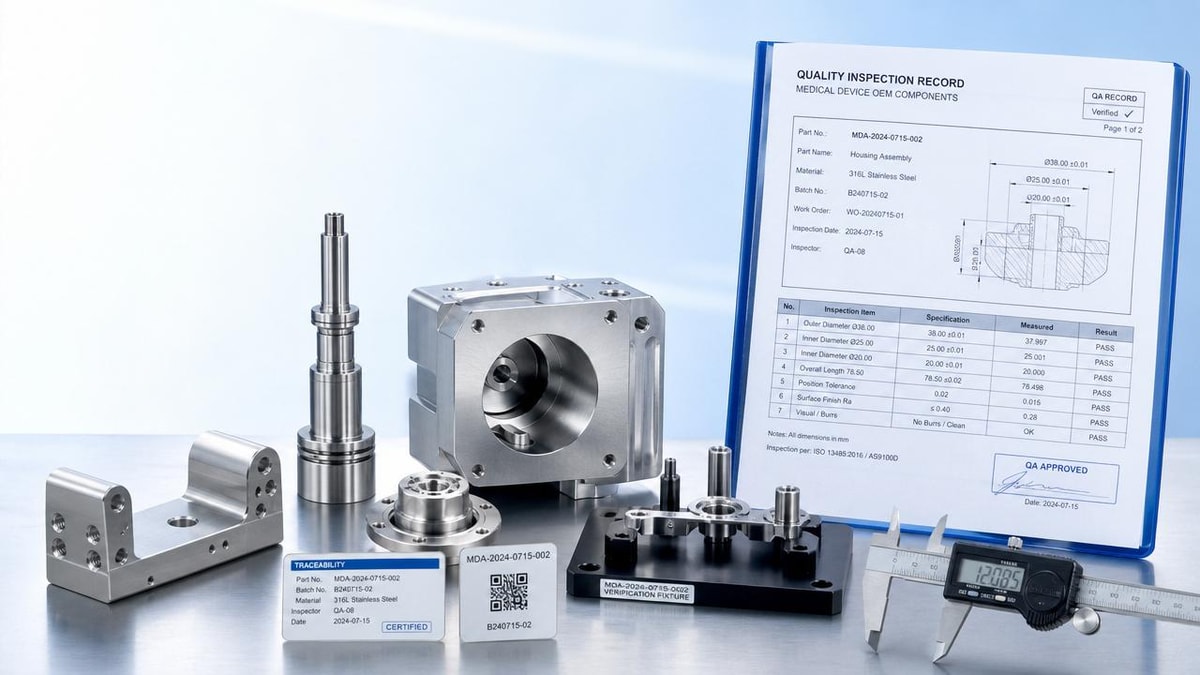
Late certificates, unsigned reports, and unclear revision history often delay approvals more than machining itself. For OEM machined parts for medical equipment, paperwork quality is part quality.
Choosing by unit price in time-critical programs
In launch or transfer projects, lower piece price can be erased by extra testing, engineering labor, and schedule slips. The relevant metric is total validation impact.
Underestimating supplier communication speed
When deviations occur, teams need rapid root-cause input. A technically capable supplier that responds slowly can still become the longest pole in the tent.
Practical fit-checks before approving a supplier for validation-sensitive programs
Before locking in OEM machined parts for medical equipment, project leaders should confirm a focused set of conditions tied to their scenario:
- Can the supplier show stable control over critical dimensions across multiple lots?
- Are material certifications, inspection reports, and revision records available in the required format and timeframe?
- Is there a defined process for notifying changes in tooling, subcontracting, raw material, or secondary finishing?
- Can the supplier support first article, deviation review, and urgent corrective action without slowing protocol execution?
- Does current capacity match expected pilot and commercial volume, not just sample demand?
These checks help teams match supplier capability to project context. That alignment is what shortens validation, not generic claims of precision machining alone.
FAQ: scenario-based questions project leaders often ask
When do OEM machined parts for medical equipment have the greatest effect on validation time?
Usually during new product introduction, design transfer, supplier change, and scale-up. These are the points where process variation, documentation gaps, or change control weaknesses are most likely to expand test scope or delay approval.
What matters more in urgent projects: speed or documentation?
Both matter, but speed without documentation often creates rework. In validation-sensitive programs, a slightly slower supplier with stronger traceability may protect the timeline better than a faster but less controlled source.
How can teams reduce revalidation risk when adding a second source?
Define equivalence criteria up front, compare multi-lot dimensional and process data, and require transparent change disclosure. This helps determine whether the new source truly matches the validated intent.
Conclusion: match the part source to the project scenario, not just the print
For healthcare project leaders, OEM machined parts for medical equipment should be evaluated through the lens of application scenario, validation exposure, and operational fit. A supplier that is ideal for a stable sustaining program may be a poor match for a design transfer under regulatory pressure. Likewise, a source that delivers excellent sample parts may still fail under commercial ramp conditions.
The most reliable way to protect validation timelines is to connect sourcing decisions with real project conditions: expected change frequency, documentation burden, testing sensitivity, and scale requirements. When teams make that connection early, they reduce surprise, accelerate qualification, and build stronger compliance readiness. For organizations looking to strengthen decision quality in global sourcing and healthcare technology programs, TradeNexus Pro provides the market intelligence and strategic context needed to evaluate supplier fit with greater confidence.
Get weekly intelligence in your inbox.
No noise. No sponsored content. Pure intelligence.
 May 03, 20265 Axis Milling Machines for Automotive: Buy New or Retrofit?5 Axis Milling Machines for Automotive: Buy New or Retrofit?
 May 03, 2026What to Check Before Sourcing OEM Machined Parts from IndiaWhat to Check Before Sourcing OEM Machined Parts from India
 May 03, 2026Why Sheet Metal Bending Machine Price Varies So MuchWhy Sheet Metal Bending Machine Price Varies So Much
 May 03, 2026Plastic Injection Molding Process Guide for Common Defect ControlPlastic Injection Molding Process Guide for Common Defect Control
 May 03, 2026Smart Manufacturing Technology Trends Reshaping Factory UpgradesSmart Manufacturing Technology Trends Reshaping Factory Upgrades
 May 03, 2026Automotive Die Casting Parts and the Hidden Cost of PorosityAutomotive Die Casting Parts and the Hidden Cost of Porosity
 May 03, 2026Assembly Line Robots: Flexibility Can Matter More Than SpeedAssembly Line Robots: Flexibility Can Matter More Than Speed
 May 03, 2026Smart Manufacturing in Energy: Which Upgrades Pay Back FasterSmart Manufacturing in Energy: Which Upgrades Pay Back Faster
 May 03, 2026Why Robotics Integration Fails After a Successful DemoWhy Robotics Integration Fails After a Successful Demo
 May 03, 2026How to Spot a Reliable Precision Components ManufacturerHow to Spot a Reliable Precision Components Manufacturer
 May 03, 2026Sheet Metal Bending Machine Specifications That Affect AccuracySheet Metal Bending Machine Specifications That Affect Accuracy
 May 03, 2026Oil and Gas Fabrication: Where Material Mismatch Gets ExpensiveOil and Gas Fabrication: Where Material Mismatch Gets Expensive
 May 03, 2026Construction Fabrication Delays Often Start at the Drawing StageConstruction Fabrication Delays Often Start at the Drawing Stage
 May 03, 2026Industrial Robotics Maintenance Guide for Fewer Surprise StopsIndustrial Robotics Maintenance Guide for Fewer Surprise Stops
 May 03, 2026Smart Manufacturing Technology Benefits Beyond Labor SavingsSmart Manufacturing Technology Benefits Beyond Labor Savings
 May 03, 2026Defense Components Need More Than Tight TolerancesDefense Components Need More Than Tight Tolerances
 May 03, 2026How to Vet a Die Casting Parts Supplier in MexicoHow to Vet a Die Casting Parts Supplier in Mexico
 May 03, 2026Food Processing Automation Systems and the Cost of DowntimeFood Processing Automation Systems and the Cost of Downtime
 May 03, 20265 Axis Milling for Aerospace: When Extra Precision Is Worth It5 Axis Milling for Aerospace: When Extra Precision Is Worth It
 May 03, 2026How OEM Medical Equipment Parts Affect Validation TimelinesHow OEM Medical Equipment Parts Affect Validation Timelines
 May 03, 2026Packaging Robotics Integration Problems That Slow CommissioningPackaging Robotics Integration Problems That Slow Commissioning
 May 03, 2026What Causes Rework in OEM Aerospace Machined PartsWhat Causes Rework in OEM Aerospace Machined Parts
 May 03, 2026Choosing Sheet Metal Bending Services in Europe Without DelaysChoosing Sheet Metal Bending Services in Europe Without Delays
 May 03, 2026Die Casting Parts for Electronics: Tolerance or Heat Control?Die Casting Parts for Electronics: Tolerance or Heat Control?
 May 03, 2026Marine Metal Fabrication Mistakes That Raise Corrosion RiskMarine Metal Fabrication Mistakes That Raise Corrosion Risk
 May 03, 2026When Welding Robots Improve Quality More Than ThroughputWhen Welding Robots Improve Quality More Than Throughput
 May 03, 2026Medical Device Molding Machines: What Specs Matter MostMedical Device Molding Machines: What Specs Matter Most