What Causes Rework in OEM Aerospace Machined Parts
Rework in OEM machined parts for aerospace often signals deeper issues in process control, material handling, documentation, or inspection standards. For quality and safety professionals, understanding these root causes is critical to preventing defects, protecting compliance, and reducing costly delays. This article examines the most common drivers of rework and how manufacturers can strengthen precision, traceability, and risk prevention.
In aerospace manufacturing, rework is rarely a minor inconvenience. A dimensional correction on a bracket, housing, manifold, or structural fitting can delay first article approval, consume additional machine hours, and create fresh inspection risk. For teams responsible for OEM machined parts for aerospace, even a deviation of ±0.01 mm in a critical feature or a missed documentation step can trigger nonconformance review, part quarantine, and delivery disruption across a 2- to 6-week production window.
For quality managers and safety leaders, the challenge is not only finding defects after machining. The larger task is identifying why the same issues recur, which controls fail first, and where risk accumulates between engineering release, material preparation, CNC machining, finishing, inspection, and shipment. When rework becomes routine, it usually points to gaps in process capability, revision control, training discipline, or inspection planning rather than isolated operator mistakes.
Why Rework in Aerospace Machining Carries High Operational Risk
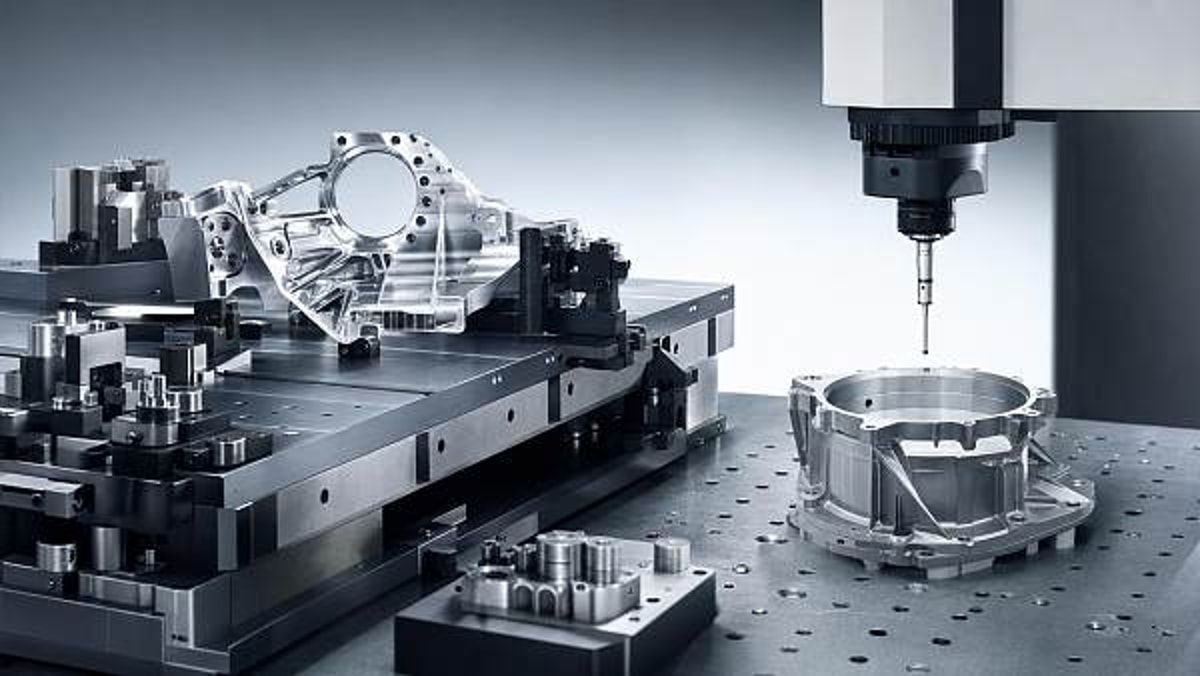
Aerospace parts operate under tighter tolerance expectations, stricter traceability demands, and higher documentation burdens than many industrial components. A reworked commercial part may add 30 minutes of polishing or a simple offset correction. A reworked aerospace part can require renewed dimensional validation, process review, concession handling, and customer approval before release. That difference changes the economics of quality.
The direct cost of rework includes extra spindle time, additional setups, more frequent CMM inspection, and higher scrap exposure. The indirect cost is often larger: delayed lot closure, interrupted supplier scorecards, increased safety review, and reduced confidence in future deliveries. In some programs, one rejected batch of 20 to 50 parts can affect downstream assembly schedules for 1 to 3 weeks.
Why quality and safety teams monitor rework closely
Repeated rework in OEM machined parts for aerospace may indicate a process that is no longer statistically stable. If the same feature repeatedly falls outside a tolerance band, or if burr removal repeatedly damages edge geometry, the issue is no longer confined to workmanship. It suggests poor control of tooling wear, fixture repeatability, material response, or method standardization.
Common operational consequences
- Extended lead times, often by 2 to 7 days for minor dimensional recovery and longer for formal deviation review
- Higher inspection frequency, including 100% verification of selected critical dimensions
- Greater risk of hidden damage after blending, polishing, or repeated clamping
- More complex traceability requirements when parts move between machining, rework, and re-inspection cells
The table below outlines how rework exposure escalates depending on the failure type found in aerospace machining operations.
The key takeaway is that rework is not just a machining issue. In aerospace supply chains, documentation and handling failures can be just as disruptive as dimensional defects. That is why effective control plans must extend across the full production route, not only the CNC cell.
The Most Common Root Causes of Rework in OEM Aerospace Machined Parts
Most rework events in OEM machined parts for aerospace can be traced to a manageable set of root causes. They often overlap, which is why single-point corrective actions do not always produce lasting improvement. A supplier may replace a worn cutter, yet continue seeing rejects because the actual problem lies in fixture distortion or drawing interpretation.
1. Process capability does not match the tolerance stack
Aerospace components often combine tight positional tolerances, surface finish requirements, and difficult materials such as titanium, Inconel, or high-strength aluminum alloys. If the machining process is only marginally capable, a normal variation in temperature, tool condition, or machine load can push parts outside limits. Features with true position, flatness, or bore size requirements below 0.02 mm are especially sensitive.
Warning signs of weak process capability
- Offsets adjusted multiple times per shift
- Feature drift after 10 to 20 pieces in a batch
- High dependence on final inspection instead of in-process checks
- Recurring nonconformance on the same datum structure or bore pattern
2. Tool wear and cutter management are poorly controlled
Tool wear is a predictable variable, but many rework cases emerge because wear limits are not linked to actual feature sensitivity. A tool may still cut, yet no longer hold edge quality or size consistency on a critical contour. In hard-to-machine alloys, even a small increase in flank wear can affect dimensional repeatability within a 15- to 30-part cycle.
Without defined replacement intervals, monitored wear criteria, and machine-level compensation strategy, operators often rely on judgment calls. That introduces variation between shifts and between machines, which is particularly risky when multiple production cells supply the same aerospace program.
3. Workholding and setup errors distort part geometry
Thin-wall parts, complex housings, and asymmetrical structures can deform under clamping pressure. A part may measure correctly while clamped and shift once released, leading to rejected flatness, profile, or concentricity. Rework then becomes difficult because the distortion is introduced during setup, not during a single cutting event.
For this reason, fixture design review should evaluate contact points, clamping sequence, support stability, and part orientation before production release. If setup approval is rushed, the resulting rework may persist across the entire lot.
4. Revision control and traveler accuracy break down
Aerospace machining depends heavily on documentation integrity. Rework can begin before the first chip is cut if operators receive an outdated drawing, an incomplete operation sheet, or a traveler missing special process notes. Revision mistakes are especially costly because they may affect every part in the batch, not just one or two units.
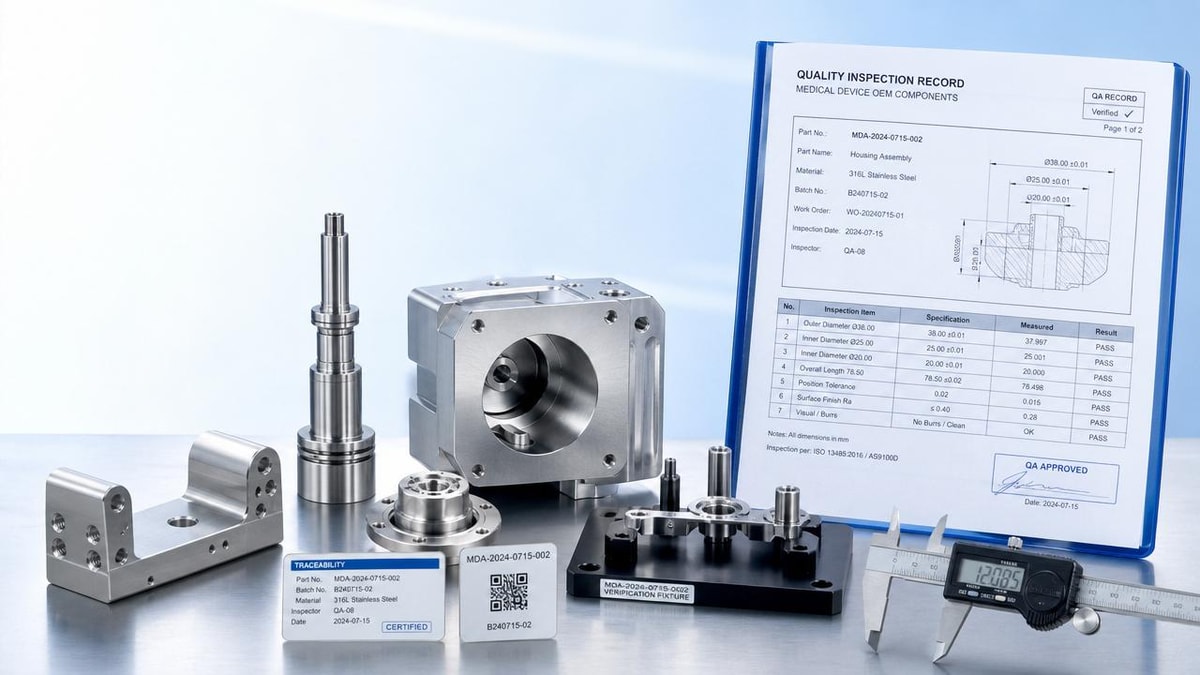
Typical documentation failures include missing key characteristics, mismatched material callouts, omitted deburr notes, and inconsistent inspection sampling instructions. For quality personnel, these errors are often harder to recover than dimensional defects because they compromise traceability and customer confidence simultaneously.
5. Material handling introduces avoidable damage
Even well-machined parts can enter rework due to scratches, dents, contamination, or mixed lot identity after machining. Aerospace surfaces intended for sealing, coating, or fatigue-sensitive service may not tolerate casual stacking or unprotected transport. Damage often occurs during the 3 most overlooked transitions: machine to inspection, inspection to secondary operation, and final pack-out.
This is why quality planning should define handling rules as precisely as machining steps, including tray design, separator material, labeling sequence, and maximum quantity per container.
Inspection, Documentation, and Human Factors That Drive Repeat Rework
Not all rework originates at the machine. In many aerospace programs, the deeper issue is a control system that detects problems too late or communicates requirements too loosely. Inspection strategy, training depth, and cross-functional coordination can determine whether a minor deviation is contained at piece 3 or discovered after piece 30.
Inspection plans that miss process-critical checkpoints
If inspection is concentrated only at final release, machinists may complete an entire batch before a drift trend is visible. Effective aerospace control plans usually include first-piece verification, in-process checks at defined intervals, and final validation against customer drawing requirements. The interval may be every 5 parts, every 10 parts, or every setup change depending on risk level.
Critical features should also be tied to explicit reaction plans. If a bore approaches 75% of tolerance consumption, for example, the process should trigger offset review, tool replacement, or setup confirmation before the dimension actually fails.
Measurement system weakness creates false confidence
Rework is sometimes caused by unreliable measurement rather than unstable machining. A gauge with poor repeatability, an unqualified fixture for CMM orientation, or inconsistent manual probing technique can hide real variation or create false rejects. For quality teams, this means measurement system review should be part of any corrective action, especially on features under 0.05 mm tolerance bands.
Training gaps and shift-to-shift inconsistency
Aerospace work instructions often assume knowledge that newer operators or temporary staff may not fully have. If one shift applies a deburr radius differently from another, or if setup staff interpret datum alignment differently, rework becomes a predictable outcome. Shops with 2 or 3 shifts need tighter skill standardization than low-mix operations because variation compounds over time.
The table below shows where quality and safety managers should look first when repeated rework appears across batches.
This audit view is useful because it shifts the discussion from blame to system control. When the same defect repeats, the strongest response is usually a layered fix across inspection, documentation, and training rather than a one-time operator warning.
How Manufacturers Can Reduce Rework in OEM Machined Parts for Aerospace
Reducing rework requires preventive discipline at each stage of the manufacturing flow. For suppliers and OEM partners alike, the most effective approach combines process planning, inspection timing, document control, and traceability practices into a single quality architecture. That is especially important in OEM machined parts for aerospace, where compliance and delivery reliability are judged together.
Build risk controls before full production starts
A robust launch process should include at least 5 checkpoints: drawing review, material verification, fixture confirmation, first-piece validation, and inspection plan approval. If any one of these steps is rushed, the shop may discover problems only after machine capacity and material are already committed. Early planning is usually less expensive than recovering a 25-part batch after final inspection.
Practical preventive measures
- Link tool life limits to critical features, not only total runtime.
- Use setup verification sheets for datum, clamp points, and zero reference checks.
- Apply revision-controlled digital travelers with mandatory signoff fields.
- Define handling instructions for every transfer point, especially after finish machining.
- Use containment rules when drift reaches warning thresholds instead of waiting for out-of-tolerance results.
Strengthen traceability and closed-loop feedback
When rework occurs, the recovery process should preserve a clear history of what happened, who approved the action, which dimensions were rechecked, and whether any downstream process was affected. A weak record may solve the immediate issue but create future audit risk. Strong traceability, by contrast, turns rework data into a basis for long-term process improvement.
For B2B decision-makers evaluating suppliers of OEM machined parts for aerospace, this is also a procurement issue. Suppliers that can demonstrate process discipline, documented reaction plans, and consistent lot traceability usually present lower operational risk than shops that rely on informal recovery methods.
What procurement and quality teams should ask suppliers
- How often are in-process inspection intervals reviewed for critical programs?
- What triggers a tool change on tolerance-sensitive features?
- How is drawing revision access controlled at the machine level?
- What is the documented process for rework approval, segregation, and re-inspection?
- How are handling controls maintained for parts with cosmetic or sealing surface requirements?
For quality and safety professionals, rework is one of the clearest indicators of hidden instability in aerospace machining operations. It may begin with a surface defect, an oversized bore, or a paperwork mismatch, but the true cause usually lies deeper in process capability, setup control, revision discipline, inspection timing, or material handling. Addressing those root causes early reduces scrap exposure, shortens lead-time disruption, and improves confidence across the supply chain.
TradeNexus Pro helps procurement leaders, supply chain managers, and technical decision-makers evaluate manufacturing risk with deeper market intelligence and industry-focused analysis. If your team is reviewing suppliers, improving quality controls, or seeking more reliable OEM machined parts for aerospace, contact us to explore tailored insights, supplier evaluation guidance, and more solutions built for high-stakes industrial programs.
Get weekly intelligence in your inbox.
No noise. No sponsored content. Pure intelligence.
 May 03, 20265 Axis Milling Machines for Automotive: Buy New or Retrofit?5 Axis Milling Machines for Automotive: Buy New or Retrofit?
 May 03, 2026What to Check Before Sourcing OEM Machined Parts from IndiaWhat to Check Before Sourcing OEM Machined Parts from India
 May 03, 2026Why Sheet Metal Bending Machine Price Varies So MuchWhy Sheet Metal Bending Machine Price Varies So Much
 May 03, 2026Plastic Injection Molding Process Guide for Common Defect ControlPlastic Injection Molding Process Guide for Common Defect Control
 May 03, 2026Smart Manufacturing Technology Trends Reshaping Factory UpgradesSmart Manufacturing Technology Trends Reshaping Factory Upgrades
 May 03, 2026Automotive Die Casting Parts and the Hidden Cost of PorosityAutomotive Die Casting Parts and the Hidden Cost of Porosity
 May 03, 2026Assembly Line Robots: Flexibility Can Matter More Than SpeedAssembly Line Robots: Flexibility Can Matter More Than Speed
 May 03, 2026Smart Manufacturing in Energy: Which Upgrades Pay Back FasterSmart Manufacturing in Energy: Which Upgrades Pay Back Faster
 May 03, 2026Why Robotics Integration Fails After a Successful DemoWhy Robotics Integration Fails After a Successful Demo
 May 03, 2026How to Spot a Reliable Precision Components ManufacturerHow to Spot a Reliable Precision Components Manufacturer
 May 03, 2026Sheet Metal Bending Machine Specifications That Affect AccuracySheet Metal Bending Machine Specifications That Affect Accuracy
 May 03, 2026Oil and Gas Fabrication: Where Material Mismatch Gets ExpensiveOil and Gas Fabrication: Where Material Mismatch Gets Expensive
 May 03, 2026Construction Fabrication Delays Often Start at the Drawing StageConstruction Fabrication Delays Often Start at the Drawing Stage
 May 03, 2026Industrial Robotics Maintenance Guide for Fewer Surprise StopsIndustrial Robotics Maintenance Guide for Fewer Surprise Stops
 May 03, 2026Smart Manufacturing Technology Benefits Beyond Labor SavingsSmart Manufacturing Technology Benefits Beyond Labor Savings
 May 03, 2026Defense Components Need More Than Tight TolerancesDefense Components Need More Than Tight Tolerances
 May 03, 2026How to Vet a Die Casting Parts Supplier in MexicoHow to Vet a Die Casting Parts Supplier in Mexico
 May 03, 2026Food Processing Automation Systems and the Cost of DowntimeFood Processing Automation Systems and the Cost of Downtime
 May 03, 20265 Axis Milling for Aerospace: When Extra Precision Is Worth It5 Axis Milling for Aerospace: When Extra Precision Is Worth It
 May 03, 2026How OEM Medical Equipment Parts Affect Validation TimelinesHow OEM Medical Equipment Parts Affect Validation Timelines
 May 03, 2026Packaging Robotics Integration Problems That Slow CommissioningPackaging Robotics Integration Problems That Slow Commissioning
 May 03, 2026What Causes Rework in OEM Aerospace Machined PartsWhat Causes Rework in OEM Aerospace Machined Parts
 May 03, 2026Choosing Sheet Metal Bending Services in Europe Without DelaysChoosing Sheet Metal Bending Services in Europe Without Delays
 May 03, 2026Die Casting Parts for Electronics: Tolerance or Heat Control?Die Casting Parts for Electronics: Tolerance or Heat Control?
 May 03, 2026Marine Metal Fabrication Mistakes That Raise Corrosion RiskMarine Metal Fabrication Mistakes That Raise Corrosion Risk
 May 03, 2026When Welding Robots Improve Quality More Than ThroughputWhen Welding Robots Improve Quality More Than Throughput
 May 03, 2026Medical Device Molding Machines: What Specs Matter MostMedical Device Molding Machines: What Specs Matter Most