Choosing Sheet Metal Bending Services in Europe Without Delays
For procurement teams, choosing sheet metal bending services Europe can quickly become a bottleneck when lead times, quality consistency, and supplier communication are unclear. This guide outlines how to assess European bending partners more efficiently, reduce sourcing risks, and keep projects moving without costly delays.
Why do sheet metal bending services in Europe cause delays in the first place?
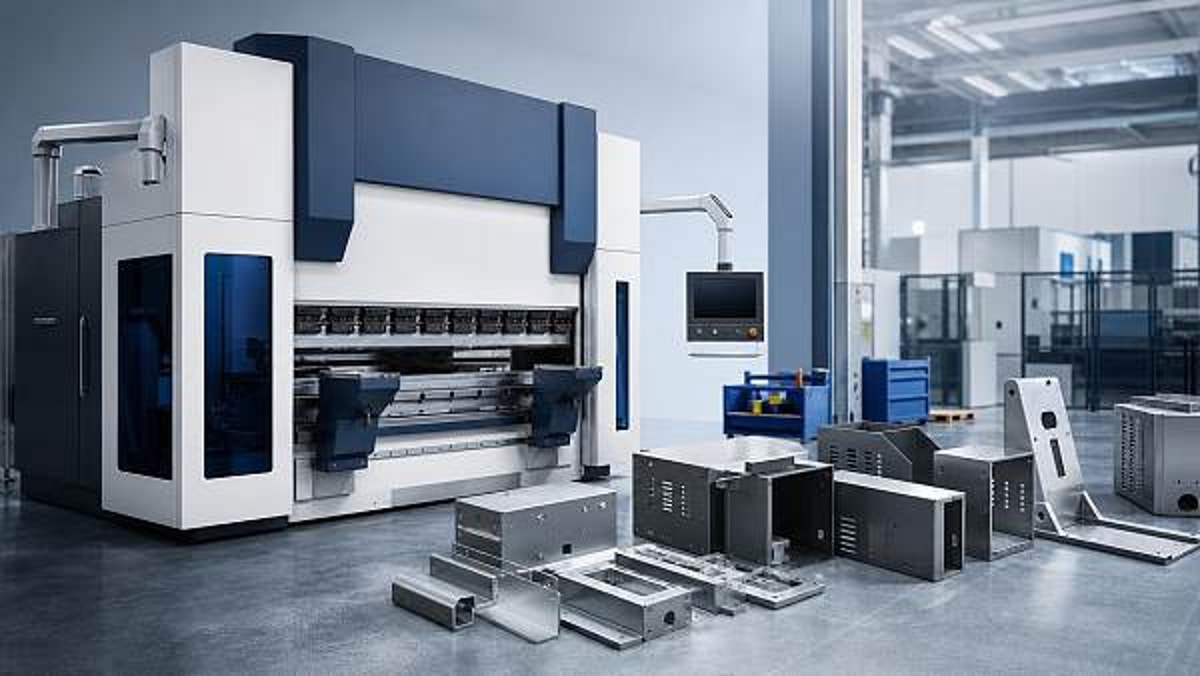
Many sourcing delays do not start on the shop floor. They begin earlier, when buyers compare suppliers using incomplete data, request quotes without tolerance details, or underestimate the effect of material availability across European markets. For procurement professionals, the real challenge is not only finding sheet metal bending services Europe offers, but finding suppliers that can convert drawings into stable output without repeated clarification rounds.
In advanced manufacturing, green energy, smart electronics, healthcare technology, and supply chain software-enabled production networks, bent sheet metal parts often sit inside larger assemblies. A delayed enclosure, bracket, rail, panel, or housing can hold back electronics integration, final testing, or shipment consolidation. That is why procurement teams need a decision model that considers technical readiness, communication discipline, and delivery resilience at the same time.
European suppliers can offer strong engineering depth, good process control, and broad regulatory familiarity. However, lead time performance varies widely depending on machine capacity, subcontracting habits, finishing dependencies, and the maturity of the supplier’s quotation process. A fast quote is not always a reliable quote. A low unit price is not always a low total procurement cost.
- Drawings are submitted without final bend radii, flat pattern assumptions, or finish notes, creating preventable engineering back-and-forth.
- Suppliers quote based on available machine time but do not disclose bottlenecks in tooling, deburring, powder coating, or packaging.
- Procurement teams compare only price and nominal lead time, without checking quality systems, batch traceability, or export readiness.
How should procurement evaluate sheet metal bending services Europe suppliers?
A practical evaluation framework helps buyers move from reactive sourcing to controlled selection. When comparing sheet metal bending services Europe providers, procurement should review six areas together: technical capability, material sourcing, quality assurance, communication speed, production flexibility, and logistics fit. Looking at one factor in isolation usually leads to hidden delays later.
The table below gives a procurement-oriented scorecard that can be used during supplier shortlisting, RFQ review, and pre-award validation.
This scorecard works best when buyers assign internal weightings based on project type. A healthcare device enclosure may place more weight on document control and surface finish. A green energy frame component may prioritize material thickness capability and predictable batch output. The key is to compare suppliers against the actual use case, not against a generic vendor checklist.
Questions worth asking before issuing a purchase order
- Can the supplier review bend feasibility from 2D and 3D files before final quotation?
- Are tooling changes or special dies needed for the specified geometry?
- Which steps are in-house, and which are outsourced, such as laser cutting, welding, finishing, or assembly?
- What is the supplier’s normal lead time for prototypes, pilot batches, and repeat production?
- How are deviations reported, approved, and documented across multiple revisions?
Which technical factors matter most when buying bent sheet metal parts?
Not every delay is visible in a quotation. Buyers often receive a price based on geometry that looks simple on paper but proves demanding in production. Reliable sheet metal bending services Europe suppliers should be able to explain how part design influences setup time, accuracy, cosmetic quality, and throughput.
The technical details that affect delivery and quality
- Material grade and thickness: Stainless steel, aluminum, mild steel, and coated materials behave differently during bending. Springback, cracking risk, and tool wear can change cycle time and inspection needs.
- Bend radius and flange length: Tight radii or short flanges may require special tooling or design adjustment. If this is not addressed at RFQ stage, production planning becomes unstable.
- Tolerance expectations: Functional tolerances should be separated from cosmetic preferences. Overly broad notes such as “high precision required” cause confusion and defensive quoting.
- Surface finish sequence: Bending before coating, coating before assembly, and masking requirements all affect routing. Finishing dependencies are a common source of lead time extension.
- Part family complexity: One part may be easy. Twenty similar parts with different bend directions, hole positions, and labeling requirements create real scheduling pressure.
Procurement teams do not need to become manufacturing engineers, but they do need enough technical literacy to spot risky quotes. If one supplier prices an enclosure with almost no engineering comments while another flags stack-up tolerances, collision risks, or finish sensitivity, the second supplier may actually be the safer option.
What should buyers compare beyond price and lead time?
Comparing sheet metal bending services Europe providers only on unit cost can distort the procurement decision. A lower quoted price may hide extra transport legs, uncertain revision handling, or inspection gaps that later create downstream cost. A broader comparison helps reveal the real landed and operational impact.
The following table is useful when comparing suppliers for prototype work, recurring production, or multi-country distribution programs.
For procurement leaders, the safer choice is often the supplier that reduces coordination cost and schedule uncertainty. That matters especially in sectors where bent components integrate with electronics, cable routing, thermal management, or regulated equipment documentation.
How can procurement reduce sourcing risk across European supply chains?
The strongest sourcing strategies combine supplier assessment with market intelligence. TradeNexus Pro supports procurement teams by turning fragmented market information into actionable supplier evaluation logic. Instead of relying on broad supplier directories alone, buyers benefit from structured insight into sector demand shifts, manufacturing specialization, and regional supply chain patterns.
A practical risk-control workflow
- Define the application clearly: identify whether the part serves structural, cosmetic, shielding, mounting, or enclosure functions.
- Prepare complete RFQ data: include drawings, revision level, annual volume estimate, finish requirement, packaging expectation, and target Incoterms.
- Shortlist suppliers by capability match rather than geography alone: regional convenience does not replace process fit.
- Validate hidden dependencies: ask whether cutting, bending, welding, coating, assembly, and final inspection are managed under one production plan.
- Use a pilot order or sample batch: this reveals communication quality, packaging discipline, and dimensional consistency before volume commitment.
This workflow is especially useful when sourcing across multiple European countries or when combining nearshoring goals with strict cost control. Regional proximity can reduce transit time, but only if engineering files, supplier accountability, and production sequencing are already aligned.
Which standards and documentation should be reviewed?
Procurement for sheet metal bending services Europe projects often involves more than dimensional conformity. Buyers may need supporting documents for quality systems, material traceability, surface treatment specifications, and customer-specific inspection requirements. The exact package depends on industry and end use, but the documentation request should be clear from the start.
- General quality management documentation may be relevant when internal supplier qualification procedures require process consistency evidence.
- Material certificates can be important for applications where grade verification, corrosion behavior, or downstream compliance review matters.
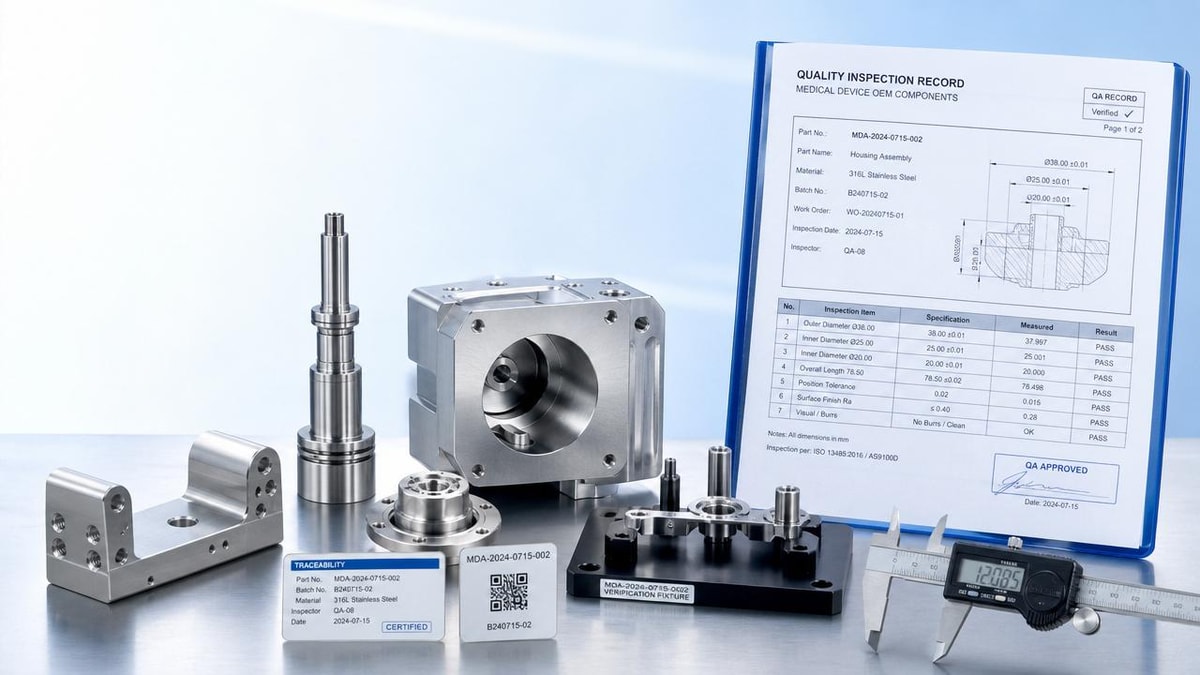
- Dimensional inspection records are useful for first article approval, especially for multi-bend parts with fit-critical hole patterns.
- Surface finish specifications should be aligned with coating partners if powder coating, anodizing, or passivation is included.
Buyers should avoid assuming that every supplier interprets tolerances, finish codes, or packaging notes the same way. If traceability and controlled documentation are important, state that explicitly in the RFQ and confirm how revisions will be distributed and acknowledged.
What are common procurement mistakes when sourcing bent parts in Europe?
Mistake 1: treating all sheet metal bending suppliers as interchangeable
A supplier that handles simple brackets efficiently may not be the right fit for multi-operation enclosures with cosmetic surfaces and assembly requirements. Procurement should map supplier strengths to the actual product family.
Mistake 2: approving quotes before clarifying subcontracted steps
Lead time risk often sits in operations outside bending itself. If coating, welding, tapping, screen printing, or final assembly are outsourced, the supplier should explain how those steps are scheduled and controlled.
Mistake 3: focusing on prototype speed without checking repeatability
A supplier may deliver prototypes quickly but struggle with serial consistency. For procurement teams planning ramp-up, process repeatability and revision discipline matter as much as first-batch responsiveness.
Mistake 4: ignoring packaging and transport details
Bent parts can scratch, deform, or mix across revisions during transport. Poor packaging turns a technically correct production run into a receiving problem. Packaging instructions should be part of the sourcing package, not an afterthought.
FAQ: what do buyers usually ask about sheet metal bending services Europe?
How do I choose between a local supplier and a multi-country European sourcing option?
Choose based on process fit, not distance alone. A nearby supplier can help with easier visits and faster sample review, but a supplier in another European market may offer better tooling depth, sector experience, or integrated finishing. Compare total coordination effort, logistics reliability, and technical match.
What lead time is realistic for sheet metal bending services Europe orders?
It depends on part complexity, raw material availability, batch size, and whether cutting, finishing, or assembly are included. Prototype runs may move faster than repeat production, but only if engineering files are complete. A credible supplier should explain the lead time path, not only the final date.
What should be included in an RFQ to avoid delays?
Include the latest drawing revision, 3D model if available, material specification, finish requirement, tolerances, expected annual demand, sample needs, inspection expectations, and delivery terms. If cosmetic surfaces or fit-critical dimensions matter, identify them clearly instead of leaving suppliers to guess.
Is the lowest quote ever the best choice for procurement?
Not necessarily. The best procurement outcome comes from a balance of price, manufacturability, quality control, communication reliability, and logistics predictability. A slightly higher quote can reduce internal workload and protect project milestones.
Why choose us for procurement insight and supplier evaluation support?
TradeNexus Pro helps procurement teams make faster, better-grounded decisions when evaluating sheet metal bending services Europe providers. Our focus is not generic vendor listing. We concentrate on the industrial sectors where component reliability, supply continuity, and market timing shape real commercial outcomes.
If your team is comparing European bending partners, planning a new RFQ, or trying to reduce sourcing delays across multi-step fabrication projects, we can help you sharpen the decision process with structured market intelligence and sector-aware evaluation logic.
- Clarify supplier screening criteria for material range, bending capability, and process integration.
- Review RFQ completeness to reduce quotation ambiguity and post-award change risk.
- Assess lead time assumptions across cutting, bending, finishing, packaging, and dispatch stages.
- Align sourcing decisions with certification expectations, documentation needs, and customer delivery commitments.
- Support conversations around sample requests, prototype validation, pricing structure, and repeat-order planning.
If you need help narrowing options, confirming technical fit, or structuring a more reliable supplier comparison for sheet metal bending services Europe, contact TradeNexus Pro with your application details, target volumes, timeline, and documentation requirements. That allows the discussion to move quickly from broad sourcing questions to practical next steps.
Get weekly intelligence in your inbox.
No noise. No sponsored content. Pure intelligence.
 May 03, 20265 Axis Milling Machines for Automotive: Buy New or Retrofit?5 Axis Milling Machines for Automotive: Buy New or Retrofit?
 May 03, 2026What to Check Before Sourcing OEM Machined Parts from IndiaWhat to Check Before Sourcing OEM Machined Parts from India
 May 03, 2026Why Sheet Metal Bending Machine Price Varies So MuchWhy Sheet Metal Bending Machine Price Varies So Much
 May 03, 2026Plastic Injection Molding Process Guide for Common Defect ControlPlastic Injection Molding Process Guide for Common Defect Control
 May 03, 2026Smart Manufacturing Technology Trends Reshaping Factory UpgradesSmart Manufacturing Technology Trends Reshaping Factory Upgrades
 May 03, 2026Automotive Die Casting Parts and the Hidden Cost of PorosityAutomotive Die Casting Parts and the Hidden Cost of Porosity
 May 03, 2026Assembly Line Robots: Flexibility Can Matter More Than SpeedAssembly Line Robots: Flexibility Can Matter More Than Speed
 May 03, 2026Smart Manufacturing in Energy: Which Upgrades Pay Back FasterSmart Manufacturing in Energy: Which Upgrades Pay Back Faster
 May 03, 2026Why Robotics Integration Fails After a Successful DemoWhy Robotics Integration Fails After a Successful Demo
 May 03, 2026How to Spot a Reliable Precision Components ManufacturerHow to Spot a Reliable Precision Components Manufacturer
 May 03, 2026Sheet Metal Bending Machine Specifications That Affect AccuracySheet Metal Bending Machine Specifications That Affect Accuracy
 May 03, 2026Oil and Gas Fabrication: Where Material Mismatch Gets ExpensiveOil and Gas Fabrication: Where Material Mismatch Gets Expensive
 May 03, 2026Construction Fabrication Delays Often Start at the Drawing StageConstruction Fabrication Delays Often Start at the Drawing Stage
 May 03, 2026Industrial Robotics Maintenance Guide for Fewer Surprise StopsIndustrial Robotics Maintenance Guide for Fewer Surprise Stops
 May 03, 2026Smart Manufacturing Technology Benefits Beyond Labor SavingsSmart Manufacturing Technology Benefits Beyond Labor Savings
 May 03, 2026Defense Components Need More Than Tight TolerancesDefense Components Need More Than Tight Tolerances
 May 03, 2026How to Vet a Die Casting Parts Supplier in MexicoHow to Vet a Die Casting Parts Supplier in Mexico
 May 03, 2026Food Processing Automation Systems and the Cost of DowntimeFood Processing Automation Systems and the Cost of Downtime
 May 03, 20265 Axis Milling for Aerospace: When Extra Precision Is Worth It5 Axis Milling for Aerospace: When Extra Precision Is Worth It
 May 03, 2026How OEM Medical Equipment Parts Affect Validation TimelinesHow OEM Medical Equipment Parts Affect Validation Timelines
 May 03, 2026Packaging Robotics Integration Problems That Slow CommissioningPackaging Robotics Integration Problems That Slow Commissioning
 May 03, 2026What Causes Rework in OEM Aerospace Machined PartsWhat Causes Rework in OEM Aerospace Machined Parts
 May 03, 2026Choosing Sheet Metal Bending Services in Europe Without DelaysChoosing Sheet Metal Bending Services in Europe Without Delays
 May 03, 2026Die Casting Parts for Electronics: Tolerance or Heat Control?Die Casting Parts for Electronics: Tolerance or Heat Control?
 May 03, 2026Marine Metal Fabrication Mistakes That Raise Corrosion RiskMarine Metal Fabrication Mistakes That Raise Corrosion Risk
 May 03, 2026When Welding Robots Improve Quality More Than ThroughputWhen Welding Robots Improve Quality More Than Throughput
 May 03, 2026Medical Device Molding Machines: What Specs Matter MostMedical Device Molding Machines: What Specs Matter Most