Smart Manufacturing Technology Trends Reshaping Factory Upgrades
Smart manufacturing technology trends are redefining how factories modernize, compete, and respond to volatile global demand. From AI-driven production planning to connected equipment and real-time supply chain visibility, these shifts are shaping smarter upgrade strategies across industries. This article explores the technologies, operational benefits, and strategic considerations that information-focused decision-makers should evaluate when planning the next phase of factory transformation.
What do smart manufacturing technology trends actually include today?
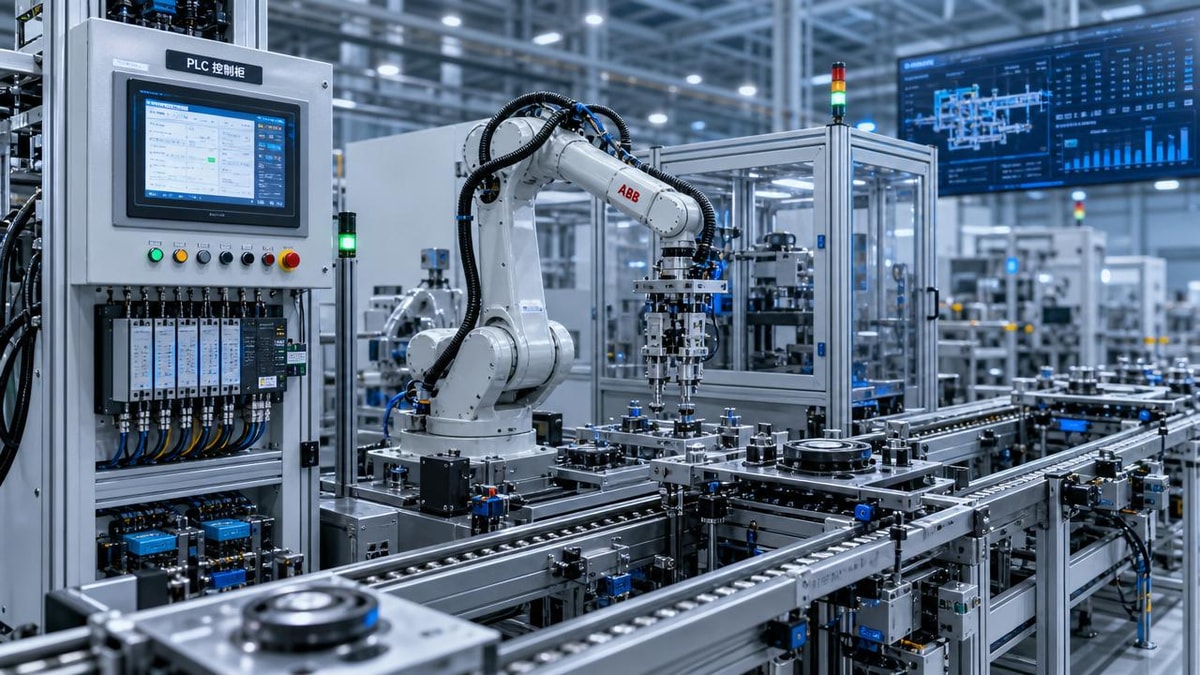
When researchers search for smart manufacturing technology trends, they are usually not looking for a single tool. They are trying to understand a connected technology stack that improves how factories plan, produce, maintain, inspect, and deliver. In practical terms, the trend now goes far beyond basic automation. It combines software intelligence, machine connectivity, data transparency, and flexible execution.
The most visible trends include industrial IoT sensors, AI-assisted production scheduling, machine vision for quality control, digital twins, collaborative robots, cloud and edge computing, advanced manufacturing execution systems, and integrated supply chain visibility platforms. These technologies work best when they are linked instead of deployed in isolation. A connected machine may generate data, but the value appears only when that data informs maintenance timing, inventory decisions, operator workflows, and customer delivery expectations.
Another important shift is that factory upgrades are no longer evaluated only by machine output. Decision-makers now care about resilience, traceability, labor adaptability, energy efficiency, cybersecurity, and cross-site comparability. That is why smart manufacturing technology trends are receiving attention across advanced manufacturing, electronics, healthcare technology, and supply chain software ecosystems.
Why are these trends becoming a priority for factory upgrades now?
The urgency comes from several pressures happening at the same time. First, demand patterns are less predictable than they were a decade ago. Factories must switch products faster, manage smaller batches, and react to customer changes without losing cost control. Second, labor shortages and skill gaps are making traditional manual coordination harder to sustain. Third, supply chain disruptions have shown that low-visibility operations are slow to recover.
Smart manufacturing technology trends address these pressures by creating a more responsive factory environment. AI can help optimize production plans when material arrivals change. Connected systems can alert teams to downtime risks before a breakdown stops a line. Vision systems can catch defects earlier, reducing scrap and protecting downstream fulfillment. Digital dashboards can give managers a live view of overall equipment effectiveness, throughput, work-in-progress, and order status.
For global B2B decision-makers, another reason is strategic competitiveness. Buyers increasingly prefer suppliers that can demonstrate process stability, quality traceability, and scalable operations. In that sense, factory modernization is not only an internal efficiency project. It is also a trust signal in procurement and supplier evaluation.
Which smart manufacturing technology trends deliver the fastest operational impact?
Not every trend delivers value at the same speed. For many factories, the fastest gains come from technologies that improve visibility and decision speed without requiring a full line redesign. These often include machine monitoring, predictive maintenance, production analytics, and digital quality inspection.
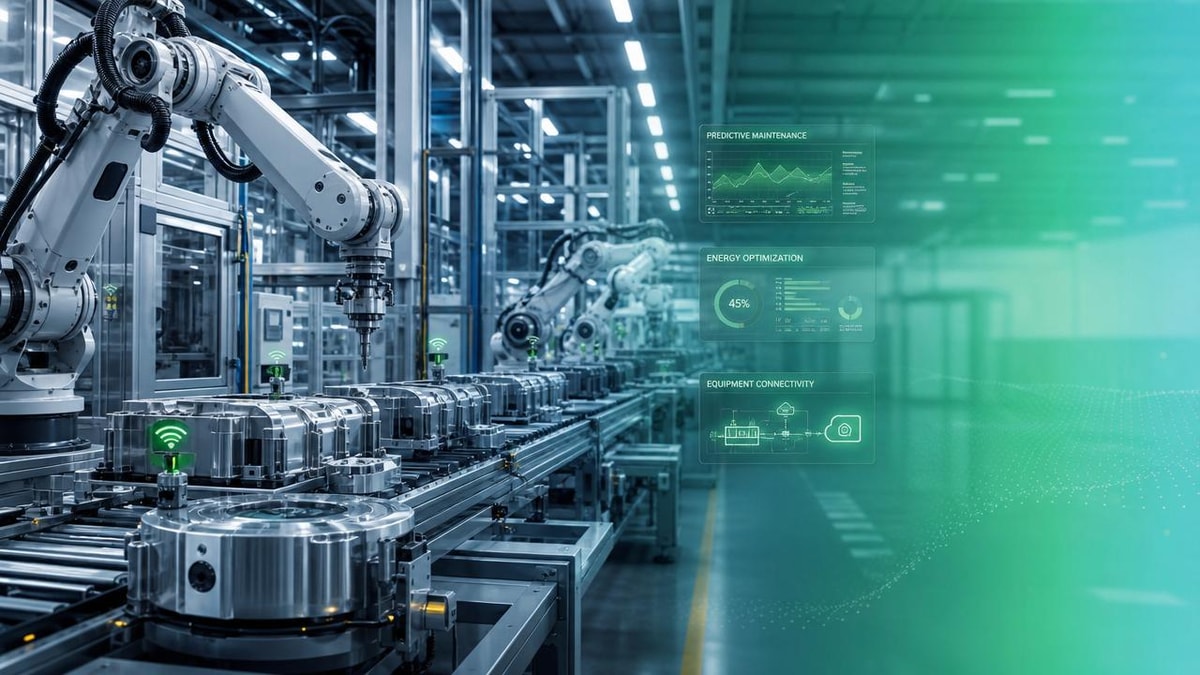
Machine connectivity is often the first practical step. Once equipment status is visible in real time, managers can identify hidden downtime, bottlenecks, and inconsistent operator practices. Predictive maintenance tools then build on that data to reduce unplanned stoppages. Instead of servicing machines on a fixed calendar, teams can schedule interventions based on actual performance signals such as vibration, temperature, or cycle irregularities.
AI-based planning is another high-impact area, especially in mixed-product environments. It can rebalance production priorities when order changes, labor constraints, or supplier delays occur. Meanwhile, machine vision can produce rapid returns in sectors where quality variation creates high rework costs. In electronics, medical components, and precision assembly, automated inspection often improves consistency faster than manual checks.
Collaborative robots can also be valuable, but they tend to produce better returns in repetitive, ergonomically difficult, or labor-sensitive tasks rather than across every process. The lesson is simple: the strongest smart manufacturing technology trends are those tied to a clearly measurable factory pain point.
How can decision-makers compare key trends before investing?
Information-focused decision-makers often need a structured way to compare technologies without getting lost in vendor promises. A useful approach is to evaluate each trend through five filters: problem fit, data readiness, integration complexity, expected payback, and organizational adoption.
This comparison shows why smart manufacturing technology trends should not be judged only by popularity. A digital twin may sound advanced, but if a factory still lacks reliable machine-level data, a simpler monitoring layer may generate more value first. Likewise, AI scheduling may fail if routing, cycle time, and inventory records are inaccurate. The best investment is often the one that matches current maturity while enabling the next layer of digital capability.
What are the most common mistakes companies make when interpreting smart manufacturing technology trends?
One common mistake is treating trends as a shopping list. Companies see smart manufacturing technology trends in trade media, then try to deploy several tools at once without a clear transformation sequence. This often creates disconnected pilots, fragmented dashboards, and low internal adoption. Technology should support an operational objective, not replace one.
A second mistake is underestimating data quality. Smart systems amplify the value of good data, but they also expose poor master data, inconsistent naming conventions, and undocumented process variation. If sensor signals, maintenance logs, production routing, and quality records are inconsistent, advanced analytics can mislead rather than improve decisions.
A third mistake is assuming that automation automatically means labor reduction. In many successful upgrades, labor is not removed so much as reallocated. Operators move from repetitive monitoring to exception handling, process improvement, and equipment oversight. That shift requires training, role clarity, and change management.
Another frequent issue is ignoring cybersecurity and interoperability. As factories connect more machines, software platforms, and external partners, the risk surface expands. Decision-makers should ask how systems authenticate users, segment networks, log access, and support secure updates. They should also confirm whether new tools can communicate with existing ERP, MES, PLM, and warehouse systems.
How should companies judge cost, timeline, and readiness for factory modernization?
There is no universal cost benchmark because readiness varies widely by plant age, process complexity, asset mix, and current digital maturity. However, a useful planning principle is to separate foundational upgrades from transformational upgrades. Foundational steps include connectivity, data collection, system mapping, and KPI definition. Transformational steps include AI orchestration, closed-loop optimization, and digital simulation at scale.
Factories that already have modern controls and consistent data can often launch targeted use cases within months. Facilities with fragmented systems may need a longer preparation phase before advanced applications make sense. Decision-makers should therefore ask not only “What does the technology cost?” but also “What conditions must exist for this technology to work well?”
A practical readiness review should examine current machine connectivity, historical downtime data, process standardization, team capability, integration architecture, and executive sponsorship. If these factors are weak, the early budget should prioritize enablement rather than ambitious dashboards. In many cases, the fastest route to ROI is a phased roadmap that proves value in one line, one plant, or one bottleneck category before broader rollout.
- Start with a measurable problem such as scrap, downtime, changeover delay, or missed delivery.
- Define baseline metrics before any upgrade begins.
- Confirm data sources, ownership, and system compatibility early.
- Run limited pilots with operational teams, not only IT stakeholders.
- Document lessons before scaling across sites.
Which industries and scenarios are seeing the strongest relevance?
Although smart manufacturing technology trends are widely discussed, their relevance becomes especially clear in industries where precision, traceability, and responsiveness directly affect business performance. Advanced manufacturing environments benefit from predictive maintenance and digital production control because uptime and throughput strongly shape margins. Green energy supply chains use smart factory tools to manage quality, scale, and demand shifts across components such as batteries, inverters, and power systems.
Smart electronics producers rely on machine vision, connected testing, and traceable workflows because product complexity is high and defects are expensive. Healthcare technology manufacturing often faces stricter documentation and validation needs, making digital records, process monitoring, and inspection intelligence especially valuable. Even supply chain software providers are increasingly tied to factory intelligence, since production visibility and logistics planning now influence each other in real time.
Across these sectors, the common theme is not simply automation. It is coordinated decision-making built on trustworthy operational data. That is why the same smart manufacturing technology trends may appear under different names across industries, yet solve similar business problems: faster response, lower risk, better quality, and stronger supplier credibility.
What questions should buyers, researchers, and partners ask before moving forward?
Before shortlisting vendors, technologies, or implementation partners, information researchers should clarify the decision context. The first question is what business outcome matters most: productivity, flexibility, quality, resilience, compliance, or energy performance. Different priorities lead to different upgrade paths. The second question is which process area creates the biggest measurable drag today. A broad digital vision is useful, but investment decisions are stronger when anchored to a visible constraint.
It is also important to ask how a solution integrates with current systems, how fast it can be piloted, what data it requires, how user adoption is supported, and what proof of value can be demonstrated in similar environments. Buyers should request examples that match their operational reality, not just generic success stories. A solution that works in high-volume standardized plants may not fit a low-volume high-mix operation without adaptation.
For organizations evaluating smart manufacturing technology trends through a strategic sourcing lens, these early questions reduce risk and improve comparability. They also help distinguish real operational capability from trend-driven marketing. If you need to confirm a specific upgrade path, implementation cycle, integration scope, expected ROI, pricing structure, or collaboration model, the best next step is to discuss current plant constraints, available data sources, target KPIs, internal ownership, and rollout priorities before deciding on any platform or equipment direction.
- smart manufacturing technology trends
- smart manufacturing
- IoT sensors
- supply chain software
- Advanced Manufacturing
- Green Energy
- Smart Electronics
- Healthcare Technology
- energy efficiency
- collaborative robots
- supply chain visibility
- Technology Trends
- smart factory
- industrial IoT
- sensors
- digital twin
- predictive maintenance
- machine vision
Get weekly intelligence in your inbox.
No noise. No sponsored content. Pure intelligence.
 May 03, 20265 Axis Milling Machines for Automotive: Buy New or Retrofit?5 Axis Milling Machines for Automotive: Buy New or Retrofit?
 May 03, 2026What to Check Before Sourcing OEM Machined Parts from IndiaWhat to Check Before Sourcing OEM Machined Parts from India
 May 03, 2026Why Sheet Metal Bending Machine Price Varies So MuchWhy Sheet Metal Bending Machine Price Varies So Much
 May 03, 2026Plastic Injection Molding Process Guide for Common Defect ControlPlastic Injection Molding Process Guide for Common Defect Control
 May 03, 2026Smart Manufacturing Technology Trends Reshaping Factory UpgradesSmart Manufacturing Technology Trends Reshaping Factory Upgrades
 May 03, 2026Automotive Die Casting Parts and the Hidden Cost of PorosityAutomotive Die Casting Parts and the Hidden Cost of Porosity
 May 03, 2026Assembly Line Robots: Flexibility Can Matter More Than SpeedAssembly Line Robots: Flexibility Can Matter More Than Speed
 May 03, 2026Smart Manufacturing in Energy: Which Upgrades Pay Back FasterSmart Manufacturing in Energy: Which Upgrades Pay Back Faster
 May 03, 2026Why Robotics Integration Fails After a Successful DemoWhy Robotics Integration Fails After a Successful Demo
 May 03, 2026How to Spot a Reliable Precision Components ManufacturerHow to Spot a Reliable Precision Components Manufacturer
 May 03, 2026Sheet Metal Bending Machine Specifications That Affect AccuracySheet Metal Bending Machine Specifications That Affect Accuracy
 May 03, 2026Oil and Gas Fabrication: Where Material Mismatch Gets ExpensiveOil and Gas Fabrication: Where Material Mismatch Gets Expensive
 May 03, 2026Construction Fabrication Delays Often Start at the Drawing StageConstruction Fabrication Delays Often Start at the Drawing Stage
 May 03, 2026Industrial Robotics Maintenance Guide for Fewer Surprise StopsIndustrial Robotics Maintenance Guide for Fewer Surprise Stops
 May 03, 2026Smart Manufacturing Technology Benefits Beyond Labor SavingsSmart Manufacturing Technology Benefits Beyond Labor Savings
 May 03, 2026Defense Components Need More Than Tight TolerancesDefense Components Need More Than Tight Tolerances
 May 03, 2026How to Vet a Die Casting Parts Supplier in MexicoHow to Vet a Die Casting Parts Supplier in Mexico
 May 03, 2026Food Processing Automation Systems and the Cost of DowntimeFood Processing Automation Systems and the Cost of Downtime
 May 03, 20265 Axis Milling for Aerospace: When Extra Precision Is Worth It5 Axis Milling for Aerospace: When Extra Precision Is Worth It
 May 03, 2026How OEM Medical Equipment Parts Affect Validation TimelinesHow OEM Medical Equipment Parts Affect Validation Timelines
 May 03, 2026Packaging Robotics Integration Problems That Slow CommissioningPackaging Robotics Integration Problems That Slow Commissioning
 May 03, 2026What Causes Rework in OEM Aerospace Machined PartsWhat Causes Rework in OEM Aerospace Machined Parts
 May 03, 2026Choosing Sheet Metal Bending Services in Europe Without DelaysChoosing Sheet Metal Bending Services in Europe Without Delays
 May 03, 2026Die Casting Parts for Electronics: Tolerance or Heat Control?Die Casting Parts for Electronics: Tolerance or Heat Control?
 May 03, 2026Marine Metal Fabrication Mistakes That Raise Corrosion RiskMarine Metal Fabrication Mistakes That Raise Corrosion Risk
 May 03, 2026When Welding Robots Improve Quality More Than ThroughputWhen Welding Robots Improve Quality More Than Throughput
 May 03, 2026Medical Device Molding Machines: What Specs Matter MostMedical Device Molding Machines: What Specs Matter Most