Die Casting Parts for Electronics: Tolerance or Heat Control?
When evaluating die casting parts for electronics, engineers often face a critical tradeoff: ultra-tight tolerance or reliable heat control. In high-density smart electronics, both directly affect fit, conductivity, durability, and production consistency. This article explores how technical teams can assess material choice, design priorities, and manufacturing requirements to balance performance, cost, and long-term reliability in demanding electronic applications.
For technical evaluators, this is rarely a theoretical debate. In compact housings, power modules, communication devices, sensor enclosures, and thermal interface structures, even a deviation of ±0.05 mm or a 10°C rise in localized operating temperature can influence assembly yield, EMI shielding consistency, or product lifespan. The right decision depends on application load, enclosure geometry, alloy behavior, and process capability rather than on a single universal rule.
Because die casting parts for electronics often serve both structural and thermal functions, procurement and engineering teams need a framework that aligns tolerance control, heat dissipation, cost, and supplier readiness. The sections below focus on that framework, with practical guidance for specification review, sourcing evaluation, and manufacturability planning.
Why Tolerance and Heat Control Compete in Electronic Die Castings
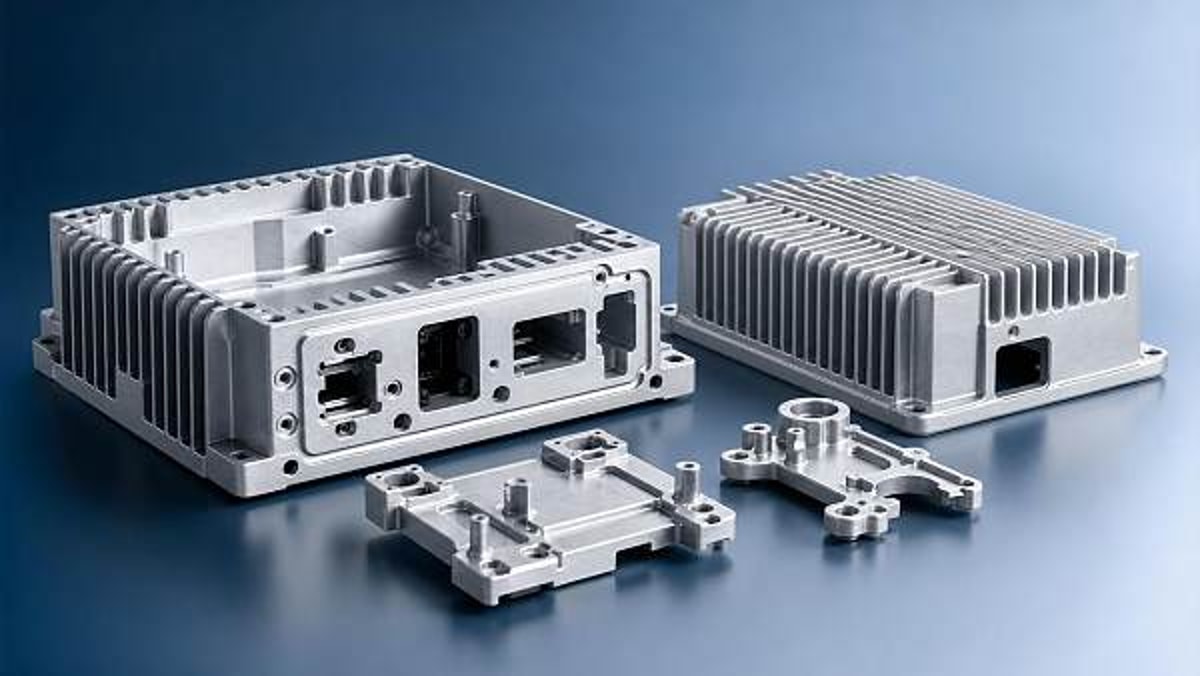
In many smart electronics programs, die casting parts for electronics must satisfy 2 jobs at once: they must fit precisely into multi-part assemblies and also help move heat away from chips, power devices, or connectors. These goals can pull design decisions in different directions. Thin walls improve weight and packaging density, but they can reduce thermal mass. Tight dimensional targets improve fit, but they may increase tooling complexity, trimming requirements, and reject rates.
Typical electronic applications where the tradeoff matters
The issue appears most often in products with dense layouts and limited airflow. Common examples include LED heat sink frames, telecom module housings, inverter control boxes, battery management enclosures, and shielding covers for industrial control electronics. In these scenarios, acceptable flatness may fall within 0.10–0.30 mm, while thermal performance may require stable heat conduction across contact surfaces over 24/7 operating cycles.
Where tolerance dominates
Tolerance takes priority when the casting interfaces with gaskets, PCB mounts, connectors, threaded inserts, or automated assembly fixtures. If stack-up error exceeds the design window, the result may be misalignment, screw stress, poor sealing, or lower first-pass yield. For some miniature assemblies, even moving from ±0.10 mm to ±0.20 mm can noticeably affect downstream fitting consistency.
Where heat control dominates
Heat control becomes decisive when the casting works as a passive heat spreader or enclosure-level thermal path. Power electronics, charging modules, and RF equipment often depend on efficient heat flow to maintain stable operation. If hot spots remain 8°C–15°C above target, electronic components may throttle, degrade faster, or require added fans, pads, or machining steps that increase cost.
The table below helps technical teams compare when each performance priority should lead the specification of die casting parts for electronics.
A common takeaway is that not every surface needs the same control level. In many programs, only 15%–30% of dimensions are truly critical. Segmenting critical surfaces, thermal contact areas, and cosmetic zones allows teams to avoid overspecification while preserving performance where it matters most.
How part geometry changes the decision
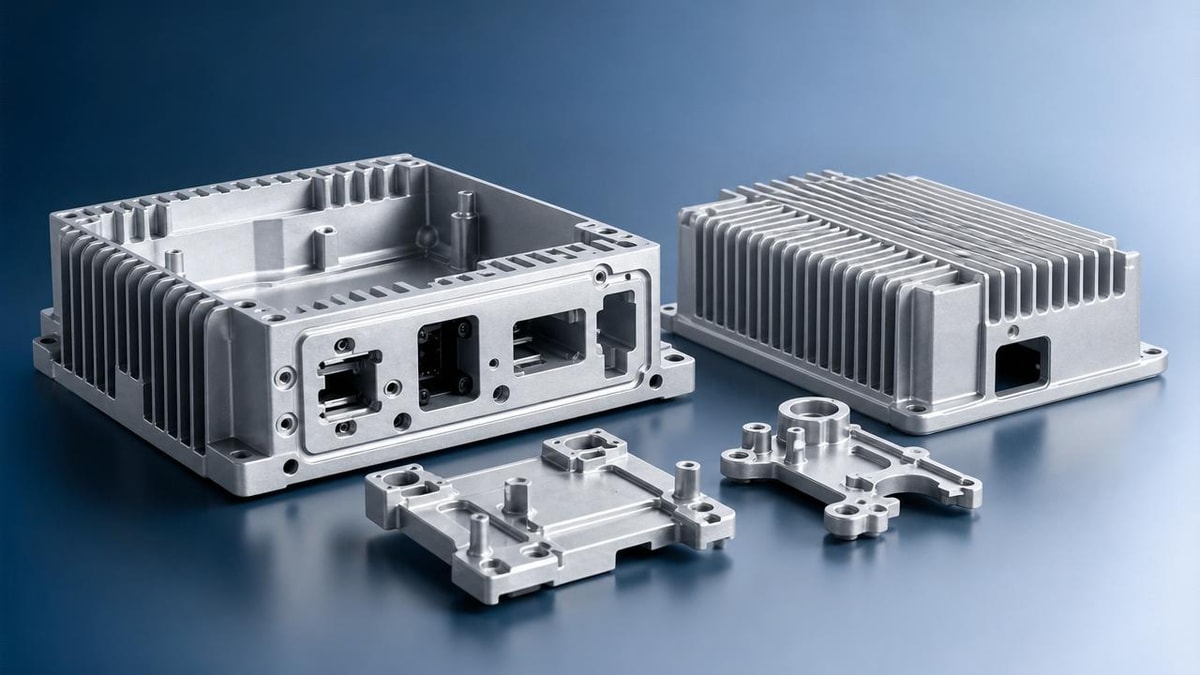
Geometry strongly influences whether tolerance or heat control should lead. Deep ribs, thin fins, blind cavities, and long unsupported spans increase the chance of distortion, porosity, or uneven cooling. A wall thickness of 1.5–2.0 mm may support compact design goals, but if thermal dissipation is central, engineers may prefer 2.5–3.5 mm in selected zones to stabilize heat flow and reduce local warpage.
- Thin-wall parts favor light weight and fast solidification but demand tighter process control.
- Broad flat surfaces need warpage planning, especially when mounting to boards or seals.
- Integrated fins improve heat release but can complicate filling and ejection behavior.
- Bosses and inserts may improve assembly but create local stress and sink-related risk.
For technical evaluators, the most effective question is not “Which is more important?” but “Which function fails first if the tradeoff is wrong?” That question usually reveals whether dimension control, thermal management, or a hybrid specification should guide supplier selection.
Material and Process Choices for Die Casting Parts for Electronics
Material selection is often the first practical lever. Most die casting parts for electronics use aluminum alloys because they offer a useful balance of castability, thermal conductivity, weight, and corrosion resistance. In some cases, zinc alloys are chosen for finer detail and dimensional stability, especially in smaller housings or shielding components. The tradeoff is that alloy choice can influence both heat transfer and achievable tolerances.
Aluminum versus zinc in electronic applications
Aluminum die castings are common in heat-sensitive devices due to their relatively strong thermal performance and lighter mass. Zinc die castings can support thin-wall precision and intricate features, sometimes with less post-machining for small parts. However, when operating temperatures are elevated or heat spreading is mission-critical, aluminum often provides a more suitable baseline for enclosure-level thermal management.
The comparison below gives procurement and engineering teams a practical view of how alloy and process choices affect evaluation criteria.
In practice, the best option is often not the cheapest alloy alone but the combination of alloy, gating strategy, cooling design, and post-processing plan. For example, a casting with one machined thermal pad and two machined datum faces may reach the required balance more efficiently than demanding ultra-tight tolerance across the entire part.
Process factors technical evaluators should verify
A supplier review for die casting parts for electronics should go beyond drawing acceptance. Technical teams should ask how the process controls heat balance during filling and solidification, how porosity is managed, and which dimensions are controlled in-tool versus corrected in machining. Lead time also matters. A new tool can take 4–8 weeks in many standard programs, while dimensional tuning after first shots may require another 1–3 iterations.
Key checks during supplier qualification
- Confirm which dimensions are critical to function and what tolerance window is realistic in production.
- Review alloy choice against operating temperature, enclosure role, and weight target.
- Check whether thermal contact surfaces will be cast, machined, or finished by secondary operations.
- Ask for porosity control methods in thermal or threaded regions.
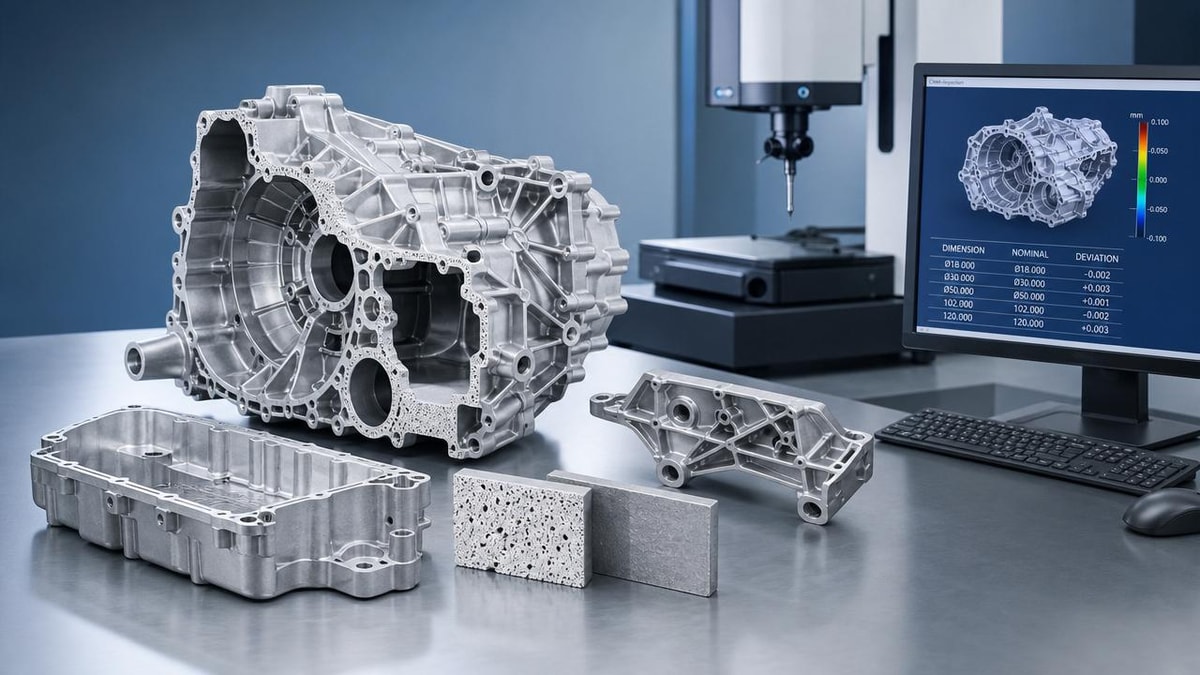
- Validate inspection capability such as CMM checks, flatness checks, and sample heat-path verification.
These 5 checks often prevent costly late-stage redesign. They also help procurement teams compare suppliers on manufacturing discipline rather than on quoted piece price alone.
How to Build a Balanced Specification Without Overengineering
Overengineering is one of the most common risks in sourcing die casting parts for electronics. When every feature receives a tight tolerance or every wall is designed for maximum heat capacity, the result is frequently higher scrap, slower cycle times, more machining, and weaker cost competitiveness. A better approach is to define performance by functional zone.
Use a three-zone specification model
A practical model divides the part into 3 categories: critical fit surfaces, thermal management surfaces, and general structural or cosmetic surfaces. Critical fit areas may require the tightest dimensional control, thermal zones may need better flatness or surface contact quality, and general zones can accept broader tolerances. This structure reduces unnecessary cost pressure on the full component.
- Zone 1: Datums, mounting faces, connector interfaces, seal grooves.
- Zone 2: Heat spreader pads, fin bases, power-device contact regions.
- Zone 3: Exterior walls, non-contact ribs, appearance-driven but non-critical features.
In many B2B electronics projects, this zoning method can shorten engineering clarification cycles by 20%–30% because suppliers know where to concentrate tooling, inspection, and secondary operations.
Decision matrix for balancing tolerance and thermal performance
The matrix below is useful when evaluating RFQs, prototype feedback, or design revisions for die casting parts for electronics.
The key conclusion is that balance is achieved by selective control. If every requirement is treated as top priority, neither manufacturability nor cost discipline will hold for long-term production.
Common mistakes to avoid
Three mistakes appear repeatedly in sourcing reviews. First, teams copy machining-style tolerances into castings without accounting for die casting behavior. Second, they ignore thermal interface flatness while focusing only on nominal conductivity of the alloy. Third, they postpone process review until after tooling release, when changes become slower and more expensive.
An effective technical review should happen in at least 3 stages: pre-RFQ specification alignment, DFM assessment before tool build, and first-article validation after sampling. This sequence reduces ambiguity and improves commercial predictability.
Procurement and Validation Strategy for Long-Term Reliability
For enterprise buyers and technical assessors, the decision is not only about whether a sample works once. It is about whether die casting parts for electronics can maintain dimensional and thermal stability across lot changes, peak demand, and field conditions. That is why procurement should connect specification review with process validation and supply continuity planning.
What to request from suppliers before nomination
Before final supplier selection, request a package that covers dimensional capability, process flow, secondary operations, inspection points, and expected production window. Even when no formal benchmark is available, teams can still compare practical indicators such as sample iteration count, tooling adjustment plan, and normal production lead time of 2–6 weeks after approval.
- Preliminary DFM comments on wall thickness, ribs, and gating constraints.
- Critical-dimension control plan with measurement method.
- Proposed alloy and surface finishing route.
- Secondary machining scope and tolerance rationale.
- Trial run, PPAP-like submission, or first-article reporting expectations.
Reliability checks that matter in electronics programs
Reliability in electronics is often revealed through cycles rather than static inspection. Depending on the application, teams may review thermal cycling, assembly repeatability, thread retention, coating adhesion, and enclosure flatness after repeated heating. If the part sees frequent on-off operation, 200–500 thermal cycles may be more informative than a single room-temperature measurement set.
Practical evaluation criteria
- Does the part maintain fit after coating, machining, and assembly torque?
- Do thermal contact zones remain stable after repeated heat exposure?
- Is porosity located away from threaded, sealing, or heat-critical areas?
- Can the supplier repeat the same output over pilot, ramp-up, and steady production?
When these questions are answered early, sourcing teams reduce the chance of hidden lifecycle cost. That includes rework, line stoppage, warranty claims, and engineering revision loops that can consume far more value than a small unit-price difference.
For companies operating in advanced manufacturing and smart electronics supply chains, the best sourcing outcomes come from aligning design intent with production reality. Die casting parts for electronics should not be judged only by print compliance or only by thermal ambition. They should be evaluated as multifunctional components whose value depends on fit, heat behavior, repeatability, and supply readiness working together.
A well-structured specification separates critical tolerance zones from thermal zones, chooses materials with a clear functional reason, and validates process capability before volume commitment. That approach helps technical evaluators make better comparisons, supports procurement discipline, and improves long-term field reliability. If you are reviewing a new program or requalifying an existing supplier base, now is the right time to get a more precise sourcing framework.
To explore more solution-oriented insights for electronics manufacturing, sourcing strategy, and component evaluation, connect with TradeNexus Pro and get tailored guidance, deeper market intelligence, or application-specific recommendations for your next project.
Get weekly intelligence in your inbox.
No noise. No sponsored content. Pure intelligence.
 May 03, 20265 Axis Milling Machines for Automotive: Buy New or Retrofit?5 Axis Milling Machines for Automotive: Buy New or Retrofit?
 May 03, 2026What to Check Before Sourcing OEM Machined Parts from IndiaWhat to Check Before Sourcing OEM Machined Parts from India
 May 03, 2026Why Sheet Metal Bending Machine Price Varies So MuchWhy Sheet Metal Bending Machine Price Varies So Much
 May 03, 2026Plastic Injection Molding Process Guide for Common Defect ControlPlastic Injection Molding Process Guide for Common Defect Control
 May 03, 2026Smart Manufacturing Technology Trends Reshaping Factory UpgradesSmart Manufacturing Technology Trends Reshaping Factory Upgrades
 May 03, 2026Automotive Die Casting Parts and the Hidden Cost of PorosityAutomotive Die Casting Parts and the Hidden Cost of Porosity
 May 03, 2026Assembly Line Robots: Flexibility Can Matter More Than SpeedAssembly Line Robots: Flexibility Can Matter More Than Speed
 May 03, 2026Smart Manufacturing in Energy: Which Upgrades Pay Back FasterSmart Manufacturing in Energy: Which Upgrades Pay Back Faster
 May 03, 2026Why Robotics Integration Fails After a Successful DemoWhy Robotics Integration Fails After a Successful Demo
 May 03, 2026How to Spot a Reliable Precision Components ManufacturerHow to Spot a Reliable Precision Components Manufacturer
 May 03, 2026Sheet Metal Bending Machine Specifications That Affect AccuracySheet Metal Bending Machine Specifications That Affect Accuracy
 May 03, 2026Oil and Gas Fabrication: Where Material Mismatch Gets ExpensiveOil and Gas Fabrication: Where Material Mismatch Gets Expensive
 May 03, 2026Construction Fabrication Delays Often Start at the Drawing StageConstruction Fabrication Delays Often Start at the Drawing Stage
 May 03, 2026Industrial Robotics Maintenance Guide for Fewer Surprise StopsIndustrial Robotics Maintenance Guide for Fewer Surprise Stops
 May 03, 2026Smart Manufacturing Technology Benefits Beyond Labor SavingsSmart Manufacturing Technology Benefits Beyond Labor Savings
 May 03, 2026Defense Components Need More Than Tight TolerancesDefense Components Need More Than Tight Tolerances
 May 03, 2026How to Vet a Die Casting Parts Supplier in MexicoHow to Vet a Die Casting Parts Supplier in Mexico
 May 03, 2026Food Processing Automation Systems and the Cost of DowntimeFood Processing Automation Systems and the Cost of Downtime
 May 03, 20265 Axis Milling for Aerospace: When Extra Precision Is Worth It5 Axis Milling for Aerospace: When Extra Precision Is Worth It
 May 03, 2026How OEM Medical Equipment Parts Affect Validation TimelinesHow OEM Medical Equipment Parts Affect Validation Timelines
 May 03, 2026Packaging Robotics Integration Problems That Slow CommissioningPackaging Robotics Integration Problems That Slow Commissioning
 May 03, 2026What Causes Rework in OEM Aerospace Machined PartsWhat Causes Rework in OEM Aerospace Machined Parts
 May 03, 2026Choosing Sheet Metal Bending Services in Europe Without DelaysChoosing Sheet Metal Bending Services in Europe Without Delays
 May 03, 2026Die Casting Parts for Electronics: Tolerance or Heat Control?Die Casting Parts for Electronics: Tolerance or Heat Control?
 May 03, 2026Marine Metal Fabrication Mistakes That Raise Corrosion RiskMarine Metal Fabrication Mistakes That Raise Corrosion Risk
 May 03, 2026When Welding Robots Improve Quality More Than ThroughputWhen Welding Robots Improve Quality More Than Throughput
 May 03, 2026Medical Device Molding Machines: What Specs Matter MostMedical Device Molding Machines: What Specs Matter Most