Medical Device Molding Machines: What Specs Matter Most
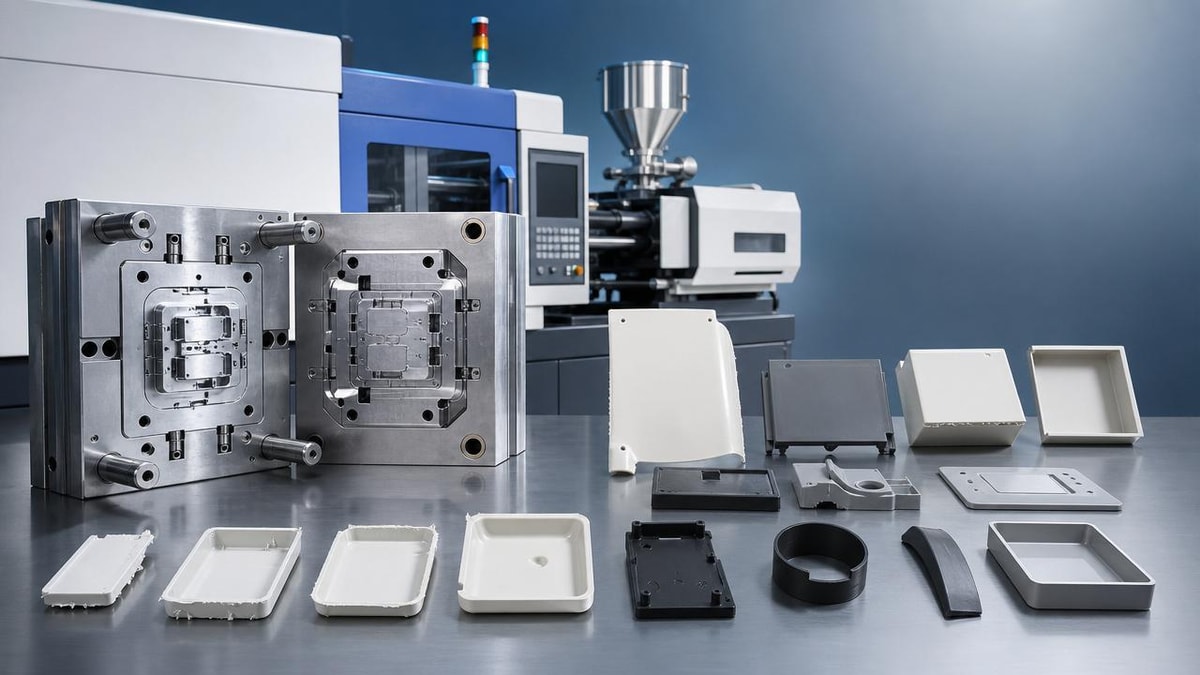
Choosing the right plastic injection molding machine for medical devices can directly affect compliance, precision, throughput, and long-term production costs. For technical evaluators, the most important specs go far beyond clamping force alone—they include shot consistency, cleanroom compatibility, material control, validation support, and automation readiness. This article highlights the key machine specifications that matter most when assessing medical molding performance and supplier fit.
In medical manufacturing, a machine that performs well in general plastics production may still fall short when molding syringe parts, diagnostic housings, IV components, inhaler parts, or implant-adjacent consumables. Tolerances can tighten to ±0.02 mm, documentation requirements can extend across IQ/OQ/PQ stages, and acceptable process drift may be far narrower than in consumer goods. That is why technical assessment should focus on process capability, validation support, and contamination control together—not on tonnage alone.
For procurement teams, engineering reviewers, and plant decision-makers using TradeNexus Pro for sourcing intelligence, the key challenge is comparing machine platforms in a way that balances compliance risk, output targets, automation plans, and total cost over 5 to 10 years. A well-specified plastic injection molding machine for medical devices should support repeatable part quality from pilot runs through scaled production without forcing expensive retrofits later.
Core Machine Specifications That Matter Most in Medical Molding
When evaluating a plastic injection molding machine for medical devices, the first filter should be process stability. Medical production often runs in validated windows with limited tolerance for variation in melt temperature, fill speed, hold pressure, and cooling time. A machine that can hold repeatability within tight ranges over 8-hour, 16-hour, or 24-hour schedules offers stronger long-term value than one with a lower initial price but inconsistent process behavior.
Injection Unit Precision and Shot-to-Shot Consistency
For many medical parts, especially those under 5 grams or with thin-wall geometry between 0.3 mm and 1.2 mm, injection control is more important than high clamping force. Technical evaluators should review screw diameter range, minimum shot size, injection speed response, and pressure control resolution. Machines intended for precision medical work typically need stable shot repeatability and a control platform that minimizes variation between cycles.
Electric or hybrid systems are often preferred for micro-molding and tight-tolerance components because they can improve positional control, reduce energy variability, and support cleaner operation. Hydraulic machines still have valid roles in some higher-volume or larger-part applications, but the evaluation should be based on actual process demands rather than legacy plant preference.
Key precision checkpoints
- Shot size matched to part weight and runner system, ideally avoiding use of only 10% to 15% of barrel capacity for critical parts
- Injection speed control suitable for thin-wall fill times that may fall under 0.5 second
- Back pressure and screw recovery stability for sensitive resins such as medical-grade PP, PC, COC, or PEEK blends
- Closed-loop control for pressure, position, and velocity across repeated cycles
Clamping System, Tie-Bar Space, and Mold Compatibility
Clamping force still matters, but it should be sized to mold design, projected area, cavity count, and injection pressure instead of being treated as the primary buying criterion. In medical molding, oversizing the clamp can increase energy consumption and floor-space demand, while undersizing can cause flash, parting-line issues, and inconsistent dimensions. Many technical teams evaluate a 15% to 25% safety margin above calculated clamping demand rather than defaulting to the next large platform.
Tie-bar spacing, platen size, ejector layout, and mold height range are equally important. A machine may have sufficient tonnage yet fail to support the mold footprint, hot runner routing, valve gate connections, or automation access required for medical tooling. Evaluators should confirm compatibility with current molds and at least 1 to 2 planned future programs.
The table below summarizes the machine parameters that technical reviewers typically prioritize when screening a plastic injection molding machine for medical devices across different production scenarios.
A common sourcing mistake is selecting a machine that appears technically robust on paper but lacks balance across these four categories. In practice, a plastic injection molding machine for medical devices should be assessed as a system platform, not as a single headline spec. That system view reduces validation delays and lowers the risk of mold transfer problems later.
Temperature Control and Resin Handling
Medical-grade polymers can be highly sensitive to heat history, moisture, and contamination. Evaluators should review barrel zone control, nozzle temperature stability, hot runner interface options, and material feed design. A temperature drift of even 2°C to 5°C can affect viscosity, gate freeze behavior, optical clarity, or dimensional consistency depending on the resin.
Drying integration is another major point. Some materials require precise dew point and residence-time control before molding. If the machine supplier cannot clearly define how material handling links with the molding cell, process capability may degrade even if the press itself is well designed. This is especially relevant for transparent diagnostic parts, microfluidic components, and parts subject to sterilization stress.
Cleanroom Fit, Validation Support, and Automation Readiness
A plastic injection molding machine for medical devices must fit the operating environment as much as the process window. In ISO-classified production areas, machine design details such as lubrication management, particle generation, enclosed mechanics, cable routing, and surface cleanability can materially affect acceptance. Technical evaluators should verify whether the machine is genuinely configured for medical production or simply marketed that way.
Cleanroom Compatibility and Contamination Control
For medical plants running ISO 7 or ISO 8 cleanroom operations, contamination risk is not limited to airborne particles. Oil mist, abrasion dust, poor guarding design, and difficult-to-clean surfaces can all create process and audit concerns. Electric machines are often selected because they can reduce hydraulic contamination risk, but the full machine layout still needs review, including guarding, moving interfaces, and waste management paths.
Technical teams should ask suppliers for specific details on cleanroom-oriented configurations: sealed covers, stainless contact surfaces where relevant, centralized lubrication, reduced-emission motion systems, and compatible interfaces for enclosed conveyors or robotic part handling. If a supplier can only provide generic brochures, that may be a signal that medical deployment experience is limited.
Cleanroom evaluation checklist
- Review lubrication points and whether exposed grease can enter the molding zone.
- Check if guarding and covers support fast cleaning within routine maintenance windows.
- Confirm cable management and hose routing to avoid particle traps and awkward wipe-down areas.
- Assess compatibility with laminar flow, robotic extraction, and closed-bin handling.
- Verify whether installation can be segmented between technical area and cleanroom side if required.
Validation Documentation and Process Traceability
In medical projects, documentation support is often a deciding factor. A lower-cost machine can become expensive if the supplier cannot support FAT, SAT, IQ, OQ, software documentation, alarm history, calibration records, or controlled change management. Technical evaluators should review validation packages before purchase order approval, not after installation.
Machine controls should store and export process data such as cycle time, fill pressure profile, cushion position, melt temperature, hold time, and alarm events. At a minimum, decision-makers should confirm data retention logic, user-level access control, and interface options for MES, SPC, or factory digitalization systems. In many facilities, traceability expectations now extend over 3 to 7 years depending on product class and quality system design.
The following comparison helps technical teams distinguish basic machine supply from a stronger medical-ready support package.
This distinction matters because the machine purchase is only one part of the qualification burden. A better-supported platform can shorten ramp-up by several weeks, reduce engineering rework, and improve audit readiness over the machine life cycle.
Automation, Vision Integration, and Future Capacity
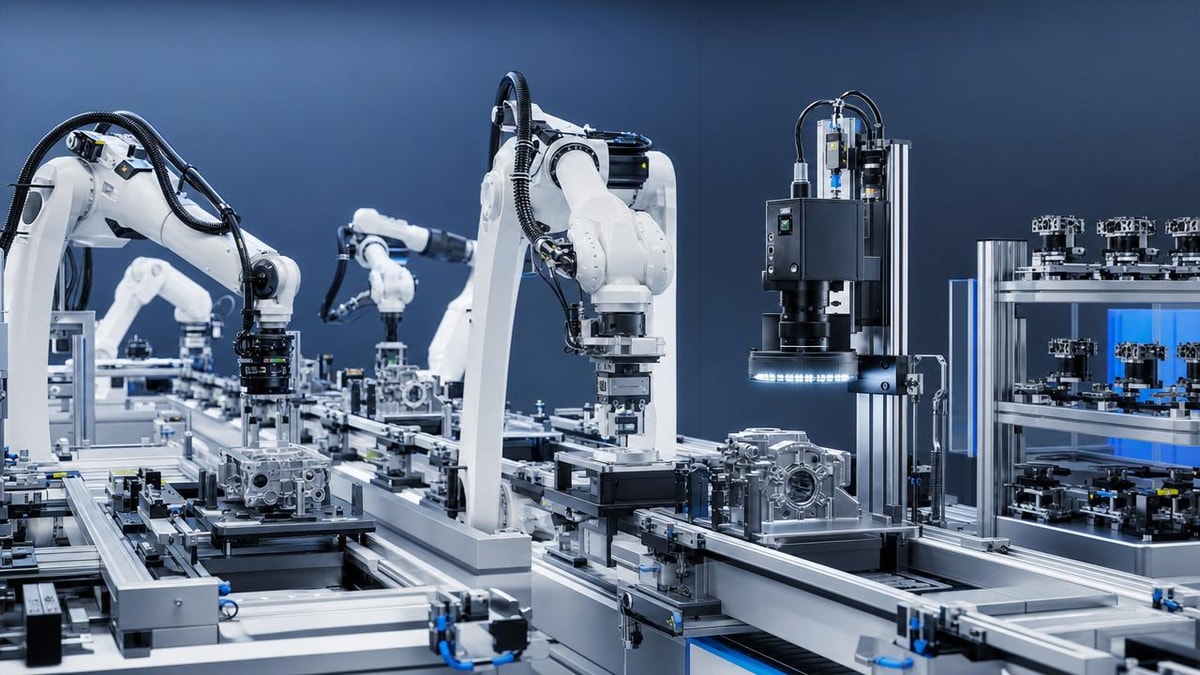
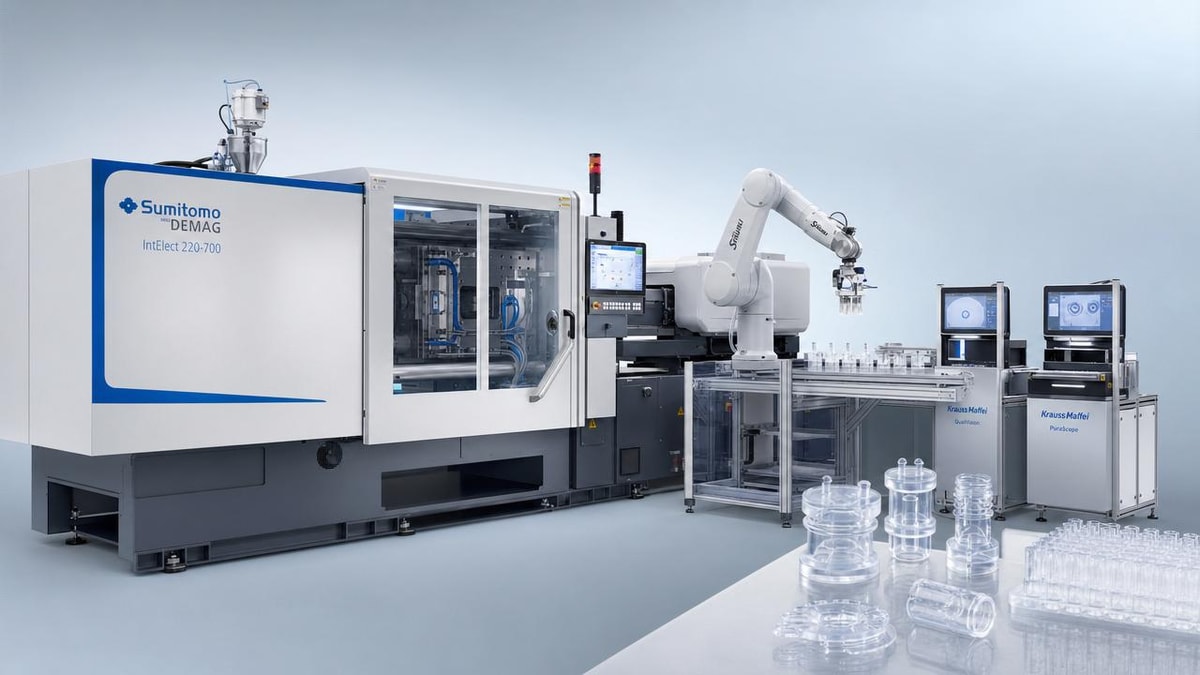
Many medical molders no longer buy stand-alone presses. They buy production cells. That means the plastic injection molding machine for medical devices should support robotic take-out, insert loading where needed, in-line vision inspection, cavity separation, leak testing, and packaging interfaces. Machine footprint and controller architecture should allow these additions without major reconfiguration 12 to 24 months later.
Key practical checks include robot mounting provisions, machine communication protocols, cycle synchronization, and alarm integration. If the target cycle time is 8 seconds, a robot or inspection module that adds 1.5 seconds may materially affect annual output. Technical evaluators should model total cell throughput, not just nominal press cycle data. On a 3-shift schedule, even a 0.8-second cycle reduction can produce a meaningful gain over a full year.
How Technical Evaluators Should Compare Suppliers and Reduce Procurement Risk
Selecting the right supplier for a plastic injection molding machine for medical devices requires a structured scoring process. A technically strong machine can still underperform if service response, spare parts access, application support, or validation experience are weak. For cross-border procurement especially, the supplier assessment should cover machine capability, lifecycle support, and implementation discipline together.
A Practical 4-Part Evaluation Model
Many procurement and engineering teams use a weighted matrix. A practical model often includes 4 blocks: machine specifications, medical application fit, documentation and compliance support, and after-sales service. Weighting can vary by project, but high-risk medical programs often assign 25% to 35% of the total score to validation and traceability factors rather than only output or price.
- Machine performance: injection stability, clamp design, energy use, cycle consistency
- Application fit: resin range, cleanroom suitability, mold compatibility, part complexity
- Documentation: FAT/SAT readiness, IQ/OQ package depth, software records, audit support
- Service support: spare parts lead time, remote diagnostics, local technician access, training
Questions worth asking during supplier review
Ask how long critical spare parts typically take to arrive, whether remote troubleshooting is available within 24 hours, and how many medical installations the supplier has supported with documented validation packages. Also ask whether the supplier can run mold trials using your target resin and whether process data from that trial can be exported for engineering review.
Common Evaluation Mistakes
One frequent mistake is choosing a machine with excess tonnage and insufficient injection precision. Another is underestimating utility requirements such as chilled water stability, compressed air quality, resin drying interfaces, and floor vibration conditions. A third is treating automation as a future optional add-on without reserving space, interfaces, and control logic from the beginning.
Technical evaluators should also avoid relying only on brochure numbers. Machine demonstrations should be tied to the actual part family, target resin, cavity count, and expected annual volume. A machine that performs well on a simple cap or housing may not hold the same process window on a microfluidic component, a medical connector, or a thin transparent cover with strict cosmetic requirements.
Lifecycle Cost Instead of Purchase Price Alone
The lowest quoted machine cost rarely equals the lowest production cost. Over a 5-year horizon, unplanned downtime, scrap rates, validation delays, spare parts waiting periods, and operator intervention can outweigh the initial price gap. If a machine saves only 0.5% in scrap on a high-volume disposable product, the annual financial impact may already justify a more capable platform.
For this reason, sourcing decisions should include at least 6 commercial-technical inputs: capital cost, installation timeline, qualification burden, energy use, maintenance interval, and productivity under validated conditions. In medical programs, the best procurement result is usually the one that reduces risk-adjusted total cost, not the one with the smallest first invoice.
Final Selection Priorities for Medical Device Molding Projects
For technical evaluators, the best plastic injection molding machine for medical devices is the one that can repeatedly hold process stability, fit cleanroom and documentation demands, integrate with automation, and scale with future production plans. Precision injection control, mold compatibility, contamination-aware design, traceable data handling, and supplier support should all be verified before award—not assumed after delivery.
In complex B2B sourcing environments, better decisions come from comparing not just machines, but full production readiness. TradeNexus Pro helps enterprise buyers and technical teams navigate that comparison with deeper sector intelligence, supplier context, and clearer evaluation criteria. If you are screening options for a new medical molding line or upgrading an existing cell, contact us to discuss your requirements, get a tailored sourcing view, and explore more medical manufacturing solutions.
Get weekly intelligence in your inbox.
No noise. No sponsored content. Pure intelligence.
 May 03, 20265 Axis Milling Machines for Automotive: Buy New or Retrofit?5 Axis Milling Machines for Automotive: Buy New or Retrofit?
 May 03, 2026What to Check Before Sourcing OEM Machined Parts from IndiaWhat to Check Before Sourcing OEM Machined Parts from India
 May 03, 2026Why Sheet Metal Bending Machine Price Varies So MuchWhy Sheet Metal Bending Machine Price Varies So Much
 May 03, 2026Plastic Injection Molding Process Guide for Common Defect ControlPlastic Injection Molding Process Guide for Common Defect Control
 May 03, 2026Smart Manufacturing Technology Trends Reshaping Factory UpgradesSmart Manufacturing Technology Trends Reshaping Factory Upgrades
 May 03, 2026Automotive Die Casting Parts and the Hidden Cost of PorosityAutomotive Die Casting Parts and the Hidden Cost of Porosity
 May 03, 2026Assembly Line Robots: Flexibility Can Matter More Than SpeedAssembly Line Robots: Flexibility Can Matter More Than Speed
 May 03, 2026Smart Manufacturing in Energy: Which Upgrades Pay Back FasterSmart Manufacturing in Energy: Which Upgrades Pay Back Faster
 May 03, 2026Why Robotics Integration Fails After a Successful DemoWhy Robotics Integration Fails After a Successful Demo
 May 03, 2026How to Spot a Reliable Precision Components ManufacturerHow to Spot a Reliable Precision Components Manufacturer
 May 03, 2026Sheet Metal Bending Machine Specifications That Affect AccuracySheet Metal Bending Machine Specifications That Affect Accuracy
 May 03, 2026Oil and Gas Fabrication: Where Material Mismatch Gets ExpensiveOil and Gas Fabrication: Where Material Mismatch Gets Expensive
 May 03, 2026Construction Fabrication Delays Often Start at the Drawing StageConstruction Fabrication Delays Often Start at the Drawing Stage
 May 03, 2026Industrial Robotics Maintenance Guide for Fewer Surprise StopsIndustrial Robotics Maintenance Guide for Fewer Surprise Stops
 May 03, 2026Smart Manufacturing Technology Benefits Beyond Labor SavingsSmart Manufacturing Technology Benefits Beyond Labor Savings
 May 03, 2026Defense Components Need More Than Tight TolerancesDefense Components Need More Than Tight Tolerances
 May 03, 2026How to Vet a Die Casting Parts Supplier in MexicoHow to Vet a Die Casting Parts Supplier in Mexico
 May 03, 2026Food Processing Automation Systems and the Cost of DowntimeFood Processing Automation Systems and the Cost of Downtime
 May 03, 20265 Axis Milling for Aerospace: When Extra Precision Is Worth It5 Axis Milling for Aerospace: When Extra Precision Is Worth It
 May 03, 2026How OEM Medical Equipment Parts Affect Validation TimelinesHow OEM Medical Equipment Parts Affect Validation Timelines
 May 03, 2026Packaging Robotics Integration Problems That Slow CommissioningPackaging Robotics Integration Problems That Slow Commissioning
 May 03, 2026What Causes Rework in OEM Aerospace Machined PartsWhat Causes Rework in OEM Aerospace Machined Parts
 May 03, 2026Choosing Sheet Metal Bending Services in Europe Without DelaysChoosing Sheet Metal Bending Services in Europe Without Delays
 May 03, 2026Die Casting Parts for Electronics: Tolerance or Heat Control?Die Casting Parts for Electronics: Tolerance or Heat Control?
 May 03, 2026Marine Metal Fabrication Mistakes That Raise Corrosion RiskMarine Metal Fabrication Mistakes That Raise Corrosion Risk
 May 03, 2026When Welding Robots Improve Quality More Than ThroughputWhen Welding Robots Improve Quality More Than Throughput
 May 03, 2026Medical Device Molding Machines: What Specs Matter MostMedical Device Molding Machines: What Specs Matter Most