Automotive Die Casting Parts and the Hidden Cost of Porosity
Porosity is one of the most overlooked risks in die casting parts for automotive applications, quietly affecting structural integrity, leak resistance, and long-term safety performance. For quality control and safety management teams, understanding its hidden cost goes far beyond scrap rates—it directly impacts compliance, warranty exposure, and brand trust. This article explores why porosity matters, how it forms, and what decision-makers should watch before defects turn into costly failures.
Why scenario differences matter more than a generic defect rate
In practice, porosity does not carry the same risk in every component. A cosmetic bracket, a transmission housing, a battery enclosure, and a steering-related structural part may all be produced as die casting parts for automotive applications, yet the consequence of internal voids is dramatically different in each case. This is why quality control teams cannot rely only on average rejection rates or supplier capability presentations. They need a scenario-based view of risk.
For safety managers, the issue is even more important. Porosity can remain invisible during early inspection but still contribute to crack initiation, pressure leakage, weld failure, machining rework, or reduced fatigue life later in the product lifecycle. A part may pass dimensional checks and still carry a latent reliability problem. In sectors where electrification, lightweighting, and higher thermal loads are increasing design pressure, the hidden cost of porosity becomes a cross-functional problem involving engineering, procurement, quality, and compliance.
The right question is not simply, “Does the casting contain porosity?” The better question is, “In this exact use case, what kind of porosity is acceptable, where is it located, and what downstream process or safety outcome could it affect?”
Where porosity risk appears across typical automotive use cases
The business value of die casting parts for automotive applications comes from speed, repeatability, and weight reduction. However, the same process efficiency that makes die casting attractive can also create trapped gas, shrinkage cavities, and micro-void networks if process windows are not tightly controlled. Different use scenarios expose those weaknesses in different ways.
Powertrain and fluid-handling components
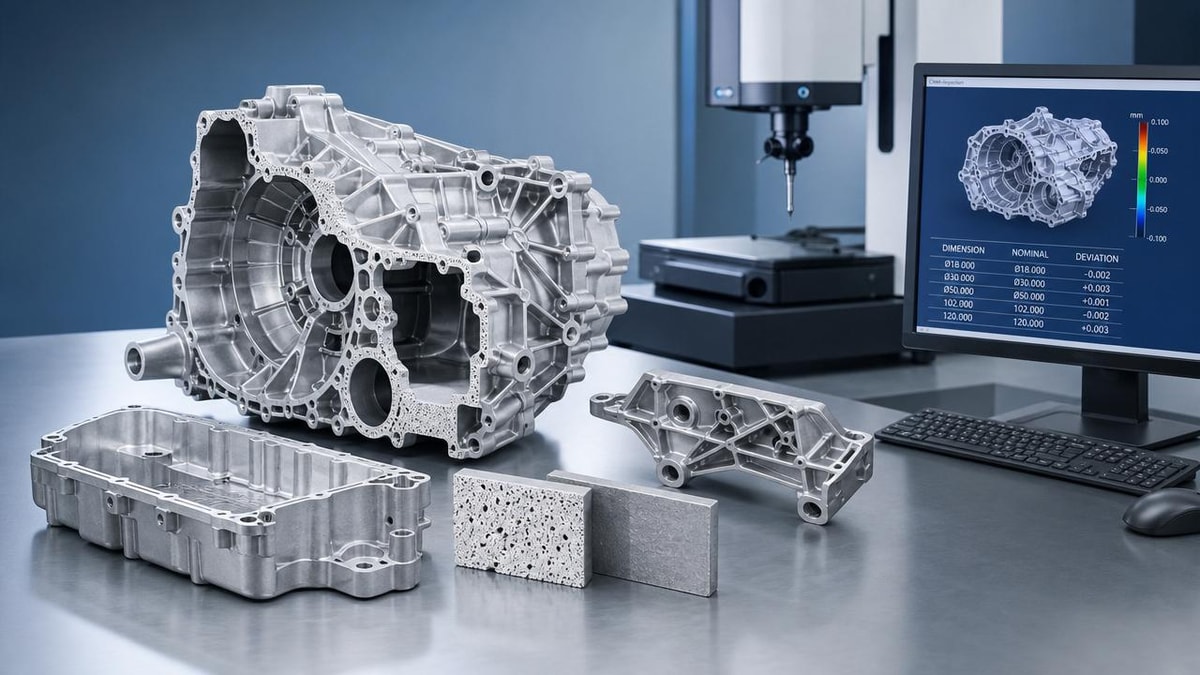
Transmission cases, pump bodies, motor housings, and valve bodies face high sensitivity to leak paths and machining exposure. In these scenarios, porosity is not just a metallurgical concern. It can become a sealing failure, oil leakage issue, pressure instability problem, or post-machining scrap event when hidden voids are opened on critical surfaces. QC personnel should focus on internal density consistency, sealing zones, and pressure-test correlation rather than broad pass/fail assumptions.
Structural and crash-relevant components
When die casting parts for automotive applications are used in cross-members, shock towers, seat structures, or large body-in-white assemblies, the concern shifts toward fatigue resistance, crack propagation, and energy absorption under impact. Even small porosity clusters can reduce confidence in load-bearing regions. Here, the cost of a hidden void is not only warranty replacement. It can influence occupant safety margins, validation outcomes, and legal exposure if a failure occurs in the field.
EV battery enclosures and thermal management systems
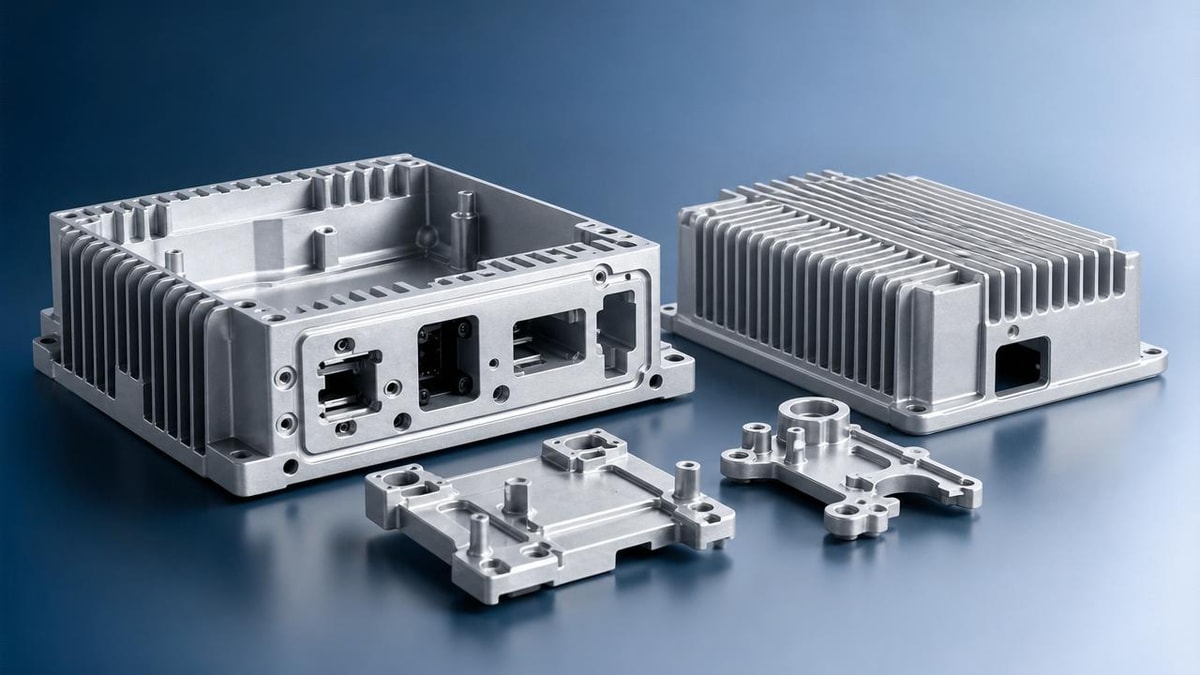
Electrified vehicle programs have increased the use of large aluminum castings. Battery trays, inverter housings, and cooling plates demand a difficult combination of light weight, dimensional stability, thermal performance, and sealing reliability. In these scenarios, porosity can interfere with ingress protection, thermal interface quality, welding, and corrosion behavior. Safety managers should treat these parts as multi-risk products where one internal defect may trigger electrical, thermal, and structural consequences at the same time.
A practical comparison table for QC and safety review
The table below helps compare how porosity should be judged across common scenarios involving die casting parts for automotive applications. It is designed for review meetings where engineering, supplier quality, and safety functions need a shared decision framework.
How porosity forms and why some scenarios are less forgiving
Although porosity is often discussed as one issue, its origin matters. Gas porosity commonly comes from trapped air, lubricant decomposition, or turbulent fill behavior. Shrinkage porosity is linked to solidification imbalance, hot spots, or insufficient feeding. Vacuum-assisted die casting, better vent design, alloy control, gating optimization, and thermal balance can reduce these defects, but not every supplier applies the same discipline or monitoring depth.
Some scenarios tolerate minor dispersed porosity if it stays away from machined, sealed, or highly loaded zones. Others do not. For example, a low-load cover may survive with internal voids that would be unacceptable in a pressure-bearing housing. Likewise, a part intended for welding or heat treatment may react badly to gas expansion from pores that seemed harmless during incoming inspection. This is why the phrase die casting parts for automotive applications should never be treated as a single quality category. The application defines the real risk threshold.
The hidden cost beyond scrap: what decision-makers often miss
The visible cost of porosity is straightforward: more rejected parts, more sorting, more operator time, and more supplier claims. The hidden cost is broader and usually more damaging.
- Machining losses increase when pores open on sealing faces or threaded areas.
- Leak testing becomes unstable, creating false failures and process bottlenecks.
- Joining quality drops in welding, bonding, or impregnation-dependent assemblies.
- Validation timelines slip when CT scans or destructive analysis reveal late-stage inconsistency.
- Warranty claims rise if pores trigger field leaks, vibration cracks, or corrosion-assisted damage.
- Brand trust suffers when “lightweight innovation” is associated with durability concerns.
For procurement and supplier quality teams, these hidden costs also distort total landed cost. A low quoted piece price for die casting parts for automotive applications may look attractive until containment actions, extra non-destructive testing, launch delays, and customer complaints are included. In many programs, porosity is not the biggest line-item cost. It is the defect that multiplies cost across departments.
What different stakeholders should prioritize by scenario
For quality control personnel
Move beyond generic porosity limits and build inspection plans around functional zones. Ask whether the part will be machined, sealed, welded, or fatigue-loaded. Require process capability evidence tied to the actual use case, not only to raw casting acceptance. Where possible, connect X-ray or CT findings to downstream defects such as leakage, dimensional movement, or tool wear.
For safety management teams
Prioritize parts with failure consequences that extend to occupants, thermal events, or loss of vehicle control. In these cases, review whether porosity limits were set by engineering convenience or by true hazard analysis. Safety managers should also verify escalation rules: when defect patterns shift, who decides whether production continues, and based on what evidence?
For sourcing and supplier development
Assess whether the supplier’s process is matched to the part scenario. Large thin-wall EV castings, for instance, may require stronger vacuum control, better simulation validation, and tighter thermal management than conventional housings. A supplier capable of simple cosmetic castings may not be ready for mission-critical die casting parts for automotive applications.
Common misjudgments in real-world application decisions
Several recurring mistakes increase porosity-related risk:
- Using one acceptance standard for all cast components regardless of function.
- Approving castings based on surface appearance while ignoring internal critical zones.
- Assuming impregnation solves all leakage concerns without checking fatigue or weld impact.
- Focusing on launch samples but neglecting process drift during volume production.
- Treating CT or X-ray as occasional troubleshooting tools instead of strategic control methods.
These misjudgments are especially risky when programs move fast, such as EV platform launches or cost-down redesigns. In those environments, internal casting quality can become a delayed issue that only appears after machining, assembly, or road use. By then, correction is far more expensive.
Scenario-based checklist before approving die casting parts for automotive applications
Before release, PPAP approval, or supplier nomination, teams should confirm the following:
- Define the part scenario clearly: cosmetic, sealing, structural, thermal, or mixed-function.
- Map critical zones where porosity would create unacceptable functional risk.
- Match inspection methods to scenario severity, including CT, X-ray, pressure testing, and section analysis.
- Review whether machining, welding, coating, or heat exposure could worsen pore effects.
- Verify ongoing process controls, not just sample-level compliance.
- Link acceptance decisions to field consequence, not only immediate production yield.
FAQ: practical questions from QC and safety teams
Are all porous castings unacceptable?
No. Many die casting parts for automotive applications contain some level of internal porosity. The key issue is whether the size, location, and distribution interfere with function, durability, or safety in the specific scenario.
Which scenarios deserve the strictest controls?
Pressure-containing parts, weld-critical enclosures, fatigue-loaded structures, and components tied to occupant or battery safety usually deserve the highest scrutiny.
Can a supplier’s low defect rate guarantee low field risk?
Not by itself. A low overall defect rate may still hide concentrated porosity in high-risk zones. Scenario-based control plans and functional validation are more reliable indicators.
Final takeaway for high-stakes sourcing and quality decisions
For teams responsible for quality, safety, and supplier approval, porosity should be treated as an application-specific business risk, not just a foundry defect. The true question is how die casting parts for automotive applications will behave in their real operating environment: under pressure, vibration, thermal cycling, crash loads, sealing demand, or high-volume machining. When that context is clear, acceptance criteria become smarter, supplier comparisons become more accurate, and hidden cost becomes easier to prevent.
TradeNexus Pro supports decision-makers who need this deeper level of industrial clarity. If your team is evaluating suppliers, comparing manufacturing routes, or setting quality expectations for die casting parts for automotive applications, start with the scenario, map the risk zones, and require evidence that matches the real consequence of failure.
Get weekly intelligence in your inbox.
No noise. No sponsored content. Pure intelligence.
 May 03, 20265 Axis Milling Machines for Automotive: Buy New or Retrofit?5 Axis Milling Machines for Automotive: Buy New or Retrofit?
 May 03, 2026What to Check Before Sourcing OEM Machined Parts from IndiaWhat to Check Before Sourcing OEM Machined Parts from India
 May 03, 2026Why Sheet Metal Bending Machine Price Varies So MuchWhy Sheet Metal Bending Machine Price Varies So Much
 May 03, 2026Plastic Injection Molding Process Guide for Common Defect ControlPlastic Injection Molding Process Guide for Common Defect Control
 May 03, 2026Smart Manufacturing Technology Trends Reshaping Factory UpgradesSmart Manufacturing Technology Trends Reshaping Factory Upgrades
 May 03, 2026Automotive Die Casting Parts and the Hidden Cost of PorosityAutomotive Die Casting Parts and the Hidden Cost of Porosity
 May 03, 2026Assembly Line Robots: Flexibility Can Matter More Than SpeedAssembly Line Robots: Flexibility Can Matter More Than Speed
 May 03, 2026Smart Manufacturing in Energy: Which Upgrades Pay Back FasterSmart Manufacturing in Energy: Which Upgrades Pay Back Faster
 May 03, 2026Why Robotics Integration Fails After a Successful DemoWhy Robotics Integration Fails After a Successful Demo
 May 03, 2026How to Spot a Reliable Precision Components ManufacturerHow to Spot a Reliable Precision Components Manufacturer
 May 03, 2026Sheet Metal Bending Machine Specifications That Affect AccuracySheet Metal Bending Machine Specifications That Affect Accuracy
 May 03, 2026Oil and Gas Fabrication: Where Material Mismatch Gets ExpensiveOil and Gas Fabrication: Where Material Mismatch Gets Expensive
 May 03, 2026Construction Fabrication Delays Often Start at the Drawing StageConstruction Fabrication Delays Often Start at the Drawing Stage
 May 03, 2026Industrial Robotics Maintenance Guide for Fewer Surprise StopsIndustrial Robotics Maintenance Guide for Fewer Surprise Stops
 May 03, 2026Smart Manufacturing Technology Benefits Beyond Labor SavingsSmart Manufacturing Technology Benefits Beyond Labor Savings
 May 03, 2026Defense Components Need More Than Tight TolerancesDefense Components Need More Than Tight Tolerances
 May 03, 2026How to Vet a Die Casting Parts Supplier in MexicoHow to Vet a Die Casting Parts Supplier in Mexico
 May 03, 2026Food Processing Automation Systems and the Cost of DowntimeFood Processing Automation Systems and the Cost of Downtime
 May 03, 20265 Axis Milling for Aerospace: When Extra Precision Is Worth It5 Axis Milling for Aerospace: When Extra Precision Is Worth It
 May 03, 2026How OEM Medical Equipment Parts Affect Validation TimelinesHow OEM Medical Equipment Parts Affect Validation Timelines
 May 03, 2026Packaging Robotics Integration Problems That Slow CommissioningPackaging Robotics Integration Problems That Slow Commissioning
 May 03, 2026What Causes Rework in OEM Aerospace Machined PartsWhat Causes Rework in OEM Aerospace Machined Parts
 May 03, 2026Choosing Sheet Metal Bending Services in Europe Without DelaysChoosing Sheet Metal Bending Services in Europe Without Delays
 May 03, 2026Die Casting Parts for Electronics: Tolerance or Heat Control?Die Casting Parts for Electronics: Tolerance or Heat Control?
 May 03, 2026Marine Metal Fabrication Mistakes That Raise Corrosion RiskMarine Metal Fabrication Mistakes That Raise Corrosion Risk
 May 03, 2026When Welding Robots Improve Quality More Than ThroughputWhen Welding Robots Improve Quality More Than Throughput
 May 03, 2026Medical Device Molding Machines: What Specs Matter MostMedical Device Molding Machines: What Specs Matter Most