Industrial Robotics Maintenance Guide for Fewer Surprise Stops
An effective industrial robotics maintenance guide helps after-sales service teams reduce unplanned downtime, extend equipment life, and improve service response quality. For technicians facing recurring faults, urgent repairs, and performance drift, this guide highlights practical maintenance priorities, inspection routines, and warning signs that support faster troubleshooting and fewer surprise stops.
For after-sales maintenance teams, the core search intent behind an industrial robotics maintenance guide is clear: they need a practical way to prevent unexpected shutdowns, diagnose faults faster, and keep robots operating safely between service calls. They are not looking for a generic overview of robotics. They want field-ready maintenance priorities, inspection logic, and clear signs of wear before a line stops.
The issues that matter most to this audience are recurring alarms, servo instability, cable fatigue, lubrication failure, overheating, backlash, sensor drift, and communication faults that appear intermittently and are hard to reproduce. They also care about what to inspect first, how often to inspect it, and how to distinguish a small deviation from a real risk of failure.
The most useful content, therefore, is not broad theory. It is structured maintenance planning, failure pattern recognition, inspection checklists, preventive actions, and troubleshooting guidance that helps technicians make sound decisions under time pressure. This article focuses on those needs and keeps general background to a minimum.
Why surprise stops happen even when a robot still seems to run normally
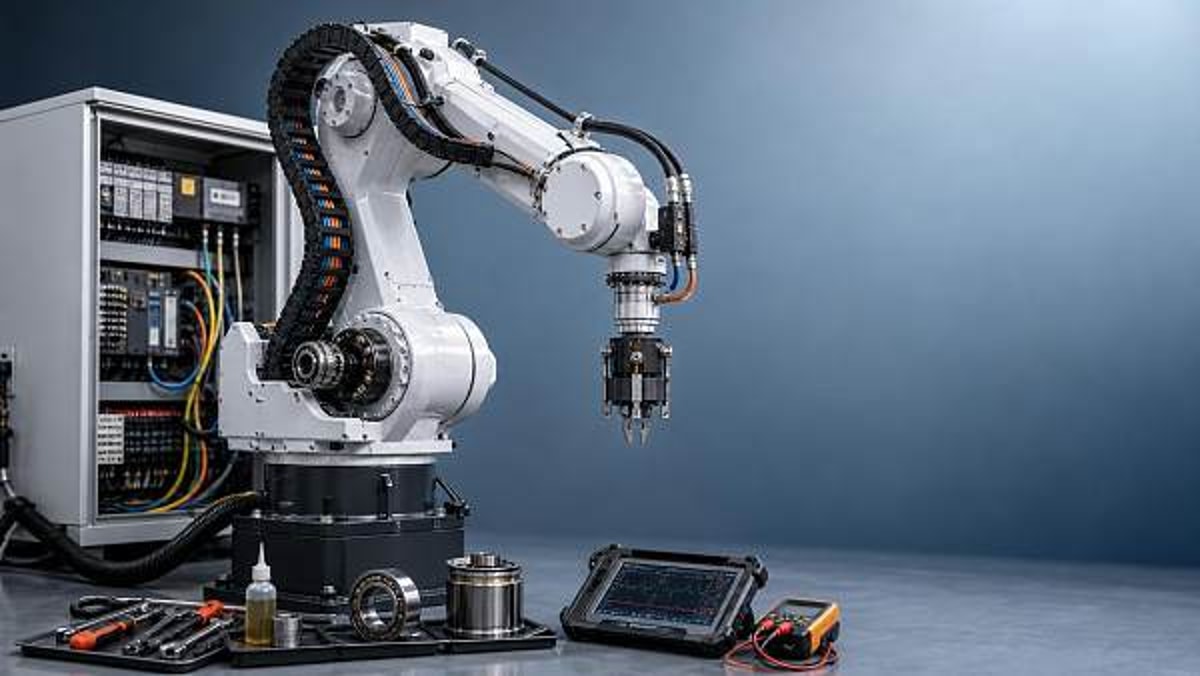
Many industrial robots do not fail suddenly without warning. In most cases, the warning signs appear earlier as minor cycle inconsistencies, temperature rise, noise changes, excessive vibration, drifting accuracy, slower acceleration, cable jacket wear, or repeated alarm resets. The problem is that these signals are often treated as isolated issues instead of linked symptoms.
For after-sales teams, this is where a strong industrial robotics maintenance guide becomes valuable. The goal is not only to fix the fault that triggered the service request. It is to identify the chain of causes behind it. A robot that stops because of encoder communication loss may actually have long-term cable flex fatigue. A robot with repeatability complaints may have contamination, lubrication issues, or joint wear rather than a software defect.
Unexpected downtime usually comes from one of four patterns: preventive maintenance intervals are too generic for the real duty cycle, inspection routines miss early degradation, spare part replacement is delayed beyond safe wear limits, or troubleshooting focuses only on the alarm code rather than the mechanical and electrical conditions around it.
Technicians who reduce surprise stops consistently tend to do one thing differently: they compare current operating behavior with a known baseline. They know what “normal” sounds like, what expected temperature ranges are, how cable routing should look through full motion, and which repeat faults usually point to hidden wear rather than random events.
What after-sales maintenance teams should inspect first on every service visit
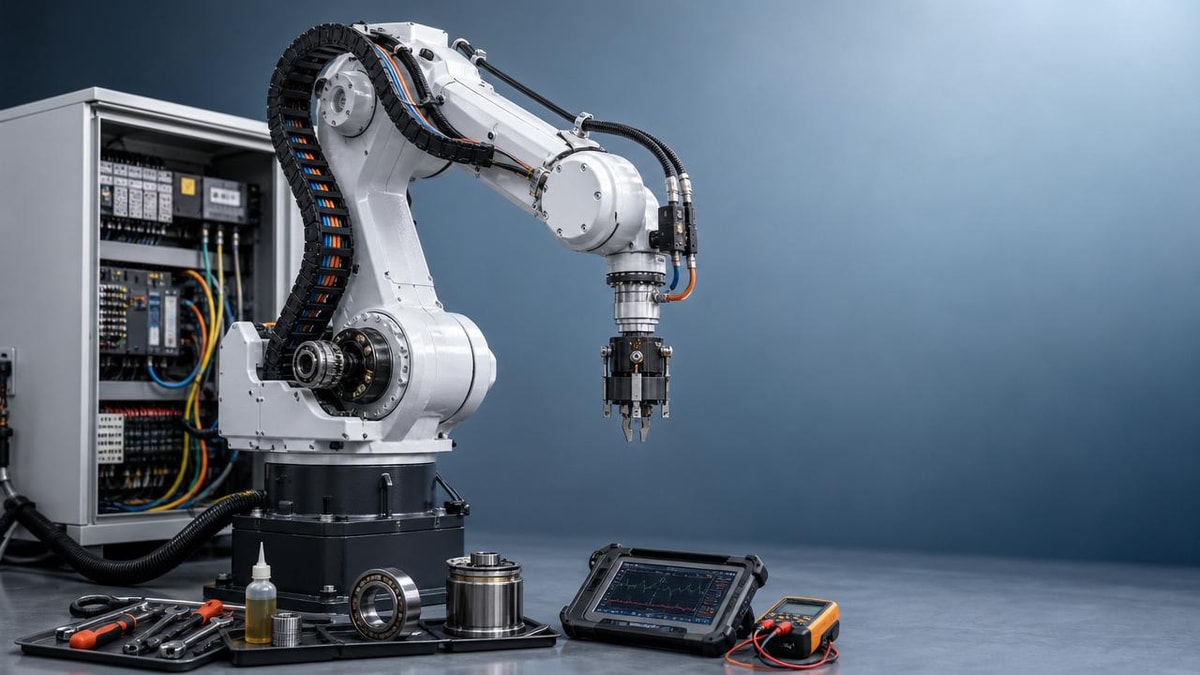
When time is limited, inspection priorities matter more than long theoretical lists. A good visit starts with the components most likely to create unplanned stoppages or safety risk. That means checking power quality, controller alarms, joint condition, cable movement, connector integrity, lubrication status, end-of-arm tooling condition, and environmental contamination around the robot cell.
Start with the controller and error history. Repeated minor alarms often reveal the real failure pattern before a major stop occurs. Look for servo overload events, communication dropouts, thermal warnings, brake release issues, encoder faults, and safety circuit interruptions. Even if the machine is currently running, alarm frequency and repetition matter. A fault that clears after reset but returns twice a week is already a maintenance event, not a minor nuisance.
Next, inspect the robot mechanically through its full programmed range, if site conditions allow. Pay attention to unusual resistance, vibration, backlash, harsh deceleration sound, and abnormal heat concentration near a joint or gearbox. Mechanical wear rarely improves on its own. If there is noticeable change from the last visit, the equipment should be flagged for deeper inspection before production demand increases.
Cables and dress packs deserve special attention because they often fail gradually and produce inconsistent symptoms. Look for flattening, twisting, rubbing points, sharp bend radii, cracked insulation, exposed shielding, and connector looseness. On robots with high-speed repetitive motion, the cable path is as important as cable condition. A healthy cable that is routed badly may still fail prematurely.
Then inspect lubrication points and contamination exposure. Missing or degraded grease can accelerate wear in gears and bearings, while dust, coolant mist, weld spatter, or chemical vapor can damage seals and connectors. In harsh environments, standard maintenance intervals may be too long. The real interval should reflect workload, contamination level, and motion intensity.
How to build a maintenance routine that reflects actual robot usage
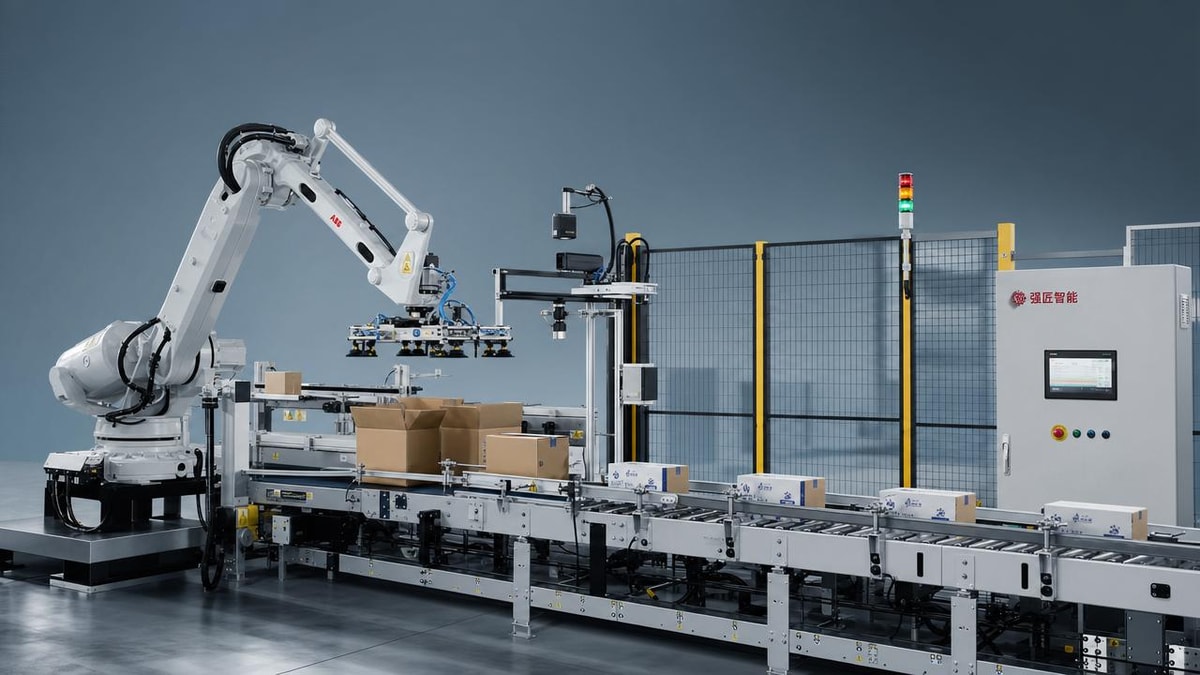
One of the biggest weaknesses in many maintenance programs is that all robots are placed on the same schedule. In reality, a palletizing robot running light, repetitive cycles does not age like a welding robot exposed to heat and spatter, or a handling robot making high-speed multi-axis movements every few seconds. A useful industrial robotics maintenance guide must account for duty cycle, environment, payload, and motion profile.
A practical routine works best when divided into daily, weekly, monthly, quarterly, and annual checks. Daily checks should be simple enough for operators or local maintenance staff: visual inspection, alarm review, air pressure or vacuum checks where relevant, abnormal noise detection, and confirmation that no cables or hoses are rubbing. Weekly tasks can include more detailed cleaning, connector checks, and verification of tool condition and fastener security.
Monthly and quarterly checks are where after-sales service teams add the most value. These should include joint temperature comparison, backlash evaluation where possible, brake performance observation, battery condition review, controller fan and filter inspection, cable bend point assessment, and lubrication confirmation. If the robot operates in a high-cycle or dirty environment, these intervals may need shortening.
Annual maintenance should not become a box-ticking exercise. It should be treated as a health review of the full robot system. This is the time to compare performance data over the previous year, evaluate recurring alarms, review replaced parts, inspect wear trends, and recommend upgrades or preventive replacements before another peak production period. The best annual service does not just maintain the robot; it helps the customer plan risk and budget.
The warning signs that should never be ignored
Some symptoms are commonly underestimated because the robot still completes its tasks most of the time. For after-sales technicians, these are exactly the signs that deserve early action. Repeated minor servo alarms, axis overcurrent events, position drift, increased cycle variation, inconsistent gripping, sudden need for frequent reteaching, and rising controller temperature all suggest that something is changing in the system.
Unusual sound is especially important. Clicking, grinding, pulsing, or high-pitched whining from a joint may indicate lubrication loss, bearing wear, gearbox wear, or motor stress. Not every sound means immediate failure, but every new sound means the robot has moved away from baseline condition. That shift should be documented and investigated.
Heat is another major indicator. If one joint consistently runs hotter than the others under similar loading, it may point to friction increase, brake drag, lubrication problems, or electrical stress. Temperature trend matters more than a single reading. Service teams should record temperature in consistent operating states and compare across visits.
Intermittent faults also deserve more respect than they usually get. A communication error that happens only during certain motion paths may reflect cable fatigue. A safety fault that appears only during shift change may involve external wiring, grounding, or connector movement. A vision alignment issue that worsens over time may be caused by vibration or mechanical looseness rather than camera calibration alone.
Faster troubleshooting: how to isolate the real cause instead of replacing parts blindly
In urgent field service, pressure often pushes teams to replace the most obvious component quickly. Sometimes that works, but it also creates repeat visits when the true cause remains unresolved. Effective troubleshooting follows a sequence: confirm the fault, reproduce the condition if possible, review fault history, inspect related mechanical and electrical systems, compare with baseline performance, then decide whether the root cause is likely electrical, mechanical, environmental, or procedural.
For example, if a robot shows unstable positioning, do not start by assuming encoder failure. Check mounting rigidity, joint play, payload changes, end-of-arm tooling condition, fixture stability, and recent reteach history. If a servo overload alarm appears, inspect for increased friction, binding cables, changed payload, collision history, and acceleration settings before replacing the motor or amplifier.
A useful field method is to separate symptoms into three groups. First are motion-related symptoms such as jerkiness, overshoot, vibration, or poor repeatability. Second are power and control symptoms such as resets, communication losses, thermal alarms, or fan issues. Third are process-related symptoms such as poor weld path, missed pick points, or inconsistent product handling. This grouping helps prevent confusion between a robot fault and a process equipment fault.
Documentation is part of troubleshooting, not an administrative afterthought. Record the exact alarm, environmental condition, axis involved, cycle stage, and corrective action taken. Photos of cable wear, connector corrosion, or contamination patterns can save hours on the next visit. For teams managing multiple customer sites, good records turn scattered field experience into a repeatable service advantage.
Parts, spares, and service decisions that reduce repeat downtime
Surprise stops are often made worse not by the original failure, but by poor spare strategy. If common wear items are unavailable, a minor issue turns into a production crisis. After-sales teams should help customers identify critical spares based on failure probability and recovery time, not just purchase price. Encoder batteries, controller fans, key relays, connectors, dress pack components, lubrication materials, and high-flex cables are often more important than customers assume.
It is also important to distinguish between parts that can safely run to condition and parts that should be replaced on schedule. Some components show measurable degradation trends. Others fail with little warning once they pass a wear threshold. A mature maintenance plan should classify components accordingly and define what data justifies continued operation.
Service recommendations should be evidence-based. If a gearbox replacement is suggested, the technician should be able to point to backlash increase, heat trend, noise pattern, contamination exposure, or motion quality change. This builds trust and supports better budget decisions. It also aligns with the standards expected by decision-makers who rely on reliable industrial insight platforms such as TradeNexus Pro, where technical authority and practical evidence matter more than generic claims.
How after-sales teams can improve service quality, not just repair speed
Repair speed matters, but customers remember whether the same issue returns. The strongest after-sales teams combine quick response with preventive insight. They explain the likely cause in plain language, identify what can be monitored next, and leave behind a realistic action plan. This may include shortened inspection intervals, cable rerouting, contamination shielding, lubrication adjustment, operator checks, or training on early warning signs.
Service quality also improves when technicians standardize how they inspect and report. A consistent checklist, fault classification method, and visit summary make it easier to compare sites, identify patterns, and escalate issues before failure becomes critical. This is especially valuable for fleets of robots spread across multiple facilities.
Where possible, teams should move from reactive support toward condition-informed maintenance. Even simple trend tracking of temperatures, alarm frequency, cycle consistency, and replaced parts can reveal which robots are approaching risk. The goal is not to add unnecessary complexity. It is to create just enough structure that emerging faults become visible early.
Conclusion: a practical industrial robotics maintenance guide is really a downtime prevention system
The most effective industrial robotics maintenance guide does more than list tasks. It helps after-sales maintenance personnel recognize early warning signs, prioritize high-risk inspections, troubleshoot root causes accurately, and recommend actions that prevent repeat failures. That is what reduces surprise stops in the real world.
If a robot is still running but showing new heat, sound, vibration, alarm repetition, or cable wear, the right time to act is now, not after the next shutdown. For service teams, fewer surprises come from disciplined observation, better documentation, usage-based maintenance intervals, and a clear understanding that small deviations are often the first stage of major downtime.
In short, the best maintenance results do not come from doing more random checks. They come from inspecting the right points, at the right frequency, with enough technical judgment to connect symptoms before production is interrupted. That is the standard after-sales teams should aim for when building a maintenance program that truly keeps industrial robots available, safe, and productive.
Get weekly intelligence in your inbox.
No noise. No sponsored content. Pure intelligence.
 May 03, 20265 Axis Milling Machines for Automotive: Buy New or Retrofit?5 Axis Milling Machines for Automotive: Buy New or Retrofit?
 May 03, 2026What to Check Before Sourcing OEM Machined Parts from IndiaWhat to Check Before Sourcing OEM Machined Parts from India
 May 03, 2026Why Sheet Metal Bending Machine Price Varies So MuchWhy Sheet Metal Bending Machine Price Varies So Much
 May 03, 2026Plastic Injection Molding Process Guide for Common Defect ControlPlastic Injection Molding Process Guide for Common Defect Control
 May 03, 2026Smart Manufacturing Technology Trends Reshaping Factory UpgradesSmart Manufacturing Technology Trends Reshaping Factory Upgrades
 May 03, 2026Automotive Die Casting Parts and the Hidden Cost of PorosityAutomotive Die Casting Parts and the Hidden Cost of Porosity
 May 03, 2026Assembly Line Robots: Flexibility Can Matter More Than SpeedAssembly Line Robots: Flexibility Can Matter More Than Speed
 May 03, 2026Smart Manufacturing in Energy: Which Upgrades Pay Back FasterSmart Manufacturing in Energy: Which Upgrades Pay Back Faster
 May 03, 2026Why Robotics Integration Fails After a Successful DemoWhy Robotics Integration Fails After a Successful Demo
 May 03, 2026How to Spot a Reliable Precision Components ManufacturerHow to Spot a Reliable Precision Components Manufacturer
 May 03, 2026Sheet Metal Bending Machine Specifications That Affect AccuracySheet Metal Bending Machine Specifications That Affect Accuracy
 May 03, 2026Oil and Gas Fabrication: Where Material Mismatch Gets ExpensiveOil and Gas Fabrication: Where Material Mismatch Gets Expensive
 May 03, 2026Construction Fabrication Delays Often Start at the Drawing StageConstruction Fabrication Delays Often Start at the Drawing Stage
 May 03, 2026Industrial Robotics Maintenance Guide for Fewer Surprise StopsIndustrial Robotics Maintenance Guide for Fewer Surprise Stops
 May 03, 2026Smart Manufacturing Technology Benefits Beyond Labor SavingsSmart Manufacturing Technology Benefits Beyond Labor Savings
 May 03, 2026Defense Components Need More Than Tight TolerancesDefense Components Need More Than Tight Tolerances
 May 03, 2026How to Vet a Die Casting Parts Supplier in MexicoHow to Vet a Die Casting Parts Supplier in Mexico
 May 03, 2026Food Processing Automation Systems and the Cost of DowntimeFood Processing Automation Systems and the Cost of Downtime
 May 03, 20265 Axis Milling for Aerospace: When Extra Precision Is Worth It5 Axis Milling for Aerospace: When Extra Precision Is Worth It
 May 03, 2026How OEM Medical Equipment Parts Affect Validation TimelinesHow OEM Medical Equipment Parts Affect Validation Timelines
 May 03, 2026Packaging Robotics Integration Problems That Slow CommissioningPackaging Robotics Integration Problems That Slow Commissioning
 May 03, 2026What Causes Rework in OEM Aerospace Machined PartsWhat Causes Rework in OEM Aerospace Machined Parts
 May 03, 2026Choosing Sheet Metal Bending Services in Europe Without DelaysChoosing Sheet Metal Bending Services in Europe Without Delays
 May 03, 2026Die Casting Parts for Electronics: Tolerance or Heat Control?Die Casting Parts for Electronics: Tolerance or Heat Control?
 May 03, 2026Marine Metal Fabrication Mistakes That Raise Corrosion RiskMarine Metal Fabrication Mistakes That Raise Corrosion Risk
 May 03, 2026When Welding Robots Improve Quality More Than ThroughputWhen Welding Robots Improve Quality More Than Throughput
 May 03, 2026Medical Device Molding Machines: What Specs Matter MostMedical Device Molding Machines: What Specs Matter Most