Marine Metal Fabrication Mistakes That Raise Corrosion Risk
In marine projects, even small fabrication errors can accelerate corrosion, inflate maintenance costs, and shorten asset life. For project leaders overseeing custom metal fabrication for marine applications, understanding the most common design, material, and finishing mistakes is essential to protecting performance, safety, and budget. This article highlights where corrosion risk often begins and how to prevent it early.
For engineering managers, fabrication buyers, and project leads, corrosion is rarely caused by a single dramatic failure. More often, it starts with 5 or 6 small decisions made during design review, material selection, welding, surface preparation, or installation planning. In offshore platforms, port equipment, ship components, desalination skids, and coastal processing assets, those decisions can affect inspection intervals, repair frequency, and total lifecycle cost for 10 to 25 years.
This is why custom metal fabrication for marine environments demands tighter coordination between design, procurement, fabrication, coating, and field teams than standard industrial work. Salt spray, humidity above 70%, cyclic wet-dry exposure, and galvanic contact between dissimilar metals all raise the stakes. The sections below focus on the fabrication mistakes that most often increase corrosion risk and the practical controls project leaders can build into scope, vendor selection, and QA workflows.
Why Corrosion Starts Earlier Than Most Marine Teams Expect
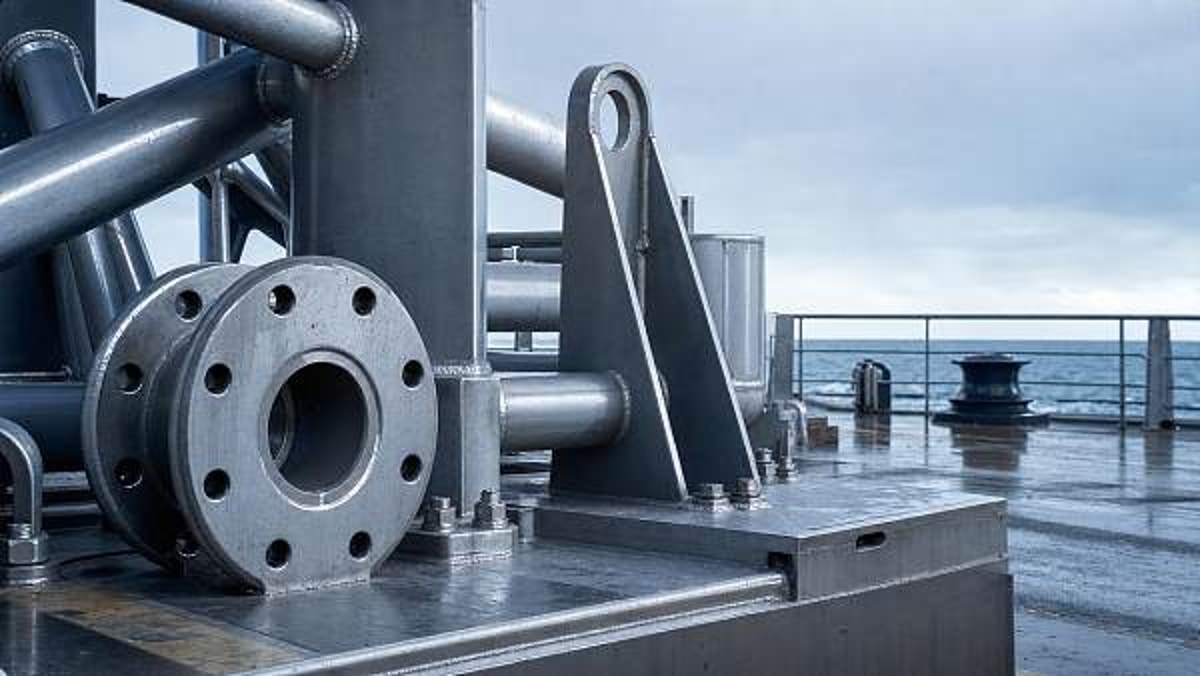
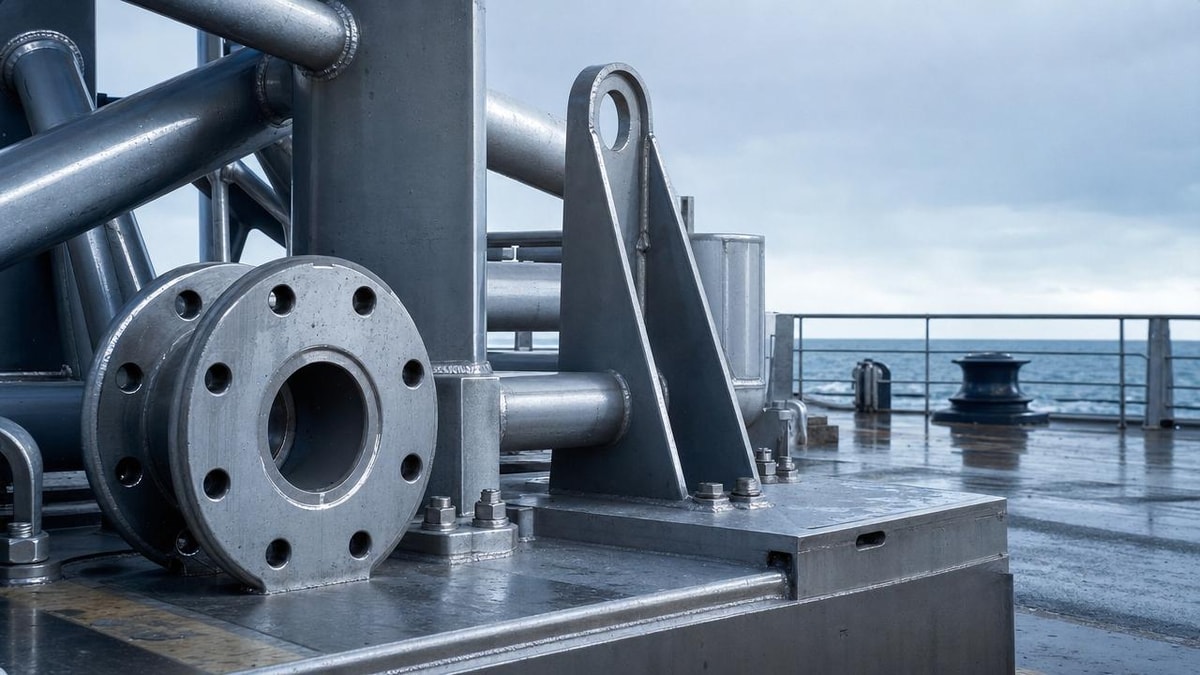
In many marine assets, corrosion begins before commissioning. If fabricated parts leave the workshop with poor edge preparation, trapped moisture points, or inconsistent weld finishing, corrosion cells can form within the first 3 to 12 months of service. This is especially true in splash zones, ballast-related structures, deck hardware supports, cable tray systems, pipe supports, and fabricated housings exposed to chloride-rich air.
Project leaders often focus on alloy grade alone, but the geometry of the fabricated part is just as important. A premium alloy can still underperform if the design creates water traps, inaccessible coating areas, or crevices narrower than 0.5 to 1.0 mm where salt residue accumulates. In custom metal fabrication for marine use, corrosion resistance is not only a material property; it is a system outcome shaped by design, process control, and finishing discipline.
Environmental exposure categories that increase fabrication sensitivity
Different marine settings change how tolerant a project can be to fabrication errors. A sheltered indoor coastal facility may allow wider maintenance windows than open-deck offshore equipment. Once exposure shifts from intermittent humidity to continuous salt mist, even minor defects become more costly.
- Atmospheric coastal exposure: moderate to high chloride deposition, frequent condensation.
- Splash and tidal zones: repeated wet-dry cycles, highly aggressive attack rates.
- Immersed service: oxygen differentials and coating defect sensitivity become critical.
- Enclosed damp compartments: hidden corrosion risk due to poor drainage and limited inspection access.
Typical early-stage triggers in fabricated assemblies
The table below helps project teams identify where corrosion often starts and which fabrication-stage oversight usually caused it. These are common patterns seen across fabricated brackets, access structures, skid frames, enclosures, manifolds, and support steel in marine service.
The key lesson is that corrosion risk is often embedded in fabrication details long before a part reaches the dock or vessel. When project teams review custom metal fabrication for marine applications, they should assess geometry, weld quality, drainage, and coating access with the same discipline used for load calculations and dimensional tolerances.
The Most Common Fabrication Mistakes That Raise Corrosion Risk
Below are the mistakes that most often undermine marine durability. These issues appear in both carbon steel and stainless assemblies, and they can affect simple brackets as much as multi-ton skid structures. For project managers, each mistake also maps to a procurement or QA checkpoint that can be specified before fabrication starts.
1. Choosing material by price tier instead of exposure profile
A common error is selecting a base metal that suits indoor industrial service but not marine chloride exposure. For example, a stainless grade that performs adequately inland may tea-stain or pit rapidly near the coast if welds are not passivated and surface contamination is present. Carbon steel can also perform well, but only when coating systems, thickness allowances, and maintenance access are planned from day 1.
Project teams should define at least 4 material decision inputs: exposure zone, expected service life, maintenance interval, and compatibility with adjoining metals. When custom metal fabrication for marine systems is bid without these criteria, vendors may quote to minimum compliance rather than lifecycle performance.
Material review checklist
- Confirm whether the component is atmospheric, splash-zone, immersed, or intermittently washed.
- Define target service life, such as 8 years, 15 years, or 20+ years.
- Review fastener and support metal compatibility, not only main frame material.
- Require documentation for post-fabrication treatment where stainless steel is used.
2. Creating crevices, pockets, and water traps in the design
Many corrosion problems start as design-for-fabrication problems. Overlapping plates, intermittent seal weld assumptions, unvented box sections, and horizontal ledges all retain salt and moisture. A trapped area that stays wet 48 to 72 hours longer than the surrounding surface can become the first failure point in an otherwise acceptable assembly.
Good marine detailing reduces crevice formation, improves drainage, and enables coating application. A drain hole of suitable size, a revised gusset orientation, or a fully welded and smooth transition can often prevent years of recurring maintenance. These are low-cost drawing changes with high lifecycle value.
3. Poor weld quality and incomplete weld finishing
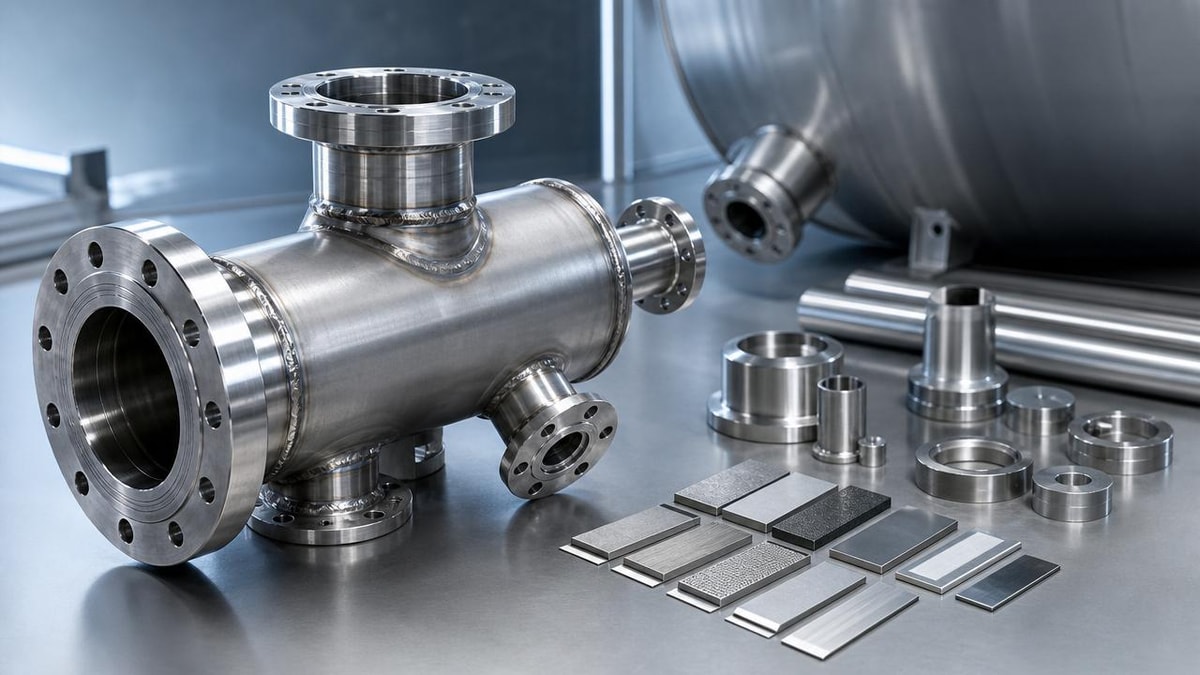
Weld discontinuities act as corrosion accelerators. Undercut, overlap, porosity, spatter, and rough starts and stops all create micro-sites for coating weakness and contamination retention. In stainless assemblies, heat tint left untreated near welds can reduce corrosion resistance significantly in marine air or splash conditions.
From a project control perspective, weld acceptance should not stop at structural soundness. Surface condition matters too. A weld may pass strength criteria yet still create coating failure within 6 to 18 months if the profile is too sharp or cleanup is incomplete. This is especially relevant for fabricated ladders, railings, instrument stands, and exposed support structures.
4. Inadequate edge preparation before coating or galvanizing
Sharp edges are notoriously difficult to protect. Coating films tend to pull away from corners, leaving lower dry film build exactly where marine exposure is most aggressive. If edges are not rounded or dressed before surface treatment, corrosion commonly appears first on cut perimeters and exposed corners.
For many marine projects, teams specify blast cleaning and coating thickness but forget to define edge conditioning. That omission can reduce the effectiveness of an otherwise robust coating system. For custom metal fabrication for marine projects, edge treatment should be visible on fabrication drawings, ITPs, and coating specifications.
5. Mixing dissimilar metals without isolation planning
Galvanic corrosion is a recurring problem in marine assemblies that combine stainless steel, aluminum, carbon steel, copper-bearing alloys, or plated fasteners. The risk rises when conductive moisture bridges the metals and the anodic material has a small area connected to a larger cathodic surface. Even a well-fabricated part can fail early if fasteners, washers, inserts, and support frames are not reviewed as one system.
This issue often enters the project through procurement substitutions. A fabricator may quote one fastener set, while site installation uses another due to stock availability. Without approved substitution rules, the corrosion performance designed at tender stage may not survive field execution.
6. Weak surface preparation and contamination control
Surface preparation is where many marine corrosion prevention plans succeed or fail. Chloride contamination, embedded carbon steel particles on stainless surfaces, residual oil, shop dust, and improper blasting media can all reduce coating adhesion or initiate localized attack. This is not a cosmetic issue; it directly affects how long the protective system lasts between maintenance windows.
Teams should define at least 3 process checkpoints: pre-cleaning, surface profile verification, and cleanliness inspection before coating or passivation. If fabricated parts sit in uncontrolled storage for 7 to 14 days between blasting and coating, flash rust or recontamination can undo earlier quality work.
How Project Leaders Can Prevent These Errors Early
Preventing corrosion in marine fabrication is less about adding expensive materials late in the project and more about controlling decisions early. The most effective project teams treat corrosion prevention as a 5-stage workflow: design review, material approval, fabrication QA, finishing verification, and installation control. Each stage should have defined acceptance criteria, not informal assumptions.
A practical pre-production review framework
Before fabrication starts, project leaders should align engineering, procurement, fabricator, and coating stakeholders around a short but disciplined review package. This helps avoid late-stage RFIs, change orders, and preventable site repairs.
- Confirm exposure category and expected maintenance interval.
- Review all mixed-metal interfaces, including fasteners and brackets.
- Check for closed sections, crevices, drain paths, and coating access.
- Define weld finishing requirements for exposed or coated surfaces.
- Approve surface preparation, treatment, and storage controls.
For custom metal fabrication for marine contracts, this review can often be completed in 1 to 2 workshops before release to production. That is a small investment compared with offshore repair mobilization, vessel access constraints, or repeated shutdown work after installation.
Specification points worth writing into RFQs and POs
Many corrosion issues originate because critical requirements were discussed verbally but not written into commercial documents. The following table shows specification items that buyers and project leads should capture when sourcing marine fabrication.
A strong purchase document does more than describe dimensions. It translates corrosion risk into actionable fabrication and inspection requirements. That is especially important when projects involve multiple vendors, international shipment, or installation in phases over 4 to 12 weeks.
Vendor evaluation questions for marine fabrication sourcing
When evaluating suppliers, project leaders should look beyond capacity and unit price. A fabricator may be excellent in general industrial work but underprepared for marine durability requirements. Ask direct questions about workshop segregation, stainless handling practices, weld finishing capability, coating coordination, and documentation discipline.
- Can the supplier show a defined process for preventing cross-contamination between carbon steel and stainless work?
- How are sharp edges, internal corners, and hard-to-coat details treated before finishing?
- What hold points are used between fabrication, blasting, passivation, and final packing?
- How are replacement fasteners or site substitutions controlled after shipment?
These questions help procurement and engineering teams judge process maturity, not just manufacturing output. In marine projects, mature process control often saves more than negotiating the lowest initial price.
Inspection, Maintenance, and Lifecycle Cost Implications
Corrosion-related fabrication mistakes create downstream cost in at least 3 ways: earlier inspection findings, more frequent maintenance interventions, and reduced asset availability. A poorly detailed fabricated support may require touch-up within the first year, while a better-executed equivalent may remain stable until the next planned shutdown. That difference affects labor planning, scaffold use, access permits, and spare inventory.
What to inspect during FAT, receipt, and pre-installation
A practical inspection plan should begin at the factory and continue after delivery. Marine fabrication frequently suffers damage or contamination during packing, shipping, and site staging, especially when storage extends beyond 30 days in humid coastal yards.
Minimum field verification points
- Check coated edges, corners, and weld zones for discontinuities or transit damage.
- Verify drain paths and vent openings remain unobstructed after packing and handling.
- Confirm installed fasteners match approved materials and isolation details.
- Inspect stainless surfaces for iron contamination, staining, or uncleaned weld areas.
- Review touch-up materials and procedures before erection begins.
How mistakes affect lifecycle cost and scheduling
Not every corrosion issue becomes a structural emergency, but many become recurring budget drains. If 20 fabricated supports require annual touch-up instead of a 5-year maintenance cycle, labor and access costs can quickly exceed the savings gained through a cheaper fabrication package. On offshore or remote coastal sites, one repair visit can involve logistics that dwarf the original manufacturing variance.
For this reason, the best custom metal fabrication for marine procurement strategy is lifecycle-based rather than piece-price-driven. A project leader who defines corrosion-critical details early can reduce unplanned maintenance, protect commissioning schedules, and improve the long-term reliability of exposed metal assets.
A Better Decision Model for Marine Fabrication Projects
The most reliable marine metalwork comes from aligning 4 decisions at the same time: suitable material, corrosion-aware detailing, controlled fabrication, and verified finishing. If any one of those is weak, the whole assembly becomes vulnerable. This is why project managers should treat corrosion control as a cross-functional requirement tied to design, sourcing, inspection, and maintenance planning.
TradeNexus Pro supports decision-makers who need deeper intelligence across advanced manufacturing and supply chain execution. For teams sourcing custom metal fabrication for marine environments, the goal is not simply to buy a fabricated part, but to secure a fabrication process that protects lifecycle value under real marine exposure.
If your team is reviewing suppliers, refining specifications, or comparing fabrication approaches for coastal and offshore assets, now is the right time to tighten your corrosion-risk checklist. Contact us to explore tailored sourcing insights, evaluate fabrication requirements, and get a more resilient marine project strategy.
Get weekly intelligence in your inbox.
No noise. No sponsored content. Pure intelligence.
 May 03, 20265 Axis Milling Machines for Automotive: Buy New or Retrofit?5 Axis Milling Machines for Automotive: Buy New or Retrofit?
 May 03, 2026What to Check Before Sourcing OEM Machined Parts from IndiaWhat to Check Before Sourcing OEM Machined Parts from India
 May 03, 2026Why Sheet Metal Bending Machine Price Varies So MuchWhy Sheet Metal Bending Machine Price Varies So Much
 May 03, 2026Plastic Injection Molding Process Guide for Common Defect ControlPlastic Injection Molding Process Guide for Common Defect Control
 May 03, 2026Smart Manufacturing Technology Trends Reshaping Factory UpgradesSmart Manufacturing Technology Trends Reshaping Factory Upgrades
 May 03, 2026Automotive Die Casting Parts and the Hidden Cost of PorosityAutomotive Die Casting Parts and the Hidden Cost of Porosity
 May 03, 2026Assembly Line Robots: Flexibility Can Matter More Than SpeedAssembly Line Robots: Flexibility Can Matter More Than Speed
 May 03, 2026Smart Manufacturing in Energy: Which Upgrades Pay Back FasterSmart Manufacturing in Energy: Which Upgrades Pay Back Faster
 May 03, 2026Why Robotics Integration Fails After a Successful DemoWhy Robotics Integration Fails After a Successful Demo
 May 03, 2026How to Spot a Reliable Precision Components ManufacturerHow to Spot a Reliable Precision Components Manufacturer
 May 03, 2026Sheet Metal Bending Machine Specifications That Affect AccuracySheet Metal Bending Machine Specifications That Affect Accuracy
 May 03, 2026Oil and Gas Fabrication: Where Material Mismatch Gets ExpensiveOil and Gas Fabrication: Where Material Mismatch Gets Expensive
 May 03, 2026Construction Fabrication Delays Often Start at the Drawing StageConstruction Fabrication Delays Often Start at the Drawing Stage
 May 03, 2026Industrial Robotics Maintenance Guide for Fewer Surprise StopsIndustrial Robotics Maintenance Guide for Fewer Surprise Stops
 May 03, 2026Smart Manufacturing Technology Benefits Beyond Labor SavingsSmart Manufacturing Technology Benefits Beyond Labor Savings
 May 03, 2026Defense Components Need More Than Tight TolerancesDefense Components Need More Than Tight Tolerances
 May 03, 2026How to Vet a Die Casting Parts Supplier in MexicoHow to Vet a Die Casting Parts Supplier in Mexico
 May 03, 2026Food Processing Automation Systems and the Cost of DowntimeFood Processing Automation Systems and the Cost of Downtime
 May 03, 20265 Axis Milling for Aerospace: When Extra Precision Is Worth It5 Axis Milling for Aerospace: When Extra Precision Is Worth It
 May 03, 2026How OEM Medical Equipment Parts Affect Validation TimelinesHow OEM Medical Equipment Parts Affect Validation Timelines
 May 03, 2026Packaging Robotics Integration Problems That Slow CommissioningPackaging Robotics Integration Problems That Slow Commissioning
 May 03, 2026What Causes Rework in OEM Aerospace Machined PartsWhat Causes Rework in OEM Aerospace Machined Parts
 May 03, 2026Choosing Sheet Metal Bending Services in Europe Without DelaysChoosing Sheet Metal Bending Services in Europe Without Delays
 May 03, 2026Die Casting Parts for Electronics: Tolerance or Heat Control?Die Casting Parts for Electronics: Tolerance or Heat Control?
 May 03, 2026Marine Metal Fabrication Mistakes That Raise Corrosion RiskMarine Metal Fabrication Mistakes That Raise Corrosion Risk
 May 03, 2026When Welding Robots Improve Quality More Than ThroughputWhen Welding Robots Improve Quality More Than Throughput
 May 03, 2026Medical Device Molding Machines: What Specs Matter MostMedical Device Molding Machines: What Specs Matter Most