Global Methanol EV Ecosystem Alliance Launched
On April 12, 2026, the Global Methanol Electric Vehicle Ecosystem Alliance was formally established during the Intelligent Electric Vehicle Development High-Level Forum (2026). The initiative signals a coordinated effort to harmonize methanol refueling infrastructure standards across markets — a development with direct implications for EV infrastructure providers, heavy-duty vehicle OEMs, fuel logistics operators, and international certification bodies.
Event Overview
On April 12, 2026, the Global Methanol Electric Vehicle Ecosystem Alliance was launched at the Intelligent Electric Vehicle Development High-Level Forum (2026). Founding members include China Automotive Technology & Research Center (CATARC), Geely, Volvo Cars, and the European Union Automotive Industry Association. The Alliance will lead the development of internationally recognized standards covering methanol refueling station interfaces, onboard fuel tank safety specifications, and methanol fuel purity requirements. The first round of certification under these standards is scheduled to begin in Q1 2027.
Industries Affected
EV Infrastructure Equipment Manufacturers
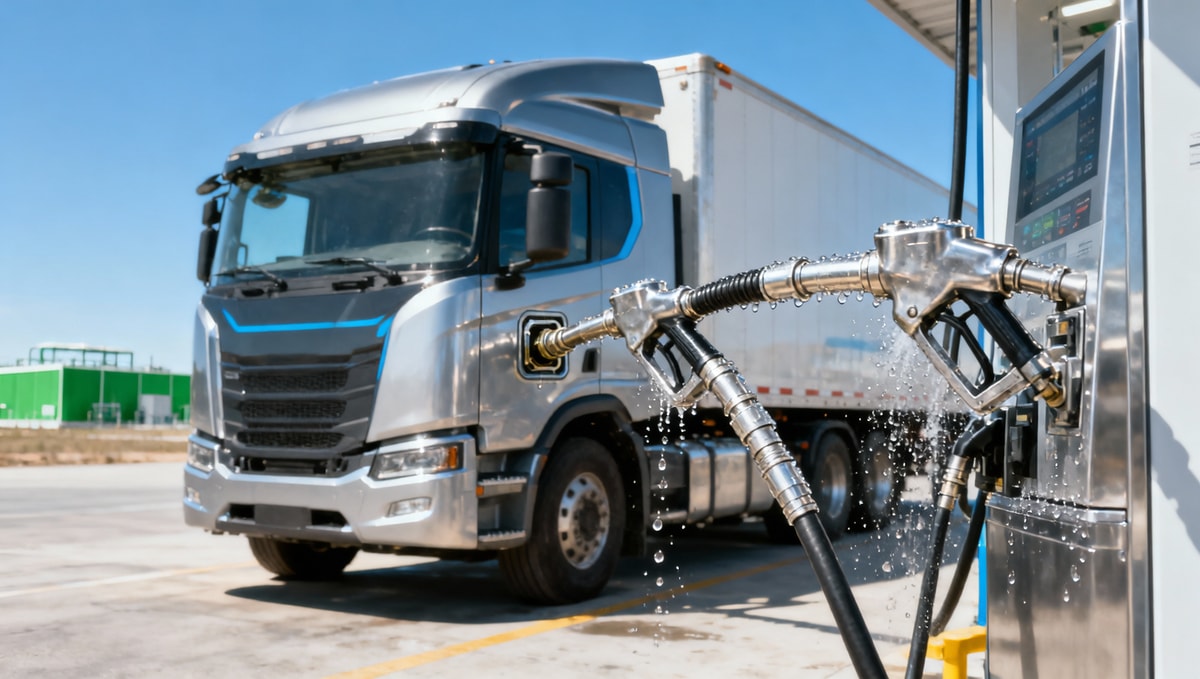
These manufacturers produce dispensers, nozzles, pressure regulators, and station control systems for methanol refueling. They are affected because the Alliance’s upcoming interface and safety standards will define technical compliance requirements for equipment deployed in international markets. Impact includes potential redesign cycles, certification timelines, and eligibility for public tenders in regions adopting the new standards.
Heavy-Duty Vehicle OEMs and Fleet Operators
OEMs developing methanol-powered Class 8 trucks — and fleets operating them — face implications for vehicle architecture (e.g., tank mounting, vapor recovery integration) and maintenance protocols. Standardized fuel purity and interface specs reduce regional fragmentation but require alignment in vehicle certification pathways, especially for cross-border operations in EU or ASEAN markets.
Fuel Logistics and Distribution Providers
Companies handling methanol transport, storage, and terminal operations must adapt to harmonized purity thresholds and handling documentation. Variance in current regional fuel specs (e.g., EN 15376 vs. GB/T 23799) may be narrowed, affecting blending practices, quality assurance workflows, and third-party testing engagement.
International Certification and Testing Bodies
Accredited labs and conformity assessment organizations are impacted as the Alliance’s standards become reference benchmarks. Their scope of accreditation, test method validation, and audit readiness for methanol-specific parameters (e.g., water content, ester impurities, corrosion resistance) will come under renewed scrutiny ahead of Q1 2027 certification rollout.
What Stakeholders Should Monitor and Do Now
Track official standard drafts and timeline updates from Alliance working groups
The Alliance has not yet published draft technical specifications. Stakeholders should monitor announcements from founding members — particularly CATARC and the EU Automotive Industry Association — for working group formation, public consultation windows, and draft release dates. Early access to drafts enables gap analysis against existing product or process designs.
Identify priority markets where Alliance-aligned infrastructure deployment is most likely by 2027
Initial certification in Q1 2027 suggests pilot deployments in China and select EU member states. Companies should assess regulatory alignment in target countries (e.g., Germany’s H2-Ready Fuel Strategy, China’s Green Heavy-Duty Transport Action Plan) to prioritize R&D or partnership efforts accordingly — rather than assuming global uniformity.
Distinguish between policy intent and operational readiness
The Alliance sets standards, not mandates. Adoption depends on national regulatory adoption and incentive frameworks. Stakeholders should separate Alliance activity from binding legislation: for example, EU Type Approval still requires separate UN GTR or national homologation, even if aligned with Alliance specs. Business planning must account for this implementation lag.
Prepare internal alignment on fuel specification tolerances and interface schematics
Manufacturers and fuel suppliers should initiate cross-functional reviews of current methanol handling procedures, tank material certifications, and dispenser interface dimensions. Preemptive internal benchmarking against publicly referenced specs (e.g., ISO/IEC Guide 51 for safety integration, ASTM D7467 for biodiesel blends as analog) supports faster adaptation once final standards publish.
Editorial Perspective / Industry Observation
Observably, this Alliance launch functions primarily as a coordination signal — not an immediate regulatory shift. Its value lies in de-risking international scale-up for methanol-powered heavy transport by reducing technical fragmentation. Analysis shows that its influence hinges less on unilateral standard-setting and more on whether key markets grant formal recognition (e.g., via national regulation or procurement criteria). From an industry perspective, it reflects growing institutional acknowledgment that electrification alone cannot address long-haul freight decarbonization — and that interoperable liquid e-fuels infrastructure requires pre-competitive alignment.
Current attention should focus on how quickly — and where — these standards transition from consensus documents to procurement or approval prerequisites. That transition, not the Alliance’s formation itself, determines real-world impact.
Conclusion
While the Global Methanol EV Ecosystem Alliance does not introduce binding rules, it establishes a foundational framework for technical interoperability in methanol-based heavy-duty mobility. For stakeholders, it is better understood as an early-stage alignment mechanism — one that clarifies future compliance expectations but requires active monitoring of downstream adoption signals. Prudent engagement now centers on preparation, not presumption.
Information Sources
Main source: Official announcement issued during the Intelligent Electric Vehicle Development High-Level Forum (2026), confirmed by founding members’ public statements (CATARC, Geely, Volvo Cars, EU Automotive Industry Association).
Note: Draft technical specifications, national adoption status, and certification body participation remain pending and are subject to ongoing observation.
Get weekly intelligence in your inbox.
No noise. No sponsored content. Pure intelligence.
 May 03, 2026AI Boom Drives Data Center Power Demand, Liquid Cooling Gains UrgencyAI Boom Drives Data Center Power Demand, Liquid Cooling Gains Urgency
 May 03, 2026Low-Altitude Economy in China's 15th Five-Year Plan Boosts Warehouse Robotics ExportsLow-Altitude Economy in China's 15th Five-Year Plan Boosts Warehouse Robotics Exports
 May 03, 2026EU REACH Adds 5 Organotin Compounds to SVHC List for ElectronicsEU REACH Adds 5 Organotin Compounds to SVHC List for Electronics
 May 03, 2026Western Land-Sea Expressway Boosts Solar PV Exports to ASEANWestern Land-Sea Expressway Boosts Solar PV Exports to ASEAN
 May 03, 2026Southeast Asia Smart Home E-commerce Grows 27.4% Amid New Matter 1.3+ Certification RulesSoutheast Asia Smart Home E-commerce Grows 27.4% Amid New Matter 1.3+ Certification Rules
 May 03, 2026FDA Updates IVD Software Guidance: AI Diagnostic Tools Require Independent Algorithm ValidationFDA Updates IVD Software Guidance: AI Diagnostic Tools Require Independent Algorithm Validation
 May 03, 2026Global Methanol EV Ecosystem Alliance LaunchedGlobal Methanol EV Ecosystem Alliance Launched
 May 03, 2026Vietnam GDP Growth Forecast Raised to 7.2% for 2026Vietnam GDP Growth Forecast Raised to 7.2% for 2026
 May 03, 2026UAE Emerges as Global AI Hub, Driving Demand for AI-Quality Inspection SystemsUAE Emerges as Global AI Hub, Driving Demand for AI-Quality Inspection Systems
 May 03, 2026OFID $500M Funding for Côte d'Ivoire Energy ProjectsOFID $500M Funding for Côte d'Ivoire Energy Projects
 May 03, 20265 Axis Milling Machines for Automotive: Buy New or Retrofit?5 Axis Milling Machines for Automotive: Buy New or Retrofit?
 May 03, 2026What to Check Before Sourcing OEM Machined Parts from IndiaWhat to Check Before Sourcing OEM Machined Parts from India
 May 03, 2026Why Sheet Metal Bending Machine Price Varies So MuchWhy Sheet Metal Bending Machine Price Varies So Much
 May 03, 2026Plastic Injection Molding Process Guide for Common Defect ControlPlastic Injection Molding Process Guide for Common Defect Control
 May 03, 2026Smart Manufacturing Technology Trends Reshaping Factory UpgradesSmart Manufacturing Technology Trends Reshaping Factory Upgrades
 May 03, 2026Automotive Die Casting Parts and the Hidden Cost of PorosityAutomotive Die Casting Parts and the Hidden Cost of Porosity
 May 03, 2026Assembly Line Robots: Flexibility Can Matter More Than SpeedAssembly Line Robots: Flexibility Can Matter More Than Speed
 May 03, 2026Smart Manufacturing in Energy: Which Upgrades Pay Back FasterSmart Manufacturing in Energy: Which Upgrades Pay Back Faster
 May 03, 2026Why Robotics Integration Fails After a Successful DemoWhy Robotics Integration Fails After a Successful Demo
 May 03, 2026How to Spot a Reliable Precision Components ManufacturerHow to Spot a Reliable Precision Components Manufacturer
 May 03, 2026Sheet Metal Bending Machine Specifications That Affect AccuracySheet Metal Bending Machine Specifications That Affect Accuracy
 May 03, 2026Oil and Gas Fabrication: Where Material Mismatch Gets ExpensiveOil and Gas Fabrication: Where Material Mismatch Gets Expensive
 May 03, 2026Construction Fabrication Delays Often Start at the Drawing StageConstruction Fabrication Delays Often Start at the Drawing Stage
 May 03, 2026Industrial Robotics Maintenance Guide for Fewer Surprise StopsIndustrial Robotics Maintenance Guide for Fewer Surprise Stops
 May 03, 2026Smart Manufacturing Technology Benefits Beyond Labor SavingsSmart Manufacturing Technology Benefits Beyond Labor Savings
 May 03, 2026Defense Components Need More Than Tight TolerancesDefense Components Need More Than Tight Tolerances
 May 03, 2026How to Vet a Die Casting Parts Supplier in MexicoHow to Vet a Die Casting Parts Supplier in Mexico