UAE Emerges as Global AI Hub, Driving Demand for AI-Quality Inspection Systems
The UAE has entered the global top tier of AI development, with Middle Eastern importers accelerating procurement of AI-integrated factory automation equipment—particularly for AI-powered visual inspection systems. This shift, confirmed in the 2026 Artificial Intelligence Index Report, carries immediate implications for industrial automation suppliers, manufacturing exporters, and supply chain service providers active in the Gulf Cooperation Council (GCC) markets.
Event Overview
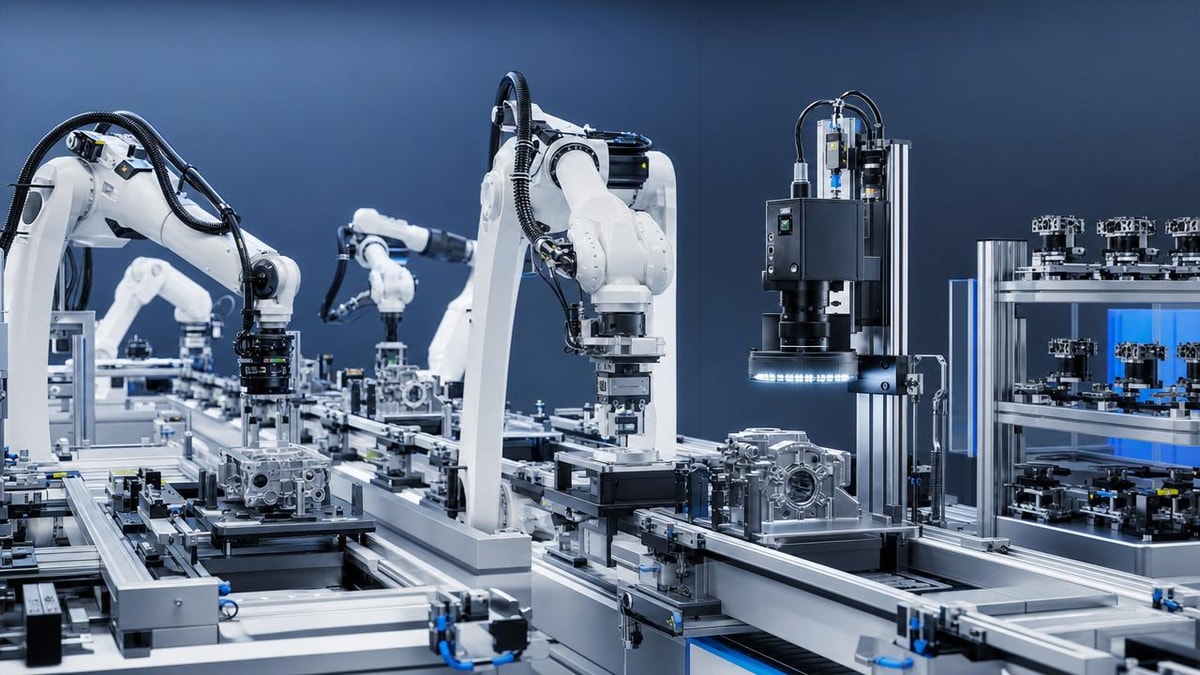
The 2026 Artificial Intelligence Index Report identifies the United Arab Emirates as a leading global AI hub, placing it among the world’s first-tier AI development economies. In parallel, UAE-based manufacturers are deploying AI vision inspection, predictive maintenance, and digital twin production line systems at scale. Concurrently, importers across the Middle East are demonstrating heightened procurement intent for Factory Automation equipment with native AI integration—including smart PLCs, industrial camera modules, and edge AI controllers—and are requiring suppliers to provide localized API integration support and ISO/IEC 23053 compliance documentation.
Industries Affected
Direct Trade Enterprises (Exporters of Industrial Automation Equipment)
These enterprises face new technical and compliance expectations from Middle Eastern buyers. The demand is no longer limited to hardware performance but extends to interoperability (via local API standards) and formal certification against ISO/IEC 23053—the international standard for AI system evaluation in industrial contexts.
Manufacturing Enterprises (OEMs & Contract Manufacturers Serving GCC Markets)
Manufacturers supplying goods into UAE or broader GCC markets may encounter downstream pressure to adopt AI-enabled quality assurance processes. As local producers deploy AI visual inspection systems, traceability, defect classification accuracy, and real-time data readiness become operational prerequisites—not optional enhancements.
Supply Chain Service Providers (Logistics, Certification, Localization Support)
Providers offering regulatory documentation, API integration testing, or Arabic-language technical support are seeing rising request volume. The requirement for ‘localized API对接’ (interpreted as region-specific interface specifications, including language, authentication protocols, and data schema alignment) signals growing need for technical localization beyond translation alone.
What Enterprises and Practitioners Should Watch and Do Now
Monitor official UAE AI strategy updates and sectoral implementation roadmaps
Analysis shows that the UAE’s AI leadership status reflects sustained national investment—not just isolated corporate deployments. Ongoing policy signals (e.g., UAE National Strategy for AI, Dubai AI Roadmap) will likely shape near-term procurement priorities in manufacturing and infrastructure sectors.
Verify ISO/IEC 23053 compliance readiness for key product lines
Observably, this standard is now being cited explicitly by regional buyers—not as a future aspiration, but as a current tender requirement. Suppliers should assess whether their AI-enabled devices have undergone third-party conformity assessment per Clause 6 (Evaluation Framework) and Annex A (Use-Case Specific Criteria).
Distinguish between market signaling and actual deployment timelines
From an industry perspective, the report confirms adoption momentum—but does not quantify installed base or annual procurement volumes. Current traction appears strongest in high-value, export-oriented manufacturing (e.g., aerospace components, pharmaceutical packaging), rather than broad SME rollout.
Prepare documentation packages for API localization and certification handover
Current more suitable preparation includes pre-validating API endpoints against common GCC cloud infrastructures (e.g., UAE-based sovereign clouds), drafting Arabic-language API reference guides, and compiling audit-ready evidence for ISO/IEC 23053 claims—including model training data provenance and inference latency benchmarks.
Editorial Perspective / Industry Observation
This development is best understood not as a sudden market shift, but as a consolidation signal: the UAE’s AI infrastructure maturity is now translating into tangible procurement criteria within industrial supply chains. Analysis shows that buyer emphasis on API localization and formal AI system certification reflects maturing buyer sophistication—not just technology adoption, but governance-aware adoption. It signals a transition from experimental AI pilots to production-grade, auditable AI integration. From an industry viewpoint, this is less about ‘entering a new market’ and more about meeting elevated baseline requirements in an already-active trade corridor.
It remains to be observed whether similar requirements will emerge in other GCC jurisdictions (e.g., Saudi Arabia’s Vision 2030 industrial AI initiatives) or whether UAE-specific standards will evolve into regional harmonized norms.
Conclusion
This report confirms that AI deployment in the UAE has progressed from strategic ambition to operational specification—especially in manufacturing quality control. For global suppliers, it means that compliance with AI-specific interoperability and evaluation standards is becoming a commercial prerequisite in the region—not a differentiator. Currently, this is best interpreted as a tightening of technical entry conditions in a high-potential, regulation-conscious market—not a wholesale market transformation, but a meaningful recalibration of what constitutes ‘ready for deployment’.
Information Sources
Main source: 2026 Artificial Intelligence Index Report. No additional background data, policy documents, or market statistics were used or inferred. The observation regarding potential regional spillover to other GCC countries is flagged as pending further public confirmation.
Get weekly intelligence in your inbox.
No noise. No sponsored content. Pure intelligence.
 May 03, 2026AI Boom Drives Data Center Power Demand, Liquid Cooling Gains UrgencyAI Boom Drives Data Center Power Demand, Liquid Cooling Gains Urgency
 May 03, 2026Low-Altitude Economy in China's 15th Five-Year Plan Boosts Warehouse Robotics ExportsLow-Altitude Economy in China's 15th Five-Year Plan Boosts Warehouse Robotics Exports
 May 03, 2026EU REACH Adds 5 Organotin Compounds to SVHC List for ElectronicsEU REACH Adds 5 Organotin Compounds to SVHC List for Electronics
 May 03, 2026Western Land-Sea Expressway Boosts Solar PV Exports to ASEANWestern Land-Sea Expressway Boosts Solar PV Exports to ASEAN
 May 03, 2026Southeast Asia Smart Home E-commerce Grows 27.4% Amid New Matter 1.3+ Certification RulesSoutheast Asia Smart Home E-commerce Grows 27.4% Amid New Matter 1.3+ Certification Rules
 May 03, 2026FDA Updates IVD Software Guidance: AI Diagnostic Tools Require Independent Algorithm ValidationFDA Updates IVD Software Guidance: AI Diagnostic Tools Require Independent Algorithm Validation
 May 03, 2026Global Methanol EV Ecosystem Alliance LaunchedGlobal Methanol EV Ecosystem Alliance Launched
 May 03, 2026Vietnam GDP Growth Forecast Raised to 7.2% for 2026Vietnam GDP Growth Forecast Raised to 7.2% for 2026
 May 03, 2026UAE Emerges as Global AI Hub, Driving Demand for AI-Quality Inspection SystemsUAE Emerges as Global AI Hub, Driving Demand for AI-Quality Inspection Systems
 May 03, 2026OFID $500M Funding for Côte d'Ivoire Energy ProjectsOFID $500M Funding for Côte d'Ivoire Energy Projects
 May 03, 20265 Axis Milling Machines for Automotive: Buy New or Retrofit?5 Axis Milling Machines for Automotive: Buy New or Retrofit?
 May 03, 2026What to Check Before Sourcing OEM Machined Parts from IndiaWhat to Check Before Sourcing OEM Machined Parts from India
 May 03, 2026Why Sheet Metal Bending Machine Price Varies So MuchWhy Sheet Metal Bending Machine Price Varies So Much
 May 03, 2026Plastic Injection Molding Process Guide for Common Defect ControlPlastic Injection Molding Process Guide for Common Defect Control
 May 03, 2026Smart Manufacturing Technology Trends Reshaping Factory UpgradesSmart Manufacturing Technology Trends Reshaping Factory Upgrades
 May 03, 2026Automotive Die Casting Parts and the Hidden Cost of PorosityAutomotive Die Casting Parts and the Hidden Cost of Porosity
 May 03, 2026Assembly Line Robots: Flexibility Can Matter More Than SpeedAssembly Line Robots: Flexibility Can Matter More Than Speed
 May 03, 2026Smart Manufacturing in Energy: Which Upgrades Pay Back FasterSmart Manufacturing in Energy: Which Upgrades Pay Back Faster
 May 03, 2026Why Robotics Integration Fails After a Successful DemoWhy Robotics Integration Fails After a Successful Demo
 May 03, 2026How to Spot a Reliable Precision Components ManufacturerHow to Spot a Reliable Precision Components Manufacturer
 May 03, 2026Sheet Metal Bending Machine Specifications That Affect AccuracySheet Metal Bending Machine Specifications That Affect Accuracy
 May 03, 2026Oil and Gas Fabrication: Where Material Mismatch Gets ExpensiveOil and Gas Fabrication: Where Material Mismatch Gets Expensive
 May 03, 2026Construction Fabrication Delays Often Start at the Drawing StageConstruction Fabrication Delays Often Start at the Drawing Stage
 May 03, 2026Industrial Robotics Maintenance Guide for Fewer Surprise StopsIndustrial Robotics Maintenance Guide for Fewer Surprise Stops
 May 03, 2026Smart Manufacturing Technology Benefits Beyond Labor SavingsSmart Manufacturing Technology Benefits Beyond Labor Savings
 May 03, 2026Defense Components Need More Than Tight TolerancesDefense Components Need More Than Tight Tolerances
 May 03, 2026How to Vet a Die Casting Parts Supplier in MexicoHow to Vet a Die Casting Parts Supplier in Mexico