Custom Heatsinks: When a Standard Profile Stops Working
When thermal loads rise, space tightens, or airflow becomes unpredictable, standard cooling solutions often fall short. That is where custom heatsinks become essential, giving operators and technical users better control over temperature, reliability, and equipment lifespan. This article explains when a standard profile stops working and how tailored thermal design can solve real-world performance challenges.
What are custom heatsinks, and why do users start looking for them?
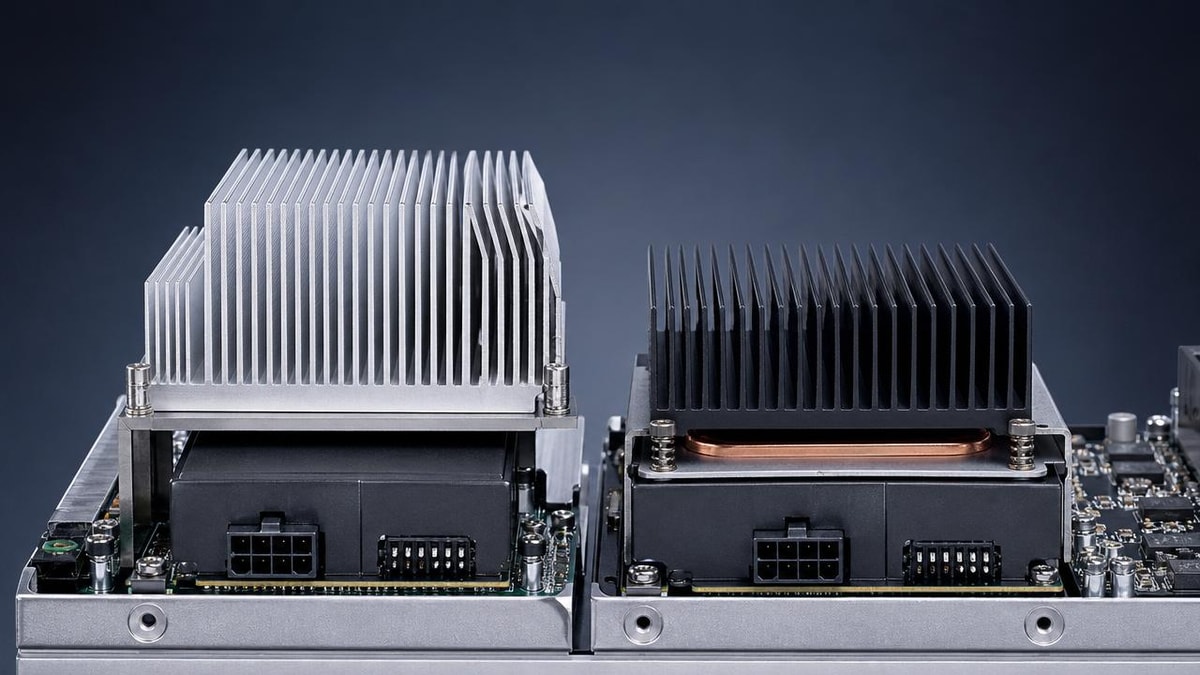
Custom heatsinks are thermal management components designed around a specific device, enclosure, power level, airflow condition, or mounting constraint. Unlike standard profiles, which are produced in a few common shapes and dimensions, custom heatsinks are engineered to match the operating reality of a product. For operators and technical users, that difference matters when heat is no longer a theoretical design issue but a daily performance problem.
A standard heatsink may work well in a lab, in open air, or under moderate loads. It often stops working when the application moves into a cabinet, onto a crowded PCB, near vibration sources, or inside equipment that experiences fluctuating duty cycles. In these cases, a thermal solution must do more than “fit.” It must dissipate heat efficiently, maintain stable temperatures over time, and avoid creating new issues such as airflow blockage, mechanical stress, or assembly complexity.
This is why custom heatsinks attract attention across advanced manufacturing equipment, power electronics, smart devices, medical systems, and transport-related electronics. The need usually begins with a symptom: repeated overheating alarms, inconsistent system output, shortened LED life, processor throttling, premature component aging, or unexplained field failures. When those signs appear, users quickly realize that a generic aluminum profile is not always enough.
How can you tell when a standard heatsink profile has stopped being effective?
The most common warning sign is temperature performance that looks acceptable on paper but fails under real operating conditions. A standard profile may be rated for a certain thermal resistance, yet that rating often assumes ideal orientation, controlled airflow, and uniform heat spreading. In actual use, operators face restricted vents, hot neighboring components, dust buildup, and uneven power density. As a result, the installed heatsink performs below expectation.
Another sign is a mismatch between the heatsink and the heat source. If the base does not fully cover the device, if fin height interferes with nearby parts, or if mounting pressure is uneven, heat transfer becomes inefficient. In high-power systems, even a small contact problem can create localized hot spots that increase thermal stress and reduce reliability.
Users should also pay attention to system-level compromises. If technicians are adding louder fans, lowering power settings, increasing maintenance intervals, or redesigning the enclosure just to keep temperatures under control, the root issue may be the thermal hardware. In that situation, moving to custom heatsinks can be more practical than forcing a standard part into a role it was never designed to fill.
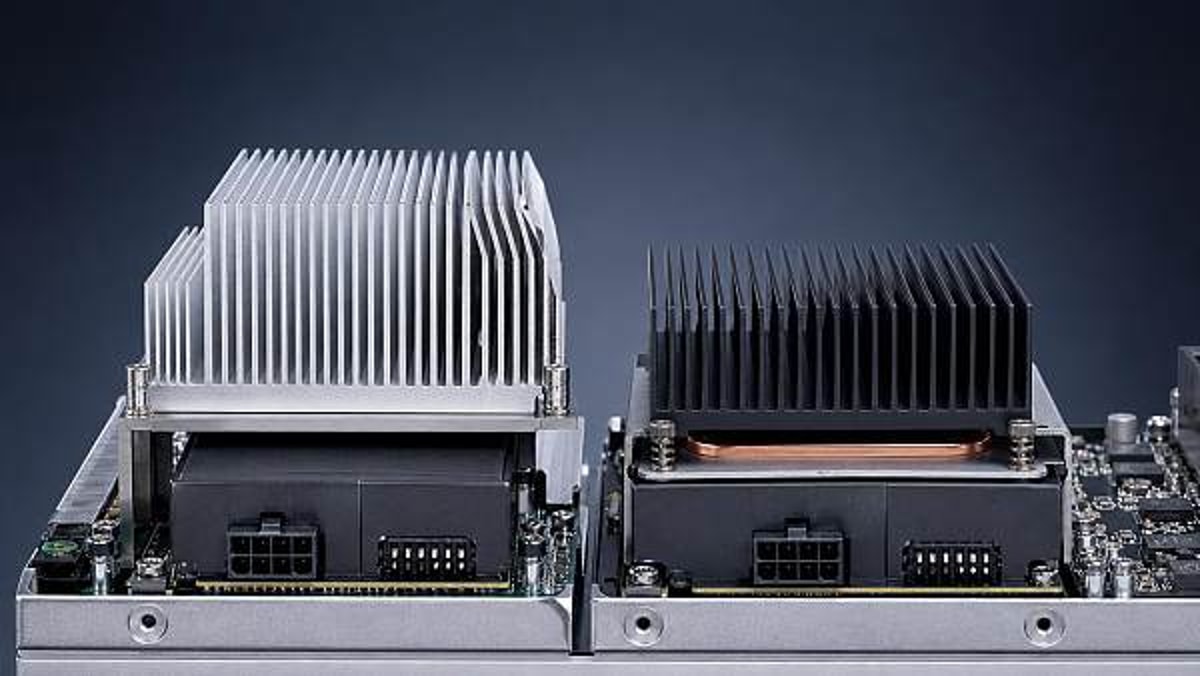
Common field indicators that point to a custom solution
- Surface temperatures remain high even after fan upgrades.
- The equipment only stays stable in certain mounting orientations.
- There is not enough clearance for a larger off-the-shelf profile.
- Heat comes from multiple components rather than one central source.
- Repeated failures occur in sealed, dusty, or high-vibration environments.
- Assembly teams need adapters, spacers, or rework to install a standard part.
In which applications do custom heatsinks make the biggest difference?
Custom heatsinks are especially valuable where thermal performance, compact packaging, and long operating life must all be balanced. In industrial drives and motor controllers, heat loads can spike quickly, and enclosure airflow is often limited. A tailored heatsink can improve fin geometry, base thickness, and mounting layout to manage transient and continuous loads more effectively.
In power conversion systems for green energy, thermal cycling and outdoor exposure increase the need for robust design. Here, custom heatsinks can support better corrosion resistance, lower thermal resistance, and more secure integration with power modules. In smart electronics, the issue is often space. Designers need a solution that clears connectors, shields neighboring components, and still removes enough heat from processors, LEDs, or communication modules.
Healthcare technology introduces another layer: reliability and acoustic control. A standard profile may cool a component, but if it requires excessive fan noise or creates contamination traps, it may not suit sensitive devices. In logistics hardware, warehouse automation, and edge systems used in supply chain SaaS infrastructure, the challenge is often mixed environmental conditions, from dust to continuous uptime. In all of these sectors, custom heatsinks help convert thermal control into operational stability.
What should you compare before choosing custom heatsinks over a standard option?
The decision should not be based on temperature alone. Users should compare thermal demand, available installation space, airflow conditions, mounting method, material choice, expected production volume, and lifecycle cost. A low-cost standard profile can become expensive if it increases system failures, fan power consumption, or assembly time. By contrast, custom heatsinks may have a higher upfront engineering cost but reduce total operating risk.
The most important question is whether the thermal path is being optimized as a whole. That includes contact area, interface material, fin spacing, orientation, airflow direction, and enclosure interaction. A custom design can also combine functions. For example, the same part may serve as a structural support, mounting frame, shielding element, or enclosure wall. That kind of integration often creates value beyond heat removal alone.
The table below summarizes a practical comparison for users evaluating standard and custom heatsinks:
What design factors matter most when specifying custom heatsinks?
For most users, the process begins with heat source data: total wattage, peak load, duty cycle, and allowable junction or case temperature. But that is only the starting point. The next factors are equally important: natural or forced convection, ambient temperature range, enclosure geometry, contamination level, and shock or vibration exposure. A good custom heatsink design reflects the full operating environment, not just the component datasheet.
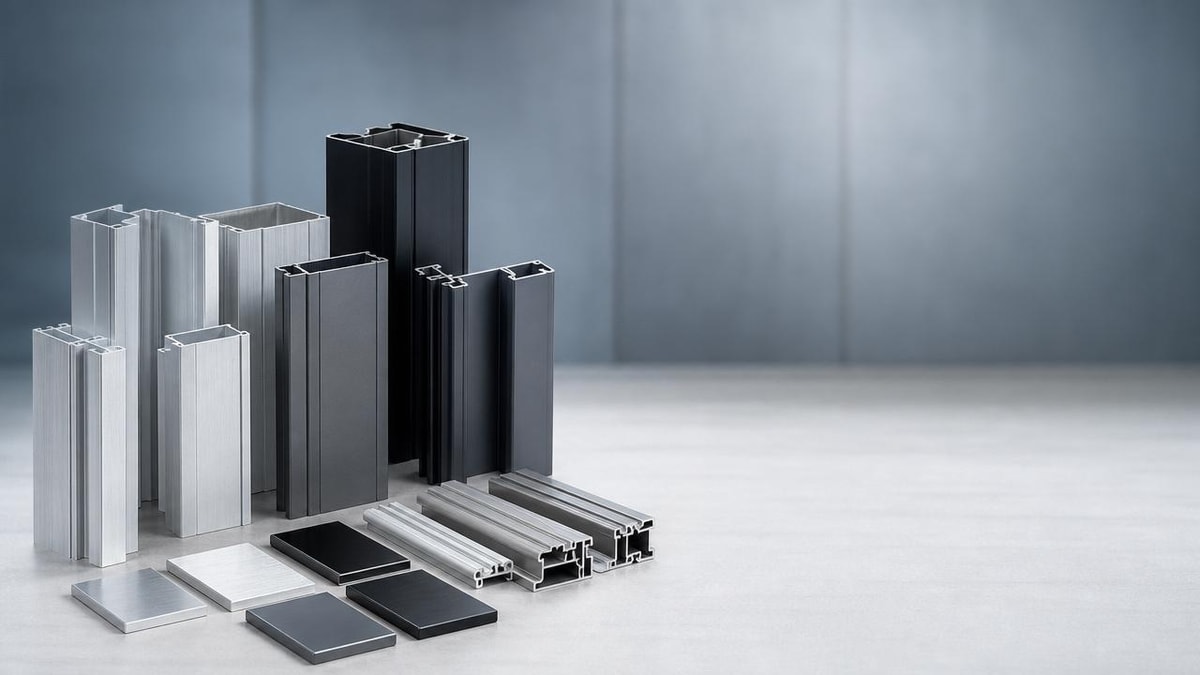
Material selection is another major factor. Aluminum remains common because it balances thermal conductivity, weight, manufacturability, and cost. Copper may be useful where heat density is high, though it increases weight and expense. Surface treatment can also matter, especially for corrosion resistance, emissivity, and electrical isolation. In some products, extruded profiles are enough; in others, skived fins, bonded fins, die casting, CNC machining, or hybrid assemblies are better suited.
Mounting details should never be treated as minor. Fastener locations, flatness, interface materials, torque consistency, and contact pressure directly affect thermal transfer. Even the best custom heatsinks will underperform if the interface to the heat source is poorly controlled. Operators should therefore ask not only about the heatsink itself, but about the entire installation method and serviceability in the field.
A practical checklist before finalizing a specification
- What is the actual heat load in steady and peak conditions?
- How much space is available in all three dimensions?
- Is airflow predictable, restricted, or variable over time?
- Will dust, moisture, chemicals, or vibration affect performance?
- Does the heatsink need to support mechanical or shielding functions?
- How easy will inspection, cleaning, and replacement be for operators?
What mistakes do buyers and operators commonly make with custom heatsinks?
One frequent mistake is assuming that larger always means better. Bigger custom heatsinks may add mass, but if fin spacing is wrong for the airflow regime, or if the extra size blocks circulation, the result can be disappointing. Thermal efficiency depends on geometry and context, not only on volume.
Another mistake is focusing only on the heatsink while ignoring the upstream and downstream thermal path. Poor thermal interface materials, uneven surfaces, or hot air recirculation can erase the benefit of a well-designed part. Some teams also underestimate the impact of manufacturing tolerances. If a custom solution is validated with one prototype but later produced with inconsistent flatness or assembly pressure, field performance may drift.
A third issue is treating custom heatsinks as a last-minute fix rather than an integrated engineering decision. Thermal design works best when considered early, alongside enclosure layout, airflow planning, and electrical architecture. Late-stage customization is still possible, but it often leads to longer validation cycles and more difficult sourcing.
How do cost, lead time, and implementation usually compare?
Custom heatsinks usually involve more front-end work than standard parts. There may be thermal simulation, prototyping, material review, tooling decisions, and mechanical validation. That can extend the initial timeline. However, the comparison should be made across the whole product lifecycle. If a standard heatsink leads to overheating, reduced output, warranty claims, or frequent maintenance, its apparent savings disappear quickly.
Lead time depends heavily on the manufacturing route. CNC-machined prototypes can be fast for evaluation, while extrusions and die-cast solutions may require tooling but offer better economics at scale. For B2B buyers, the best approach is to align volume forecasts with design intent. A prototype-friendly solution is not always the best production solution, and vice versa.
Implementation also includes supplier communication quality. Reliable partners will ask about thermal targets, mounting surfaces, ambient conditions, compliance needs, and inspection requirements. If a supplier only asks for dimensions, the solution may be mechanically correct but thermally incomplete. In practical terms, the best custom heatsinks come from a design dialogue, not a simple parts request.
How should users start the conversation if they need a tailored thermal solution?
Start with operating facts, not just drawings. Share the heat load, temperature limits, airflow reality, mounting orientation, enclosure constraints, and failure symptoms. If available, provide thermal images, test results, duty cycles, and service feedback from the field. This helps separate a true heatsink problem from a broader system issue.
Next, clarify business conditions. State expected volumes, prototype timing, production targets, reliability goals, and whether the part must serve additional functions such as structural support or EMI-related integration. This allows engineers and sourcing teams to match the custom heatsinks concept to the right manufacturing process and cost model.
For companies operating in complex B2B sectors, especially where uptime, thermal reliability, and equipment longevity influence profitability, the right conversation is not “Do we need more metal?” but “What thermal design best supports our real operating environment?” If you need to confirm a specific solution, parameters, timeline, budget range, or collaboration model, the best questions to discuss first are heat load, available space, airflow conditions, target temperature, expected production volume, and field reliability requirements.
Get weekly intelligence in your inbox.
No noise. No sponsored content. Pure intelligence.
 May 06, 2026Hydraulic Cylinder Fabrication Errors That Shorten Service LifeHydraulic Cylinder Fabrication Errors That Shorten Service Life
 May 06, 2026Surface Finishing Services That Reduce Warranty ComplaintsSurface Finishing Services That Reduce Warranty Complaints
 May 06, 2026Waterjet Cutting Is Better Than Laser for These MaterialsWaterjet Cutting Is Better Than Laser for These Materials
 May 06, 2026Custom Molded Rubber Choices That Affect Seal PerformanceCustom Molded Rubber Choices That Affect Seal Performance
 May 06, 2026Linear Motion Systems Fail Faster When Alignment Is OverlookedLinear Motion Systems Fail Faster When Alignment Is Overlooked
 May 06, 2026How Accurate Is Energy Forecasting When Weather Turns Volatile?How Accurate Is Energy Forecasting When Weather Turns Volatile?
 May 06, 2026Medical Device Manufacturing Delays Often Start in ValidationMedical Device Manufacturing Delays Often Start in Validation
 May 06, 2026Anodizing Services: Which Finish Holds Up Outdoors LongerAnodizing Services: Which Finish Holds Up Outdoors Longer
 May 06, 2026Solar Tracker Maintenance Issues That Hurt Long-Term OutputSolar Tracker Maintenance Issues That Hurt Long-Term Output
 May 06, 2026What Changes the Real Cost of Pneumatic Valves WholesaleWhat Changes the Real Cost of Pneumatic Valves Wholesale
 May 06, 2026Solar Microinverters vs String Inverters for Shaded RoofsSolar Microinverters vs String Inverters for Shaded Roofs
 May 06, 2026Bifacial Solar Panels: Do They Pay Off on Every Site?Bifacial Solar Panels: Do They Pay Off on Every Site?
 May 06, 2026Why Heavy Equipment Manufacturing Lead Times Keep SlippingWhy Heavy Equipment Manufacturing Lead Times Keep Slipping
 May 06, 2026Metal Stamping Parts: When Tooling Cost Stops Making SenseMetal Stamping Parts: When Tooling Cost Stops Making Sense
 May 06, 2026Energy Storage Battery Sizing Mistakes That Raise Project CostsEnergy Storage Battery Sizing Mistakes That Raise Project Costs
 May 06, 2026What Causes Revenue Gaps in a Solar Farm ProjectWhat Causes Revenue Gaps in a Solar Farm Project
 May 06, 2026Low Volume Manufacturing Works Best When Demand Is UnclearLow Volume Manufacturing Works Best When Demand Is Unclear
 May 06, 2026Automotive Parts Machining Costs That Grow With Late Design ChangesAutomotive Parts Machining Costs That Grow With Late Design Changes
 May 06, 2026AS9100 Aerospace Machining: What Fails an Audit Most OftenAS9100 Aerospace Machining: What Fails an Audit Most Often
 May 06, 2026Plastic Extrusion Tolerances That Affect Final Product FitPlastic Extrusion Tolerances That Affect Final Product Fit
 May 06, 2026Is Renewable Power Getting Easier to Finance for Industry?Is Renewable Power Getting Easier to Finance for Industry?
 May 06, 2026Ultrasonic Welding Defects That Are Easy to Miss at FirstUltrasonic Welding Defects That Are Easy to Miss at First
 May 06, 2026How to Compare Industrial Bearing Suppliers by Failure RiskHow to Compare Industrial Bearing Suppliers by Failure Risk
 May 06, 2026Custom Heatsinks: When a Standard Profile Stops WorkingCustom Heatsinks: When a Standard Profile Stops Working
 May 06, 2026Gear Manufacturing Problems That Show Up After AssemblyGear Manufacturing Problems That Show Up After Assembly
 May 06, 2026Why Thin Film Solar Cells Still Matter in 2026Why Thin Film Solar Cells Still Matter in 2026
 May 06, 2026Wire EDM Services or CNC Milling for Tight Tolerance Parts?Wire EDM Services or CNC Milling for Tight Tolerance Parts?