Is Renewable Power Getting Easier to Finance for Industry?
As industrial buyers face rising energy costs, tighter ESG targets, and greater pressure to secure resilient operations, the short answer is yes: renewable power is becoming easier to finance for many industrial users, but not in a simple or universal way. Capital is more available, financing structures are more flexible, and lenders are more familiar with renewable assets than they were a decade ago. At the same time, higher interest rates, grid bottlenecks, policy uncertainty, and contract complexity mean the easiest deals are going to companies with strong credit, clear load profiles, and disciplined procurement processes.
For business evaluators, the key question is no longer whether renewable power is financeable in principle. The more practical question is which financing route best fits a company’s balance sheet, operating footprint, risk tolerance, and energy strategy. That is where many projects still succeed or fail.
This article examines the real financing landscape behind industrial renewable power adoption. It focuses on what commercial decision-makers need most: what has improved, what still creates friction, how common financing models differ, and how to judge whether a proposed project will create durable operational and financial value.
Why renewable power financing feels more accessible now
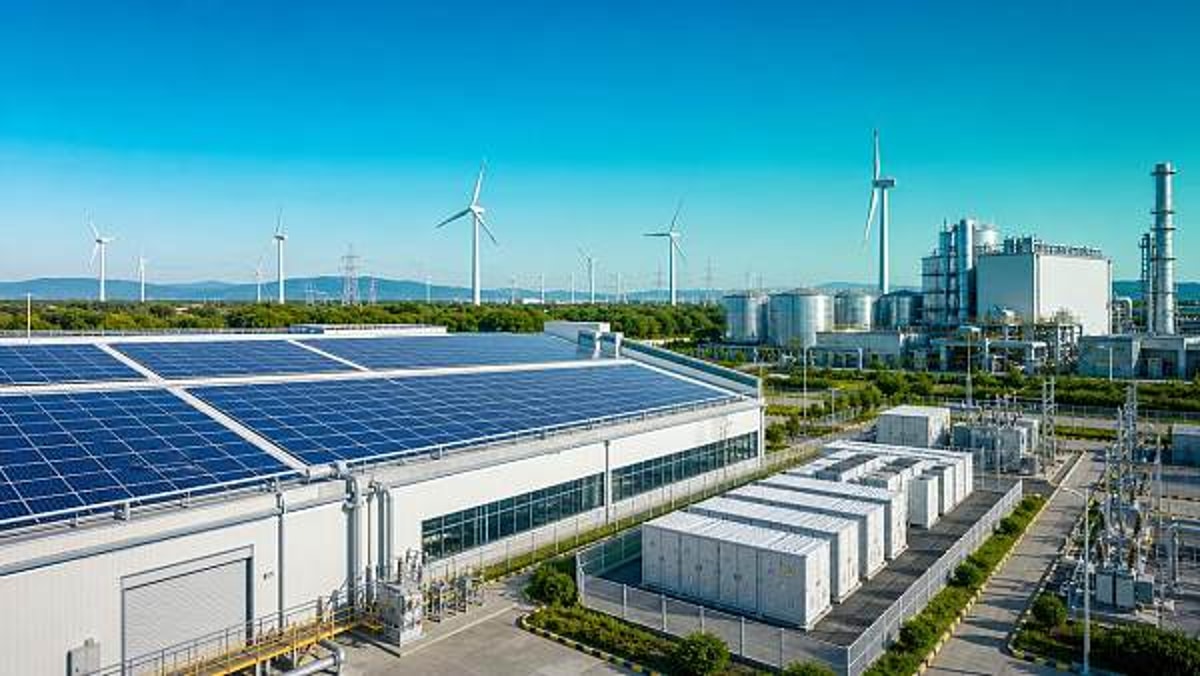
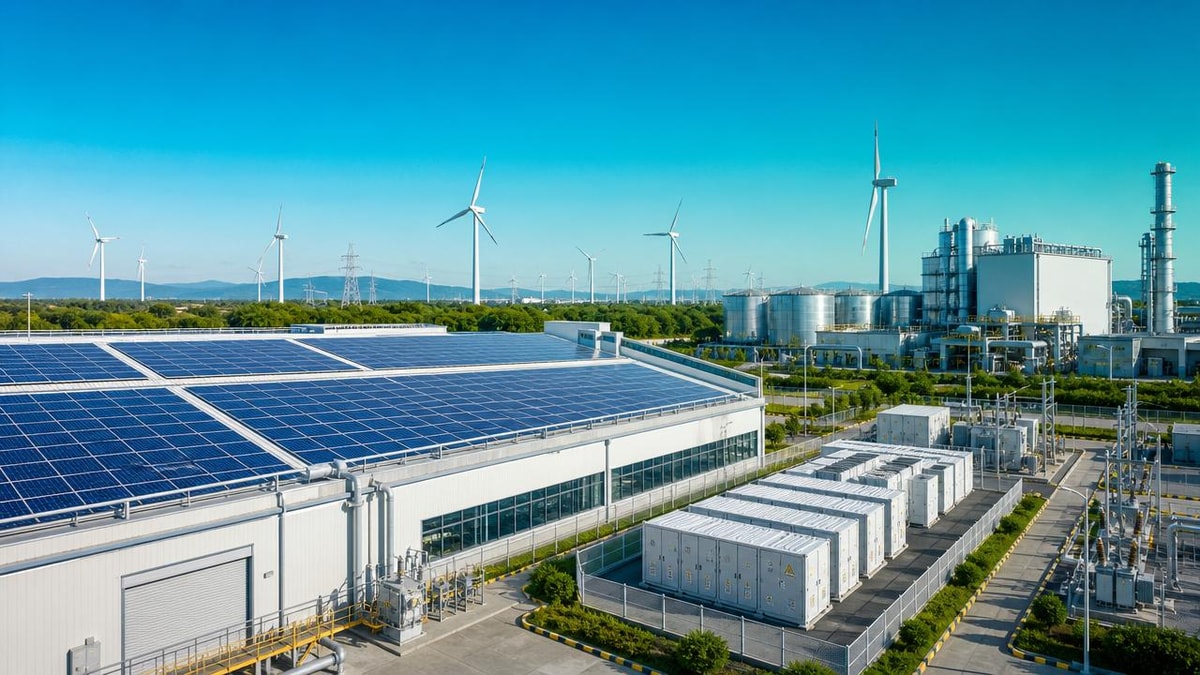
From a market perspective, renewable power has moved from a niche sustainability initiative to a mainstream industrial infrastructure asset. That shift matters because banks, private credit providers, infrastructure funds, utilities, and corporate energy partners now understand how to underwrite solar, wind, storage, and hybrid systems far better than they did in earlier stages of the market.
Several structural changes are making financing easier. Technology costs for solar modules, inverters, digital controls, and some storage systems have fallen significantly over time, even with recent supply chain volatility. Performance data is stronger, operational lifespans are better documented, and maintenance practices are more standardized. In lending terms, the asset class has become more bankable.
Corporate demand has also changed the equation. Industrial buyers are no longer exploring renewable power only for brand positioning. They are using it to hedge electricity price volatility, meet customer procurement standards, reduce emissions intensity, and support site resilience. When an asset supports both cost management and strategic compliance, it is easier to justify financing approval internally and externally.
Another major factor is the growth of specialized financing products. Instead of requiring every manufacturer or industrial operator to fund projects entirely from its own capex budget, the market now offers power purchase agreements, energy-as-a-service models, green loans, sustainability-linked financing, leasing, and blended structures. This creates more pathways for adoption, especially for companies trying to preserve cash.
That said, easier does not mean frictionless. Financing has become more available, but it has also become more selective. Investors want predictable energy demand, credible offtake structures, reliable site data, stable regulation, and counterparties that can manage long-term contractual obligations.
What business evaluators care about most before approving a project
For a business evaluation team, renewable power financing is rarely judged on environmental benefit alone. The decision usually sits at the intersection of cost, risk, flexibility, and strategic fit. Readers in this role typically want to know five things before moving forward.
First, they want to know whether the project will reduce total energy cost in a measurable and durable way. A low headline tariff is not enough. Evaluators need to understand all-in economics, including interconnection, operations and maintenance, insurance, contract administration, land or rooftop constraints, and the impact of time-of-use pricing.
Second, they want clarity on who carries performance and market risk. If the renewable system underperforms, who absorbs the revenue gap? If market power prices drop, does the company still pay a fixed premium? If policy incentives change, does the economics still hold? The allocation of risk often matters more than the headline financing rate.
Third, they care about balance-sheet treatment and capital allocation. Some industrial groups prefer direct ownership because it creates a long-term energy asset and may support depreciation or tax advantages. Others prefer off-balance-sheet or service-based models that preserve borrowing capacity for core production investments.
Fourth, they want confidence that the structure aligns with operations. A project may look attractive financially but fail in practice if the site load is too variable, if future facility expansion changes energy demand, or if the company lacks internal capabilities to manage contracts over 10 to 20 years.
Fifth, they increasingly need to know whether the renewable power arrangement supports broader customer, investor, and regulatory requirements. In many sectors, procurement decisions are now linked to Scope 2 emissions, supplier disclosure, and traceable decarbonization pathways. Financing is easier when the project supports multiple business objectives at once.
Which financing models are most relevant for industrial renewable power
The phrase renewable power financing covers several very different models. Understanding the differences is essential because each model shifts control, cost, and risk in different ways.
Direct ownership remains attractive for companies with strong balance sheets and long-term site certainty. In this model, the company funds or borrows for the project directly, owns the asset, and captures the energy savings over time. This can deliver the strongest lifetime economics, but it also requires upfront capital, internal project oversight, and acceptance of technology and operating risk.
On-site power purchase agreements are one of the most common ways to reduce capex pressure. A third party develops, owns, and operates the renewable system on the buyer’s site, while the industrial user agrees to purchase the generated electricity at a predetermined rate. This often lowers upfront cost and shifts technical risk to the provider, though the buyer must assess contract terms carefully, especially escalation clauses, site access obligations, and end-of-term options.
Off-site or virtual PPAs are more common among larger energy users with multi-site footprints or ambitious decarbonization goals. These contracts do not physically deliver electricity to the facility in a simple one-to-one sense. Instead, they provide a financial hedge linked to a renewable project elsewhere. They can be powerful tools for sustainability and price management, but they introduce basis risk, settlement complexity, and accounting considerations that require sophisticated evaluation.
Green loans and sustainability-linked loans can support direct ownership or broader energy transition programs. Green loans typically require proceeds to be used for defined eligible projects, while sustainability-linked loans tie financing terms to performance targets. These products can improve access to capital, but they also require measurement discipline and, in some cases, external verification.
Leasing and energy-as-a-service structures are growing in popularity where industrial companies want predictable monthly costs and minimal operational burden. These models can be especially useful for mid-market firms or fast-growing businesses that value flexibility over full asset ownership.
For evaluators, no single model is universally best. The right structure depends on energy intensity, credit strength, site control, investment horizon, tax position, and internal appetite for operational ownership.
What is still making renewable power hard to finance
Despite strong momentum, real obstacles remain. One of the biggest is the interest-rate environment. Renewable assets are capital-intensive, so higher rates can materially reduce project returns or make previously attractive structures less competitive against grid power in the short term. This does not eliminate financing, but it raises the importance of project quality and counterpart credit.
Grid interconnection is another persistent issue. In many markets, industrial projects face delays in obtaining approvals, connecting generation assets, or understanding curtailment exposure. A project with sound equipment and financing can still underperform commercially if interconnection takes too long or operates under restrictive conditions.
Policy risk also remains significant. Tax credits, renewable certificates, local permitting rules, and carbon frameworks can materially influence project economics. While many jurisdictions are moving toward stronger clean energy support, the timing and durability of policies vary. Business evaluators should be cautious about returns that depend too heavily on incentives that may change.
Counterparty risk is also more visible now. Providers have multiplied, but not all developers, installers, and financing intermediaries have the same execution quality or long-term stability. A low-priced proposal may hide weak maintenance commitments, unrealistic production assumptions, or refinancing dependencies that create exposure later.
Finally, the complexity of industrial demand profiles can be a barrier. Financing is easiest when energy consumption is stable, site tenure is secure, and facility operations are predictable. Seasonal loads, uncertain production expansion, multi-tenant arrangements, and fragmented utility contracts can all make underwriting more difficult.
How to evaluate whether a renewable power proposal is truly financeable
Business evaluators should treat renewable power like a strategic infrastructure decision, not just a utility procurement exercise. A disciplined assessment framework can quickly distinguish robust projects from attractive-looking but fragile ones.
Start with load quality. Assess historical consumption patterns by hour, day, and season. A project aligned with the facility’s actual demand profile is easier to finance and more likely to deliver forecast savings. If the project assumes stable demand while the operation is volatile, projected returns may be overstated.
Next, test the commercial model under multiple scenarios. Do not rely on a base-case savings estimate alone. Run sensitivity analysis for power prices, output degradation, maintenance costs, downtime, policy changes, and financing costs. Industrial buyers often discover that a seemingly strong proposal only works under narrow assumptions.
Then evaluate contract design in detail. Key questions include: What is the term? Are there escalation clauses? What happens if output underperforms? Who owns renewable energy certificates or similar environmental attributes? What are the termination rights if the facility closes, relocates, or is sold? These details shape the real economics far more than headline marketing claims.
It is also essential to assess vendor bankability. Review the developer’s track record, balance sheet support, O&M capabilities, insurance coverage, subcontractor strategy, and references in comparable industrial environments. Financing may appear available, but if the delivery partner is weak, the asset is not truly low risk.
Finally, compare the renewable project against realistic alternatives. In some cases, the best path may be a phased approach: energy efficiency first, then on-site solar, then storage, then procurement hedging. Financing is easier and outcomes are better when renewable power is integrated into a broader energy strategy rather than treated as a stand-alone purchase.
Why the best opportunities are not the same for every industrial buyer
The renewable power market is broad, and financing conditions vary sharply by company profile. Large multinationals with investment-grade credit can usually access the widest range of structures, including sophisticated off-site contracts and portfolio-based financing. Their challenge is less about access and more about coordination across multiple sites, jurisdictions, and governance requirements.
Mid-sized industrial companies often face a different reality. They may have strong business fundamentals but less in-house energy expertise and less negotiating leverage. For this group, standardized on-site PPAs, leasing models, or developer-led turnkey structures can be more practical than complex ownership strategies. The trade-off is that convenience sometimes comes with lower upside or less contractual flexibility.
Energy-intensive manufacturers have another advantage: their savings potential is usually large enough to attract financing attention. High and predictable electricity usage improves project economics and underwriting confidence. By contrast, facilities with lower or inconsistent energy use may find that project transaction costs become a larger share of value, making smaller deals harder to structure efficiently.
Geography also matters. Markets with clear permitting rules, mature installer networks, strong utility data access, and supportive renewable frameworks generally offer smoother financing pathways. In contrast, cross-border operations in emerging or fragmented regulatory environments may need more conservative assumptions and stronger local due diligence.
What renewable power financing is likely to look like over the next few years
Looking ahead, financing should continue to improve in quality and variety, even if capital does not become uniformly cheaper. More lenders and infrastructure investors are entering the space, and industrial energy solutions are becoming more integrated. Instead of financing solar alone, providers are increasingly packaging solar, storage, energy management software, backup systems, and demand optimization into a single commercial offer.
This matters because industrial buyers do not simply want green electricity. They want cost control, uptime protection, emissions reporting support, and operational visibility. Financing products are gradually evolving to match that broader value proposition.
At the same time, the market is likely to become more data-driven and more selective. Better metering, digital performance tracking, and asset monitoring will improve underwriting and may lower perceived risk for well-structured projects. But companies that cannot provide clean consumption data, credible facility plans, or strong governance may still struggle to secure favorable terms.
Another likely trend is a stronger link between renewable power financing and supply chain requirements. As large buyers pressure suppliers to disclose and reduce emissions, renewable energy projects may increasingly support commercial qualification, customer retention, and export competitiveness. In that environment, financing decisions will not be made solely on electricity savings, but on broader revenue protection and market access logic.
Conclusion: easier to finance, but only for well-structured decisions
So, is renewable power getting easier to finance for industry? In practical terms, yes. The market is more mature, capital sources are broader, and financing structures are far more adaptable than in the past. For many industrial companies, renewable power is no longer an exceptional investment case. It is becoming a standard strategic option.
But ease of financing should not be confused with simplicity. The best outcomes depend on matching the financing model to the company’s load profile, credit reality, operational plans, and risk tolerance. Projects are most successful when they are evaluated not just as sustainability initiatives, but as long-horizon business infrastructure decisions.
For commercial evaluators, the right mindset is clear: focus less on whether renewable power is broadly financeable and more on whether a specific structure creates resilient value for your organization. That is the distinction that turns available capital into a sound industrial energy decision.
Get weekly intelligence in your inbox.
No noise. No sponsored content. Pure intelligence.
 May 06, 2026Hydraulic Cylinder Fabrication Errors That Shorten Service LifeHydraulic Cylinder Fabrication Errors That Shorten Service Life
 May 06, 2026Surface Finishing Services That Reduce Warranty ComplaintsSurface Finishing Services That Reduce Warranty Complaints
 May 06, 2026Waterjet Cutting Is Better Than Laser for These MaterialsWaterjet Cutting Is Better Than Laser for These Materials
 May 06, 2026Custom Molded Rubber Choices That Affect Seal PerformanceCustom Molded Rubber Choices That Affect Seal Performance
 May 06, 2026Linear Motion Systems Fail Faster When Alignment Is OverlookedLinear Motion Systems Fail Faster When Alignment Is Overlooked
 May 06, 2026How Accurate Is Energy Forecasting When Weather Turns Volatile?How Accurate Is Energy Forecasting When Weather Turns Volatile?
 May 06, 2026Medical Device Manufacturing Delays Often Start in ValidationMedical Device Manufacturing Delays Often Start in Validation
 May 06, 2026Anodizing Services: Which Finish Holds Up Outdoors LongerAnodizing Services: Which Finish Holds Up Outdoors Longer
 May 06, 2026Solar Tracker Maintenance Issues That Hurt Long-Term OutputSolar Tracker Maintenance Issues That Hurt Long-Term Output
 May 06, 2026What Changes the Real Cost of Pneumatic Valves WholesaleWhat Changes the Real Cost of Pneumatic Valves Wholesale
 May 06, 2026Solar Microinverters vs String Inverters for Shaded RoofsSolar Microinverters vs String Inverters for Shaded Roofs
 May 06, 2026Bifacial Solar Panels: Do They Pay Off on Every Site?Bifacial Solar Panels: Do They Pay Off on Every Site?
 May 06, 2026Why Heavy Equipment Manufacturing Lead Times Keep SlippingWhy Heavy Equipment Manufacturing Lead Times Keep Slipping
 May 06, 2026Metal Stamping Parts: When Tooling Cost Stops Making SenseMetal Stamping Parts: When Tooling Cost Stops Making Sense
 May 06, 2026Energy Storage Battery Sizing Mistakes That Raise Project CostsEnergy Storage Battery Sizing Mistakes That Raise Project Costs
 May 06, 2026What Causes Revenue Gaps in a Solar Farm ProjectWhat Causes Revenue Gaps in a Solar Farm Project
 May 06, 2026Low Volume Manufacturing Works Best When Demand Is UnclearLow Volume Manufacturing Works Best When Demand Is Unclear
 May 06, 2026Automotive Parts Machining Costs That Grow With Late Design ChangesAutomotive Parts Machining Costs That Grow With Late Design Changes
 May 06, 2026AS9100 Aerospace Machining: What Fails an Audit Most OftenAS9100 Aerospace Machining: What Fails an Audit Most Often
 May 06, 2026Plastic Extrusion Tolerances That Affect Final Product FitPlastic Extrusion Tolerances That Affect Final Product Fit
 May 06, 2026Is Renewable Power Getting Easier to Finance for Industry?Is Renewable Power Getting Easier to Finance for Industry?
 May 06, 2026Ultrasonic Welding Defects That Are Easy to Miss at FirstUltrasonic Welding Defects That Are Easy to Miss at First
 May 06, 2026How to Compare Industrial Bearing Suppliers by Failure RiskHow to Compare Industrial Bearing Suppliers by Failure Risk
 May 06, 2026Custom Heatsinks: When a Standard Profile Stops WorkingCustom Heatsinks: When a Standard Profile Stops Working
 May 06, 2026Gear Manufacturing Problems That Show Up After AssemblyGear Manufacturing Problems That Show Up After Assembly
 May 06, 2026Why Thin Film Solar Cells Still Matter in 2026Why Thin Film Solar Cells Still Matter in 2026
 May 06, 2026Wire EDM Services or CNC Milling for Tight Tolerance Parts?Wire EDM Services or CNC Milling for Tight Tolerance Parts?