Bifacial Solar Panels: Do They Pay Off on Every Site?
Bifacial solar panels promise higher energy yield, but do they deliver strong returns on every site? For enterprise decision-makers, the answer depends on ground reflectivity, layout, installation height, and long-term project economics. This article examines where bifacial solar panels create measurable value, where performance gains may be limited, and how to assess site-specific ROI before making a strategic investment.
For procurement leaders, energy project developers, and operations executives, the key question is not whether bifacial technology works in theory. It is whether a specific site can convert rear-side irradiance into enough incremental kilowatt-hours to justify higher module, mounting, design, and maintenance complexity over a 20- to 30-year asset life.
In utility-scale and commercial projects, even a 3% to 8% difference in annual yield can materially shift internal rate of return, debt-service coverage, and payback timing. However, the uplift from bifacial solar panels is highly site-dependent. Ground conditions, row spacing, tracker geometry, local soiling, snow cover, and electrical design all affect actual performance.
Where Bifacial Solar Panels Create the Most Value
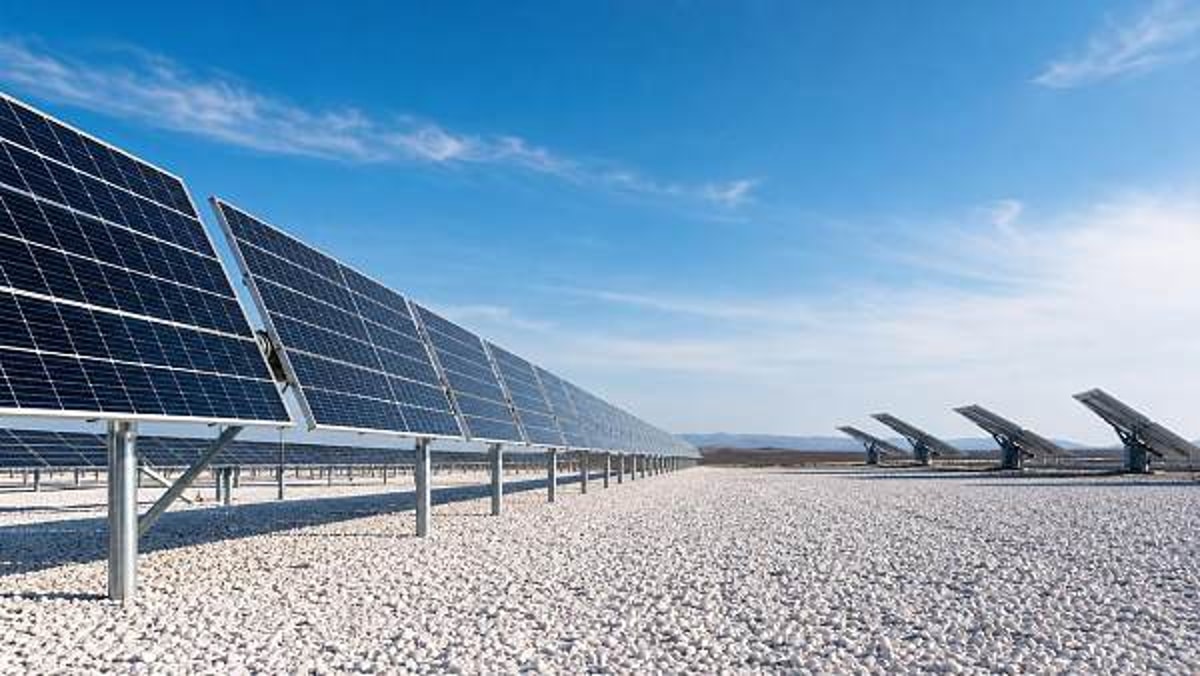
The strongest business case for bifacial solar panels usually appears on sites that allow rear-side light capture under stable and predictable conditions. In practical terms, that means open layouts, reflective surfaces, and mounting configurations that reduce rear shading. When these factors align, energy gains often move from marginal to decision-relevant.
High-albedo surfaces improve rear-side generation
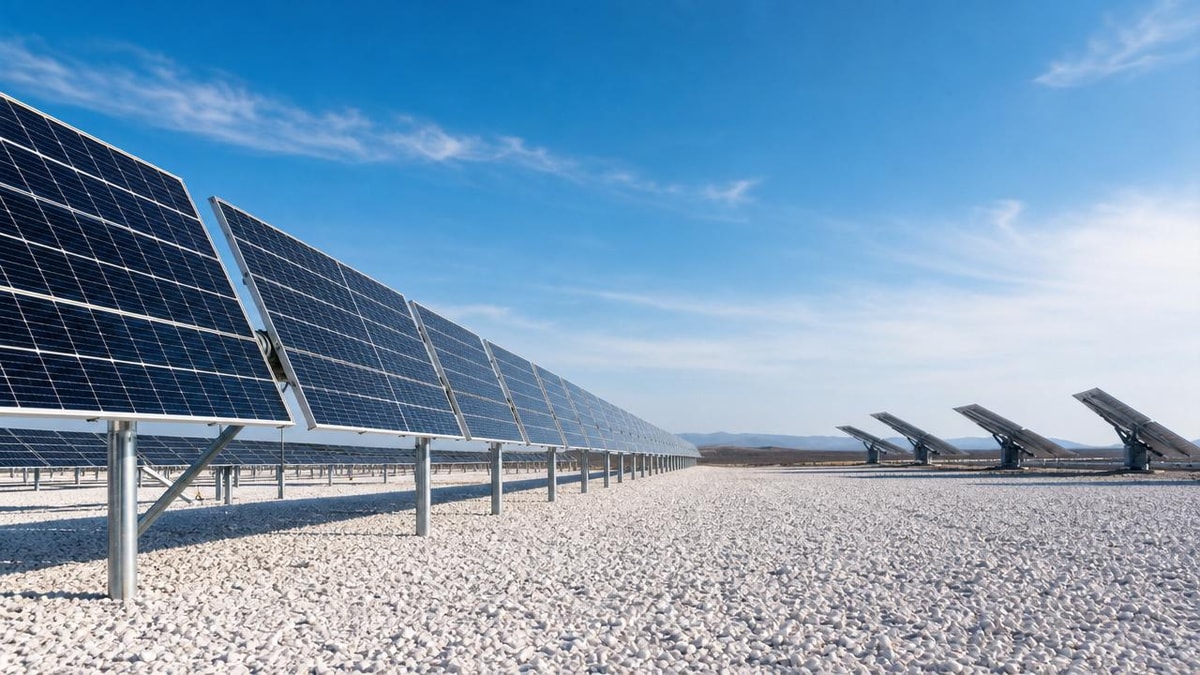
Rear-side output depends heavily on albedo, or the percentage of sunlight reflected by the ground. Dark soil or asphalt may reflect less than 15%, while light gravel can often reach 25% to 35%. Fresh snow can temporarily exceed 60%. On sites with consistently higher reflectivity, bifacial solar panels can deliver a much clearer performance premium than on low-reflectance surfaces.
For enterprise buyers, this matters because albedo is not an abstract engineering parameter. It can influence annual energy production, project bankability, and land-preparation cost. In some cases, spending more on surface treatment or ballast-friendly light aggregate can improve yield enough to offset part of the premium paid for bifacial modules.
Elevated mounting and spacing matter more than many buyers expect
Installation height typically affects how much reflected and diffused light reaches the rear glass. Ground-mounted systems raised by 0.8 to 1.5 meters often perform better than low-clearance arrays, particularly when row spacing is optimized. If rows are too close, mutual shading cuts rear-side benefit and reduces the expected gain from bifacial solar panels.
Single-axis tracker projects also tend to favor bifacial modules, especially in regions with strong direct irradiance and broad, unobstructed land. In these settings, rear-side contribution may come from both reflected ground light and sky diffuse radiation, producing more value than fixed-tilt designs on constrained commercial rooftops.
Typical site profiles that support stronger ROI
- Utility-scale ground mounts with row spacing designed for rear irradiance capture
- Carport systems with open undersides and light-colored paving below
- Tracker-based projects in dry or semi-arid climates with low vegetation growth
- Sites with seasonal snow cover that can raise winter or shoulder-season reflectivity
- Industrial campuses with available land and flexibility to optimize mounting height
The table below outlines how common site variables influence the commercial case for bifacial solar panels. It can help procurement teams separate promising conditions from projects where gains may remain too small to change investment outcomes.
The main takeaway is that bifacial solar panels reward physical openness. If the site design prioritizes dense land use, low-clearance mounting, or dark ground cover, rear-side generation can be too limited to materially improve net present value. Site geometry, not marketing claims, should drive the decision.
Where Performance Gains May Be Limited
Not every project can capture the upside promised by bifacial solar panels. In many commercial and industrial settings, site constraints reduce rear irradiance so much that the incremental yield falls into a narrow 1% to 4% band. At that point, additional balance-of-system cost and modeling complexity may dilute the return.
Rooftops are often the most misunderstood application
On flat rooftops, the area beneath the module is frequently obstructed by membranes, cable trays, parapets, HVAC units, or closely packed rows. Even with white roofing materials, module spacing is usually constrained by available square footage and fire-setback requirements. That limits the reflected light reaching the rear side.
For many rooftop systems below 5 MW, standard monofacial modules may outperform bifacial options on a cost-adjusted basis because they can support denser layouts and simpler performance modeling. A higher nominal wattage on paper does not automatically create a better LCOE outcome in these space-restricted environments.
Vegetation, dust, and soiling can reduce real-world gains
Landscaped or agricultural-adjacent sites can create unpredictable rear shading from grass growth, weeds, or uneven ground cover. Dust accumulation on both front and rear glass may also narrow the expected gain range. In dry regions, cleaning frequency may need to increase from 2 times per year to 4 or more, especially if the project depends on maintaining rear-side reflectivity.
Operationally, this means asset owners must evaluate O&M implications, not just module efficiency. A site that appears favorable at commissioning can underperform in years 2 through 5 if vegetation management, washing access, and drainage were underestimated during project planning.
Common situations where caution is warranted
- Low-slope rooftops with narrow row spacing and frequent rooftop obstructions
- Brownfield sites with dark surfaces and limited budget for reflectivity improvement
- Land-constrained projects where maximizing DC capacity per acre matters more than rear-side gain
- High-soiling regions without a practical cleaning plan or water strategy
- Sites with persistent snow drift, debris accumulation, or uneven terrain beneath arrays
The comparison below helps decision-makers understand when bifacial solar panels are likely to justify their premium and when monofacial alternatives may remain the more disciplined procurement choice.
The decision is rarely binary. In borderline projects, the best answer may be to value-engineer the entire system rather than focus on module type alone. Row spacing, inverter sizing, and albedo enhancement can have as much influence on project returns as the module architecture itself.
How Enterprise Buyers Should Evaluate Site-Specific ROI
A disciplined procurement process for bifacial solar panels should combine engineering assumptions with commercial thresholds. Enterprise buyers should ask not only how much more energy the system may generate, but how sensitive that estimate is to seasonal conditions, O&M execution, and financing structure. A robust review often includes at least 4 to 6 evaluation dimensions.
Start with energy modeling, not module marketing
The first step is a location-specific energy model that includes rear irradiance assumptions, shading losses, degradation, soiling behavior, and weather variability. If a supplier presents a generic 10% to 20% uplift claim without linking it to site geometry, decision-makers should treat the estimate as directional rather than investment-grade.
In practical terms, buyers should compare at least 2 scenarios: a monofacial baseline and a bifacial design using the same land envelope, the same interconnection limits, and similar electrical architecture. This reveals whether the energy gain survives real project constraints or disappears once spacing, capex, and balance-of-system changes are applied consistently.
Use a multi-factor commercial screen
The most useful ROI screen blends technical and financial inputs. Teams should examine capex delta, expected annual yield gain, O&M burden, land cost, and debt assumptions over a 20- to 25-year horizon. In some projects, a 5% yield gain can justify the premium. In others, the same gain may not offset higher structural cost or lower DC density.
A practical 5-step evaluation framework
- Measure site albedo, topography, and obstruction profile across representative seasons.
- Model monofacial and bifacial layouts under the same land and interconnection constraints.
- Quantify capex differences across modules, racking, labor, and ground-preparation scope.
- Estimate O&M impacts such as cleaning frequency, vegetation control, and rear-side inspection access.
- Stress-test payback, IRR, and LCOE under low, mid, and high performance cases.
This framework is especially relevant for global B2B organizations managing multi-site portfolios. A technology that performs well in one region may not scale economically across 10 or 20 facilities if site conditions vary widely. Standardized evaluation criteria reduce procurement bias and improve capital allocation discipline.
Key questions to ask suppliers and EPC partners
- What bifacial gain assumption is being used, and how was it modeled for this exact site?
- How do row spacing and mounting height differ from the monofacial design option?
- What rear-side soiling and maintenance assumptions are included over years 1 to 10?
- Will the design reduce DC capacity per acre or per rooftop zone compared with alternatives?
- What is the sensitivity of project IRR if rear-side gain is 2 percentage points lower than forecast?
For strategic buyers, these questions do more than clarify technical fit. They reveal whether a supplier can support transparent, investment-grade decision-making. In a competitive procurement cycle, the strongest proposal is usually the one that explains downside risk as clearly as upside potential.
Implementation Risks, Operations, and Long-Term Asset Strategy
Selecting bifacial solar panels is only part of the decision. Long-term returns depend on whether the system can preserve its modeled performance over 15, 20, or 30 years. That requires attention to cleaning logistics, inspection routines, vegetation management, and the interaction between module design and mounting hardware.
Design and O&M should be aligned from day one
If bifacial gain is central to the business case, the project should be designed to protect rear-side exposure over time. That may include stricter mowing intervals, drainage improvements, controlled ground cover, and access paths that allow cleaning equipment to operate efficiently. A design that saves 2% in upfront cost can lose much more if rear irradiance conditions deteriorate after commissioning.
Procurement teams should also review warranty terms, module handling requirements, and replacement planning. Glass-glass bifacial constructions may differ in weight, frame behavior, or handling considerations compared with standard alternatives. These details influence logistics, labor planning, and spare-part strategy across large portfolios.
Do not overlook portfolio-level decision logic
For enterprise decision-makers, the real question is often not whether bifacial solar panels work on one flagship site, but whether they improve returns across a portfolio. A portfolio with 3 ideal sites and 7 marginal ones may benefit from a selective deployment strategy rather than a blanket technology standard. This approach can improve average project economics while controlling execution complexity.
In board-level energy planning, consistency matters. Standardizing where bifacial modules are used, what minimum albedo or spacing thresholds apply, and when monofacial designs remain preferred can shorten procurement cycles and reduce design rework. Many organizations find it useful to define a decision threshold, such as a minimum modeled yield uplift of 4% to 6% before approving the bifacial premium.
Operational checkpoints before final approval
- Confirm that site maintenance crews can preserve rear-side exposure throughout the year.
- Check whether cleaning frequency, water access, or robotic washing needs will change.
- Validate that mounting height and row spacing do not create unacceptable structural or land-cost penalties.
- Review downside cases where bifacial gain drops by 20% to 30% relative to the base model.
- Ensure supplier documentation supports financing, insurance, and performance monitoring requirements.
Bifacial solar panels can be a high-value asset choice, but they are not a universal default. Their strongest returns appear on well-designed sites that allow rear-side light capture to remain consistent over time. Where density, low reflectivity, or operating complexity limit that advantage, conventional module strategies may produce more dependable economics.
For enterprise buyers evaluating new solar capacity, the most effective path is a site-specific commercial and technical review rather than a technology-led assumption. If you are comparing procurement options across industrial, commercial, or utility-scale assets, TradeNexus Pro can help you assess supplier positioning, project-fit criteria, and strategic sourcing priorities. Contact us to discuss your project parameters, request a tailored evaluation framework, or explore broader green energy procurement solutions.
Get weekly intelligence in your inbox.
No noise. No sponsored content. Pure intelligence.
 May 06, 2026Hydraulic Cylinder Fabrication Errors That Shorten Service LifeHydraulic Cylinder Fabrication Errors That Shorten Service Life
 May 06, 2026Surface Finishing Services That Reduce Warranty ComplaintsSurface Finishing Services That Reduce Warranty Complaints
 May 06, 2026Waterjet Cutting Is Better Than Laser for These MaterialsWaterjet Cutting Is Better Than Laser for These Materials
 May 06, 2026Custom Molded Rubber Choices That Affect Seal PerformanceCustom Molded Rubber Choices That Affect Seal Performance
 May 06, 2026Linear Motion Systems Fail Faster When Alignment Is OverlookedLinear Motion Systems Fail Faster When Alignment Is Overlooked
 May 06, 2026How Accurate Is Energy Forecasting When Weather Turns Volatile?How Accurate Is Energy Forecasting When Weather Turns Volatile?
 May 06, 2026Medical Device Manufacturing Delays Often Start in ValidationMedical Device Manufacturing Delays Often Start in Validation
 May 06, 2026Anodizing Services: Which Finish Holds Up Outdoors LongerAnodizing Services: Which Finish Holds Up Outdoors Longer
 May 06, 2026Solar Tracker Maintenance Issues That Hurt Long-Term OutputSolar Tracker Maintenance Issues That Hurt Long-Term Output
 May 06, 2026What Changes the Real Cost of Pneumatic Valves WholesaleWhat Changes the Real Cost of Pneumatic Valves Wholesale
 May 06, 2026Solar Microinverters vs String Inverters for Shaded RoofsSolar Microinverters vs String Inverters for Shaded Roofs
 May 06, 2026Bifacial Solar Panels: Do They Pay Off on Every Site?Bifacial Solar Panels: Do They Pay Off on Every Site?
 May 06, 2026Why Heavy Equipment Manufacturing Lead Times Keep SlippingWhy Heavy Equipment Manufacturing Lead Times Keep Slipping
 May 06, 2026Metal Stamping Parts: When Tooling Cost Stops Making SenseMetal Stamping Parts: When Tooling Cost Stops Making Sense
 May 06, 2026Energy Storage Battery Sizing Mistakes That Raise Project CostsEnergy Storage Battery Sizing Mistakes That Raise Project Costs
 May 06, 2026What Causes Revenue Gaps in a Solar Farm ProjectWhat Causes Revenue Gaps in a Solar Farm Project
 May 06, 2026Low Volume Manufacturing Works Best When Demand Is UnclearLow Volume Manufacturing Works Best When Demand Is Unclear
 May 06, 2026Automotive Parts Machining Costs That Grow With Late Design ChangesAutomotive Parts Machining Costs That Grow With Late Design Changes
 May 06, 2026AS9100 Aerospace Machining: What Fails an Audit Most OftenAS9100 Aerospace Machining: What Fails an Audit Most Often
 May 06, 2026Plastic Extrusion Tolerances That Affect Final Product FitPlastic Extrusion Tolerances That Affect Final Product Fit
 May 06, 2026Is Renewable Power Getting Easier to Finance for Industry?Is Renewable Power Getting Easier to Finance for Industry?
 May 06, 2026Ultrasonic Welding Defects That Are Easy to Miss at FirstUltrasonic Welding Defects That Are Easy to Miss at First
 May 06, 2026How to Compare Industrial Bearing Suppliers by Failure RiskHow to Compare Industrial Bearing Suppliers by Failure Risk
 May 06, 2026Custom Heatsinks: When a Standard Profile Stops WorkingCustom Heatsinks: When a Standard Profile Stops Working
 May 06, 2026Gear Manufacturing Problems That Show Up After AssemblyGear Manufacturing Problems That Show Up After Assembly
 May 06, 2026Why Thin Film Solar Cells Still Matter in 2026Why Thin Film Solar Cells Still Matter in 2026
 May 06, 2026Wire EDM Services or CNC Milling for Tight Tolerance Parts?Wire EDM Services or CNC Milling for Tight Tolerance Parts?