Anodizing Services: Which Finish Holds Up Outdoors Longer
When evaluating anodizing services for outdoor applications, technical teams need more than a basic finish comparison—they need performance data that stands up to UV exposure, moisture, corrosion, and wear. This article examines which anodized finish lasts longer outdoors, how coating type affects durability, and what decision-makers should consider when selecting the right surface treatment for demanding environments.
Why a checklist-based review is the fastest way to compare outdoor anodizing services
For technical evaluators, the biggest mistake is treating outdoor anodizing as a simple aesthetic choice. In practice, service life depends on a stack of variables: alloy chemistry, anodic film thickness, sealing quality, color stability, local climate, and even the geometry of the part. A checklist approach helps teams avoid vague supplier claims and focus on measurable performance indicators.
In most outdoor cases, the finish that holds up longer is not defined by color alone or by whether a supplier offers “premium anodizing services.” It is usually the result of a properly specified architectural or hard anodized coating, matched to the substrate and exposure conditions, then sealed correctly and verified against recognized test methods. That is why procurement, engineering, and quality teams should evaluate anodizing services through decision criteria rather than brochure language.
First priority: confirm what “outdoors longer” actually means for your application
Before comparing suppliers, define the real failure mode you are trying to avoid. Outdoor durability may refer to corrosion resistance, color retention, gloss retention, abrasion resistance, or reduced maintenance. Different anodized finishes rank differently depending on which of those outcomes matters most.
- If corrosion is the main concern, prioritize thicker anodic layers, high-quality sealing, and salt-spray or cyclic corrosion test data.
- If appearance matters most, request UV stability data, dye durability information, and weathering performance for the exact finish family.
- If surface wear is critical, compare hard anodizing or thicker oxide systems instead of relying only on decorative anodizing services.
- If the part will be installed near the coast, in industrial pollution, or under freeze-thaw cycling, ask for environment-specific recommendations rather than general outdoor claims.
This first clarification prevents a common sourcing error: selecting a finish optimized for showroom appearance when the application really requires long-term exposure resistance.
Core checklist: the factors that most influence how long anodized finishes last outdoors
Use the following checklist when screening anodizing services for exterior components, frames, housings, brackets, panels, and visible architectural hardware.
1. Alloy compatibility
The base aluminum alloy affects finish consistency and durability. Some alloys anodize with a cleaner, more uniform oxide layer, while others may show color variation or less predictable surface behavior. Ask suppliers which alloys they process most often and whether they have outdoor performance history with your exact grade.
2. Coating thickness
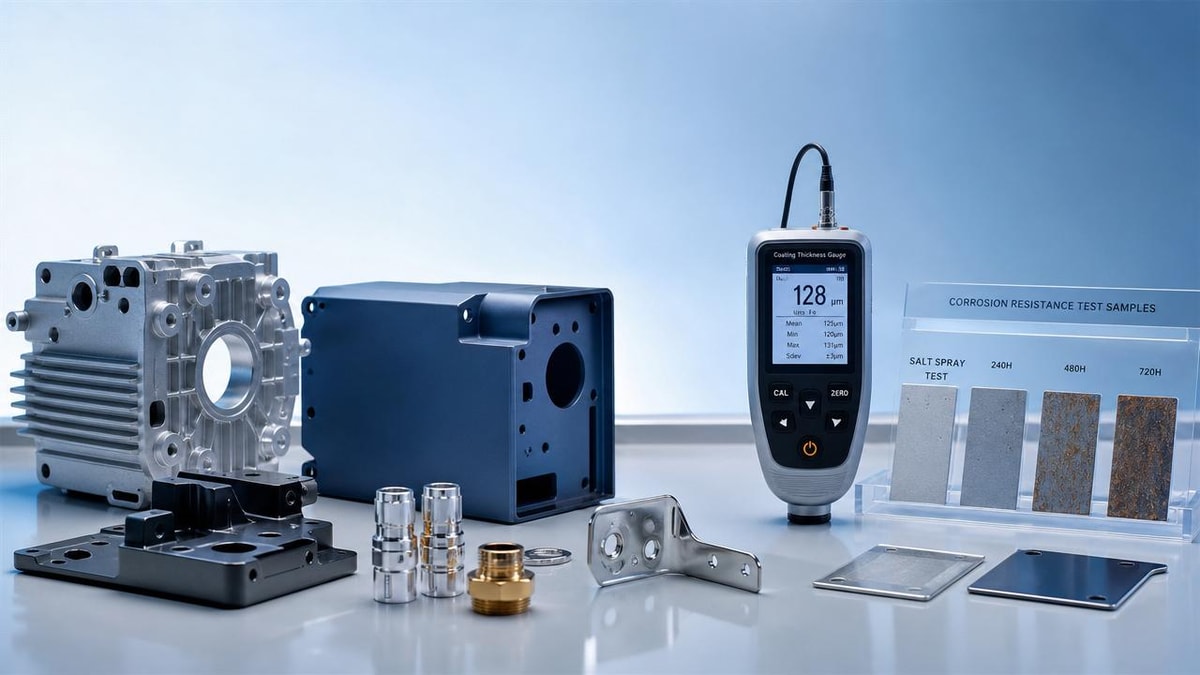
For outdoor service, thickness is one of the strongest predictors of life expectancy. Thin decorative layers may work indoors but often underperform outside. Architectural anodizing typically offers better weather resistance because the oxide film is thicker and better suited to exposure. In severe conditions, technical teams should ask for the target thickness range, minimum guaranteed thickness, and thickness measurement method.
3. Sealing quality
Even a good anodic layer can fail early if sealing is poor. Sealing closes the porous oxide structure and improves resistance to staining, corrosion, and moisture ingress. When evaluating anodizing services, ask what sealing process is used, how it is controlled, and which acceptance tests are performed.
4. Color method and UV stability
Not all black, bronze, or custom-colored anodized finishes age the same way. Electrolytic coloring generally performs better outdoors than many dyed finishes, especially under heavy UV exposure. If long-term visual consistency is important, verify whether the finish is dyed, electrolytically colored, or clear anodized, then request weathering evidence for that exact system.
5. Pretreatment and process consistency
Surface preparation affects both appearance and adhesion of the oxide structure. Uneven etching, contamination, or inconsistent bath control can create weak points that reduce service life. Strong anodizing services should be able to explain pretreatment steps, bath maintenance, inspection controls, and lot traceability.
Which anodized finish usually lasts longer outdoors?
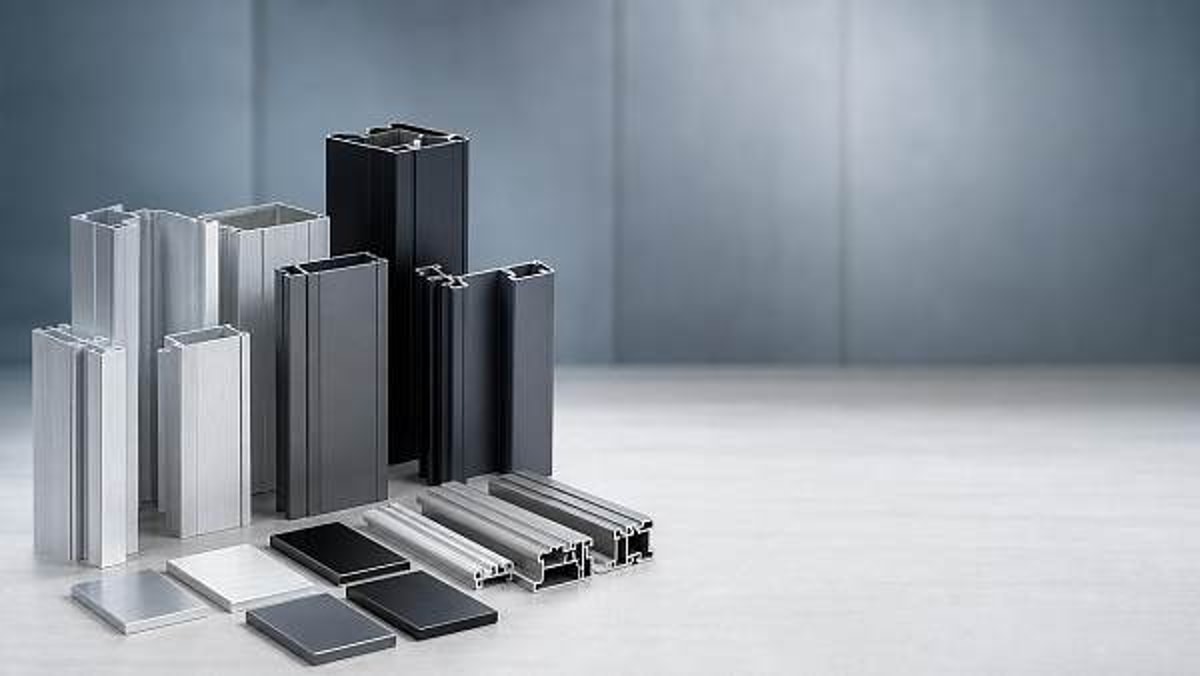
As a practical rule, clear or electrolytically colored architectural anodizing with sufficient thickness and proper sealing typically lasts longer outdoors than thin decorative dyed finishes. For applications where wear and surface hardness matter alongside weather exposure, hard anodizing can outperform standard decorative anodizing, but it may not always be the best fit for appearance-sensitive exterior products.
Technical teams should not interpret this as a universal ranking for every project. The longest-lasting option depends on the balance between appearance, corrosion resistance, abrasion, cost, and manufacturability. For visible building components, architectural anodizing often delivers the best outdoor compromise. For industrial equipment exposed to friction or repeated handling, a harder technical oxide layer may provide a longer functional life even if the cosmetic finish is less refined.
Use this decision table when comparing anodizing services
The table below helps technical evaluators match finish type to outdoor priorities.
Scenario-based checks: what to prioritize by application type
For coastal or marine-adjacent installations
Salt-laden air accelerates corrosion risks, especially where sealing quality is inconsistent or where edges are poorly finished. In this scenario, anodizing services should be reviewed for higher thickness capability, validated sealing controls, corrosion test history, and experience with chloride-rich environments.
For solar, green energy, and outdoor electronics housings
These sectors often need a balance of thermal performance, appearance, and corrosion resistance. Technical teams should verify dimensional control after anodizing, electrical considerations if grounding interfaces are involved, and whether the finish maintains performance under long solar loading and thermal cycling.
For advanced manufacturing equipment used outdoors
If components face both weather and contact wear, hard anodizing or thicker technical anodic finishes may be the better option. Ask whether the anodizing services provider can control buildup on tolerance-critical areas and whether masking is available where electrical contact or mating fit is essential.
For visible architectural hardware and branded exterior components
Uniform appearance matters as much as corrosion protection. Here, the key checks are color matching consistency, lot-to-lot repeatability, sample approval process, and outdoor weathering evidence. A finish that is technically durable but visually unstable may still fail the application.
Commonly overlooked risks that shorten outdoor life
- Specifying anodizing services without naming the alloy, which leads to finish mismatch and inconsistent appearance.
- Requesting color only, without defining coating thickness, sealing expectations, or outdoor exposure category.
- Ignoring cut edges, machined zones, threads, and contact points where post-processing may affect protection.
- Using laboratory salt-spray claims as the only proof of field performance.
- Comparing unit price without considering maintenance cost, replacement cycle, and warranty exposure.
- Assuming all black anodized finishes have equal UV resistance.
These issues are especially important in cross-border sourcing, where process names may sound similar but actual quality control standards differ significantly between suppliers.
Execution checklist: what to request before approving a supplier
- State the aluminum alloy, part geometry, and intended outdoor exposure conditions.
- Define whether priority is corrosion life, color retention, wear resistance, or mixed performance.
- Request recommended anodizing services options with target thickness and sealing specification.
- Ask for applicable standards, test methods, inspection frequency, and sample records.
- Review color process type and any weathering limitations for dark or custom finishes.
- Confirm dimensional impact, masking requirements, and critical tolerance areas.
- Obtain reference projects or outdoor service history for similar industries and environments.
- Approve production samples under realistic lighting and expected use conditions.
FAQ for technical evaluators reviewing anodizing services
Is thicker always better for outdoor anodizing?
Not always, but thicker coatings generally improve outdoor durability when the process is well controlled. Thickness must still match the part’s dimensional needs, appearance requirements, and service environment.
Does black anodizing last longer outdoors?
Color alone does not determine life span. The coloring method matters more. Some black dyed finishes fade faster than electrolytically colored finishes under strong UV exposure.
Should we choose hard anodizing for every outdoor metal part?
No. Hard anodizing is excellent for wear resistance, but architectural anodizing may be a better choice for visible exterior applications where uniform appearance and color stability are more important.
Final decision guidance for teams comparing suppliers
If your goal is the longest outdoor service life, the safest default is to evaluate anodizing services based on alloy fit, coating thickness, sealing quality, and proven weathering performance—not on finish name alone. In many exterior applications, properly specified architectural anodizing or electrolytically colored anodized finishes will outlast thin decorative alternatives. Where mechanical wear is also high, hard anodizing may deliver the strongest functional durability.
For procurement directors, engineers, and technical reviewers using platforms such as TradeNexus Pro to identify qualified global partners, the best next step is to prepare a concise technical brief. Include alloy grade, environment, required finish appearance, target life, test expectations, tolerances, and annual volume. With that information, anodizing services providers can recommend a finish that is not just attractive at shipment, but reliable after years of outdoor exposure.
Get weekly intelligence in your inbox.
No noise. No sponsored content. Pure intelligence.
 May 06, 2026Hydraulic Cylinder Fabrication Errors That Shorten Service LifeHydraulic Cylinder Fabrication Errors That Shorten Service Life
 May 06, 2026Surface Finishing Services That Reduce Warranty ComplaintsSurface Finishing Services That Reduce Warranty Complaints
 May 06, 2026Waterjet Cutting Is Better Than Laser for These MaterialsWaterjet Cutting Is Better Than Laser for These Materials
 May 06, 2026Custom Molded Rubber Choices That Affect Seal PerformanceCustom Molded Rubber Choices That Affect Seal Performance
 May 06, 2026Linear Motion Systems Fail Faster When Alignment Is OverlookedLinear Motion Systems Fail Faster When Alignment Is Overlooked
 May 06, 2026How Accurate Is Energy Forecasting When Weather Turns Volatile?How Accurate Is Energy Forecasting When Weather Turns Volatile?
 May 06, 2026Medical Device Manufacturing Delays Often Start in ValidationMedical Device Manufacturing Delays Often Start in Validation
 May 06, 2026Anodizing Services: Which Finish Holds Up Outdoors LongerAnodizing Services: Which Finish Holds Up Outdoors Longer
 May 06, 2026Solar Tracker Maintenance Issues That Hurt Long-Term OutputSolar Tracker Maintenance Issues That Hurt Long-Term Output
 May 06, 2026What Changes the Real Cost of Pneumatic Valves WholesaleWhat Changes the Real Cost of Pneumatic Valves Wholesale
 May 06, 2026Solar Microinverters vs String Inverters for Shaded RoofsSolar Microinverters vs String Inverters for Shaded Roofs
 May 06, 2026Bifacial Solar Panels: Do They Pay Off on Every Site?Bifacial Solar Panels: Do They Pay Off on Every Site?
 May 06, 2026Why Heavy Equipment Manufacturing Lead Times Keep SlippingWhy Heavy Equipment Manufacturing Lead Times Keep Slipping
 May 06, 2026Metal Stamping Parts: When Tooling Cost Stops Making SenseMetal Stamping Parts: When Tooling Cost Stops Making Sense
 May 06, 2026Energy Storage Battery Sizing Mistakes That Raise Project CostsEnergy Storage Battery Sizing Mistakes That Raise Project Costs
 May 06, 2026What Causes Revenue Gaps in a Solar Farm ProjectWhat Causes Revenue Gaps in a Solar Farm Project
 May 06, 2026Low Volume Manufacturing Works Best When Demand Is UnclearLow Volume Manufacturing Works Best When Demand Is Unclear
 May 06, 2026Automotive Parts Machining Costs That Grow With Late Design ChangesAutomotive Parts Machining Costs That Grow With Late Design Changes
 May 06, 2026AS9100 Aerospace Machining: What Fails an Audit Most OftenAS9100 Aerospace Machining: What Fails an Audit Most Often
 May 06, 2026Plastic Extrusion Tolerances That Affect Final Product FitPlastic Extrusion Tolerances That Affect Final Product Fit
 May 06, 2026Is Renewable Power Getting Easier to Finance for Industry?Is Renewable Power Getting Easier to Finance for Industry?
 May 06, 2026Ultrasonic Welding Defects That Are Easy to Miss at FirstUltrasonic Welding Defects That Are Easy to Miss at First
 May 06, 2026How to Compare Industrial Bearing Suppliers by Failure RiskHow to Compare Industrial Bearing Suppliers by Failure Risk
 May 06, 2026Custom Heatsinks: When a Standard Profile Stops WorkingCustom Heatsinks: When a Standard Profile Stops Working
 May 06, 2026Gear Manufacturing Problems That Show Up After AssemblyGear Manufacturing Problems That Show Up After Assembly
 May 06, 2026Why Thin Film Solar Cells Still Matter in 2026Why Thin Film Solar Cells Still Matter in 2026
 May 06, 2026Wire EDM Services or CNC Milling for Tight Tolerance Parts?Wire EDM Services or CNC Milling for Tight Tolerance Parts?