Wire EDM Services or CNC Milling for Tight Tolerance Parts?
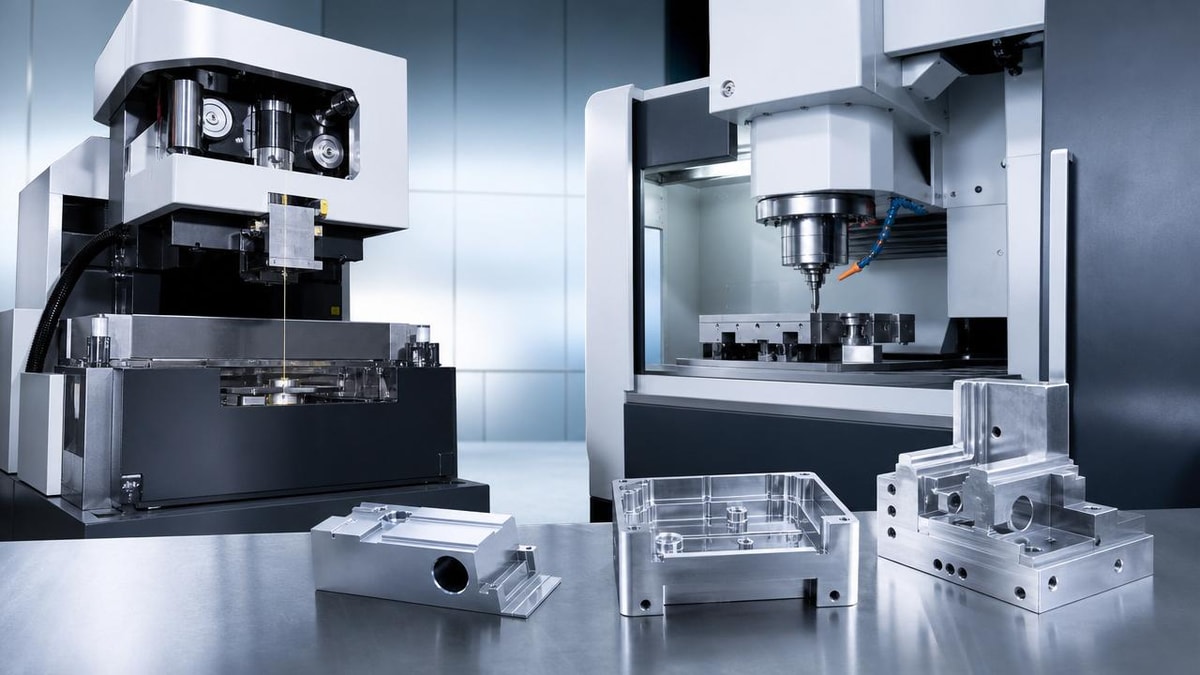
When evaluating tight-tolerance parts, the choice between wire edm services and CNC milling can directly affect precision, lead time, material compatibility, and total production cost. For technical evaluators, understanding where each process performs best is essential to reducing risk and improving manufacturability. This article compares both methods through a practical, engineering-focused lens to help support smarter sourcing and production decisions.
Why a checklist-first comparison works better for tight-tolerance sourcing
For technical assessment teams, the biggest mistake is comparing wire edm services and CNC milling as if they were interchangeable. They are not. Both remove material with high accuracy, but they do so under different physical constraints, tooling models, and production economics. A checklist-based review is more useful than a generic process description because it helps evaluators prioritize what actually determines success: feature geometry, tolerance stack-up, surface integrity, material hardness, batch size, and downstream finishing needs.
In practical supplier evaluation, the best process is rarely the one with the broadest capability on paper. It is the one that matches the part’s critical-to-function requirements with the lowest manufacturing risk. That is why technical buyers should start with a structured decision path rather than vendor preference or unit price alone.
First-pass decision checklist: what to confirm before choosing a process
Before requesting a quote, confirm the following points. These checks will quickly indicate whether wire edm services or CNC milling should be your primary candidate.
- Is the part profile mainly 2D through-cut geometry, or does it require complex 3D surfaces, pockets, and contoured faces?
- Are the tightest tolerances located on internal corners, thin walls, slots, or delicate features that are difficult to mill without tool deflection?
- What is the material condition: annealed, hardened, heat-treated, conductive, or non-conductive?
- Does the design require burr-free edges, minimal cutting force, or reduced mechanical stress during machining?
- Is speed more important than ultimate precision, especially for larger volumes or less intricate geometries?
- Will the part need secondary operations such as polishing, grinding, coating, deburring, or assembly alignment?
- Are you optimizing for prototype validation, low-volume precision production, or scalable repeat manufacturing?
If your answers point toward ultra-fine detail, hardened conductive materials, sharp inside corners, and low mechanical load, wire edm services often deserve priority. If they point toward 3D geometry, faster material removal, and broader production flexibility, CNC milling usually leads.
Core judgment standard: where wire edm services usually win
Wire EDM is especially strong when dimensional accuracy must be maintained without introducing cutting pressure into the workpiece. Because the process uses a thin electrically charged wire to erode conductive material, it avoids many of the force-related issues common in conventional cutting. For technical evaluators, this matters most in precision tooling, medical components, aerospace inserts, fine electronic parts, and hardened steel profiles.
Choose wire edm services first when the part includes very narrow slots, small radii, fragile webs, or tall thin sections that could distort under milling forces. The process is also highly suitable when the material is already hardened and post-machining heat treatment would create dimensional instability. In those cases, EDM can cut final geometry directly after hardening, reducing risk across the manufacturing route.
Another advantage is edge quality. Well-controlled wire edm services can deliver excellent surface finish and highly consistent profiles, often reducing manual deburring. For evaluators responsible for fit-critical interfaces, punch-and-die components, and precision mating features, this can simplify assembly and inspection.
Core judgment standard: where CNC milling usually wins
CNC milling is generally the stronger option when the part requires three-dimensional forms rather than only through-cut profiles. If the component includes pockets, bosses, contours, chamfers, tapped holes, or multiple machined faces, milling provides broader geometric freedom. It is also faster at removing large volumes of material, which is important when lead time and unit economics matter.
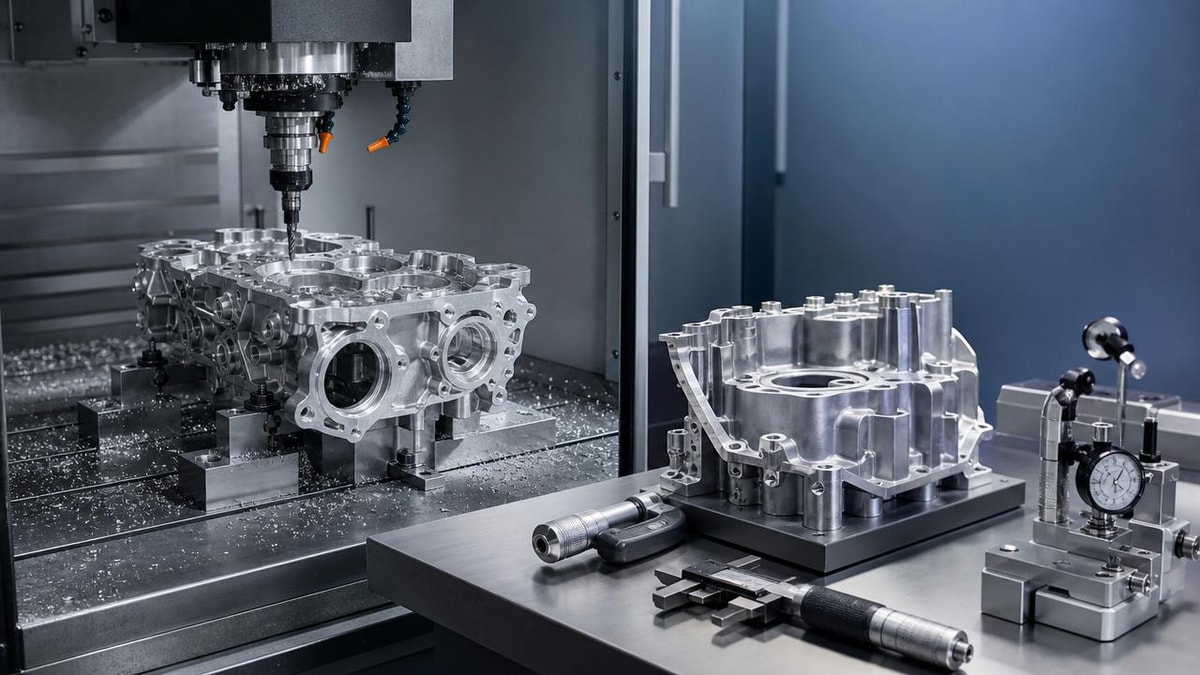
For technical teams evaluating manufacturability, CNC milling should move to the front when the tolerances are tight but still achievable with modern machine rigidity, toolpath optimization, and in-process probing. In many industrial applications, a high-quality milling supplier can hold demanding tolerances while shortening cycle time compared with wire edm services, particularly on aluminum, stainless steel, titanium, and engineering plastics.
Milling also offers better flexibility for mixed-feature parts. If your design combines precision faces with drilled patterns, threaded features, and cosmetic surfaces, consolidating operations in a CNC cell may reduce handling steps and total lead time.
Use this practical comparison table during technical review
Scenario-based guidance for technical evaluators
If the part is a hardened die component
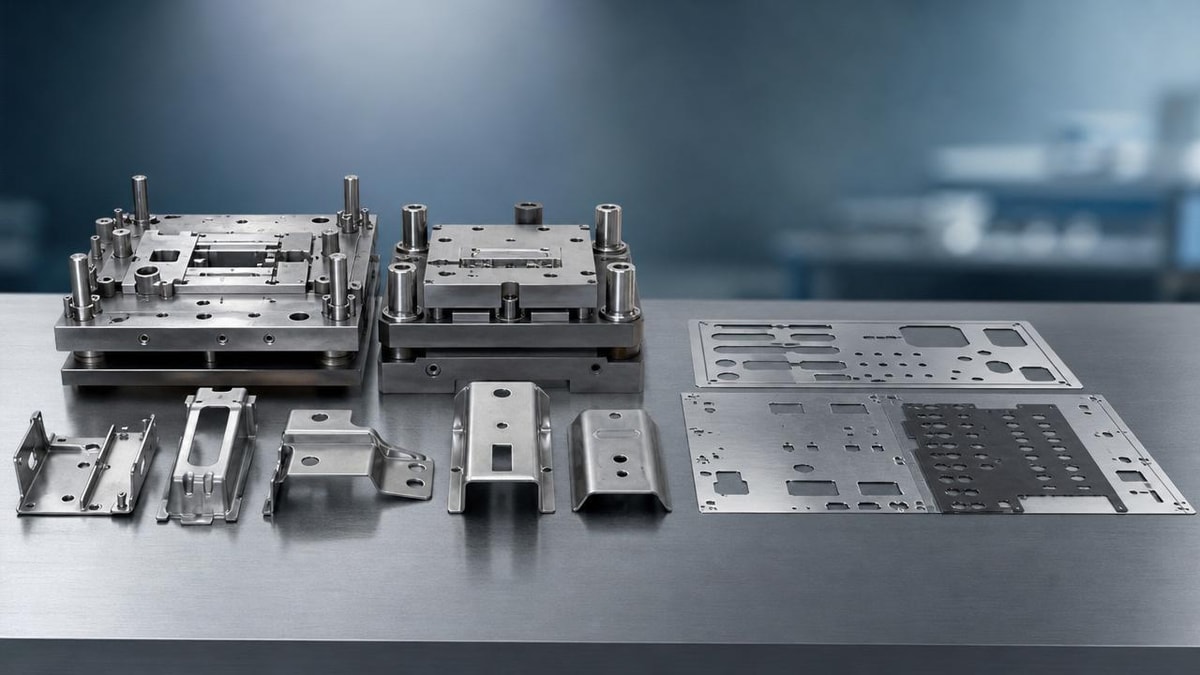
Wire edm services are often the safer route. They handle hardened conductive materials with minimal distortion and can preserve tight feature relationships. This is especially useful for dies, punches, wear plates, and precision inserts where edge sharpness and profile fidelity matter more than 3D sculpting.
If the part is a housing or bracket with multiple features
CNC milling is usually more efficient. When a component includes holes, pockets, flatness requirements, and multiple datums, milling reduces process fragmentation. Wire edm services may still support a local critical feature, but they are rarely the complete answer for this part category.
If the part has delicate walls or narrow slots
Favor wire edm services, particularly when the wall could deflect or chatter under a milling cutter. This is one of the clearest decision points because non-contact thermal erosion often protects geometry better than force-based cutting.
If the part must scale into moderate production volume
Re-check economics carefully. CNC milling often becomes more attractive as volume grows, especially when tolerances are challenging but not extreme. Wire edm services remain valuable for critical inserts, fixture details, and specific high-precision features, but cycle time can become the limiting factor.
Commonly overlooked risks that affect the final decision
- Assuming tolerance is the only metric. A quoted tolerance may look acceptable, but feature location, perpendicularity, recast layer concerns, or cutter access may create hidden problems.
- Ignoring material conductivity. Wire edm services require electrically conductive materials. This sounds basic, but mixed-material projects and coated blanks can still create confusion during sourcing.
- Overlooking corner requirements. Designers often specify internal corners that are unrealistic for milling without redesign. EDM may solve this immediately.
- Not checking downstream finishing impact. Surface treatment, grinding stock, or polishing may alter which process is more cost-effective.
- Using the wrong datum strategy. Tight-tolerance parts succeed or fail based on how features relate to functional datums, not just nominal dimensions in isolation.
Execution checklist for RFQ preparation
If you want reliable feedback from suppliers offering wire edm services or CNC milling, provide a stronger data package upfront. This shortens quote cycles and improves process recommendations.
- Mark the truly critical dimensions and identify which tolerances are functional versus preferred.
- Specify material grade, hardness range, heat-treatment condition, and whether machining occurs before or after hardening.
- Call out surface finish requirements by feature, not just as a blanket note.
- Share expected annual volume, prototype quantity, and target delivery window.
- Identify features that can be adjusted for manufacturability, such as corner radii, stock allowance, or non-critical cosmetic areas.
- Ask suppliers to indicate their proposed process route, inspection method, and any assumptions behind tolerance capability.
FAQ for choosing wire edm services or CNC milling
Can wire edm services replace CNC milling completely?
Usually no. Wire EDM excels in precision profile cutting of conductive materials, but it does not replace the broad 3D capability and fast stock removal of milling. Many high-performance parts use both processes strategically.
Which process is better for the tightest tolerances?
It depends on where the tolerance sits. For profile accuracy, fine slots, and delicate conductive parts, wire edm services often have the edge. For controlled 3D features and machined datums, advanced CNC milling may be more practical.
Which process is usually faster?
CNC milling is typically faster for bulk material removal and mixed-feature machining. Wire edm services are slower but can reduce rework and improve precision on difficult geometries.
Final recommendation: how to move from comparison to action
For technical evaluators, the most reliable approach is not choosing wire edm services or CNC milling in the abstract. It is matching the process to the part’s most failure-sensitive features. Start with geometry, tolerance location, material condition, and production volume. Then review whether the supplier can explain inspection strategy, process limits, and any manufacturability trade-offs in clear engineering terms.
If you need to move a project forward, prioritize discussion around these points: critical dimensions, acceptable tolerance bands, conductive versus non-conductive material, hardness state, required finish, target quantity, and whether a hybrid route is acceptable. In many cases, the best outcome comes from using CNC milling for roughing and 3D features, then applying wire edm services only where ultra-precise profiles or stress-free cutting truly add value.
For B2B sourcing teams operating in precision manufacturing supply chains, that disciplined review process improves quote quality, shortens decision time, and lowers the risk of selecting a process that looks capable on paper but fails under production conditions.
Get weekly intelligence in your inbox.
No noise. No sponsored content. Pure intelligence.
 May 06, 2026Hydraulic Cylinder Fabrication Errors That Shorten Service LifeHydraulic Cylinder Fabrication Errors That Shorten Service Life
 May 06, 2026Surface Finishing Services That Reduce Warranty ComplaintsSurface Finishing Services That Reduce Warranty Complaints
 May 06, 2026Waterjet Cutting Is Better Than Laser for These MaterialsWaterjet Cutting Is Better Than Laser for These Materials
 May 06, 2026Custom Molded Rubber Choices That Affect Seal PerformanceCustom Molded Rubber Choices That Affect Seal Performance
 May 06, 2026Linear Motion Systems Fail Faster When Alignment Is OverlookedLinear Motion Systems Fail Faster When Alignment Is Overlooked
 May 06, 2026How Accurate Is Energy Forecasting When Weather Turns Volatile?How Accurate Is Energy Forecasting When Weather Turns Volatile?
 May 06, 2026Medical Device Manufacturing Delays Often Start in ValidationMedical Device Manufacturing Delays Often Start in Validation
 May 06, 2026Anodizing Services: Which Finish Holds Up Outdoors LongerAnodizing Services: Which Finish Holds Up Outdoors Longer
 May 06, 2026Solar Tracker Maintenance Issues That Hurt Long-Term OutputSolar Tracker Maintenance Issues That Hurt Long-Term Output
 May 06, 2026What Changes the Real Cost of Pneumatic Valves WholesaleWhat Changes the Real Cost of Pneumatic Valves Wholesale
 May 06, 2026Solar Microinverters vs String Inverters for Shaded RoofsSolar Microinverters vs String Inverters for Shaded Roofs
 May 06, 2026Bifacial Solar Panels: Do They Pay Off on Every Site?Bifacial Solar Panels: Do They Pay Off on Every Site?
 May 06, 2026Why Heavy Equipment Manufacturing Lead Times Keep SlippingWhy Heavy Equipment Manufacturing Lead Times Keep Slipping
 May 06, 2026Metal Stamping Parts: When Tooling Cost Stops Making SenseMetal Stamping Parts: When Tooling Cost Stops Making Sense
 May 06, 2026Energy Storage Battery Sizing Mistakes That Raise Project CostsEnergy Storage Battery Sizing Mistakes That Raise Project Costs
 May 06, 2026What Causes Revenue Gaps in a Solar Farm ProjectWhat Causes Revenue Gaps in a Solar Farm Project
 May 06, 2026Low Volume Manufacturing Works Best When Demand Is UnclearLow Volume Manufacturing Works Best When Demand Is Unclear
 May 06, 2026Automotive Parts Machining Costs That Grow With Late Design ChangesAutomotive Parts Machining Costs That Grow With Late Design Changes
 May 06, 2026AS9100 Aerospace Machining: What Fails an Audit Most OftenAS9100 Aerospace Machining: What Fails an Audit Most Often
 May 06, 2026Plastic Extrusion Tolerances That Affect Final Product FitPlastic Extrusion Tolerances That Affect Final Product Fit
 May 06, 2026Is Renewable Power Getting Easier to Finance for Industry?Is Renewable Power Getting Easier to Finance for Industry?
 May 06, 2026Ultrasonic Welding Defects That Are Easy to Miss at FirstUltrasonic Welding Defects That Are Easy to Miss at First
 May 06, 2026How to Compare Industrial Bearing Suppliers by Failure RiskHow to Compare Industrial Bearing Suppliers by Failure Risk
 May 06, 2026Custom Heatsinks: When a Standard Profile Stops WorkingCustom Heatsinks: When a Standard Profile Stops Working
 May 06, 2026Gear Manufacturing Problems That Show Up After AssemblyGear Manufacturing Problems That Show Up After Assembly
 May 06, 2026Why Thin Film Solar Cells Still Matter in 2026Why Thin Film Solar Cells Still Matter in 2026
 May 06, 2026Wire EDM Services or CNC Milling for Tight Tolerance Parts?Wire EDM Services or CNC Milling for Tight Tolerance Parts?