AS9100 Aerospace Machining: What Fails an Audit Most Often
In as9100 aerospace machining, most audit failures do not come from complex engineering errors, but from repeated gaps in documentation, process control, traceability, and risk management. For quality and safety professionals, understanding these common nonconformities is essential to preventing costly findings, protecting compliance, and strengthening operational confidence before the auditor ever arrives.
For procurement-facing quality teams, supplier quality engineers, and safety managers, this matters far beyond the audit room. A single documentation lapse can delay first article approval by 3 to 10 business days, trigger additional containment, or interrupt a release to a customer with zero tolerance for uncertainty. In as9100 aerospace machining, readiness is not a one-time event. It is a daily operating discipline measured through records, revision control, operator competence, and the ability to prove what happened, when it happened, and who approved it.
This article examines the findings that appear most often during audits, why they recur in aerospace machine shops, and what quality and safety leaders can do in the 30, 60, and 90 days before an audit to reduce risk. It also outlines practical controls that strengthen supplier confidence and improve cross-functional coordination across manufacturing, inspection, planning, and compliance.
Where AS9100 Aerospace Machining Audits Fail Most Often
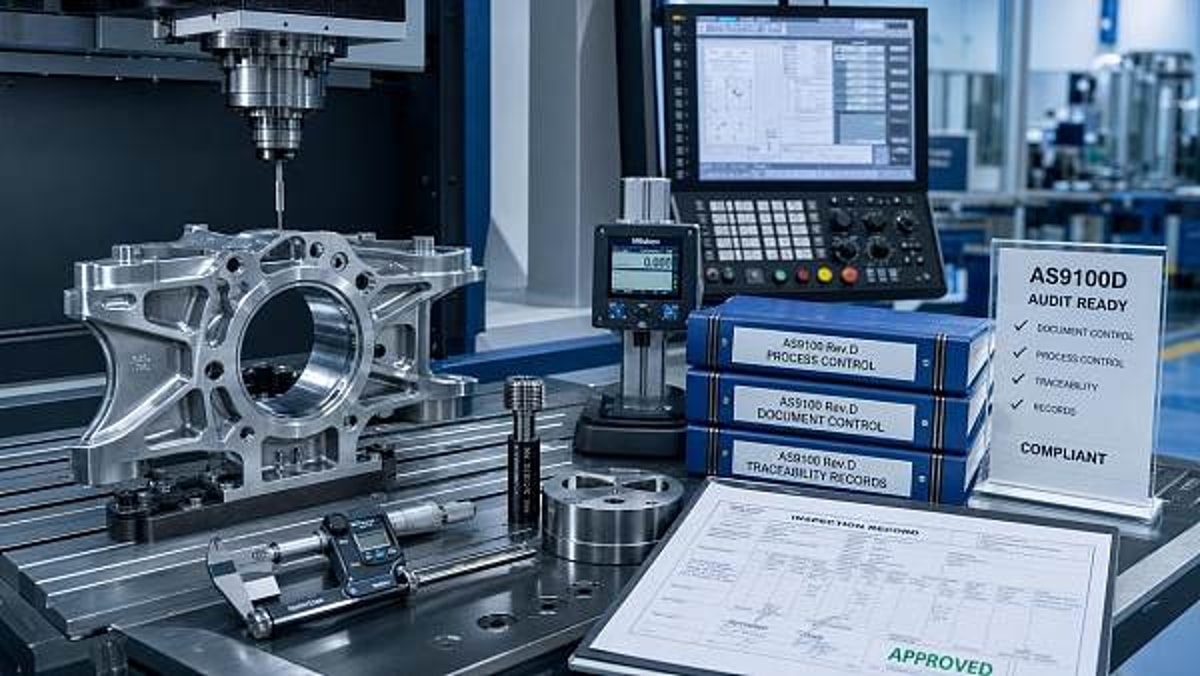
The most frequent nonconformities in as9100 aerospace machining usually fall into 5 categories: incomplete documentation, weak process control, poor traceability, inadequate risk management, and ineffective corrective action. These are not isolated technical issues. They are system-level weaknesses that auditors can identify within the first few hours of reviewing traveler packets, calibration records, training files, and nonconformance logs.
In many shops, the problem is not that procedures do not exist. The problem is that procedures are inconsistently followed across shifts, cells, or subcontracted operations. An operator may use the right tool offset but sign the wrong router revision. A buyer may approve an outside processor without a current verification file. A quality engineer may close a corrective action in 14 days without proving effectiveness after 30 or 60 days. These small gaps are exactly what create repeat findings.
1. Documentation Control Breakdowns
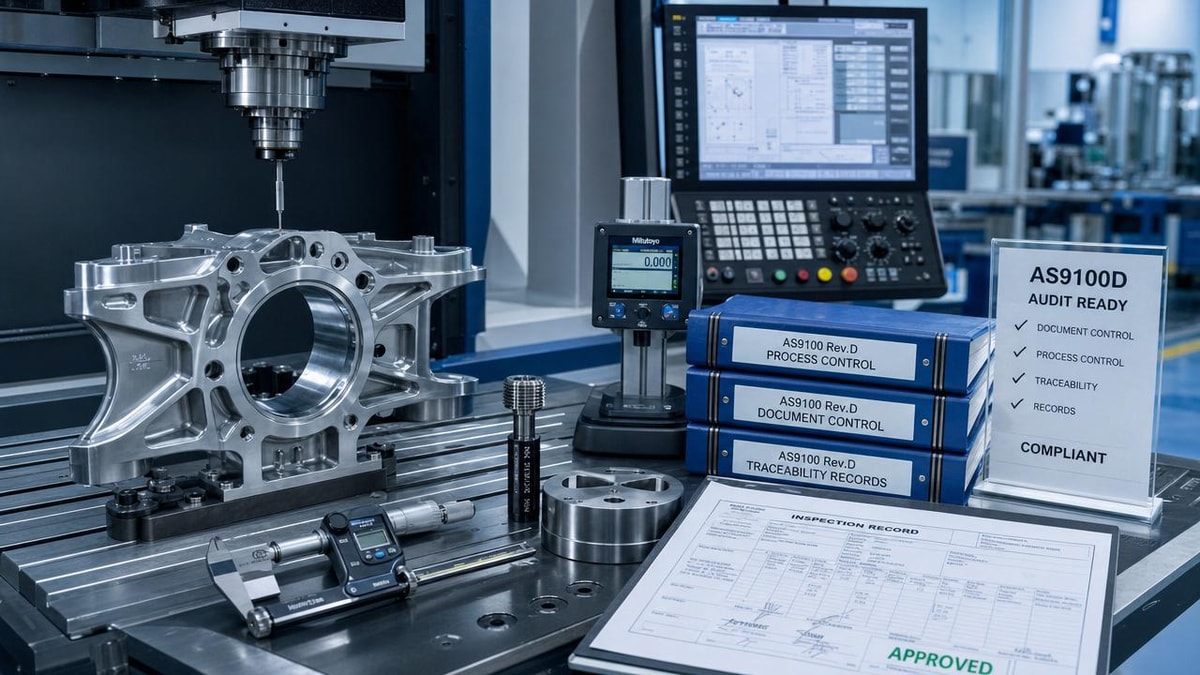
Document control is one of the most visible failure points. Auditors commonly find obsolete work instructions on the shop floor, unsigned inspection reports, missing approval dates, or incomplete revision history. In aerospace machining, a missing signature is not administrative trivia. It weakens evidence that the process was performed under controlled conditions.
Common examples include using drawing revision C in production while quality is inspecting to revision D, failing to update CNC setup sheets within 24 hours of engineering change, and retaining paper records without a clear retention matrix. If a shop runs 20 to 50 active jobs at a time, even a 2% record error rate can multiply into dozens of exposed audit points within a quarter.
Typical documentation gaps
- Traveler packets missing final sign-off or inspection stamp
- Controlled forms used in multiple unofficial versions
- Training records not linked to current process revisions
- Supplier approvals missing review date, scope, or expiration logic
2. Process Control That Exists on Paper but Not in Practice
A second major failure area is process control. In as9100 aerospace machining, auditors expect to see evidence that critical process variables are identified, monitored, and reacted to. That includes setup verification, in-process checks, first-off acceptance, tool life control where relevant, and clear handling of special process dependencies such as heat treatment, plating, or nondestructive testing performed externally.
The gap often appears when a shop relies too heavily on experienced personnel rather than documented controls. A machinist with 15 years of experience may know exactly when to replace a tool or hold a part for review, but if the control plan does not define the trigger, the organization cannot prove consistency. Auditors do not certify tribal knowledge. They certify repeatable systems.
The table below shows the audit failure points that appear most often in aerospace machining environments and the operational consequence each one creates.
The pattern is clear: most findings are not exotic technical failures. They are missing links between intent, execution, and objective evidence. For quality managers, that means the fastest improvement usually comes from control discipline, not expensive system replacement.
3. Traceability Weaknesses That Escalate Quickly
Traceability is one of the highest-risk areas because a small break can expand into a large containment action. In as9100 aerospace machining, traceability may include raw material heat number, machine routing, operator identification, inspection status, and linkage to outsourced special processes. If any one of those links is unclear, the auditor may question whether the organization can isolate affected product within 2 hours or less during a suspected quality event.
Frequent issues include material tags separated from product during staging, partial lots merged without documented control, and serialized components logged manually with transcription errors. Shops handling 3 to 5 customer programs simultaneously are especially vulnerable when physical flow and electronic records do not match in real time.
4. Risk Management and Preventive Thinking Are Too Shallow
AS9100 expects risk-based thinking to be part of operational planning, not a form completed only during certification season. Auditors often ask how risk is evaluated when a new material source is approved, when a machine is down for 48 hours, when a key programmer is absent, or when an outside processor changes lead time from 7 days to 21 days. Weak answers here often reveal weak planning discipline.
A common nonconformity is that risks are identified but not translated into controls. For example, a supplier delay may be listed as a risk, yet there is no alternate source strategy, no safety stock threshold, and no escalation rule once on-time delivery drops below 95%. In aerospace machining, unmanaged operational risk often surfaces later as quality failure.
How Quality and Safety Teams Can Reduce Audit Risk Before the Visit
The most effective response is not a last-minute cleanup. It is a structured pre-audit discipline built over 30, 60, and 90 days. For as9100 aerospace machining organizations, quality and safety professionals should treat audit readiness like a controlled project with ownership, deadlines, evidence review, and management escalation.
Build a 4-Step Internal Audit Readiness Cycle
- Review document control across the top 10 active jobs and verify revision consistency.
- Sample 15 to 20 production records from the last 60 days for completeness and approval logic.
- Trace 3 parts backward from shipment to raw material, in-process inspection, and outside processing.
- Check 5 recent corrective actions for root cause quality and effectiveness verification after closure.
This cycle is practical because it mirrors how auditors think. They typically sample horizontally across the quality system and vertically through one product path. If your internal review can survive both, your exposure drops significantly.
Focus on the Highest-Risk Record Sets First
Not all records carry the same audit risk. In most aerospace machine shops, the highest-value review set includes first article inspection packages, calibration status, operator training authorization, nonconforming product logs, supplier approval files, and special process certificates. These records influence both compliance and customer trust.
If resources are limited, apply an 80/20 approach. Spend the first 2 weeks on records linked to product release and external supplier control. Spend the next 2 weeks on closed corrective actions and risk registers. Spend the final 1 to 2 weeks on housekeeping gaps such as formatting consistency, archived approvals, and evidence indexing.
The following checklist framework can help teams prioritize actions by severity, audit visibility, and response time.
A disciplined review frequency creates a measurable routine. It also gives safety and quality leaders a simple escalation path when deadlines slip, records are incomplete, or supplier controls start drifting outside acceptable range.
Strengthen Corrective Action Quality
Many audit failures become repeat failures because corrective action is too superficial. “Operator retrained” is rarely enough if the issue came from weak process design, unclear forms, conflicting revisions, or poor workflow handoff. In as9100 aerospace machining, a strong corrective action should include root cause, containment, systemic correction, owner, due date, and effectiveness check after a defined interval such as 30 or 45 days.
Quality teams should also separate symptom from cause. If a material cert was missing at shipment, the cause is usually not “employee forgot.” It may be that receiving status was not linked to planning release, or that ERP and physical staging were disconnected. Auditors look favorably on organizations that can show process redesign, not just reminder emails.
Questions auditors often test
- How do you prevent use of obsolete documents on the shop floor?
- Can you trace this shipped part back to the raw material lot in less than 2 hours?
- What triggers revalidation after a process change, supplier change, or equipment issue?
- How do you verify that corrective action prevented recurrence after 30 to 60 days?
What Procurement, Supplier Quality, and Safety Leaders Should Look For in a Machining Partner
For companies sourcing precision components, audit resilience is a supplier capability indicator. A machine shop that consistently passes as9100 aerospace machining audits is more likely to deliver stable documentation, controlled change management, and faster response during customer investigations. That reduces hidden supply chain cost even if unit price is not the lowest in the bid set.
Decision-makers should ask not only whether a supplier is certified, but how mature its operating controls are. Certification alone does not guarantee that traceability is clean, subcontractors are tightly managed, or corrective actions are deep enough to prevent recurrence. A strong evaluation should combine document review, process walk-through, and a limited record sample.
A Practical 6-Point Supplier Evaluation Lens
- Revision control discipline across drawings, routers, and inspection plans
- Traceability from raw material through machining, inspection, and special process
- Closure quality of nonconformance and corrective action records
- Calibration and measurement system control for critical dimensions
- Risk planning for machine downtime, supplier disruption, and engineering change
- Response speed to customer quality requests, ideally within 24 hours for containment
These six areas give procurement and supplier quality teams a stronger basis for approval than a certificate copy alone. They also improve cross-functional alignment between sourcing, quality assurance, and program management when evaluating long-term supplier fit.
Why This Matters in a B2B Intelligence Context
For platforms such as TradeNexus Pro, the value of analysis around as9100 aerospace machining extends beyond compliance education. It supports better sourcing choices, sharper supplier benchmarking, and more informed discussions between buyers and technical teams. In sectors where delivery risk, compliance exposure, and documentation maturity directly affect program continuity, audit performance becomes a meaningful indicator of commercial reliability.
That is especially relevant in advanced manufacturing supply chains, where one weak documentation link at a lower-tier supplier can disrupt qualification timelines, increase incoming inspection burden, or force expedited recovery actions. For enterprise buyers, understanding the most common audit failures is not academic. It is part of risk-adjusted supplier selection.
Turning Audit Readiness Into a Competitive Advantage
The organizations that perform best in as9100 aerospace machining audits are rarely the ones scrambling in the final week. They are the ones with repeatable control habits: current documents at point of use, traceability that can be demonstrated quickly, corrective actions that address system causes, and risk reviews that translate into operational decisions. For quality and safety professionals, that discipline reduces findings, supports customer confidence, and protects release continuity.
If your team is reviewing machining suppliers, preparing for an audit, or strengthening aerospace compliance controls across a distributed supply base, TradeNexus Pro can help you assess operational maturity with greater precision. Explore more sector intelligence, compare supplier risk signals, and get tailored guidance for high-stakes manufacturing decisions. Contact us to discuss your sourcing priorities, request a customized evaluation framework, or learn more solutions.
Get weekly intelligence in your inbox.
No noise. No sponsored content. Pure intelligence.
 May 06, 2026Hydraulic Cylinder Fabrication Errors That Shorten Service LifeHydraulic Cylinder Fabrication Errors That Shorten Service Life
 May 06, 2026Surface Finishing Services That Reduce Warranty ComplaintsSurface Finishing Services That Reduce Warranty Complaints
 May 06, 2026Waterjet Cutting Is Better Than Laser for These MaterialsWaterjet Cutting Is Better Than Laser for These Materials
 May 06, 2026Custom Molded Rubber Choices That Affect Seal PerformanceCustom Molded Rubber Choices That Affect Seal Performance
 May 06, 2026Linear Motion Systems Fail Faster When Alignment Is OverlookedLinear Motion Systems Fail Faster When Alignment Is Overlooked
 May 06, 2026How Accurate Is Energy Forecasting When Weather Turns Volatile?How Accurate Is Energy Forecasting When Weather Turns Volatile?
 May 06, 2026Medical Device Manufacturing Delays Often Start in ValidationMedical Device Manufacturing Delays Often Start in Validation
 May 06, 2026Anodizing Services: Which Finish Holds Up Outdoors LongerAnodizing Services: Which Finish Holds Up Outdoors Longer
 May 06, 2026Solar Tracker Maintenance Issues That Hurt Long-Term OutputSolar Tracker Maintenance Issues That Hurt Long-Term Output
 May 06, 2026What Changes the Real Cost of Pneumatic Valves WholesaleWhat Changes the Real Cost of Pneumatic Valves Wholesale
 May 06, 2026Solar Microinverters vs String Inverters for Shaded RoofsSolar Microinverters vs String Inverters for Shaded Roofs
 May 06, 2026Bifacial Solar Panels: Do They Pay Off on Every Site?Bifacial Solar Panels: Do They Pay Off on Every Site?
 May 06, 2026Why Heavy Equipment Manufacturing Lead Times Keep SlippingWhy Heavy Equipment Manufacturing Lead Times Keep Slipping
 May 06, 2026Metal Stamping Parts: When Tooling Cost Stops Making SenseMetal Stamping Parts: When Tooling Cost Stops Making Sense
 May 06, 2026Energy Storage Battery Sizing Mistakes That Raise Project CostsEnergy Storage Battery Sizing Mistakes That Raise Project Costs
 May 06, 2026What Causes Revenue Gaps in a Solar Farm ProjectWhat Causes Revenue Gaps in a Solar Farm Project
 May 06, 2026Low Volume Manufacturing Works Best When Demand Is UnclearLow Volume Manufacturing Works Best When Demand Is Unclear
 May 06, 2026Automotive Parts Machining Costs That Grow With Late Design ChangesAutomotive Parts Machining Costs That Grow With Late Design Changes
 May 06, 2026AS9100 Aerospace Machining: What Fails an Audit Most OftenAS9100 Aerospace Machining: What Fails an Audit Most Often
 May 06, 2026Plastic Extrusion Tolerances That Affect Final Product FitPlastic Extrusion Tolerances That Affect Final Product Fit
 May 06, 2026Is Renewable Power Getting Easier to Finance for Industry?Is Renewable Power Getting Easier to Finance for Industry?
 May 06, 2026Ultrasonic Welding Defects That Are Easy to Miss at FirstUltrasonic Welding Defects That Are Easy to Miss at First
 May 06, 2026How to Compare Industrial Bearing Suppliers by Failure RiskHow to Compare Industrial Bearing Suppliers by Failure Risk
 May 06, 2026Custom Heatsinks: When a Standard Profile Stops WorkingCustom Heatsinks: When a Standard Profile Stops Working
 May 06, 2026Gear Manufacturing Problems That Show Up After AssemblyGear Manufacturing Problems That Show Up After Assembly
 May 06, 2026Why Thin Film Solar Cells Still Matter in 2026Why Thin Film Solar Cells Still Matter in 2026
 May 06, 2026Wire EDM Services or CNC Milling for Tight Tolerance Parts?Wire EDM Services or CNC Milling for Tight Tolerance Parts?