Hydraulic Cylinder Fabrication Errors That Shorten Service Life
Even a well-designed cylinder can fail early when hydraulic cylinder fabrication mistakes go unnoticed. For aftermarket maintenance teams, understanding how welding distortion, poor tolerances, surface damage, and contamination affect service life is critical to reducing downtime and repeat repairs. This article highlights the most common fabrication errors and what they mean for long-term field performance.
Why do hydraulic cylinder fabrication errors create expensive field failures?
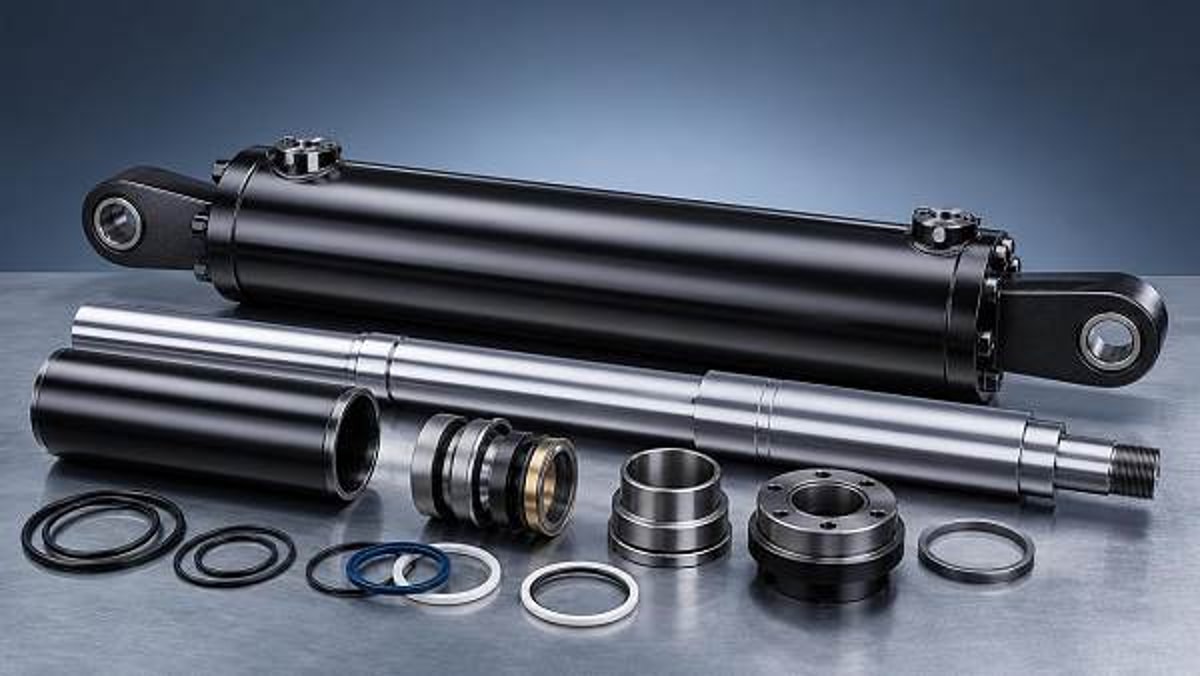
In aftermarket service, a failed cylinder rarely arrives with a label that says “fabrication defect.” The unit may show rod scoring, seal leakage, side loading marks, barrel wear, or erratic motion. Yet many of these symptoms start much earlier, during hydraulic cylinder fabrication, when dimensional control, weld sequence, cleanliness, and surface finishing are not managed tightly enough.
For maintenance personnel, this matters because the repair decision is often made under pressure. A cylinder that returns from rebuild and fails again in a few weeks creates double labor, added freight, production disruption, and reduced confidence in the service chain. In heavy equipment, factory automation, energy systems, and mobile machinery, that repeat failure can affect several linked assets, not just one actuator.
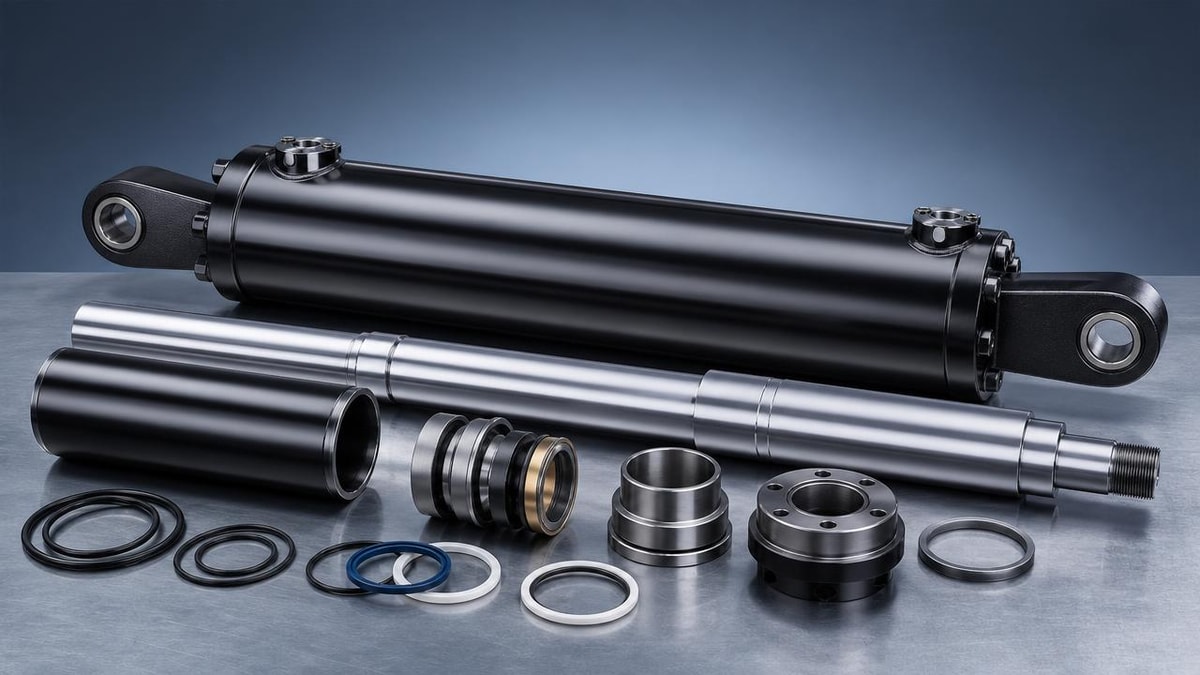
Hydraulic cylinder fabrication is not only about making parts fit together. It is about preserving concentricity, managing heat input, protecting sealing surfaces, and controlling contamination so the final assembly survives real operating loads. Small geometric errors that seem acceptable on the bench can become large stress multipliers once pressure, side load, shock load, and thermal cycling enter the picture.
- A slightly misaligned gland or end cap can accelerate rod seal wear and create uneven bearing contact.
- Weld distortion in the barrel or mounting points can shift the load path and increase friction during stroke travel.
- Rough internal surfaces can damage seals, trap debris, and reduce lubrication film stability.
- Residual particles left after machining or welding can circulate through the system and trigger premature wear far beyond the cylinder itself.
For cross-industry maintenance teams, the practical question is not whether a fabrication mistake exists, but how quickly it can be identified before another breakdown occurs. That is why inspection criteria should be linked directly to service life risk, not only to cosmetic appearance.
Which hydraulic cylinder fabrication errors shorten service life the most?
The most damaging hydraulic cylinder fabrication errors are usually the ones that affect alignment, surface integrity, and internal cleanliness. These issues may not prevent initial assembly, but they often reduce durability under cycling pressure.
1. Welding distortion and heat-affected deformation
Barrel-end welding, port welding, and mounting attachment welding can pull components out of alignment if fixturing and weld sequence are not controlled. Excessive heat can distort the tube, alter roundness, and create stress concentrations near the heat-affected zone. In operation, this may show up as stick-slip movement, uneven seal wear, or abnormal side loading on the rod bearing.
2. Poor tolerances and concentricity errors
A rod can be straight on its own, and a barrel can be acceptable on its own, yet the complete cylinder can still be misaligned. Problems arise when machining centers, gland bores, piston fits, and mount interfaces are not held to consistent tolerances. Maintenance teams often see the result as recurring seal replacement without solving the root cause.
3. Surface damage on rod, tube, or seal contact areas
Scratches, chatter marks, embedded grit, and poor plating quality reduce service life fast. A rough rod surface can cut seals. A damaged tube bore can interrupt lubrication and increase friction. Even handling damage during transport or assembly can turn a new or rebuilt cylinder into an early failure candidate.
4. Inadequate cleaning after machining and welding
Residual chips, weld spatter, abrasive dust, and cleaning rag fibers are common contamination sources. If the cylinder enters service with debris inside, the first hours of operation can redistribute particles across the piston seal, wear band, and valve system. This often causes premature leakage that is wrongly attributed to seal material alone.
5. Improper edge preparation and seal groove finishing
Sharp edges or poor groove geometry can nick seals during installation. If groove dimensions are inconsistent, seal squeeze may be too high or too low. Too much squeeze increases heat and friction; too little squeeze reduces sealing effectiveness under pressure pulses.
The table below connects common hydraulic cylinder fabrication errors with the service symptoms maintenance teams typically encounter in the field.
For maintenance planning, this comparison helps separate true hydraulic cylinder fabrication defects from operating problems such as overpressure, contaminated reservoir oil, or misapplied mounting geometry. In many cases, both factors interact, which is why root-cause review should include fabrication records when available.
How can maintenance teams inspect fabrication quality before installation?
The best time to catch hydraulic cylinder fabrication issues is before the cylinder goes back into service. A practical receiving inspection does not need a full laboratory setup, but it does need consistency. If your team handles replacement cylinders from multiple suppliers, a standard checklist can reduce subjective acceptance decisions.
Pre-installation inspection checklist
- Verify rod surface condition under good lighting. Look for scoring, pits, plating irregularities, or handling dents near the seal sweep area.
- Check port threads, weld zones, and mounting interfaces for distortion, spatter, and incomplete finishing that could affect fit-up.
- Confirm smooth stroke travel by hand or controlled bench movement where safe and practical. Any tight spot deserves investigation.
- Inspect cleanliness of ports and internal cavities. Protective caps should be intact, and no loose particles should be visible.
- Review critical dimensions against the application: stroke length, closed length, mount spacing, port orientation, and rod-end details.
Where recurring failures exist, maintenance teams should add alignment verification and document whether the failed cylinders came from one fabrication source, one rebuild route, or one production batch. This pattern often reveals whether the problem is operational or tied to hydraulic cylinder fabrication consistency.
The next table offers a practical acceptance framework that aftermarket teams can use when evaluating incoming cylinders or rebuilt units from vendors.
This kind of inspection is especially valuable when lead times are tight. Rejecting a poor cylinder before installation is far less expensive than pulling it back out after contaminating the machine or damaging surrounding components.
What should buyers and service managers ask suppliers about hydraulic cylinder fabrication?
Aftermarket maintenance teams often inherit supplier choices made primarily on price or speed. But when life-cycle cost is considered, the lowest initial price is not always the most economical option. A better approach is to ask process-based questions that reveal whether the supplier can control hydraulic cylinder fabrication quality from machining through final cleaning.
Supplier evaluation questions that matter
- How are weld distortion and alignment controlled during fabrication of the barrel, end caps, and mounts?
- What dimensional checks are performed on bore alignment, rod straightness, and gland fit before assembly?
- What cleaning process is used after machining, honing, and welding, and how are ports protected for shipment?
- Can the supplier support traceable inspection records for critical dimensions or pressure-sensitive applications?
- What is the response process if a rebuilt or fabricated cylinder shows repeat leakage within a short operating window?
For procurement and maintenance coordination, these questions convert a vague quality discussion into a practical risk assessment. They also support better communication with engineering teams, especially in sectors such as advanced manufacturing and green energy where uptime targets are strict and maintenance windows are narrow.
Why cross-sector intelligence improves supplier decisions
TradeNexus Pro helps decision-makers compare supplier capabilities in a broader industrial context. A cylinder source that performs acceptably in low-duty mobile equipment may not be suitable for high-cycle automation, clean process environments, or precision handling systems. By tracking supply chain shifts, fabrication capability signals, and technical positioning across industries, maintenance leaders can avoid sourcing based only on availability.
This matters when replacement plans span multiple sites, mixed equipment brands, and urgent service intervals. Market visibility can support better questions about lead time resilience, process maturity, and the likely consistency of hydraulic cylinder fabrication across different production lots.
How do fabrication errors affect cost, downtime, and replacement strategy?
When a cylinder fails early because of fabrication defects, the visible cost is usually the repair invoice. The hidden cost is often larger. Maintenance labor, lost machine availability, secondary contamination, emergency freight, and repeated troubleshooting can quickly exceed the price difference between a marginal cylinder and a well-controlled one.
For service managers, replacement strategy should consider failure mode. If the application is low-cycle and non-critical, a standard repair route may be acceptable. If the application is high-cycle, shock-loaded, or difficult to access, a stronger emphasis on verified hydraulic cylinder fabrication quality is justified, even if lead time planning becomes more important.
Practical decision framework
- Classify the asset by downtime cost, not only by cylinder size or purchase price.
- Separate operating abuse from fabrication-related failure using inspection evidence.
- For repeat failures, review source consistency and fabrication controls before changing seal material alone.
- Use a vendor scorecard that includes quality escape rate, response speed, documentation quality, and cleanliness performance.
This framework is useful across industries because the operational details vary, but the economic logic is the same: recurring failures usually indicate a weak point in design application, hydraulic cylinder fabrication, or maintenance handling, and each requires a different corrective action.
FAQ: what do maintenance teams ask most about hydraulic cylinder fabrication?
How can I tell whether leakage is caused by fabrication quality or normal wear?
Look for timing and pattern. If leakage appears soon after installation, especially across multiple units from the same source, hydraulic cylinder fabrication issues become more likely. Check for rod scoring, uneven seal wear, gland misalignment, contamination traces, and tight stroke points. Normal wear usually develops more gradually and aligns with operating hours and duty severity.
Are rebuilt cylinders more vulnerable to fabrication-related life reduction?
They can be, especially if the rebuild focuses only on replacing seals without correcting tube damage, rod finish problems, or alignment errors. A quality rebuild should assess whether the base components remain dimensionally and mechanically suitable. If core parts are already distorted or deeply worn, rebuilding may only delay another failure.
What standards or practices should buyers ask about?
Ask about dimensional inspection practice, pressure testing approach, welding procedure control, material traceability where relevant, and cleanliness handling during assembly and shipment. Depending on the sector, suppliers may also align with broader quality management or welding quality systems. The key is not the label alone, but whether those practices reduce hydraulic cylinder fabrication variation in real production.
When should a maintenance team escalate to a different supplier?
Escalation is justified when you see repeated early failures, weak corrective-action responses, inconsistent dimensions between units, or contamination-related issues that continue after feedback. If the supplier cannot explain how hydraulic cylinder fabrication controls are verified, the risk of repeat downtime remains high.
Why choose us for market insight and sourcing support?
For maintenance teams and procurement leaders, the challenge is rarely just finding a cylinder. The challenge is confirming whether a supplier can deliver repeatable hydraulic cylinder fabrication quality under real-world deadlines, budget constraints, and application demands. TradeNexus Pro supports that decision with focused B2B intelligence across advanced manufacturing, green energy, smart electronics, healthcare technology, and supply chain software ecosystems.
If you are reviewing repeat cylinder failures, evaluating new fabrication partners, or comparing repair versus replacement options, you can use TNP to strengthen discussions around:
- Parameter confirmation for stroke, mounting, load path, and sealing requirements.
- Supplier shortlisting based on process capability, not only price or location.
- Lead time and delivery risk discussions for urgent replacement programs.
- Custom solution planning for difficult duty cycles or multi-site maintenance environments.
- Documentation review for inspection expectations, cleanliness handling, and application-specific requirements.
If your team needs support on hydraulic cylinder fabrication risk review, supplier comparison, delivery planning, or quotation communication, connect through TradeNexus Pro with your operating conditions, failure symptoms, and service priorities. A clearer technical brief leads to better sourcing decisions and fewer repeat repairs in the field.
Get weekly intelligence in your inbox.
No noise. No sponsored content. Pure intelligence.
 May 06, 2026Hydraulic Cylinder Fabrication Errors That Shorten Service LifeHydraulic Cylinder Fabrication Errors That Shorten Service Life
 May 06, 2026Surface Finishing Services That Reduce Warranty ComplaintsSurface Finishing Services That Reduce Warranty Complaints
 May 06, 2026Waterjet Cutting Is Better Than Laser for These MaterialsWaterjet Cutting Is Better Than Laser for These Materials
 May 06, 2026Custom Molded Rubber Choices That Affect Seal PerformanceCustom Molded Rubber Choices That Affect Seal Performance
 May 06, 2026Linear Motion Systems Fail Faster When Alignment Is OverlookedLinear Motion Systems Fail Faster When Alignment Is Overlooked
 May 06, 2026How Accurate Is Energy Forecasting When Weather Turns Volatile?How Accurate Is Energy Forecasting When Weather Turns Volatile?
 May 06, 2026Medical Device Manufacturing Delays Often Start in ValidationMedical Device Manufacturing Delays Often Start in Validation
 May 06, 2026Anodizing Services: Which Finish Holds Up Outdoors LongerAnodizing Services: Which Finish Holds Up Outdoors Longer
 May 06, 2026Solar Tracker Maintenance Issues That Hurt Long-Term OutputSolar Tracker Maintenance Issues That Hurt Long-Term Output
 May 06, 2026What Changes the Real Cost of Pneumatic Valves WholesaleWhat Changes the Real Cost of Pneumatic Valves Wholesale
 May 06, 2026Solar Microinverters vs String Inverters for Shaded RoofsSolar Microinverters vs String Inverters for Shaded Roofs
 May 06, 2026Bifacial Solar Panels: Do They Pay Off on Every Site?Bifacial Solar Panels: Do They Pay Off on Every Site?
 May 06, 2026Why Heavy Equipment Manufacturing Lead Times Keep SlippingWhy Heavy Equipment Manufacturing Lead Times Keep Slipping
 May 06, 2026Metal Stamping Parts: When Tooling Cost Stops Making SenseMetal Stamping Parts: When Tooling Cost Stops Making Sense
 May 06, 2026Energy Storage Battery Sizing Mistakes That Raise Project CostsEnergy Storage Battery Sizing Mistakes That Raise Project Costs
 May 06, 2026What Causes Revenue Gaps in a Solar Farm ProjectWhat Causes Revenue Gaps in a Solar Farm Project
 May 06, 2026Low Volume Manufacturing Works Best When Demand Is UnclearLow Volume Manufacturing Works Best When Demand Is Unclear
 May 06, 2026Automotive Parts Machining Costs That Grow With Late Design ChangesAutomotive Parts Machining Costs That Grow With Late Design Changes
 May 06, 2026AS9100 Aerospace Machining: What Fails an Audit Most OftenAS9100 Aerospace Machining: What Fails an Audit Most Often
 May 06, 2026Plastic Extrusion Tolerances That Affect Final Product FitPlastic Extrusion Tolerances That Affect Final Product Fit
 May 06, 2026Is Renewable Power Getting Easier to Finance for Industry?Is Renewable Power Getting Easier to Finance for Industry?
 May 06, 2026Ultrasonic Welding Defects That Are Easy to Miss at FirstUltrasonic Welding Defects That Are Easy to Miss at First
 May 06, 2026How to Compare Industrial Bearing Suppliers by Failure RiskHow to Compare Industrial Bearing Suppliers by Failure Risk
 May 06, 2026Custom Heatsinks: When a Standard Profile Stops WorkingCustom Heatsinks: When a Standard Profile Stops Working
 May 06, 2026Gear Manufacturing Problems That Show Up After AssemblyGear Manufacturing Problems That Show Up After Assembly
 May 06, 2026Why Thin Film Solar Cells Still Matter in 2026Why Thin Film Solar Cells Still Matter in 2026
 May 06, 2026Wire EDM Services or CNC Milling for Tight Tolerance Parts?Wire EDM Services or CNC Milling for Tight Tolerance Parts?