Solar Tracker Maintenance Issues That Hurt Long-Term Output
For after-sales maintenance teams, solar tracker reliability is directly tied to long-term energy yield, warranty performance, and customer trust. Small issues such as actuator wear, sensor drift, loose fasteners, or poor lubrication can quietly reduce output over time. This article explores the most common solar tracker maintenance problems that hurt system performance and explains how proactive service can prevent costly losses.
In utility-scale and commercial PV projects, a solar tracker is not just a moving structure. It is a performance-critical subsystem that affects generation consistency over 20 to 30 years. For service contractors, O&M managers, and field technicians, maintenance quality often determines whether a site stays within expected yield tolerance, such as a 1%–3% annual deviation, or slips into chronic underperformance that becomes difficult to recover.
Because many tracker issues develop gradually, they are frequently missed during routine visual checks. A plant may still operate, but rows can misalign by a few degrees, motors may draw excess current, and sensors can report inaccurate position data. Over a 12-month cycle, even small tracking errors can compound into measurable energy losses, more service calls, and increased strain on warranty reserves.
Why Minor Solar Tracker Faults Become Major Long-Term Output Problems
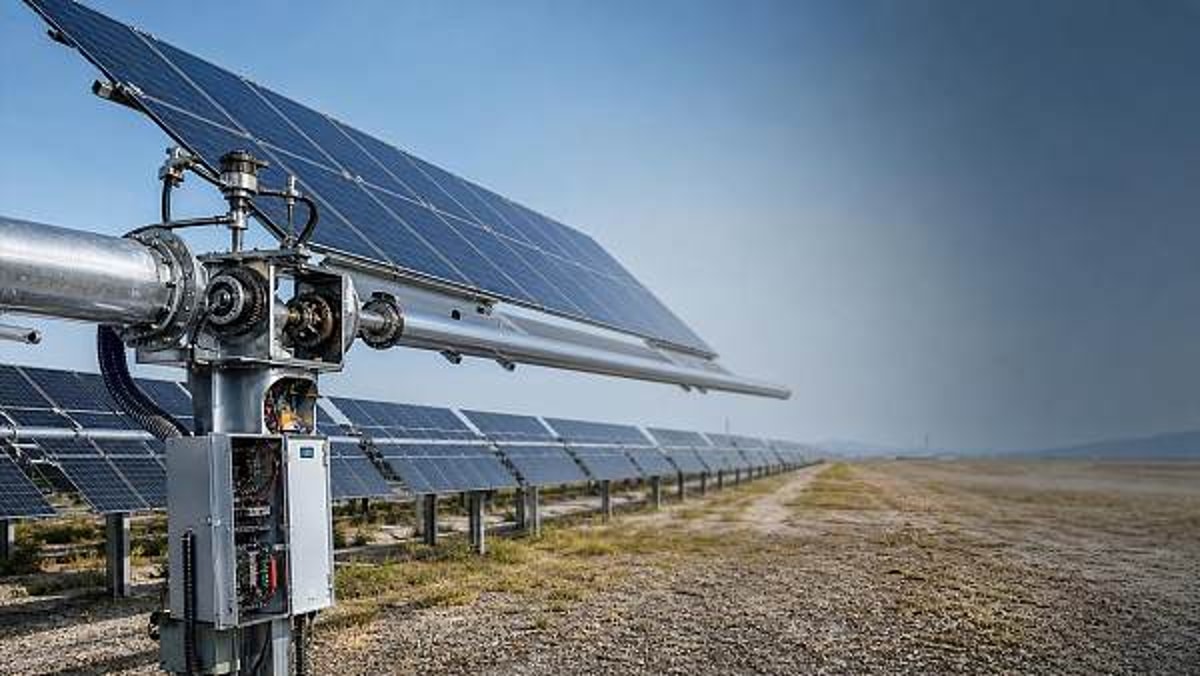
A solar tracker is exposed to continuous mechanical cycling, dust, moisture, wind loading, and temperature swings that can range from below 0°C to above 45°C depending on the site. Unlike fixed-tilt systems, trackers introduce moving components, control logic, and feedback devices that require tighter service discipline. If inspection intervals stretch beyond 3 to 6 months, small faults often progress unnoticed.
For after-sales teams, the real risk is not one dramatic failure. It is slow degradation. An actuator with increasing backlash may still move. A corroded connector may still pass signal. A row with loose hardware may still track. But each condition reduces positional accuracy, increases wear rate, and raises the probability of an unscheduled outage during peak irradiance hours.
The most common performance pathways to output loss
- Tracking angle deviation of 2°–5° during high-sun periods
- Motor or actuator efficiency drop due to poor lubrication or contamination
- Sensor drift that causes incorrect stow, backtracking, or sun-following commands
- Fastener loosening that leads to torsion tube misalignment or vibration
- Communication faults that leave a row idle for several hours or several days
The table below highlights common solar tracker maintenance issues, the typical symptoms seen in the field, and the likely impact on long-term output. This helps service teams prioritize inspection points instead of treating every alarm with the same urgency.
The key takeaway is that most solar tracker losses begin as a maintenance quality issue rather than an obvious equipment collapse. Teams that document angle accuracy, torque retention, lubrication status, and actuator cycle behavior usually identify degradation earlier than teams relying only on alarms or visual patrols.
Why after-sales teams should track trend data, not only failures
Many service programs still focus on failure restoration instead of drift detection. That approach is costly. If one row remains 3° off-angle for 90 days, the plant may never trigger a major fault, yet it can still underdeliver. Useful service KPIs include actuator current trend, row response time, repeat alarm frequency, and variance between commanded and actual position.
A practical benchmark is to investigate repeated deviations that persist across 2 or more inspection cycles. If a tracker row shows the same anomaly over 30 to 60 days, it is usually a sign of root-cause wear rather than random environmental disturbance.
High-Risk Solar Tracker Maintenance Issues and How to Diagnose Them
Not every maintenance issue carries the same risk. For field teams, diagnosis should focus first on faults that combine three factors: high likelihood, hidden progression, and direct influence on tracking precision. The sections below break down the most common issue categories and what technicians should check on site.
Actuator and drive system wear
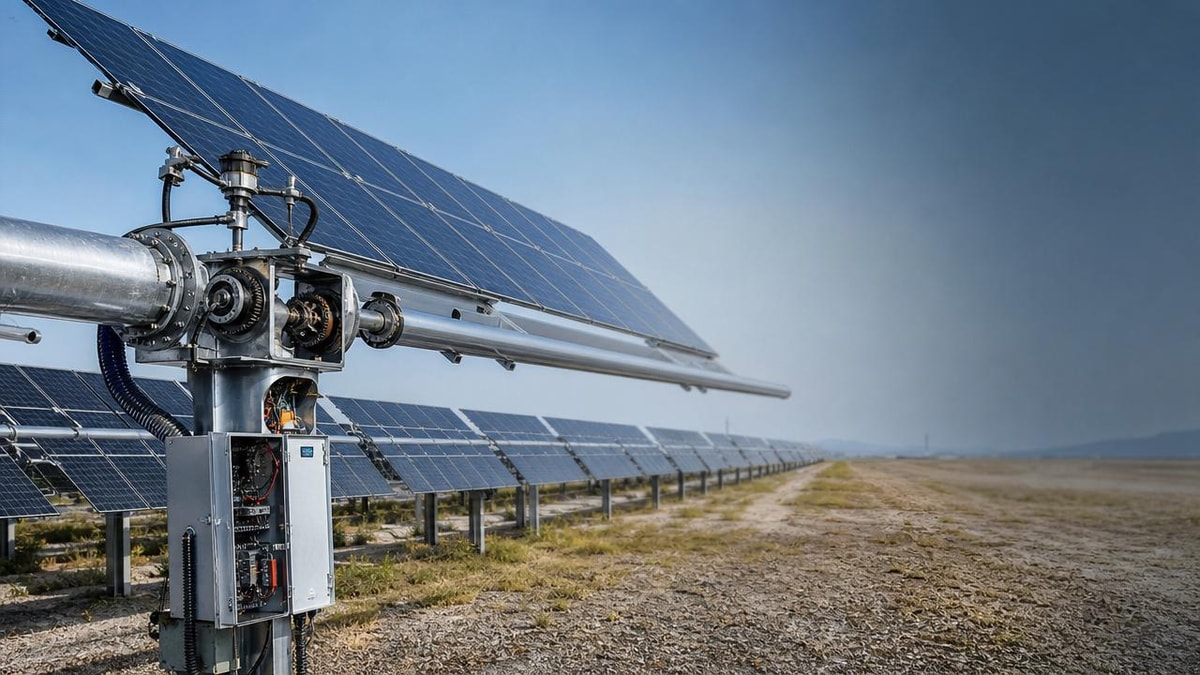
Actuators, slew drives, motors, and gear interfaces experience repeated daily motion cycles, often 1,000 or more movement events per month depending on tracking logic and stow behavior. Over time, seals harden, grease degrades, and internal play increases. The result is slower response, overshoot, or failure to reach the intended angle under load.
Field checks that matter
- Listen for grinding, knocking, or inconsistent motor sound during movement
- Compare commanded angle versus actual mechanical position
- Record current draw and look for sudden increases above normal operating range
- Inspect boots, seals, and housings for water ingress or dust accumulation
A common mistake is replacing only the failed actuator without checking neighboring rows. If lubrication contamination, dust ingress, or mounting stress exists across a block, a single replacement may solve the symptom for 30 days but not the site-level cause.
Sensor drift and control feedback errors
Position sensors, inclinometers, limit switches, and weather inputs all influence tracker behavior. Inaccurate feedback can cause false stow, uneven row angles, or poor backtracking in early morning and late afternoon hours. Even a small calibration shift can affect output if it persists through a full season.
Diagnostic priorities
- Verify sensor readings against a physical angle reference.
- Inspect cable terminations, enclosure sealing, and grounding continuity.
- Review event logs for repeated resets, signal dropouts, or abnormal stow commands.
- Confirm firmware and control parameters match the site configuration.
In sites with frequent storms or strong daily wind variation, teams should also verify that stow thresholds and recovery logic remain appropriate. Excessively conservative settings can sacrifice generation, while delayed stow increases structural risk.
Loose fasteners, misalignment, and structural movement
Fastener loosening is one of the most underestimated solar tracker issues because the system may still appear operational. Yet repeated vibration, thermal expansion, and wind loading can reduce clamp force over time. Once alignment shifts, row geometry changes, loads redistribute, and drive components wear faster.
Torque verification should not be a one-time commissioning activity. For many sites, recheck intervals of 6 to 12 months are reasonable, with additional checks after major weather events. Any row showing repeated loosening should be investigated for foundation settlement, tube distortion, or installation variance.
Lubrication failures and contamination control
Improper lubrication is a classic hidden driver of solar tracker degradation. Too little grease raises friction. The wrong grease can separate, harden, or wash out. Over-lubrication may attract dust and create abrasive paste in desert or agricultural environments. Service teams should follow manufacturer intervals, but also adjust for local conditions such as high dust, salt spray, or sub-zero starts.
The table below provides a practical maintenance view for diagnosing high-risk tracker issues, typical service frequency, and what a field team should document during each visit.
This maintenance framework helps after-sales teams move from reactive repair to predictive intervention. The most effective programs combine scheduled checks, event-log review, and row-level comparison. If one section behaves differently from adjacent rows under similar conditions, that difference is often the first sign of an emerging solar tracker problem.
Building a Preventive Service Strategy That Protects Yield and Warranty Performance
A strong maintenance plan is not just about reducing failures. It is about protecting annual yield, minimizing emergency dispatches, and creating a defensible service record for warranty discussions. In large PV portfolios, consistent documentation can be as important as the physical repair itself.
Five elements of an effective after-sales tracker program
- Define inspection frequencies by site condition, not by a single fixed template.
- Use row-level trend comparison to detect underperforming sections early.
- Standardize torque, lubrication, and angle-verification procedures.
- Link every maintenance action to a timestamped service record.
- Escalate repeated minor deviations before they become structural or electrical faults.
For example, a dry inland site with high dust may require more frequent cleaning of enclosures and more careful grease inspection, while a coastal site may need stronger focus on corrosion, connector sealing, and hardware retention. Service plans should account for these local variables every 90 to 180 days rather than treating all plants the same.
What procurement and service decision-makers should look for
From a B2B operations perspective, solar tracker service quality also affects procurement outcomes. Buyers evaluating O&M partners or replacement components should compare response time, field reporting quality, spare part availability, and root-cause analysis capability. The cheapest service model often becomes more expensive when it fails to detect hidden degradation.
Useful evaluation criteria
- Documented inspection checklist with at least 6 to 10 critical control points
- Ability to mobilize corrective service within 24–72 hours for high-priority faults
- Clear spare parts planning for actuators, sensors, connectors, and hardware kits
- Reporting that distinguishes symptom, root cause, and preventive recommendation
A disciplined solar tracker maintenance routine protects more than equipment. It helps preserve power purchase expectations, supports insurer and warranty conversations, and improves client confidence in long-term asset care. For after-sales personnel, the strongest value often comes from catching output erosion before it appears in monthly production reconciliation.
Common mistakes that reduce service effectiveness
Three mistakes appear repeatedly in the field. First, teams replace components without recording baseline and post-repair angle data. Second, lubrication is performed without checking contamination source or seal condition. Third, visual inspection is treated as sufficient even when the tracker control system provides event history that can reveal repeated anomalies over weeks or months.
Avoiding these mistakes usually does not require major capital spending. It requires a repeatable process, better technician training, and tighter communication between field service, asset management, and procurement teams. Over the life of a project, that discipline can prevent avoidable energy losses and reduce the volume of recurring maintenance tickets.
Practical FAQ for After-Sales Maintenance Teams
How often should a solar tracker be inspected?
A common baseline is every 3 to 6 months for mechanical and electrical checks, with extra inspections after extreme wind, flooding, or persistent fault alarms. High-dust, coastal, or high-cycle sites may require shorter intervals.
What is the first warning sign of hidden tracker degradation?
Often it is inconsistency rather than outright failure: one row moves slower, draws more current, or shows repeated small angle deviation compared with adjacent rows. These differences are easier to catch through trend logs than through a walk-by inspection alone.
Should maintenance teams prioritize mechanical or control-side issues?
Both matter, but mechanical wear and feedback errors are closely linked. A control alarm may originate from a sensor, while the root cause is actuator resistance or structural misalignment. Good diagnosis checks both the physical drive path and the control signal path before parts are changed.
Long-term solar tracker output depends less on dramatic repairs than on disciplined prevention. Actuator wear, sensor drift, loose fasteners, lubrication errors, and communication faults can each shave performance over time if they are not tracked, documented, and corrected early. For after-sales maintenance teams, the best results come from structured inspection intervals, site-specific service plans, and clear row-level performance diagnostics.
TradeNexus Pro supports decision-makers across green energy and industrial supply chains with practical intelligence on maintenance risk, component selection, and service strategy. If you want to strengthen solar tracker reliability, reduce repeat field failures, or evaluate more resilient support solutions, contact us today to get a tailored plan and explore more industry-focused solutions.
Get weekly intelligence in your inbox.
No noise. No sponsored content. Pure intelligence.
 May 06, 2026Hydraulic Cylinder Fabrication Errors That Shorten Service LifeHydraulic Cylinder Fabrication Errors That Shorten Service Life
 May 06, 2026Surface Finishing Services That Reduce Warranty ComplaintsSurface Finishing Services That Reduce Warranty Complaints
 May 06, 2026Waterjet Cutting Is Better Than Laser for These MaterialsWaterjet Cutting Is Better Than Laser for These Materials
 May 06, 2026Custom Molded Rubber Choices That Affect Seal PerformanceCustom Molded Rubber Choices That Affect Seal Performance
 May 06, 2026Linear Motion Systems Fail Faster When Alignment Is OverlookedLinear Motion Systems Fail Faster When Alignment Is Overlooked
 May 06, 2026How Accurate Is Energy Forecasting When Weather Turns Volatile?How Accurate Is Energy Forecasting When Weather Turns Volatile?
 May 06, 2026Medical Device Manufacturing Delays Often Start in ValidationMedical Device Manufacturing Delays Often Start in Validation
 May 06, 2026Anodizing Services: Which Finish Holds Up Outdoors LongerAnodizing Services: Which Finish Holds Up Outdoors Longer
 May 06, 2026Solar Tracker Maintenance Issues That Hurt Long-Term OutputSolar Tracker Maintenance Issues That Hurt Long-Term Output
 May 06, 2026What Changes the Real Cost of Pneumatic Valves WholesaleWhat Changes the Real Cost of Pneumatic Valves Wholesale
 May 06, 2026Solar Microinverters vs String Inverters for Shaded RoofsSolar Microinverters vs String Inverters for Shaded Roofs
 May 06, 2026Bifacial Solar Panels: Do They Pay Off on Every Site?Bifacial Solar Panels: Do They Pay Off on Every Site?
 May 06, 2026Why Heavy Equipment Manufacturing Lead Times Keep SlippingWhy Heavy Equipment Manufacturing Lead Times Keep Slipping
 May 06, 2026Metal Stamping Parts: When Tooling Cost Stops Making SenseMetal Stamping Parts: When Tooling Cost Stops Making Sense
 May 06, 2026Energy Storage Battery Sizing Mistakes That Raise Project CostsEnergy Storage Battery Sizing Mistakes That Raise Project Costs
 May 06, 2026What Causes Revenue Gaps in a Solar Farm ProjectWhat Causes Revenue Gaps in a Solar Farm Project
 May 06, 2026Low Volume Manufacturing Works Best When Demand Is UnclearLow Volume Manufacturing Works Best When Demand Is Unclear
 May 06, 2026Automotive Parts Machining Costs That Grow With Late Design ChangesAutomotive Parts Machining Costs That Grow With Late Design Changes
 May 06, 2026AS9100 Aerospace Machining: What Fails an Audit Most OftenAS9100 Aerospace Machining: What Fails an Audit Most Often
 May 06, 2026Plastic Extrusion Tolerances That Affect Final Product FitPlastic Extrusion Tolerances That Affect Final Product Fit
 May 06, 2026Is Renewable Power Getting Easier to Finance for Industry?Is Renewable Power Getting Easier to Finance for Industry?
 May 06, 2026Ultrasonic Welding Defects That Are Easy to Miss at FirstUltrasonic Welding Defects That Are Easy to Miss at First
 May 06, 2026How to Compare Industrial Bearing Suppliers by Failure RiskHow to Compare Industrial Bearing Suppliers by Failure Risk
 May 06, 2026Custom Heatsinks: When a Standard Profile Stops WorkingCustom Heatsinks: When a Standard Profile Stops Working
 May 06, 2026Gear Manufacturing Problems That Show Up After AssemblyGear Manufacturing Problems That Show Up After Assembly
 May 06, 2026Why Thin Film Solar Cells Still Matter in 2026Why Thin Film Solar Cells Still Matter in 2026
 May 06, 2026Wire EDM Services or CNC Milling for Tight Tolerance Parts?Wire EDM Services or CNC Milling for Tight Tolerance Parts?