Plastic Extrusion Tolerances That Affect Final Product Fit
In plastic extrusion, small tolerance variations can determine whether a component fits seamlessly or fails in assembly. For technical evaluators, understanding how dimensional control affects performance, interchangeability, and downstream manufacturing is essential. This article examines the key plastic extrusion tolerances that influence final product fit, helping decision-makers assess quality risks, supplier capabilities, and application-specific requirements with greater confidence.
What plastic extrusion tolerances mean in practical terms
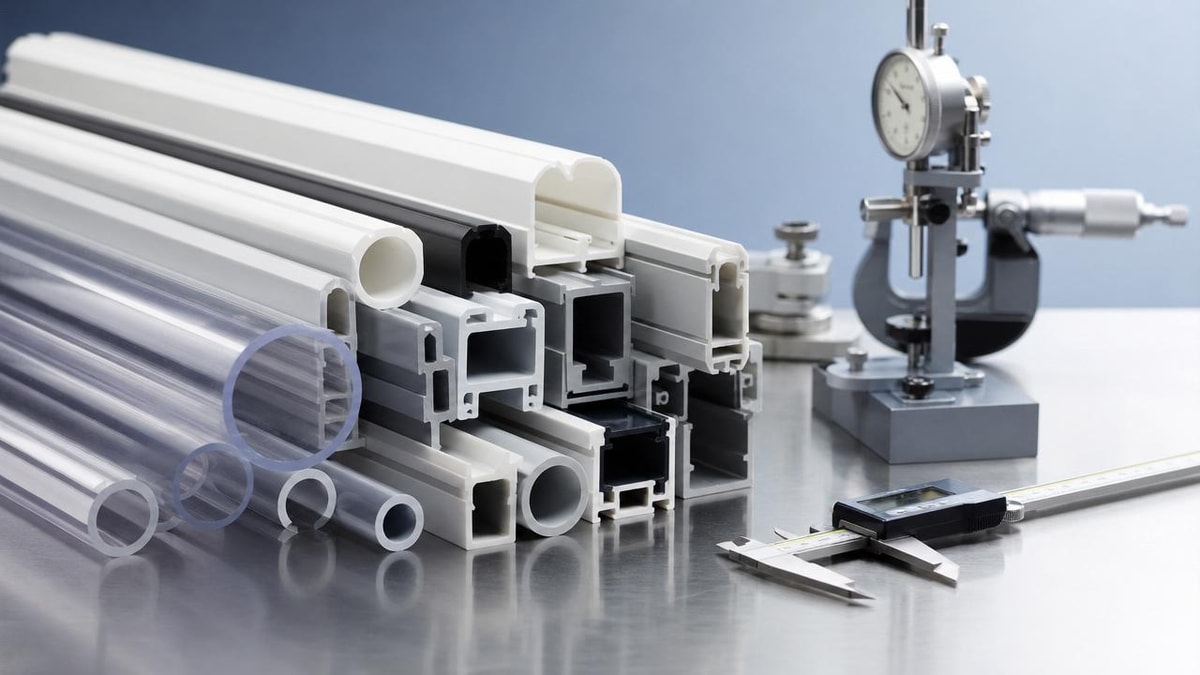
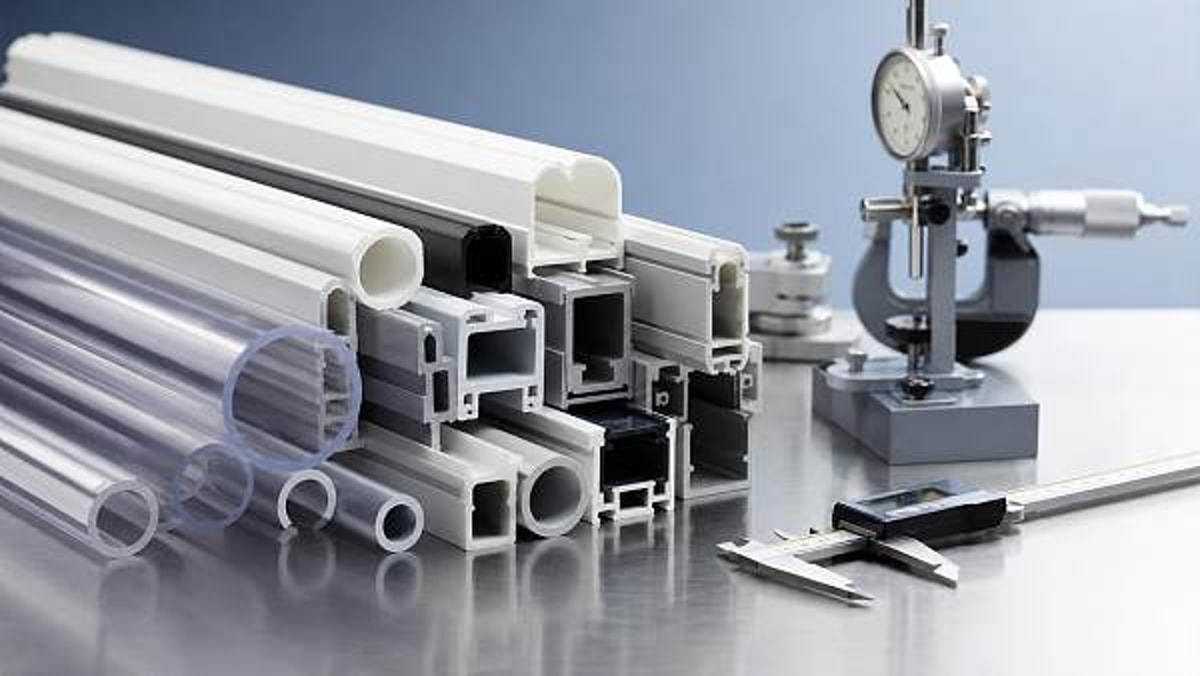
Plastic extrusion tolerances are the allowable dimensional variations in an extruded profile, tube, sheet, rod, or custom shape after production. In simple terms, they define how much the actual product can deviate from the target drawing and still remain acceptable. For technical evaluators, this is not just a quality-control detail. It directly affects product fit, assembly efficiency, sealing performance, structural behavior, and the consistency of downstream operations such as cutting, welding, insert assembly, and overmolding.
Because plastic extrusion is a continuous process, dimensional outcomes are shaped by more than die geometry alone. Melt temperature, material viscosity, cooling rate, puller speed, calibration tooling, moisture content, and post-extrusion shrinkage all influence whether the final profile stays within specification. A part may look visually acceptable while still being oversized, undersized, warped, or inconsistent along its length. That is why evaluating plastic extrusion through tolerance capability is often more informative than reviewing nominal dimensions alone.
In global B2B sectors such as advanced manufacturing, smart electronics, healthcare technology, and supply chain systems, the demand for reliable fit has increased. Components are expected to integrate into automated assembly lines, mate with standardized hardware, and perform consistently across geographies and production batches. In this environment, plastic extrusion tolerances become a strategic quality variable rather than a secondary production metric.
Why final product fit depends so heavily on tolerance control
Final fit is affected by both absolute dimension and dimensional stability. A profile can meet one key measurement at a single inspection point yet still create assembly problems if wall thickness drifts, corners round excessively, or the section twists over length. Technical evaluators therefore need to look beyond pass-fail dimensions and ask whether the supplier can hold a repeatable process window.
Poorly controlled plastic extrusion tolerances can lead to several common failures. Interference fit may become too tight, causing cracking during insertion. Clearance fit may become too loose, creating vibration, leakage, or cosmetic misalignment. In electronics housings, channels may no longer accept PCB edges or wire bundles. In medical or fluid systems, tubing inner diameter variation can alter flow characteristics. In architectural or industrial assemblies, profile bow and cut-length variation can produce cumulative stack-up errors that are expensive to correct later.
For decision-makers, tolerance control also influences commercial outcomes. Better dimensional consistency typically reduces scrap, lowers field failure risk, improves interchangeability, and simplifies supplier qualification. In sectors with high traceability expectations, tolerance capability can become part of the supplier’s credibility profile and overall risk rating.
The main plastic extrusion tolerances that affect fit
Although every application has unique priorities, several dimensions consistently determine whether an extruded part will fit as intended. Technical evaluations should usually begin with the following tolerance categories.
Outer dimensions and profile width
Overall width, height, and external shape are often the most visible dimensions, especially for channels, trims, guides, and enclosure profiles. Variations here affect slot engagement, frame insertion, mating with rigid components, and visual alignment. Even slight oversize can prevent assembly in automated systems.
Wall thickness
Wall thickness influences mechanical strength, flexibility, insulation value, and cooling behavior. Thin-wall inconsistency may create weak points or deformation, while thick-wall drift can change weight, stiffness, and fit within constrained assemblies. For hollow extrusions, uneven wall thickness is especially important because it often signals unstable melt flow.
Inner diameter or channel opening
For tubing, sleeves, and multi-void profiles, internal dimensions can matter more than external ones. If inner diameter is too small, fluid, cable, or mating components may not pass through. If too large, sealing, retention, or support can fail. In many end uses, internal tolerance has direct functional impact that is not visible in a superficial inspection.
Straightness, bow, twist, and camber
Linear fit depends on more than cross-sectional size. A profile can technically meet width and thickness targets but still be unusable if it bows, twists, or curves beyond acceptable limits. These geometric deviations commonly affect long components used in rails, sealing supports, cable management, and trim systems.
Cut length and end squareness
In downstream assembly, cut-to-length accuracy often determines whether parts can be installed without rework. End squareness also matters when profiles interface with caps, joints, or rigid housings. A good plastic extrusion supplier should define whether cut tolerances are measured separately from profile tolerances.
Shrinkage and post-processing stability
Some materials continue to relax after extrusion, particularly when exposed to temperature change, storage stress, or secondary operations. For technical evaluators, a critical question is not only what the part measures at line exit, but what it measures after conditioning, packaging, shipping, and final use.
Industry overview: where tolerance sensitivity is highest
Tolerance requirements vary widely by sector. The table below highlights how plastic extrusion fit concerns typically differ across industries relevant to modern B2B supply chains.
What drives variation in plastic extrusion
A strong technical assessment should connect dimensional outcomes with process causes. Material selection is one major driver. Rigid PVC, HDPE, ABS, TPU, nylon, and medical-grade polymers all behave differently under heat and drawdown. Some materials are more sensitive to moisture, some shrink unevenly, and some recover elastically after calibration. Expecting the same plastic extrusion tolerance window across all polymers is unrealistic.
Tooling design is equally important. Die balance, calibrator quality, vacuum sizing, and cooling uniformity all influence profile accuracy. A supplier with experience in simple solid profiles may struggle with tight tolerances on thin-wall multi-void parts. Line control matters as well. Variability in haul-off speed, melt pressure, temperature zoning, and operator adjustment can introduce drift over time, which is why process capability data is often more useful than a single first-article report.
Environmental factors should not be overlooked. Extruded plastics can expand, contract, or deform depending on storage temperature and support method. A profile measured immediately after production may not represent its dimensions after transport or warehouse dwell time. For globally sourced products, tolerance validation under real logistics conditions is often worth the effort.
How technical evaluators should assess fit-critical extrusion parts
For fit-sensitive applications, technical evaluators should avoid approving a plastic extrusion part solely on a drawing review or a limited sample check. A stronger approach is to assess the part in its assembly context. Functional gauging, mating trials, and stacked-tolerance reviews can reveal risks that dimensional inspection alone may miss.
It is also useful to rank dimensions by function. Not every measurement requires the same control. Some dimensions are cosmetic, some are assembly-critical, and some affect long-term performance only under load or temperature. By identifying critical-to-fit characteristics early, teams can request tighter tolerances only where value justifies cost and complexity.
Supplier capability should be examined through evidence. Ask for measurement method definitions, sampling frequency, capability studies where available, material lot traceability, and examples of similar profiles already in production. In a data-driven sourcing environment, this information supports better qualification decisions and reduces ambiguity between engineering, quality, and procurement teams.
Common application categories and their tolerance priorities
Practical recommendations for reducing fit risk
First, define acceptance around function, not just nominal dimensions. If the product must seal, snap, slide, or align, state the functional expectation and the related critical dimensions. This makes plastic extrusion tolerances more actionable and reduces disputes over borderline measurements.
Second, align material choice with tolerance expectations. If a design requires unusually tight dimensional control, confirm that the selected polymer and profile geometry can realistically support it in continuous production. Overly tight tolerances on unstable materials often increase cost without delivering real-world reliability.
Third, specify measurement conditions. Temperature, conditioning time, cut length location, and gauge method can materially affect results. A tolerance is only meaningful when the inspection method is consistent. Fourth, review packaging and logistics effects if parts are shipped internationally. Compression, heat exposure, and unsupported storage can alter fit before the component reaches assembly.
Finally, favor suppliers that can explain process capability in a transparent way. In markets where digital trust and verified expertise matter, credible technical communication is part of supplier quality. Platforms such as TradeNexus Pro are valuable because technical evaluators increasingly need not only product data, but also context on manufacturing maturity, sector-specific application demands, and broader supply chain reliability.
Conclusion and next-step considerations
Plastic extrusion tolerances affect final product fit through a combination of dimensional accuracy, shape stability, material behavior, and process consistency. For technical evaluators, the most important shift is to treat tolerance review as a functional assessment rather than a drawing exercise alone. Outer size, wall thickness, internal geometry, straightness, and cut accuracy each influence whether an extruded part will integrate smoothly into the final assembly.
As product designs become more integrated and global supply chains demand higher repeatability, careful evaluation of plastic extrusion capability becomes a practical advantage. Teams that define fit-critical features clearly, validate parts in real use conditions, and engage suppliers with proven dimensional control are better positioned to reduce quality risk and improve long-term performance. For organizations tracking precision manufacturing and sourcing intelligence, a structured view of plastic extrusion tolerances is not optional; it is part of making better technical decisions.
Get weekly intelligence in your inbox.
No noise. No sponsored content. Pure intelligence.
 May 06, 2026Hydraulic Cylinder Fabrication Errors That Shorten Service LifeHydraulic Cylinder Fabrication Errors That Shorten Service Life
 May 06, 2026Surface Finishing Services That Reduce Warranty ComplaintsSurface Finishing Services That Reduce Warranty Complaints
 May 06, 2026Waterjet Cutting Is Better Than Laser for These MaterialsWaterjet Cutting Is Better Than Laser for These Materials
 May 06, 2026Custom Molded Rubber Choices That Affect Seal PerformanceCustom Molded Rubber Choices That Affect Seal Performance
 May 06, 2026Linear Motion Systems Fail Faster When Alignment Is OverlookedLinear Motion Systems Fail Faster When Alignment Is Overlooked
 May 06, 2026How Accurate Is Energy Forecasting When Weather Turns Volatile?How Accurate Is Energy Forecasting When Weather Turns Volatile?
 May 06, 2026Medical Device Manufacturing Delays Often Start in ValidationMedical Device Manufacturing Delays Often Start in Validation
 May 06, 2026Anodizing Services: Which Finish Holds Up Outdoors LongerAnodizing Services: Which Finish Holds Up Outdoors Longer
 May 06, 2026Solar Tracker Maintenance Issues That Hurt Long-Term OutputSolar Tracker Maintenance Issues That Hurt Long-Term Output
 May 06, 2026What Changes the Real Cost of Pneumatic Valves WholesaleWhat Changes the Real Cost of Pneumatic Valves Wholesale
 May 06, 2026Solar Microinverters vs String Inverters for Shaded RoofsSolar Microinverters vs String Inverters for Shaded Roofs
 May 06, 2026Bifacial Solar Panels: Do They Pay Off on Every Site?Bifacial Solar Panels: Do They Pay Off on Every Site?
 May 06, 2026Why Heavy Equipment Manufacturing Lead Times Keep SlippingWhy Heavy Equipment Manufacturing Lead Times Keep Slipping
 May 06, 2026Metal Stamping Parts: When Tooling Cost Stops Making SenseMetal Stamping Parts: When Tooling Cost Stops Making Sense
 May 06, 2026Energy Storage Battery Sizing Mistakes That Raise Project CostsEnergy Storage Battery Sizing Mistakes That Raise Project Costs
 May 06, 2026What Causes Revenue Gaps in a Solar Farm ProjectWhat Causes Revenue Gaps in a Solar Farm Project
 May 06, 2026Low Volume Manufacturing Works Best When Demand Is UnclearLow Volume Manufacturing Works Best When Demand Is Unclear
 May 06, 2026Automotive Parts Machining Costs That Grow With Late Design ChangesAutomotive Parts Machining Costs That Grow With Late Design Changes
 May 06, 2026AS9100 Aerospace Machining: What Fails an Audit Most OftenAS9100 Aerospace Machining: What Fails an Audit Most Often
 May 06, 2026Plastic Extrusion Tolerances That Affect Final Product FitPlastic Extrusion Tolerances That Affect Final Product Fit
 May 06, 2026Is Renewable Power Getting Easier to Finance for Industry?Is Renewable Power Getting Easier to Finance for Industry?
 May 06, 2026Ultrasonic Welding Defects That Are Easy to Miss at FirstUltrasonic Welding Defects That Are Easy to Miss at First
 May 06, 2026How to Compare Industrial Bearing Suppliers by Failure RiskHow to Compare Industrial Bearing Suppliers by Failure Risk
 May 06, 2026Custom Heatsinks: When a Standard Profile Stops WorkingCustom Heatsinks: When a Standard Profile Stops Working
 May 06, 2026Gear Manufacturing Problems That Show Up After AssemblyGear Manufacturing Problems That Show Up After Assembly
 May 06, 2026Why Thin Film Solar Cells Still Matter in 2026Why Thin Film Solar Cells Still Matter in 2026
 May 06, 2026Wire EDM Services or CNC Milling for Tight Tolerance Parts?Wire EDM Services or CNC Milling for Tight Tolerance Parts?