Linear Motion Systems Fail Faster When Alignment Is Overlooked
Linear motion systems often fail long before their expected service life when alignment issues go unnoticed. For after-sales maintenance teams, even minor misalignment can trigger excess wear, vibration, accuracy loss, and costly downtime. Understanding these early warning signs is essential to improving equipment reliability, extending component life, and preventing recurring service problems in demanding industrial environments.
Why do linear motion systems fail faster when alignment is ignored?
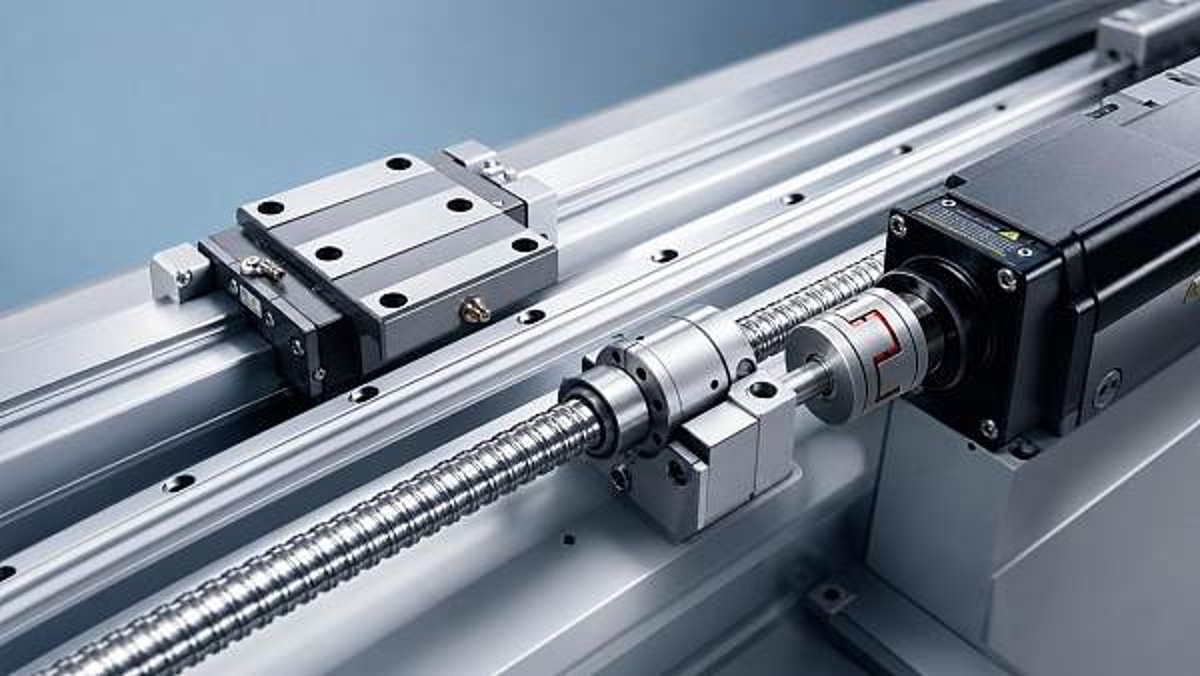
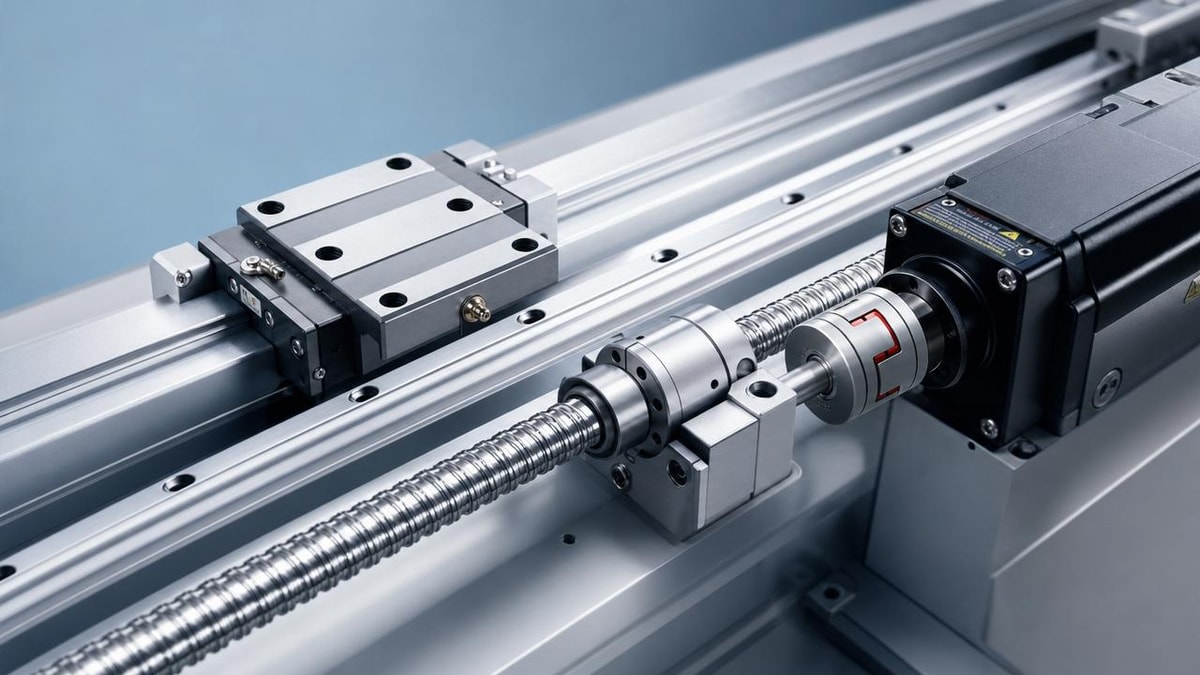
In industrial equipment, linear motion systems are expected to deliver repeatable travel, stable load support, and precise positioning over long service intervals. Yet many field failures do not begin with material defects or overloaded duty cycles. They begin with alignment drift that develops slowly during installation, replacement, transport, thermal cycling, or frame movement.
For after-sales maintenance personnel, this matters because misalignment rarely appears as a single obvious fault. It usually shows up as a pattern: seals wearing unevenly, bearings becoming noisy, guide rails developing localized marks, ball screws heating up, motors drawing more current, or positioning accuracy falling outside tolerance. If the root cause is missed, the same service call returns again and again.
Across advanced manufacturing, green energy equipment, smart electronics assembly, healthcare technology devices, and supply chain automation, the risk profile is similar. A small angular or parallel offset can increase friction, distort load distribution, and shorten bearing life. In high-cycle systems, the damage accumulates quickly. In low-speed but high-precision systems, product quality may fail before the hardware visibly breaks.
- Misalignment creates concentrated contact stress instead of balanced load sharing across the rail, carriage, shaft, or screw assembly.
- Additional friction raises heat, lubricant breakdown, and power demand, especially in enclosed or contaminated environments.
- Motion accuracy degrades over time, which can affect dispensing, cutting, pick-and-place, inspection, packaging, or medical positioning tasks.
- Repeated parts replacement without alignment correction increases maintenance cost while leaving the real failure mechanism in place.
This is why maintenance teams should treat alignment as a reliability variable, not only as an installation detail. TradeNexus Pro closely tracks how service teams in global industrial sectors reduce repeat failures by combining field diagnostics, component sourcing intelligence, and better cross-functional decisions between maintenance, procurement, and OEM support.
What symptoms should after-sales maintenance teams check first?
The most expensive alignment problems are often the ones that look like normal wear. A practical inspection routine should focus on measurable field symptoms rather than assumptions. Maintenance teams handling linear motion systems should document not only failed parts, but also where wear appears, how fast it progresses, and whether replacement restores stable performance for a full operating cycle.
Early warning signs that usually point to alignment-related stress
- Uneven carriage resistance along travel, especially when one end of the stroke feels tighter than the other.
- Recurring bearing noise or vibration after lubrication and part replacement have already been completed.
- Localized rail wear, scoring, or discoloration that appears only in one zone rather than evenly across the guide path.
- Motor overload alarms, temperature rise, or unexplained torque increase during otherwise normal production cycles.
- Loss of repeatability, product placement drift, or inconsistent end-of-stroke positioning in precision applications.
The table below helps maintenance teams distinguish common field symptoms in linear motion systems and the alignment conditions that often trigger them.
A useful lesson for after-sales teams is that symptoms should be mapped to geometry, not only to replacement parts. When linear motion systems keep consuming bearings, guides, seals, or couplings faster than planned, the maintenance strategy should shift from reactive replacement to root-cause correction.
Which alignment errors are most common across industrial applications?
Different machines expose linear motion systems to different forces, but the same misalignment patterns appear repeatedly across sectors. In automated assembly, the issue may come from rushed installation or base plate flatness. In packaging or conveyor transfer modules, structural movement and uneven loads are common. In medical or inspection systems, even tiny offsets become visible as accuracy loss.
Four field conditions that deserve close attention
- Parallel misalignment between dual rails. This often loads one carriage harder than the other and can create jerking motion under acceleration.
- Angular misalignment between motor, coupling, and screw axis. This raises vibration and can reduce screw, nut, and bearing life.
- Mounting surface irregularity. Even a quality rail installed on a twisted or uneven surface will not run as designed.
- Load line offset. When the applied load sits too far from the carriage center or changes dynamically, moment loads amplify alignment sensitivity.
Maintenance teams working in broad industrial environments should also watch for secondary causes. Machine relocation, repeated maintenance on welded frames, collision events, poor shim practice, contamination under mounting surfaces, and thermal expansion all change alignment over time. The original factory setting may no longer reflect current operating geometry.
How should you inspect linear motion systems before replacing parts?
A disciplined inspection sequence saves both downtime and spare-parts budget. Before ordering another rail, carriage, or ball screw assembly, after-sales teams should confirm whether the system is truly worn out or simply forced to operate under geometric stress. This distinction is critical for procurement planning and service credibility.
Recommended service workflow
- Record the complaint in operational terms: noise, accuracy drift, motor load, temperature, leakage, or sudden failure.
- Inspect the full stroke manually if safe to do so. Feel for tight spots, resistance change, or stroke-end anomalies.
- Check fastener condition, torque sequence, and visible seating of rails, supports, and couplings.
- Measure mounting reference surfaces for flatness, straightness, and parallelism using available field tools.
- Compare unloaded and loaded motion behavior. Many alignment defects become obvious only when production force is applied.
- Review service history. Repeat replacement at similar intervals usually signals an unresolved system-level cause.
For organizations managing multiple sites, a shared inspection template improves decision speed. TradeNexus Pro supports this type of cross-border maintenance intelligence by helping teams compare service practices, sourcing conditions, and technical requirements across industries where linear motion systems play a central role.
Procurement and replacement: what should maintenance teams evaluate?
When a replacement is necessary, the wrong purchasing decision can lock in future failures. After-sales maintenance teams often face urgency, tight budgets, incomplete drawings, and pressure to restore output fast. In that situation, buying by part number alone is risky if the surrounding alignment condition has not been verified.
The following table summarizes practical selection factors for linear motion systems when maintenance teams need to balance service life, compatibility, lead time, and installation risk.
A strong procurement decision for linear motion systems should answer two questions at once: will the replacement fit the machine, and will it survive the actual alignment and load conditions on site? If the second question is ignored, even a premium component may deliver disappointing service life.
Cost of misalignment versus cost of correction
Many organizations hesitate to spend time on alignment checks because the machine is still running. However, the financial impact of misalignment often exceeds the cost of proper correction. The hidden losses include repeat technician visits, express shipping of replacement parts, scrap, production instability, and reduced trust between maintenance and operations teams.
Where the real cost appears
- More frequent replacement of carriages, rails, screws, couplings, seals, and bearings.
- Longer troubleshooting time because the visible failure is treated, but the source of stress remains active.
- Output loss from reduced accuracy, rejected product, or slower operating speed to avoid alarms.
- Emergency procurement at unfavorable pricing due to unplanned downtime events.
By contrast, correction usually involves better mounting preparation, alignment verification, re-torquing, support adjustment, lubrication review, and in some cases frame reinforcement or motion redesign. These actions are not always simple, but they are usually cheaper than repeated failure cycles. This is especially true in sectors with high uptime demands such as automated warehousing, precision assembly, and healthcare equipment support.
What standards and technical references are worth considering?
Not every service situation requires formal certification review, but maintenance teams benefit from using standard-based thinking. Dimensional tolerances, fit consistency, lubrication practices, mounting quality, and documentation discipline all affect the service outcome of linear motion systems. In regulated or quality-sensitive sectors, records also matter for traceability.
- Use OEM installation guidance and relevant dimensional tolerances whenever available, especially for rails, screws, and support housings.
- Confirm whether the application environment requires additional material, cleanliness, or corrosion-resistance considerations.
- Document measurement methods and service adjustments to support future troubleshooting and procurement consistency.
- For export-oriented manufacturers, align maintenance records with broader plant quality systems to reduce disputes during audits or warranty reviews.
TradeNexus Pro is valuable here because global buyers and technical teams often need more than a part source. They need context: supply chain continuity, regional manufacturing capability, service implications, and the operational meaning of a specification in the field.
FAQ: practical questions about linear motion systems and alignment
How often should linear motion systems be checked for alignment?
There is no single universal interval. High-duty automation, vibration-prone equipment, and machines exposed to impact or thermal change should be checked more often than lightly used systems. A practical trigger is any repeated wear pattern, rising motor load, unusual noise, or drop in positioning accuracy. Alignment should also be reviewed after machine relocation, collision events, or major component replacement.
Can lubrication solve alignment-related problems in linear motion systems?
Lubrication can reduce friction temporarily, but it cannot correct geometric error. If the rail, screw, or carriage is forced out of its intended path, fresh lubricant may only mask the symptom for a short period. When lubrication seems to help briefly and the fault soon returns, maintenance teams should suspect alignment, mounting distortion, or improper load distribution.
When is replacement not enough?
Replacement is not enough when new components fail in a similar time window, when wear repeats in the same physical location, or when system accuracy does not recover after installation. Those signals usually indicate a problem with the machine structure, mounting base, coupling alignment, or process load rather than with the component alone.
What should procurement ask before ordering a substitute part?
Procurement should confirm dimensional compatibility, load rating, environment suitability, lubrication requirements, and lead time risk. It is also wise to ask whether the substitute part changes preload, friction behavior, mounting method, or sealing arrangement. A substitute that looks equivalent on paper may behave differently in an already sensitive alignment condition.
Why choose us for deeper sourcing and maintenance decision support?
TradeNexus Pro helps enterprise buyers, maintenance leaders, and supply chain teams make better decisions around linear motion systems by combining industrial market intelligence with application-focused analysis. Instead of stopping at broad product visibility, TNP supports more informed judgment on service risk, replacement strategy, sourcing options, and sector-specific technical context across advanced manufacturing, green energy, smart electronics, healthcare technology, and supply chain SaaS-linked automation.
If your team is facing recurring failures, uncertain replacement paths, or cross-border sourcing pressure, you can use TNP as a strategic resource for:
- Parameter confirmation for rails, carriages, screws, support structures, and operating conditions.
- Replacement and selection guidance when original specifications are incomplete or outdated.
- Lead time and supply chain evaluation for urgent maintenance planning and regional sourcing alternatives.
- Custom solution discussions where contamination, precision, duty cycle, or load moment conditions differ from standard applications.
- Support for certification-related questions, documentation alignment, sample assessment, and quotation communication.
If linear motion systems in your installed base are failing faster than expected, the next step should not be another blind replacement. It should be a better technical and sourcing decision. Use TradeNexus Pro to clarify specifications, compare options, evaluate service risk, and build a more reliable maintenance strategy before the next downtime event arrives.
Get weekly intelligence in your inbox.
No noise. No sponsored content. Pure intelligence.
 May 06, 2026Hydraulic Cylinder Fabrication Errors That Shorten Service LifeHydraulic Cylinder Fabrication Errors That Shorten Service Life
 May 06, 2026Surface Finishing Services That Reduce Warranty ComplaintsSurface Finishing Services That Reduce Warranty Complaints
 May 06, 2026Waterjet Cutting Is Better Than Laser for These MaterialsWaterjet Cutting Is Better Than Laser for These Materials
 May 06, 2026Custom Molded Rubber Choices That Affect Seal PerformanceCustom Molded Rubber Choices That Affect Seal Performance
 May 06, 2026Linear Motion Systems Fail Faster When Alignment Is OverlookedLinear Motion Systems Fail Faster When Alignment Is Overlooked
 May 06, 2026How Accurate Is Energy Forecasting When Weather Turns Volatile?How Accurate Is Energy Forecasting When Weather Turns Volatile?
 May 06, 2026Medical Device Manufacturing Delays Often Start in ValidationMedical Device Manufacturing Delays Often Start in Validation
 May 06, 2026Anodizing Services: Which Finish Holds Up Outdoors LongerAnodizing Services: Which Finish Holds Up Outdoors Longer
 May 06, 2026Solar Tracker Maintenance Issues That Hurt Long-Term OutputSolar Tracker Maintenance Issues That Hurt Long-Term Output
 May 06, 2026What Changes the Real Cost of Pneumatic Valves WholesaleWhat Changes the Real Cost of Pneumatic Valves Wholesale
 May 06, 2026Solar Microinverters vs String Inverters for Shaded RoofsSolar Microinverters vs String Inverters for Shaded Roofs
 May 06, 2026Bifacial Solar Panels: Do They Pay Off on Every Site?Bifacial Solar Panels: Do They Pay Off on Every Site?
 May 06, 2026Why Heavy Equipment Manufacturing Lead Times Keep SlippingWhy Heavy Equipment Manufacturing Lead Times Keep Slipping
 May 06, 2026Metal Stamping Parts: When Tooling Cost Stops Making SenseMetal Stamping Parts: When Tooling Cost Stops Making Sense
 May 06, 2026Energy Storage Battery Sizing Mistakes That Raise Project CostsEnergy Storage Battery Sizing Mistakes That Raise Project Costs
 May 06, 2026What Causes Revenue Gaps in a Solar Farm ProjectWhat Causes Revenue Gaps in a Solar Farm Project
 May 06, 2026Low Volume Manufacturing Works Best When Demand Is UnclearLow Volume Manufacturing Works Best When Demand Is Unclear
 May 06, 2026Automotive Parts Machining Costs That Grow With Late Design ChangesAutomotive Parts Machining Costs That Grow With Late Design Changes
 May 06, 2026AS9100 Aerospace Machining: What Fails an Audit Most OftenAS9100 Aerospace Machining: What Fails an Audit Most Often
 May 06, 2026Plastic Extrusion Tolerances That Affect Final Product FitPlastic Extrusion Tolerances That Affect Final Product Fit
 May 06, 2026Is Renewable Power Getting Easier to Finance for Industry?Is Renewable Power Getting Easier to Finance for Industry?
 May 06, 2026Ultrasonic Welding Defects That Are Easy to Miss at FirstUltrasonic Welding Defects That Are Easy to Miss at First
 May 06, 2026How to Compare Industrial Bearing Suppliers by Failure RiskHow to Compare Industrial Bearing Suppliers by Failure Risk
 May 06, 2026Custom Heatsinks: When a Standard Profile Stops WorkingCustom Heatsinks: When a Standard Profile Stops Working
 May 06, 2026Gear Manufacturing Problems That Show Up After AssemblyGear Manufacturing Problems That Show Up After Assembly
 May 06, 2026Why Thin Film Solar Cells Still Matter in 2026Why Thin Film Solar Cells Still Matter in 2026
 May 06, 2026Wire EDM Services or CNC Milling for Tight Tolerance Parts?Wire EDM Services or CNC Milling for Tight Tolerance Parts?