Metal Stamping Parts: When Tooling Cost Stops Making Sense
For procurement teams, sourcing metal stamping parts is not just about unit price—it is about knowing when tooling investment still supports margins, lead times, and flexibility. As volumes shift and product lifecycles shorten, the point where stamping becomes less economical can arrive faster than expected. This article helps buyers evaluate when tooling cost stops making sense and what sourcing alternatives deserve serious consideration.
In practical terms, tooling for metal stamping parts stops making sense when expected lifetime demand can no longer absorb the upfront die cost, engineering changes are still likely, or supply risk outweighs the unit-price advantage of scale production. Buyers do not need a perfect theoretical model to make this call. They need a disciplined way to compare annual volume, part complexity, revision risk, lead time pressure, and total cost across realistic sourcing options.
For procurement professionals, the core search intent behind this topic is clear: how to decide whether to keep investing in stamping tools, delay tooling, or switch to another process without creating cost, quality, or delivery problems. The most useful answer is not a generic explanation of stamping. It is a buyer-focused framework for making a sourcing decision with commercial confidence.
What procurement teams really need to know before approving tooling
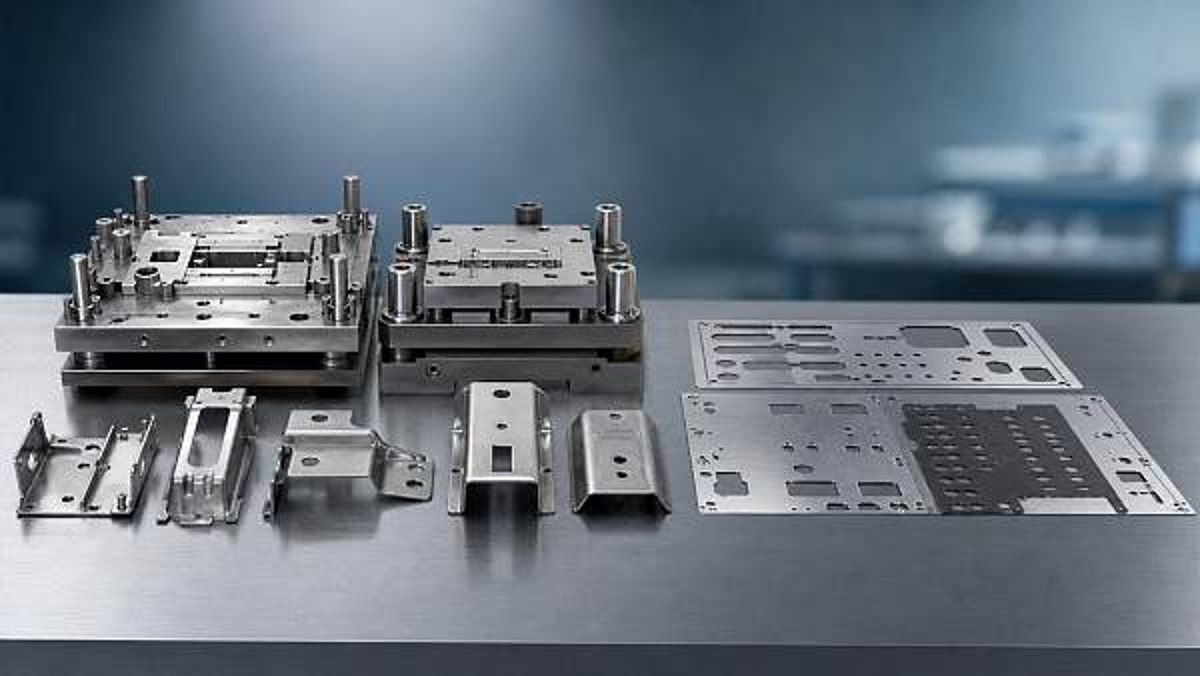
Most buyers are not asking whether stamping is a valid manufacturing process. They are asking whether this specific part, at this specific volume, under these market conditions, still justifies a dedicated tool. That is a very different question.
For many stamped components, the commercial logic has traditionally been simple: high upfront tooling cost, low repeat piece price, excellent consistency, and strong economics at stable volume. But that logic weakens when demand forecasts become less reliable, product refresh cycles shorten, and engineering teams continue to revise dimensions, features, or materials after sourcing has already started.
The real procurement challenge is timing. Approve tooling too early, and the buyer may lock the business into a high sunk cost before demand is proven. Wait too long, and the program may miss cost targets or launch dates. The right answer depends less on the stamping process itself and more on how much certainty the buyer has about volume, design stability, and replenishment strategy.
That is why the most important question is not “What does the tool cost?” but “How many good parts, over how much time, with how much design stability, will this tool actually support?” Once procurement reframes the decision this way, the evaluation becomes much more practical.
When tooling cost for metal stamping parts usually stops making economic sense
There is no universal break-even number, because tooling economics vary by material, press tonnage, tolerance requirements, die complexity, secondary operations, and regional labor costs. Still, there are several reliable warning signs that the business case for dedicated tooling is weakening.
The first warning sign is low or uncertain volume. If annual demand is modest and the forecast is not credible beyond one buying cycle, the tooling amortization per part may remain too high for too long. In these cases, a “cheap piece price” quoted by a stamping supplier can be misleading if the buyer underestimates the risk of volume not materializing.
The second warning sign is frequent design change. If the part is still likely to undergo hole relocation, flange adjustment, thickness change, coating revision, or tolerance redefinition, the buyer should treat tooling cost as a moving target rather than a one-time investment. Even minor revisions can require die modification, revalidation, and additional downtime.
The third warning sign is compressed product lifecycle. Some products now turn over so quickly that the program may never reach the production run needed to fully recover die cost. This is especially relevant in smart electronics, emerging clean-tech hardware, pilot medical devices, and new industrial platforms where versioning is rapid and launch assumptions are often revised.
The fourth warning sign is demand volatility across SKUs. A family of similar metal stamping parts may look attractive for tooling on paper, but if actual orders fragment across many variants, each individual SKU may fail to generate the throughput needed to justify dedicated dies. Procurement should watch for volume dilution hidden inside aggregated forecast numbers.
The fifth warning sign is strategic sourcing risk. If the tool must be built at a supplier with limited engineering responsiveness, weak maintenance discipline, or geographic exposure that threatens continuity, the theoretical cost advantage of stamping can quickly be offset by disruption risk. A lower unit price is not meaningful if the supply base cannot support changes or recover quickly from issues.
A practical break-even framework buyers can use
For procurement teams, the most useful approach is a total-cost break-even model rather than a piece-price comparison. At minimum, the model should include tooling cost, part price, setup charges, scrap assumptions, engineering change probability, validation cost, logistics, maintenance obligations, and the forecasted program life.
Start with five core inputs: expected annual volume, total program volume, estimated tool cost, quoted piece price after tooling, and piece price from a non-tooled alternative such as laser cutting, CNC fabrication, turret punching, or short-run forming. Then add realistic assumptions about revision risk and launch timing.
A simple way to think about it is this: the more uncertain the demand and the more likely the design is to change, the higher the true threshold for tooling should be. Procurement should not rely on nominal break-even volume alone. A program that appears to break even at 80,000 pieces may in reality require 120,000 or more if change orders, delayed ramps, and scrap during qualification are included.
Buyers should also compare break-even timing, not just break-even quantity. If the tool only pays back near the end of the product’s commercial life, the investment may be technically justified but strategically weak. Capital tied up in slow-payback tooling can reduce sourcing flexibility elsewhere.
Another important practice is scenario analysis. Model at least three cases: base forecast, downside forecast, and delay-plus-revision forecast. If tooling only makes sense in the most optimistic scenario, it is not a robust procurement decision. This is especially true for custom metal stamping parts tied to new product launches or unproven customer demand.
Questions buyers should ask suppliers before committing to stamping tools
Supplier conversations often focus too narrowly on die price and production rate. A stronger procurement review goes deeper into what affects the life-cycle economics of the tool and the resilience of the supply arrangement.
First, ask how stable the quoted piece price really is. Does it assume a specific annual volume, coil width optimization, material index, or scrap recovery rate? If volume underperforms, will the supplier reprice? Many attractive quotes for metal stamping parts are only attractive under conditions that may not hold.
Second, ask what design changes can be absorbed without a major die rebuild. Buyers should understand which changes are low-impact, which require inserts or modifications, and which force a near restart. This matters greatly when engineering maturity is still evolving.
Third, ask about tool ownership, maintenance, and storage. Who pays for preventive maintenance? What happens if the tool is idle for months? Can the tool be transferred if performance fails? Procurement should clarify these points before issuing a purchase order, not after service problems emerge.
Fourth, ask about qualification timeline and ramp risk. Tool build lead time is only part of the story. Sampling, first article approval, capability studies, corrective actions, and PPAP or equivalent customer requirements can materially delay the first true production shipment. A nominal cost win can become expensive if the part misses launch.
Fifth, ask whether the supplier can propose phased tooling. In some situations, a soft tool, modular die strategy, or hybrid launch approach may reduce early capital exposure while preserving a path to lower cost at scale. Experienced suppliers can often provide more than a binary “tool or no tool” option.
Alternatives to stamped parts when tooling risk is too high
When tooling no longer makes sense, procurement does not simply abandon the part. It evaluates alternate manufacturing routes that better match the program’s volume, flexibility, and timing requirements. The best alternative depends on geometry, tolerances, material, finish requirements, and downstream assembly needs.
Laser cutting combined with press brake forming is often a strong option for low to medium volumes, especially when geometry may still change. It offers fast iteration and avoids major hard-tool investment. The piece price is usually higher than mature stamping, but the flexibility can easily outweigh that difference in uncertain programs.
Turret punching can work well for sheet metal parts with repeat hole patterns and moderate complexity. For some designs, it offers an efficient middle ground between fully dedicated stamping and slower fabrication methods.
CNC machining or fabrication may be suitable when the part is relatively thick, highly customized, or produced in low quantities. It is rarely the cheapest route on a per-part basis for simple flat components, but it can be commercially smarter when changes are frequent or annual demand remains limited.
Fineblanking, roll forming, extrusion, metal injection molding, or even redesign for assembly simplification may also be worth exploring depending on the part function. Procurement should not evaluate alternatives only by direct part price. The better comparison is total program cost plus responsiveness to change.
In some cases, redesign is the most valuable sourcing lever. A part that requires expensive progressive tooling may be redesigned into a simpler formed bracket, a multi-piece assembly, or a different geometry that is easier to produce through flexible processes. Procurement teams that engage engineering early often uncover these opportunities before costs are locked in.
How lifecycle and forecast quality should shape the sourcing decision
One reason tooling decisions go wrong is that buyers treat demand forecasts as fixed facts instead of probability ranges. In reality, forecast quality varies dramatically by industry, customer concentration, aftermarket exposure, and product maturity. Tooling decisions for metal stamping parts should reflect that uncertainty.
If the part supports a mature industrial platform with repeat demand and a long service life, tooling is often easier to justify. If it supports a launch-stage product in a fast-moving market, buyers should apply a much higher standard before approving capital-intensive dies.
Product lifecycle also matters beyond demand volume. If the buyer expects multiple engineering releases within 12 to 18 months, flexibility may be more valuable than the lowest nominal unit cost. Procurement often captures more value by preserving optionality than by forcing early cost-down through hard tooling.
This is particularly relevant in sectors such as healthcare technology and smart electronics, where validation, compliance updates, and design refinements can continue well into early commercialization. In these environments, the wrong tool decision can create both cost leakage and schedule friction.
Common mistakes procurement teams make with metal stamping parts
The first common mistake is focusing on quoted unit price without fully amortizing the tool against realistic demand. A stamped part may look cheaper on a spreadsheet simply because the buyer assumes volume that never arrives.
The second mistake is approving tooling before engineering freeze. When revision risk is visible but not quantified, procurement can be pressured into a premature decision that later triggers modification cost, resampling, and supplier tension.
The third mistake is overlooking indirect costs. Expedited freight, line stoppage exposure, qualification delays, and inventory buffering can erase the expected savings from stamping if the supply setup is fragile.
The fourth mistake is failing to segment parts by strategic importance. Not every metal stamping part should be evaluated the same way. A high-runner service component, a launch-phase bracket, and a low-volume custom cover each require different sourcing logic.
The fifth mistake is treating tooling as irreversible. Buyers often assume that once a die is approved, the commercial path is fixed. In reality, phased sourcing, temporary alternate processes, or dual-path qualification can reduce risk while preserving future options.
A smarter sourcing approach: tool late, learn early
For many procurement organizations, the best policy is not “avoid tooling” or “tool aggressively,” but “tool when certainty is high enough.” That usually means using flexible manufacturing methods earlier in the product lifecycle, learning from actual demand and design feedback, and then shifting to stamping once the business case is proven.
This staged approach can be especially effective when buyers negotiate with suppliers from the start for a transition plan. Early runs may use laser-cut and formed parts, followed by dedicated stamping only after forecast accuracy, quality requirements, and product design are validated. Although the early piece price is higher, the total program economics can be much better.
Procurement teams should also build internal decision gates. Before authorizing a die, require alignment on forecast confidence, design maturity, break-even timing, inventory strategy, supplier readiness, and contingency options. A formal gate reduces the risk of tooling based on optimism alone.
For organizations managing broad supplier portfolios, this discipline creates a second benefit: better capital allocation. Tooling dollars can be directed toward metal stamping parts with genuine scale advantage, while uncertain programs retain flexibility and avoid sunk-cost pressure.
Conclusion: when tooling stops making sense, the right answer is usually clearer than it looks
Tooling for metal stamping parts stops making sense when certainty is too low to recover the investment with confidence. The clearest triggers are unstable demand, likely design changes, shortened lifecycle, fragmented SKU volume, and elevated supply risk. In those conditions, the lowest quoted unit price can become the most expensive sourcing choice.
For procurement professionals, the best decision framework combines total cost, break-even timing, revision risk, and operational flexibility. Stamping remains highly effective for the right parts at the right scale. But when the numbers only work under perfect assumptions, buyers should pause and test alternatives.
The strongest sourcing strategy is not to chase tooling cost downward in isolation. It is to match manufacturing commitment to market certainty. When procurement teams do that well, they protect margins, improve resilience, and make better long-term decisions on every category of metal stamping parts.
Get weekly intelligence in your inbox.
No noise. No sponsored content. Pure intelligence.
 May 06, 2026Hydraulic Cylinder Fabrication Errors That Shorten Service LifeHydraulic Cylinder Fabrication Errors That Shorten Service Life
 May 06, 2026Surface Finishing Services That Reduce Warranty ComplaintsSurface Finishing Services That Reduce Warranty Complaints
 May 06, 2026Waterjet Cutting Is Better Than Laser for These MaterialsWaterjet Cutting Is Better Than Laser for These Materials
 May 06, 2026Custom Molded Rubber Choices That Affect Seal PerformanceCustom Molded Rubber Choices That Affect Seal Performance
 May 06, 2026Linear Motion Systems Fail Faster When Alignment Is OverlookedLinear Motion Systems Fail Faster When Alignment Is Overlooked
 May 06, 2026How Accurate Is Energy Forecasting When Weather Turns Volatile?How Accurate Is Energy Forecasting When Weather Turns Volatile?
 May 06, 2026Medical Device Manufacturing Delays Often Start in ValidationMedical Device Manufacturing Delays Often Start in Validation
 May 06, 2026Anodizing Services: Which Finish Holds Up Outdoors LongerAnodizing Services: Which Finish Holds Up Outdoors Longer
 May 06, 2026Solar Tracker Maintenance Issues That Hurt Long-Term OutputSolar Tracker Maintenance Issues That Hurt Long-Term Output
 May 06, 2026What Changes the Real Cost of Pneumatic Valves WholesaleWhat Changes the Real Cost of Pneumatic Valves Wholesale
 May 06, 2026Solar Microinverters vs String Inverters for Shaded RoofsSolar Microinverters vs String Inverters for Shaded Roofs
 May 06, 2026Bifacial Solar Panels: Do They Pay Off on Every Site?Bifacial Solar Panels: Do They Pay Off on Every Site?
 May 06, 2026Why Heavy Equipment Manufacturing Lead Times Keep SlippingWhy Heavy Equipment Manufacturing Lead Times Keep Slipping
 May 06, 2026Metal Stamping Parts: When Tooling Cost Stops Making SenseMetal Stamping Parts: When Tooling Cost Stops Making Sense
 May 06, 2026Energy Storage Battery Sizing Mistakes That Raise Project CostsEnergy Storage Battery Sizing Mistakes That Raise Project Costs
 May 06, 2026What Causes Revenue Gaps in a Solar Farm ProjectWhat Causes Revenue Gaps in a Solar Farm Project
 May 06, 2026Low Volume Manufacturing Works Best When Demand Is UnclearLow Volume Manufacturing Works Best When Demand Is Unclear
 May 06, 2026Automotive Parts Machining Costs That Grow With Late Design ChangesAutomotive Parts Machining Costs That Grow With Late Design Changes
 May 06, 2026AS9100 Aerospace Machining: What Fails an Audit Most OftenAS9100 Aerospace Machining: What Fails an Audit Most Often
 May 06, 2026Plastic Extrusion Tolerances That Affect Final Product FitPlastic Extrusion Tolerances That Affect Final Product Fit
 May 06, 2026Is Renewable Power Getting Easier to Finance for Industry?Is Renewable Power Getting Easier to Finance for Industry?
 May 06, 2026Ultrasonic Welding Defects That Are Easy to Miss at FirstUltrasonic Welding Defects That Are Easy to Miss at First
 May 06, 2026How to Compare Industrial Bearing Suppliers by Failure RiskHow to Compare Industrial Bearing Suppliers by Failure Risk
 May 06, 2026Custom Heatsinks: When a Standard Profile Stops WorkingCustom Heatsinks: When a Standard Profile Stops Working
 May 06, 2026Gear Manufacturing Problems That Show Up After AssemblyGear Manufacturing Problems That Show Up After Assembly
 May 06, 2026Why Thin Film Solar Cells Still Matter in 2026Why Thin Film Solar Cells Still Matter in 2026
 May 06, 2026Wire EDM Services or CNC Milling for Tight Tolerance Parts?Wire EDM Services or CNC Milling for Tight Tolerance Parts?