Waterjet Cutting Is Better Than Laser for These Materials
When material integrity matters more than speed alone, waterjet cutting often outperforms laser systems in real-world production. For operators working with heat-sensitive, reflective, layered, or unusually thick materials, the right cutting method can reduce defects, improve edge quality, and simplify downstream processing. This guide explains where waterjet cutting delivers clear advantages and why it remains a practical choice across diverse industrial applications.
Why does waterjet cutting beat laser cutting for some materials?
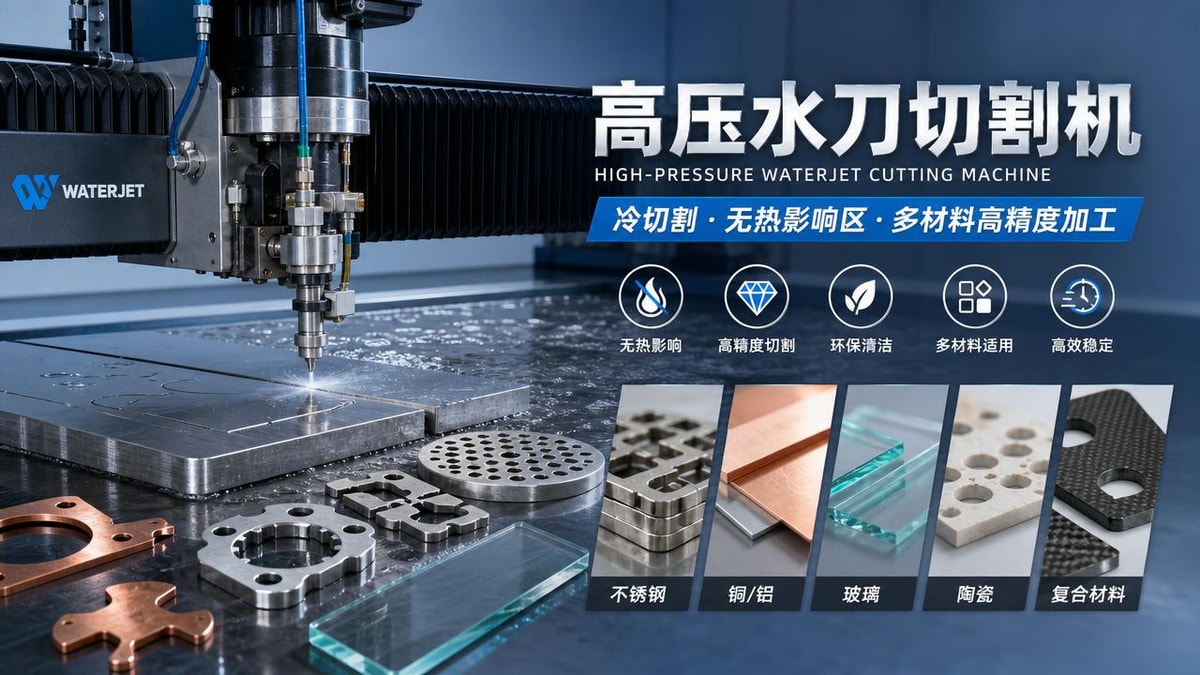
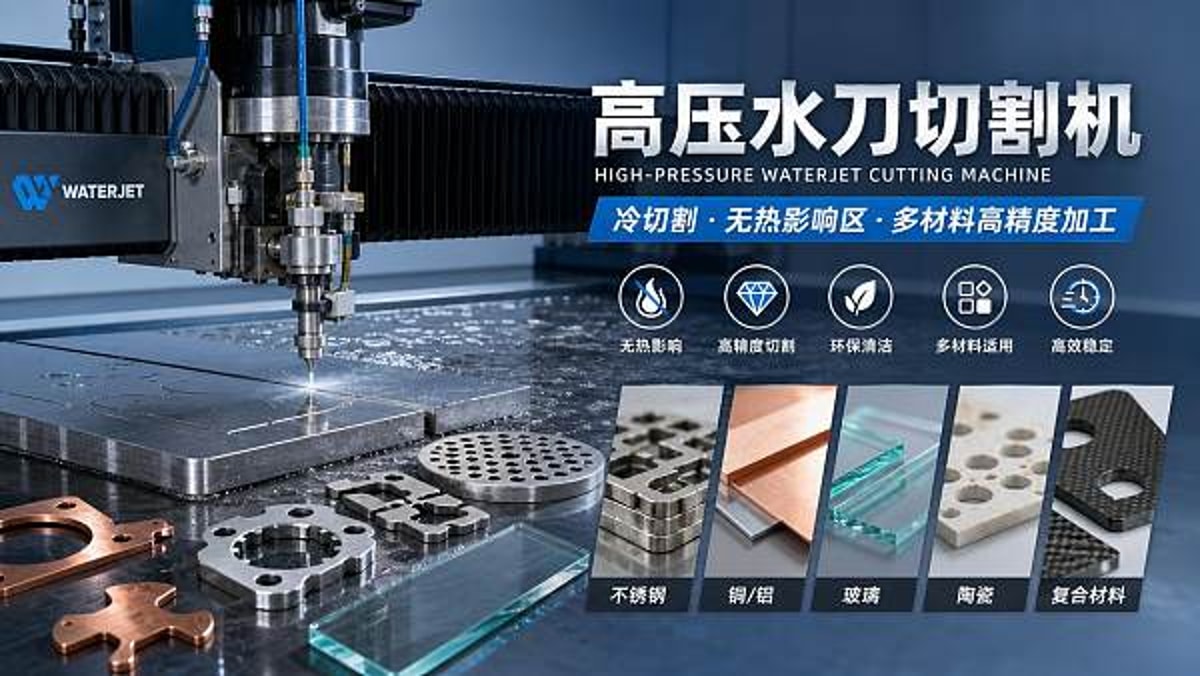
The short answer is heat. Laser systems remove material through concentrated thermal energy, which is highly effective for many metals and thin sheets, but that same heat can create problems when the workpiece is sensitive, reflective, laminated, thick, or structurally delicate. Waterjet cutting uses a high-pressure stream of water, often combined with abrasive media, so it cuts without creating a heat-affected zone. For operators, this matters because fewer thermal side effects usually mean fewer surprises after cutting.
In practical shop conditions, waterjet cutting reduces risks such as warping, burning, discoloration, microcracking, hardened edges, and delamination. It also avoids the challenge of laser beam reflection on materials like copper, brass, and aluminum. While laser cutting is often faster on thin, straightforward parts, waterjet cutting becomes the better choice when preserving material properties is more important than maximizing throughput on every job.
This is especially relevant in advanced manufacturing and precision fabrication, where a cut edge is not just a visual feature. Edge quality can affect assembly fit, coating performance, weldability, fatigue life, and the amount of secondary finishing required. If the wrong cutting method creates hidden stress or thermal distortion, downstream costs rise even when the initial cut looks acceptable.
Which materials clearly favor waterjet cutting over laser?
Several material groups consistently show the strengths of waterjet cutting. Operators often encounter these cases when laser performance becomes inconsistent, expensive, or quality-limiting.
- Heat-sensitive plastics and composites: Acrylic, polycarbonate, rubber, foam, fiberglass, carbon fiber, and certain engineered polymers can melt, char, or deform under laser heat. Waterjet cutting helps preserve edge condition and dimensional stability.
- Reflective metals: Copper, brass, and aluminum can be difficult for some laser systems because reflected energy may reduce efficiency or stress optics. Waterjet cutting is far less affected by reflectivity.
- Thick metals: Stainless steel, tool steel, titanium, and other thick sections may be cut by laser, but waterjet cutting often delivers cleaner quality through greater thickness ranges without thermal hardening.
- Laminated or layered materials: Stacked products, bonded panels, insulation boards, and mixed-material assemblies can separate or burn under thermal cutting. Waterjet cutting is often safer for maintaining layer integrity.
- Stone, glass, and ceramics: These materials are not typical laser-cutting candidates in many production settings, while waterjet cutting is widely used for complex shapes and controlled edge results.
- Food, medical, or specialty materials: In some non-metal applications, a cold cutting process is preferred to avoid thermal contamination or edge degradation.
The key decision point is not simply “Can laser cut it?” but rather “Can laser cut it without creating side effects that hurt quality, yield, or post-processing time?” That is where waterjet cutting often shows stronger overall value.
What specific material problems does waterjet cutting help operators avoid?
Operators usually care less about theory and more about recurring defects. In that context, waterjet cutting solves some very practical problems. First, it prevents thermal distortion. Thin or intricate parts cut by laser can warp because heat is concentrated into a narrow zone. Waterjet cutting avoids that issue, which is valuable when tolerances must hold across a full nested sheet.
Second, it protects edge metallurgy. With steels and specialty alloys, laser cutting may alter hardness at the edge or create a heat-affected zone that changes subsequent machining or welding behavior. Waterjet cutting leaves the parent material closer to its original condition. This matters in aerospace components, medical parts, and precision industrial assemblies where material performance is tightly controlled.
Third, it reduces burning and cosmetic damage. Decorative metals, coated surfaces, plastics, and visible architectural components may require a clean, unburned edge. Waterjet cutting is often chosen when final appearance matters as much as geometry. Fourth, it lowers the risk of delamination in composites and bonded structures. Heat can weaken adhesives or separate layers, while waterjet cutting generally provides a more stable process window for these materials.
Finally, waterjet cutting improves flexibility when one facility processes varied materials. Shops serving multiple industries often prefer a process that can move from stainless steel to stone to gasket material with fewer technology constraints. For mixed-job environments, that versatility reduces scheduling bottlenecks.
How do waterjet cutting and laser compare by material type and production priority?
A side-by-side comparison helps clarify where waterjet cutting provides the stronger advantage. The right answer depends on both the material and the production goal.
For many operators, the table reveals the real tradeoff: laser wins where speed on suitable thin materials drives profitability, while waterjet cutting wins where quality risk, material sensitivity, or thickness changes the economics of the job.
When is waterjet cutting the smarter operational choice, even if laser is faster?
Speed should be measured across the entire workflow, not just at the cutting head. A laser may complete the cutting stage faster, but if parts then require deburring, flattening, stress relief, edge cleanup, or scrap sorting caused by heat damage, the apparent time savings shrink. Waterjet cutting is often the smarter operational choice when it lowers total handling time or reduces rejected parts.
This is common in prototype work, custom fabrication, low-to-medium batch production, and jobs with expensive raw materials. If a titanium plate, carbon fiber panel, or thick copper component is costly to replace, process reliability becomes more valuable than headline cutting speed. Waterjet cutting also supports jobs where one machine must handle broad material variety without frequent process limitations.
From a procurement or production planning perspective, the question should be framed this way: does the process deliver acceptable parts at the lowest total cost per good component? In many cases, waterjet cutting improves that metric by reducing downstream correction and preserving material value.
What are the most common mistakes when choosing between waterjet cutting and laser?
One common mistake is comparing only hourly machine rates. Waterjet cutting may appear more expensive if viewed only through machine time, but that ignores scrap, rework, edge finishing, and quality risk. A second mistake is assuming all metals favor laser. Thin mild steel parts may, but reflective alloys, thicker sections, and heat-sensitive applications often shift the balance toward waterjet cutting.
Another frequent error is underestimating the value of no heat-affected zone. For operators, this is not just a technical phrase. It can mean easier drilling after cutting, better weld consistency, less distortion during assembly, and improved confidence in part performance. Shops also sometimes overlook mixed-material production realities. If work orders vary significantly across metals, composites, rubber, stone, and specialty substrates, waterjet cutting may create a more adaptable production environment than a laser-centered workflow.
There is also a misconception that waterjet cutting is only for niche or oversized jobs. In reality, it is a mainstream industrial process used in manufacturing, energy systems, electronics enclosures, medical components, and precision contract fabrication. Its role is not to replace laser everywhere, but to outperform it where material behavior under heat becomes the limiting factor.
How should operators evaluate whether waterjet cutting is right for a specific job?
A practical evaluation starts with five questions. First, is the material heat-sensitive, reflective, layered, brittle, or unusually thick? If yes, waterjet cutting deserves serious consideration. Second, what edge quality is required, and will thermal marking or hardening create downstream problems? Third, what is the true cost of scrap if the part fails? Fourth, how much post-processing is acceptable? Fifth, is this a recurring production requirement or a special-case job?
Operators should also review tolerances, pierce locations, material support, taper expectations, and abrasive usage if relevant. In some applications, waterjet cutting may require optimization for edge finish versus speed, but that tuning is often worthwhile when final part integrity matters. If possible, a sample cut comparison remains the best proof. Looking at edge condition, flatness, fit-up, and secondary finishing needs usually reveals the better process quickly.
For organizations working across advanced manufacturing, green energy assemblies, smart electronics housings, healthcare technology components, or supply chain-driven custom fabrication, the decision should align with both quality targets and supply continuity. Waterjet cutting often supports resilient production because it can process a wide range of materials with fewer heat-related constraints.
What should you confirm before requesting quotes, trials, or process recommendations?
Before moving into sourcing or implementation, prepare a clear checklist. Confirm the exact material grade, thickness range, required tolerances, desired edge finish, annual volume, acceptable lead time, and whether post-cut machining or welding is planned. If the workpiece has coatings, laminates, adhesives, or cosmetic surfaces, mention those early because they strongly influence whether waterjet cutting is the safer option.
It is also useful to ask suppliers or internal process teams for examples of similar jobs, expected taper range, abrasive consumption assumptions, nesting strategy, and recommendations for fixturing or part support. If comparing waterjet cutting with laser, request not just cycle time but total delivered part condition. That includes burr level, thermal impact, flatness, dimensional consistency, and likely secondary operations.
In many production environments, the best decision comes from a broader view: not which machine is more impressive, but which process protects the material, supports reliable output, and minimizes expensive correction work. If you need to confirm a specific cutting solution, the first conversation should focus on material behavior, thickness, edge requirements, and downstream process compatibility before discussing price alone.
Get weekly intelligence in your inbox.
No noise. No sponsored content. Pure intelligence.
 May 06, 2026Hydraulic Cylinder Fabrication Errors That Shorten Service LifeHydraulic Cylinder Fabrication Errors That Shorten Service Life
 May 06, 2026Surface Finishing Services That Reduce Warranty ComplaintsSurface Finishing Services That Reduce Warranty Complaints
 May 06, 2026Waterjet Cutting Is Better Than Laser for These MaterialsWaterjet Cutting Is Better Than Laser for These Materials
 May 06, 2026Custom Molded Rubber Choices That Affect Seal PerformanceCustom Molded Rubber Choices That Affect Seal Performance
 May 06, 2026Linear Motion Systems Fail Faster When Alignment Is OverlookedLinear Motion Systems Fail Faster When Alignment Is Overlooked
 May 06, 2026How Accurate Is Energy Forecasting When Weather Turns Volatile?How Accurate Is Energy Forecasting When Weather Turns Volatile?
 May 06, 2026Medical Device Manufacturing Delays Often Start in ValidationMedical Device Manufacturing Delays Often Start in Validation
 May 06, 2026Anodizing Services: Which Finish Holds Up Outdoors LongerAnodizing Services: Which Finish Holds Up Outdoors Longer
 May 06, 2026Solar Tracker Maintenance Issues That Hurt Long-Term OutputSolar Tracker Maintenance Issues That Hurt Long-Term Output
 May 06, 2026What Changes the Real Cost of Pneumatic Valves WholesaleWhat Changes the Real Cost of Pneumatic Valves Wholesale
 May 06, 2026Solar Microinverters vs String Inverters for Shaded RoofsSolar Microinverters vs String Inverters for Shaded Roofs
 May 06, 2026Bifacial Solar Panels: Do They Pay Off on Every Site?Bifacial Solar Panels: Do They Pay Off on Every Site?
 May 06, 2026Why Heavy Equipment Manufacturing Lead Times Keep SlippingWhy Heavy Equipment Manufacturing Lead Times Keep Slipping
 May 06, 2026Metal Stamping Parts: When Tooling Cost Stops Making SenseMetal Stamping Parts: When Tooling Cost Stops Making Sense
 May 06, 2026Energy Storage Battery Sizing Mistakes That Raise Project CostsEnergy Storage Battery Sizing Mistakes That Raise Project Costs
 May 06, 2026What Causes Revenue Gaps in a Solar Farm ProjectWhat Causes Revenue Gaps in a Solar Farm Project
 May 06, 2026Low Volume Manufacturing Works Best When Demand Is UnclearLow Volume Manufacturing Works Best When Demand Is Unclear
 May 06, 2026Automotive Parts Machining Costs That Grow With Late Design ChangesAutomotive Parts Machining Costs That Grow With Late Design Changes
 May 06, 2026AS9100 Aerospace Machining: What Fails an Audit Most OftenAS9100 Aerospace Machining: What Fails an Audit Most Often
 May 06, 2026Plastic Extrusion Tolerances That Affect Final Product FitPlastic Extrusion Tolerances That Affect Final Product Fit
 May 06, 2026Is Renewable Power Getting Easier to Finance for Industry?Is Renewable Power Getting Easier to Finance for Industry?
 May 06, 2026Ultrasonic Welding Defects That Are Easy to Miss at FirstUltrasonic Welding Defects That Are Easy to Miss at First
 May 06, 2026How to Compare Industrial Bearing Suppliers by Failure RiskHow to Compare Industrial Bearing Suppliers by Failure Risk
 May 06, 2026Custom Heatsinks: When a Standard Profile Stops WorkingCustom Heatsinks: When a Standard Profile Stops Working
 May 06, 2026Gear Manufacturing Problems That Show Up After AssemblyGear Manufacturing Problems That Show Up After Assembly
 May 06, 2026Why Thin Film Solar Cells Still Matter in 2026Why Thin Film Solar Cells Still Matter in 2026
 May 06, 2026Wire EDM Services or CNC Milling for Tight Tolerance Parts?Wire EDM Services or CNC Milling for Tight Tolerance Parts?