Custom Molded Rubber Choices That Affect Seal Performance
Choosing the right custom molded rubber is critical to seal performance, especially when technical evaluators must balance compression set, chemical resistance, temperature range, and dimensional precision. Small material or design differences can lead to leakage, shorter service life, and higher maintenance costs. This article examines the key custom molded rubber factors that directly influence sealing reliability in demanding industrial applications.
For technical evaluators, the central question is rarely whether a seal can be molded. The real question is whether the selected compound and part design will maintain sealing force, resist the actual media, tolerate thermal cycling, and stay dimensionally stable across the product’s service life. In most industrial failures, leakage is not caused by a single obvious mistake. It usually results from a mismatch between rubber formulation, gland design, process capability, and real operating conditions.
That is why evaluating custom molded rubber for seals requires more than comparing datasheets. A material that looks suitable on paper may fail when exposed to mixed chemicals, pressure spikes, dynamic movement, or long-term compression. Likewise, a high-performance polymer may be unnecessary if tolerances, surface finish, and part geometry are the true weak points. The most reliable decisions come from assessing the full sealing system rather than the elastomer in isolation.
What technical evaluators should prioritize first when reviewing custom molded rubber
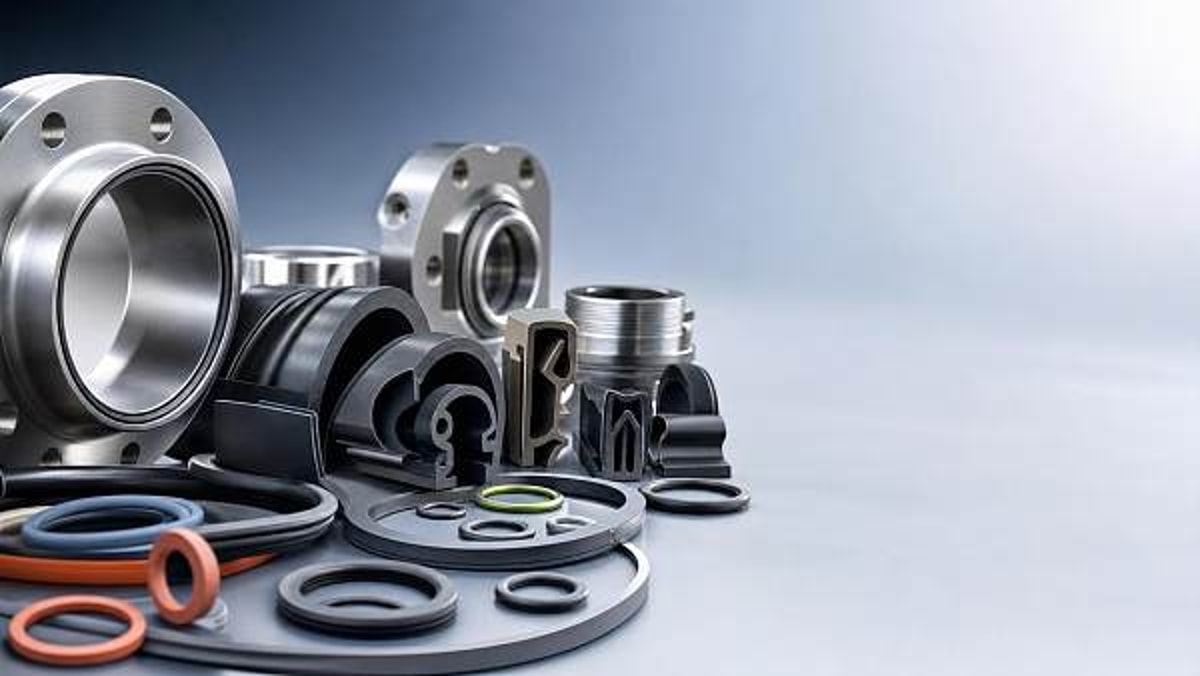
The first priority is sealing function under real conditions, not nominal material grade. A seal must maintain enough contact stress at the interface to prevent leakage over time. That means evaluators should begin with four practical filters: operating temperature range, media exposure, compression behavior, and tolerance demands. If any of these are misunderstood, even a premium compound may underperform.
Start by defining whether the application is static or dynamic, intermittent or continuous, indoor or exposed, clean or contaminated, low-pressure or pressure-cycling. These distinctions directly affect material selection. Static seals can often tolerate compounds that would fail quickly in reciprocating or vibratory environments. Similarly, occasional chemical splash is very different from full immersion at elevated temperature.
Another early priority is failure mode analysis. Ask what kind of failure is least acceptable: compression loss, swelling, cracking, abrasion, extrusion, outgassing, or dimensional drift. The answer helps narrow material families and molding methods much faster than general specification sheets. Technical evaluators who define unacceptable failure first usually make more accurate sourcing decisions than those who begin with cost or generic compound names.
Why rubber material choice has the biggest effect on long-term seal performance
Among all variables, the elastomer compound typically has the greatest influence on whether a seal performs reliably after installation. In custom molded rubber applications, the base polymer determines the broad performance envelope, while the formulation details control how consistently the seal behaves in practice. Fillers, curing system, plasticizers, and post-cure treatment can all shift real-world results significantly.
EPDM, NBR, FKM, silicone, neoprene, and HNBR are common starting points, but none should be chosen by reputation alone. EPDM is often strong for water, steam, weathering, and many polar fluids, yet it is not suitable for petroleum oils. NBR is frequently selected for fuel and oil resistance, but its upper temperature capability may limit use in hotter systems. FKM offers strong chemical and heat resistance, though it may come with higher cost and different low-temperature behavior. Silicone performs well in broad temperature ranges and clean environments, but its tear strength and abrasion resistance may be weaker for some industrial uses.
For seal applications, compression set is often the material property that deserves the closest attention. A rubber seal works by storing elastic energy after installation. If the compound takes a permanent set too quickly, sealing force drops and leakage risk rises. Evaluators should review compression set values in conditions that resemble actual service, especially temperature and duration. Room-temperature data alone can be misleading for heat-exposed assemblies.
Chemical compatibility is equally important, but it should be interpreted carefully. Many failures occur because compatibility charts are treated as absolute. In reality, concentration, temperature, mixed media, cleaning cycles, and exposure duration can produce very different outcomes. Swelling may be acceptable in some static applications but unacceptable where dimensional control is critical. Hardness changes, extraction, and surface degradation can all undermine sealing even if the rubber does not visibly fail.
Hardness selection also affects seal behavior more than many buyers expect. A softer compound can improve conformity to mating surfaces and help compensate for minor irregularities. A harder compound may improve extrusion resistance and dimensional stability. However, the best hardness depends on pressure, groove design, assembly conditions, and the risk of over-compression. Selecting durometer without considering the hardware interface can create avoidable sealing problems.
How part geometry and dimensional precision influence leakage risk
Even the best compound cannot compensate for a poor seal geometry. In custom molded rubber components, shape determines how force is distributed, how the part seats during assembly, and how well it tolerates pressure and thermal change. Technical evaluators should pay close attention to cross-section design, flash-sensitive areas, parting line placement, corner radii, and thin sections that may mold inconsistently.
Sealing reliability depends on predictable compression. If dimensions vary too widely, installed squeeze may fall below the minimum needed for sealing or exceed the limit that accelerates compression set and damage. This is why tolerance capability matters as much as nominal dimensions. A supplier may quote the target geometry accurately, but what matters is repeatability across lots and cavities.
Parting lines deserve special scrutiny in sealing areas. If the seal line crosses a critical contact surface, even minor mismatch or flash can create leak paths or assembly interference. Evaluators should ask whether mold design can position parting lines away from functional sealing surfaces. In many applications, this is more valuable than a small reduction in unit price.
Complex geometries can also introduce internal stress concentrations that shorten service life. Sharp transitions, unsupported lips, and thin ribs may tear, curl, or compress unevenly. When a custom molded rubber part must combine sealing with retention or alignment features, the design should be reviewed for trade-offs. A multifunction part may reduce assembly count, but only if the geometry remains manufacturable and stable.
Dimensional precision becomes especially important in miniature seals, high-pressure interfaces, medical devices, and assemblies with rigid mating components. In these environments, small variation can create large performance changes. Evaluators should confirm whether tolerances are realistic for the chosen elastomer, mold technology, and post-mold shrink behavior rather than assuming nominal CAD dimensions are directly transferable to production.
How molding process and cure control affect seal consistency
Seal performance is shaped not only by design and material, but also by how the part is molded and cured. Compression molding, transfer molding, and injection molding each have strengths depending on geometry, volume, tolerance demands, and flash control requirements. The right process can improve consistency, while the wrong one may increase dimensional variation or create surface defects that compromise sealing.
Injection molding is often preferred for high-volume precision parts because it can support repeatability and shorter cycle times. Compression molding may be suitable for simpler geometries or lower volumes, but it can involve more variation if process control is weak. Transfer molding can be useful when intricate shapes require better cavity fill than compression alone can deliver. The best option depends on the actual design, not just throughput targets.
Cure control is another major factor. Under-cured rubber may show poor mechanical properties, unstable dimensions, or inadequate chemical resistance. Over-cured material can become brittle or lose elasticity depending on the compound system. Post-curing may be essential for some materials, particularly when volatile removal, property stabilization, or regulatory cleanliness is important. Technical evaluators should verify not just the nominal compound, but the validated curing profile behind it.
Batch-to-batch consistency should also be part of supplier qualification. Variability in raw material sourcing, mixing, molding temperature, or cure timing can shift hardness, tensile properties, and compression set enough to affect sealing outcomes. If the application is critical, ask for process capability data, control plans, and traceability practices. In many sectors, this evidence is more valuable than generic marketing claims about quality.
Which environmental and application factors are most often underestimated
One of the most common evaluation mistakes is basing material choice on steady-state conditions while ignoring transient stress. Seals often fail during startup, shutdown, cleaning, sterilization, pressure pulsing, or unexpected temperature excursions rather than during normal operation. Custom molded rubber should therefore be assessed against the full duty cycle, not just average conditions.
Temperature cycling is especially important because elastomers respond differently at cold and hot extremes. Low temperatures can reduce flexibility and increase leakage risk during initial compression. High temperatures accelerate aging, soften some compounds, and worsen compression set. Repeated cycling can amplify these effects by stressing both the rubber and the surrounding hardware.
Surface finish and mating material are also frequently underestimated. A rough or damaged counter-surface may require a different hardness or seal geometry than a polished one. Some elastomers may stick, wear, or react differently depending on whether they contact aluminum, stainless steel, coated metal, or engineered plastics. These interface details can shift performance significantly even when the rubber compound remains unchanged.
Exposure to ozone, UV, steam, cleaning chemicals, and particulate contamination can further narrow the suitable material window. In outdoor, hygienic, or harsh-process environments, these external factors may govern the seal life more than pressure alone. Technical evaluators should build a condition matrix that includes process media, cleaning media, ambient exposure, and maintenance practices before finalizing a compound.
How to compare suppliers and validate a custom molded rubber seal before approval
Supplier evaluation should move beyond price, lead time, and basic compliance documents. For a sealing application, the right supplier is one that understands how material, tooling, tolerances, and inspection interact. Ask whether the manufacturer has experience with comparable sealing environments, whether they can recommend compound adjustments, and how they control shrinkage, flash, and cavity variation.
Prototype validation should include more than dimensional inspection. A useful approval path may combine first-article measurement, compression testing, media exposure trials, accelerated aging, and real assembly evaluation. If the seal is critical, include leak testing under representative pressure and thermal conditions. This approach often reveals issues that standard receiving inspection cannot detect.
Documentation matters as well. Evaluators should request compound traceability, material certification, inspection plans, and where applicable, data on compression set, tensile properties, elongation, hardness, and specific media resistance. If the application involves regulated sectors such as healthcare technology or food-adjacent processing, additional cleanliness, biocompatibility, or extractables considerations may apply.
It is also wise to assess the supplier’s willingness to co-engineer. In custom molded rubber projects, the best outcomes often come from iterative refinement rather than a one-time print handoff. A capable supplier can identify undercuts, tolerance traps, venting issues, or parting line risks early, reducing both validation time and long-term field failure.
A practical decision framework for selecting the right custom molded rubber
For technical evaluators, a structured selection process reduces costly surprises. First, define the true operating envelope, including peaks, cycles, cleaning exposure, and assembly loads. Second, rank the most critical failure risks such as compression set, swelling, tearing, or extrusion. Third, shortlist material families based on actual compatibility and thermal needs. Fourth, review geometry and tolerances in relation to seal compression and manufacturability.
Fifth, align the molding process and quality controls with the part’s precision requirements. Sixth, validate with testing that reflects service reality rather than relying solely on catalog data. Finally, compare suppliers on technical depth and repeatability, not just unit cost. This sequence keeps the evaluation centered on functional performance instead of superficial specification matching.
In many applications, the best seal is not the one made from the most expensive elastomer. It is the one whose compound, hardness, geometry, molding process, and tolerance strategy are correctly matched to the real use case. That is the core principle behind reliable custom molded rubber selection.
Conclusion: seal performance depends on system-level choices, not material labels alone
When evaluating custom molded rubber for seals, technical teams should focus on the factors that truly determine field performance: compression set resistance, chemical compatibility under actual conditions, temperature capability, dimensional precision, and molding consistency. Material family matters, but it is only one part of the decision.
The strongest outcomes come from system-level thinking. A well-chosen elastomer can still fail if the geometry is unstable, the tolerances are unrealistic, or the cure process is inconsistent. By combining application analysis, design review, process validation, and supplier assessment, technical evaluators can make decisions that reduce leakage risk, extend service life, and improve total cost of ownership.
In short, seal reliability is shaped by a chain of choices. The more rigor applied to each choice early in the evaluation process, the more dependable the final custom molded rubber solution will be in production.
Get weekly intelligence in your inbox.
No noise. No sponsored content. Pure intelligence.
 May 06, 2026Hydraulic Cylinder Fabrication Errors That Shorten Service LifeHydraulic Cylinder Fabrication Errors That Shorten Service Life
 May 06, 2026Surface Finishing Services That Reduce Warranty ComplaintsSurface Finishing Services That Reduce Warranty Complaints
 May 06, 2026Waterjet Cutting Is Better Than Laser for These MaterialsWaterjet Cutting Is Better Than Laser for These Materials
 May 06, 2026Custom Molded Rubber Choices That Affect Seal PerformanceCustom Molded Rubber Choices That Affect Seal Performance
 May 06, 2026Linear Motion Systems Fail Faster When Alignment Is OverlookedLinear Motion Systems Fail Faster When Alignment Is Overlooked
 May 06, 2026How Accurate Is Energy Forecasting When Weather Turns Volatile?How Accurate Is Energy Forecasting When Weather Turns Volatile?
 May 06, 2026Medical Device Manufacturing Delays Often Start in ValidationMedical Device Manufacturing Delays Often Start in Validation
 May 06, 2026Anodizing Services: Which Finish Holds Up Outdoors LongerAnodizing Services: Which Finish Holds Up Outdoors Longer
 May 06, 2026Solar Tracker Maintenance Issues That Hurt Long-Term OutputSolar Tracker Maintenance Issues That Hurt Long-Term Output
 May 06, 2026What Changes the Real Cost of Pneumatic Valves WholesaleWhat Changes the Real Cost of Pneumatic Valves Wholesale
 May 06, 2026Solar Microinverters vs String Inverters for Shaded RoofsSolar Microinverters vs String Inverters for Shaded Roofs
 May 06, 2026Bifacial Solar Panels: Do They Pay Off on Every Site?Bifacial Solar Panels: Do They Pay Off on Every Site?
 May 06, 2026Why Heavy Equipment Manufacturing Lead Times Keep SlippingWhy Heavy Equipment Manufacturing Lead Times Keep Slipping
 May 06, 2026Metal Stamping Parts: When Tooling Cost Stops Making SenseMetal Stamping Parts: When Tooling Cost Stops Making Sense
 May 06, 2026Energy Storage Battery Sizing Mistakes That Raise Project CostsEnergy Storage Battery Sizing Mistakes That Raise Project Costs
 May 06, 2026What Causes Revenue Gaps in a Solar Farm ProjectWhat Causes Revenue Gaps in a Solar Farm Project
 May 06, 2026Low Volume Manufacturing Works Best When Demand Is UnclearLow Volume Manufacturing Works Best When Demand Is Unclear
 May 06, 2026Automotive Parts Machining Costs That Grow With Late Design ChangesAutomotive Parts Machining Costs That Grow With Late Design Changes
 May 06, 2026AS9100 Aerospace Machining: What Fails an Audit Most OftenAS9100 Aerospace Machining: What Fails an Audit Most Often
 May 06, 2026Plastic Extrusion Tolerances That Affect Final Product FitPlastic Extrusion Tolerances That Affect Final Product Fit
 May 06, 2026Is Renewable Power Getting Easier to Finance for Industry?Is Renewable Power Getting Easier to Finance for Industry?
 May 06, 2026Ultrasonic Welding Defects That Are Easy to Miss at FirstUltrasonic Welding Defects That Are Easy to Miss at First
 May 06, 2026How to Compare Industrial Bearing Suppliers by Failure RiskHow to Compare Industrial Bearing Suppliers by Failure Risk
 May 06, 2026Custom Heatsinks: When a Standard Profile Stops WorkingCustom Heatsinks: When a Standard Profile Stops Working
 May 06, 2026Gear Manufacturing Problems That Show Up After AssemblyGear Manufacturing Problems That Show Up After Assembly
 May 06, 2026Why Thin Film Solar Cells Still Matter in 2026Why Thin Film Solar Cells Still Matter in 2026
 May 06, 2026Wire EDM Services or CNC Milling for Tight Tolerance Parts?Wire EDM Services or CNC Milling for Tight Tolerance Parts?