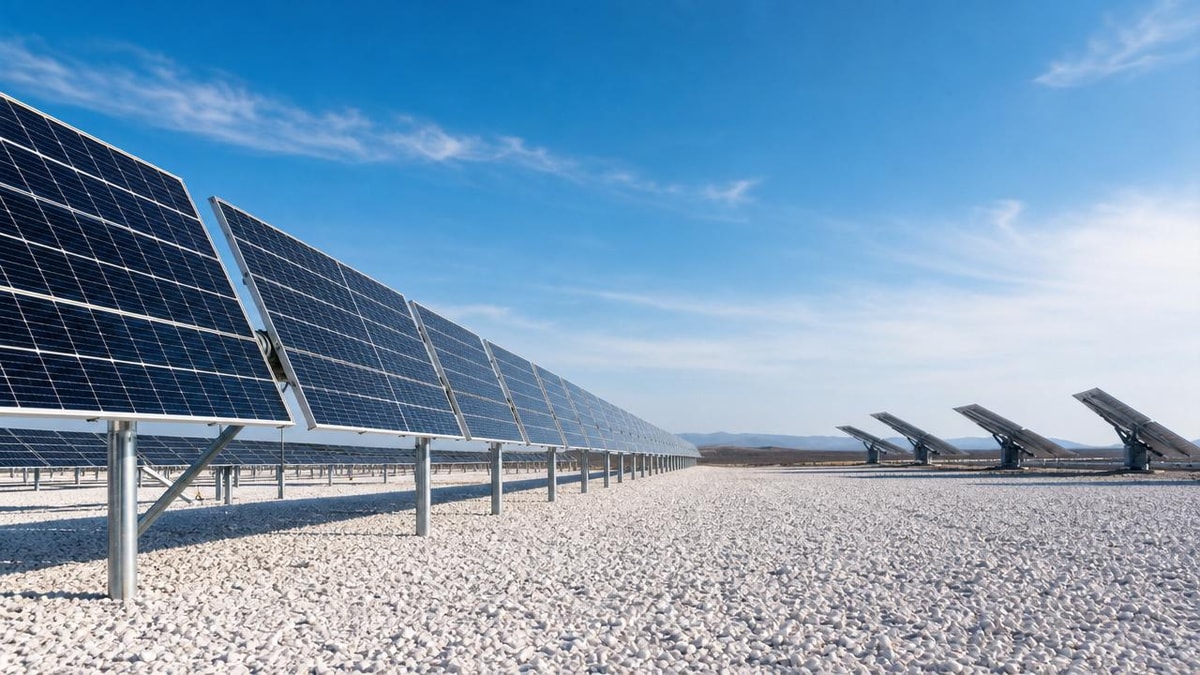
What Causes Revenue Gaps in a Solar Farm Project
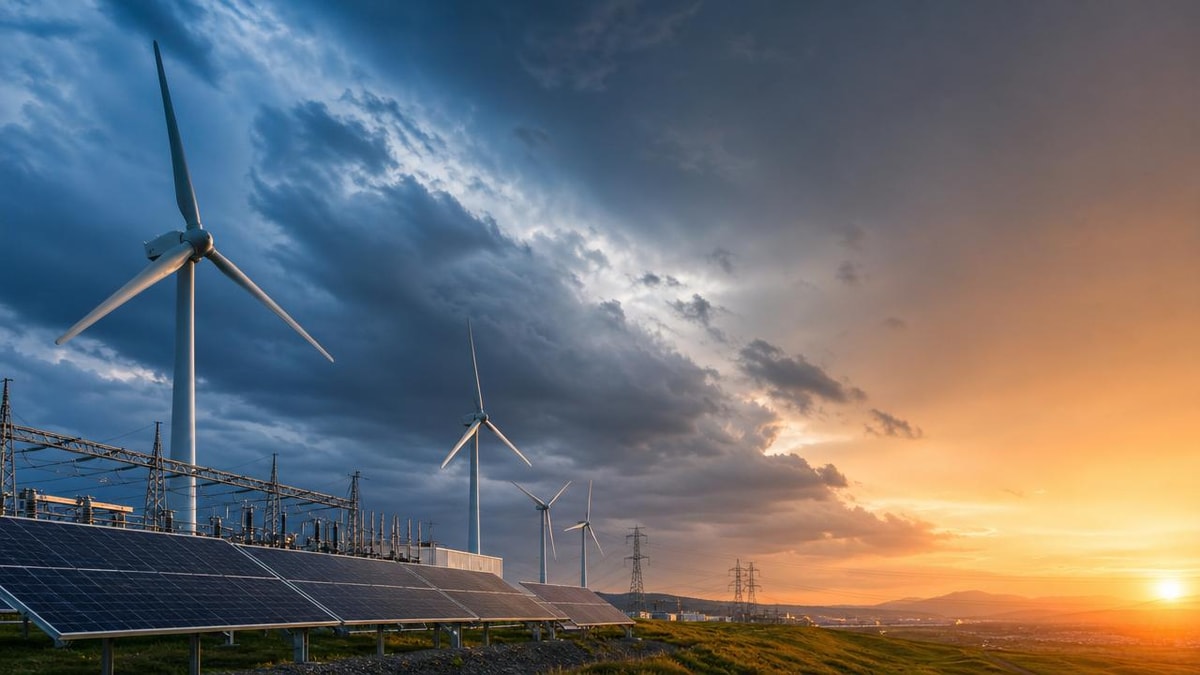
Revenue gaps in a solar farm project rarely come from one obvious issue. For financial approvers, hidden cost overruns, delayed grid connections, underperforming equipment, and inaccurate yield forecasts can quietly erode expected returns. Understanding what creates these gaps is essential to evaluating project risk, protecting capital, and making better investment decisions in an increasingly competitive renewable energy market.
Why revenue gaps in a solar farm project are drawing more scrutiny now
The financial profile of a modern solar farm has changed. A few years ago, many projects could absorb forecast errors because module prices were falling, policy support was stronger, and power demand growth created room for operational inefficiency. Today, the margin for error is narrower. Financing costs are higher in many markets, permitting timelines are less predictable, interconnection queues are longer, and buyers of renewable power expect more reliable delivery profiles. As a result, revenue gaps in a solar farm project have become a board-level concern rather than a technical footnote.
This shift matters especially to financial approvers. The key issue is not only whether a solar farm will generate electricity, but whether it will deliver the contracted, modeled, and debt-supporting cash flow on schedule. In a tighter capital environment, even small deviations in commissioning dates, curtailment levels, degradation rates, or operating expenses can materially affect debt service coverage, payback assumptions, and portfolio valuation.
The result is a broader change in due diligence. Investors and approval teams now look beyond headline capacity, EPC pricing, and irradiance assumptions. They are increasingly focused on execution risk, grid access quality, equipment bankability, weather volatility, merchant price exposure, and the operational resilience of the project over its full life cycle.
The market signals behind widening solar farm revenue uncertainty
Several industry signals explain why projected returns and actual cash generation are diverging more often. First, project pipelines are growing faster than transmission infrastructure in many regions. A solar farm can be physically complete yet unable to export at full capacity because grid upgrades, studies, or approvals are delayed. Second, competition for strong sites has intensified, pushing developers into locations with more complex land, weather, or interconnection constraints. Third, performance expectations have risen as power purchase agreements, lender models, and investor reporting become more rigorous.
At the same time, technology has improved, but complexity has increased. Bifacial modules, trackers, advanced inverters, storage integration, and digital monitoring can improve output, yet they also introduce more variables that can underperform if assumptions are weak or integration is poor. For a solar farm project, more technology does not automatically mean more reliable revenue. It means the quality of design, forecasting, and operations matters more.
Where revenue gaps in a solar farm project usually begin
Revenue erosion usually starts much earlier than the operations phase. In many cases, the first gap appears in development assumptions. A solar farm project may be modeled with optimistic irradiance data, simplified curtailment expectations, or aggressive construction timing. Those early assumptions are then carried into financing, contracting, and valuation decisions. When reality catches up, the shortfall is treated as an operational issue, even though the cause was embedded in the original business case.
Another common source is schedule compression. Developers often face pressure to meet policy deadlines, tax credit milestones, or PPA commencement dates. That pressure can lead to procurement substitutions, incomplete site readiness, or reduced commissioning windows. The project may still reach mechanical completion, but not in a condition that supports stable revenue from day one. The difference between “built” and “revenue-ready” is often where financial disappointment begins.
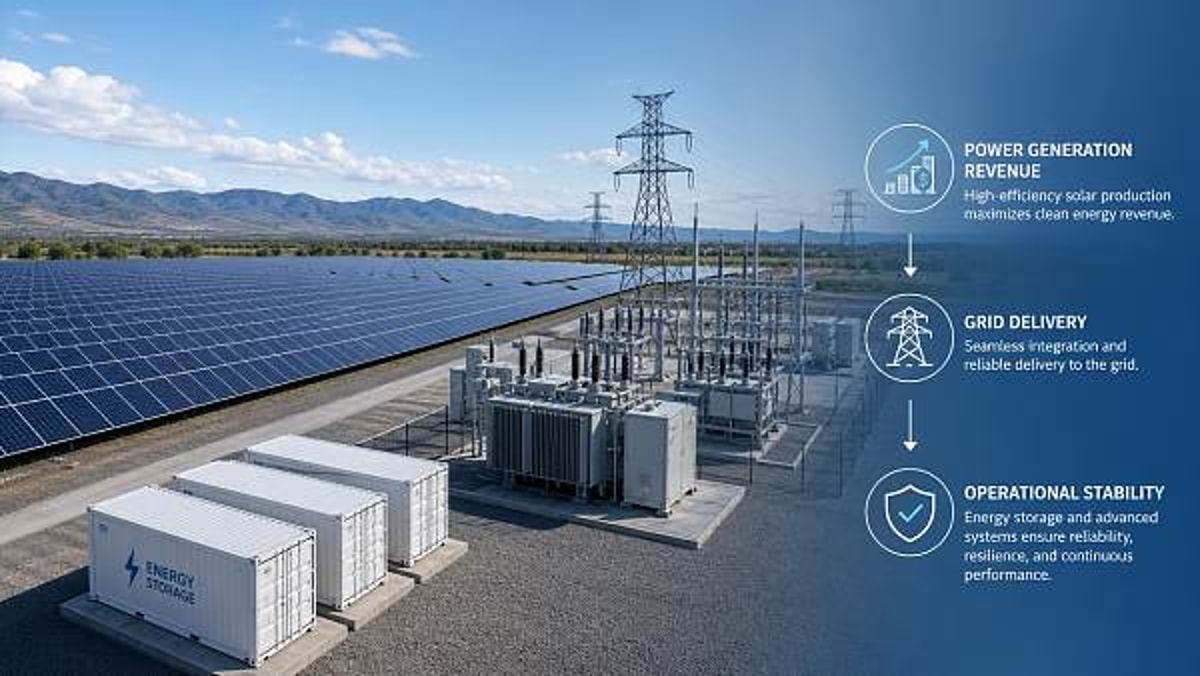
The five most persistent causes of solar farm revenue gaps
1. Delayed grid connection and export limitations
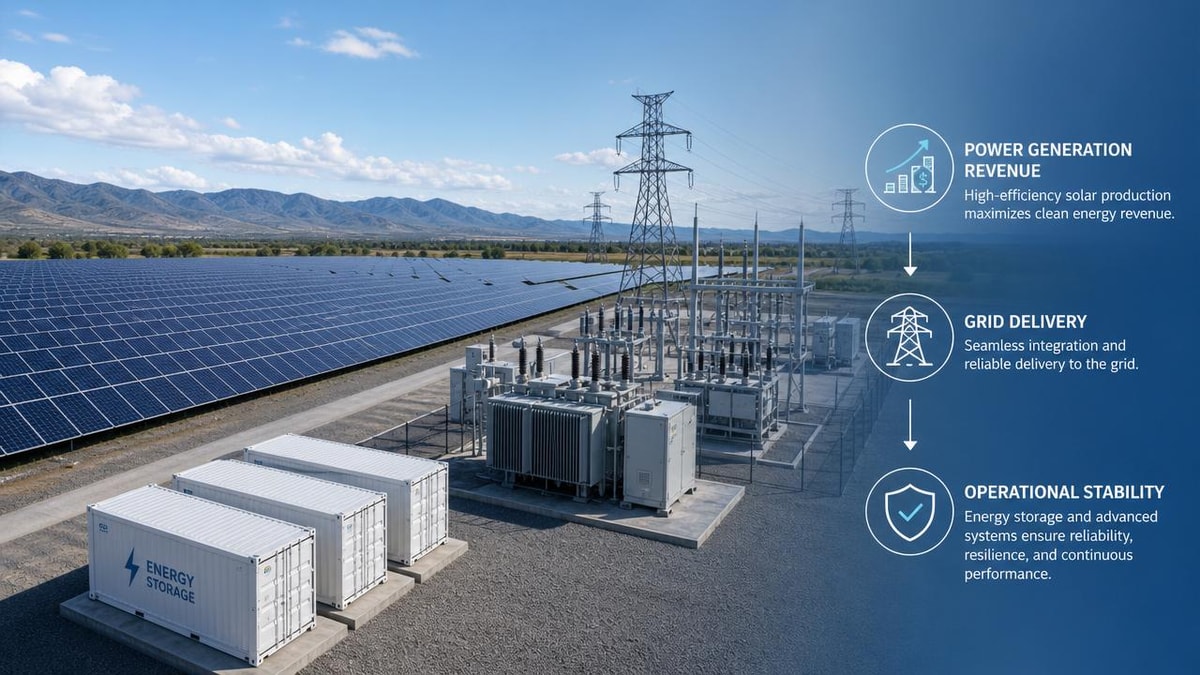
Grid connection has become one of the most important commercial risk factors in any solar farm project. Delays in utility studies, substation upgrades, or final approvals can postpone revenue for months. Even after connection, export constraints and curtailment may reduce the amount of energy sold. For financial approvers, this means nameplate capacity is less important than effective deliverability.
2. Overestimated energy yield
Forecasting errors remain a major driver of revenue gaps. Overconfidence in solar resource data, unrealistic availability assumptions, and inadequate treatment of temperature loss, soiling, shading, or seasonal weather patterns can all inflate modeled production. In current market conditions, modest yield overstatement can weaken debt performance and extend return horizons.
3. Equipment underperformance and degradation
Modules, inverters, trackers, transformers, and monitoring systems rarely fail in identical ways, but underperformance across these components creates cumulative losses. A solar farm project may suffer from inverter clipping, tracker misalignment, PID risk, poor cable management, or mismatch losses that are individually manageable yet financially significant over time. Faster-than-expected degradation can also undermine long-term models.
4. Hidden operating and maintenance costs
Revenue gaps are not only about lower output. They also emerge when O&M, vegetation control, security, spare parts, insurance, or compliance costs exceed plan. In harsher environments, cleaning frequency, storm response, and component replacement can rise sharply. A project that meets generation targets may still disappoint investors if the cost structure was understated.
5. Contract structure and power price exposure
Not every solar farm operates under a fully fixed long-term contract. Merchant exposure, settlement complexity, negative pricing periods, basis risk, and mismatch between production hours and market value can all reduce realized revenue. This issue is becoming more important as renewable penetration grows and midday price pressure intensifies in some power markets.
How these changes affect financial approvers more directly than before
For finance teams, the main change is that project viability can no longer be judged by capex, headline IRR, and sponsor reputation alone. Revenue quality now depends on a chain of assumptions that stretches from land control and permitting to plant controls and settlement mechanics. A solar farm project with an attractive levelized cost profile may still carry weak revenue resilience if interconnection, curtailment, or price capture risks are poorly understood.
This affects capital approval in three ways. First, downside cases need more realism. Second, time-to-cash should matter as much as lifetime return. Third, technical diligence and commercial diligence can no longer be reviewed separately. If the generation profile does not align with grid conditions or contract structure, the modeled revenue case may be structurally fragile.
What signals deserve closer attention in the next wave of solar farm investment
Looking ahead, several signals will likely shape the next pattern of revenue performance in the solar farm market. One is the growing importance of co-location with storage. Storage does not remove every revenue gap, but it can reduce curtailment, improve price capture, and support more flexible offtake strategies. Another signal is the rising value of granular operating data. Better monitoring, anomaly detection, and predictive maintenance can narrow performance drift before it becomes a financial problem.
A third trend is stricter demand for operational transparency from lenders, institutional investors, and corporate buyers. Projects that provide clear evidence of resource quality, equipment traceability, grid readiness, and performance benchmarking are more likely to secure confidence. In other words, bankability is shifting from a static concept toward a data-supported operating narrative.
There is also a regional trend worth noting. As mature solar markets saturate during peak generation hours, revenue quality depends less on annual megawatt-hours alone and more on when electricity is produced, how it is settled, and whether delivery can be optimized. For a solar farm project, energy volume and revenue value are no longer interchangeable assumptions.
Practical decision filters for reviewing a solar farm project
Financial approvers can improve decision quality by applying a tighter set of commercial filters before capital is committed. These filters should focus on whether the project’s cash flow is robust under current market conditions rather than whether the base case looks attractive on paper.
- Test the interconnection path, not just the expected connection date.
- Review yield assumptions against conservative weather, soiling, and curtailment cases.
- Separate component efficiency claims from proven field performance.
- Stress-test O&M budgets for labor, cleaning, insurance, and replacement cycles.
- Examine how contract terms interact with the plant’s real production profile.
- Require clarity on reserve accounts, liquidated damages, and post-COD support obligations.
These questions are increasingly relevant in a market where a solar farm can be technically sound yet financially exposed. The most resilient projects are not always those with the highest modeled output, but those with the most credible pathway from generation to realized revenue.
A sharper way to judge revenue risk before approval
The central lesson is that revenue gaps in a solar farm project are becoming less about isolated failure and more about system interaction. Grid conditions, technology choices, contract design, weather volatility, and operational discipline now combine to shape revenue outcomes. That is why simplistic approval logic can miss material risk.
For organizations evaluating renewable assets, the better approach is to ask whether the project has credible resilience across development, construction, energization, and long-term operation. If a solar farm depends on optimistic timing, narrow contingencies, or untested assumptions to achieve its forecast return, the revenue gap is often already embedded in the model.
If your business wants to judge how these trends may affect a specific solar farm opportunity, focus first on four questions: Is grid access truly executable, are production assumptions conservative enough, is the cost base realistic over the asset life, and does the commercial structure protect actual price realization? Those answers will do more to protect capital than any headline capacity number.
Get weekly intelligence in your inbox.
No noise. No sponsored content. Pure intelligence.
 May 06, 2026Hydraulic Cylinder Fabrication Errors That Shorten Service LifeHydraulic Cylinder Fabrication Errors That Shorten Service Life
 May 06, 2026Surface Finishing Services That Reduce Warranty ComplaintsSurface Finishing Services That Reduce Warranty Complaints
 May 06, 2026Waterjet Cutting Is Better Than Laser for These MaterialsWaterjet Cutting Is Better Than Laser for These Materials
 May 06, 2026Custom Molded Rubber Choices That Affect Seal PerformanceCustom Molded Rubber Choices That Affect Seal Performance
 May 06, 2026Linear Motion Systems Fail Faster When Alignment Is OverlookedLinear Motion Systems Fail Faster When Alignment Is Overlooked
 May 06, 2026How Accurate Is Energy Forecasting When Weather Turns Volatile?How Accurate Is Energy Forecasting When Weather Turns Volatile?
 May 06, 2026Medical Device Manufacturing Delays Often Start in ValidationMedical Device Manufacturing Delays Often Start in Validation
 May 06, 2026Anodizing Services: Which Finish Holds Up Outdoors LongerAnodizing Services: Which Finish Holds Up Outdoors Longer
 May 06, 2026Solar Tracker Maintenance Issues That Hurt Long-Term OutputSolar Tracker Maintenance Issues That Hurt Long-Term Output
 May 06, 2026What Changes the Real Cost of Pneumatic Valves WholesaleWhat Changes the Real Cost of Pneumatic Valves Wholesale
 May 06, 2026Solar Microinverters vs String Inverters for Shaded RoofsSolar Microinverters vs String Inverters for Shaded Roofs
 May 06, 2026Bifacial Solar Panels: Do They Pay Off on Every Site?Bifacial Solar Panels: Do They Pay Off on Every Site?
 May 06, 2026Why Heavy Equipment Manufacturing Lead Times Keep SlippingWhy Heavy Equipment Manufacturing Lead Times Keep Slipping
 May 06, 2026Metal Stamping Parts: When Tooling Cost Stops Making SenseMetal Stamping Parts: When Tooling Cost Stops Making Sense
 May 06, 2026Energy Storage Battery Sizing Mistakes That Raise Project CostsEnergy Storage Battery Sizing Mistakes That Raise Project Costs
 May 06, 2026What Causes Revenue Gaps in a Solar Farm ProjectWhat Causes Revenue Gaps in a Solar Farm Project
 May 06, 2026Low Volume Manufacturing Works Best When Demand Is UnclearLow Volume Manufacturing Works Best When Demand Is Unclear
 May 06, 2026Automotive Parts Machining Costs That Grow With Late Design ChangesAutomotive Parts Machining Costs That Grow With Late Design Changes
 May 06, 2026AS9100 Aerospace Machining: What Fails an Audit Most OftenAS9100 Aerospace Machining: What Fails an Audit Most Often
 May 06, 2026Plastic Extrusion Tolerances That Affect Final Product FitPlastic Extrusion Tolerances That Affect Final Product Fit
 May 06, 2026Is Renewable Power Getting Easier to Finance for Industry?Is Renewable Power Getting Easier to Finance for Industry?
 May 06, 2026Ultrasonic Welding Defects That Are Easy to Miss at FirstUltrasonic Welding Defects That Are Easy to Miss at First
 May 06, 2026How to Compare Industrial Bearing Suppliers by Failure RiskHow to Compare Industrial Bearing Suppliers by Failure Risk
 May 06, 2026Custom Heatsinks: When a Standard Profile Stops WorkingCustom Heatsinks: When a Standard Profile Stops Working
 May 06, 2026Gear Manufacturing Problems That Show Up After AssemblyGear Manufacturing Problems That Show Up After Assembly
 May 06, 2026Why Thin Film Solar Cells Still Matter in 2026Why Thin Film Solar Cells Still Matter in 2026
 May 06, 2026Wire EDM Services or CNC Milling for Tight Tolerance Parts?Wire EDM Services or CNC Milling for Tight Tolerance Parts?