Solar Microinverters vs String Inverters for Shaded Roofs
For homeowners dealing with partial shade, choosing the right inverter can make a major difference in solar performance and long-term savings. Solar microinverters are often praised for maximizing output panel by panel, while string inverters remain a cost-effective option for simpler roof layouts. This guide compares both technologies for shaded roofs, helping you understand efficiency, reliability, and which solution best fits your energy goals.
Why shaded-roof decisions are changing faster than before
The conversation around residential solar has shifted. A few years ago, many homeowners mainly compared system size, panel brand, and upfront price. Today, roof complexity matters much more. More homes are installing solar on roofs with dormers, vents, chimneys, nearby trees, or neighboring buildings that create partial shade during part of the day. That change has pushed inverter choice into the spotlight, especially for buyers researching solar microinverters.
At the same time, consumer expectations are higher. Homeowners want stronger monitoring, better long-term reliability, easier system expansion, and more predictable savings. These expectations are influencing installer recommendations and changing how shaded-roof projects are evaluated. Instead of asking only, “Which inverter is cheaper?” many buyers now ask, “Which inverter protects production under real-world conditions?”
This trend is especially relevant as residential electricity prices remain a concern in many markets and as homeowners try to maximize every available square foot of roof space. When a roof has uneven sun exposure, the choice between solar microinverters and string inverters can affect not only first-year output but also long-term performance, troubleshooting, and upgrade flexibility.
The biggest market signal: performance is now judged roof section by roof section
One of the clearest signals in the residential solar market is the move from system-level assumptions to panel-level analysis. Shaded roofs rarely behave like clean textbook examples. A single roof plane may receive strong sun in the morning, partial obstruction in the afternoon, and seasonal shading in winter. In that environment, inverter architecture becomes more than a technical detail.
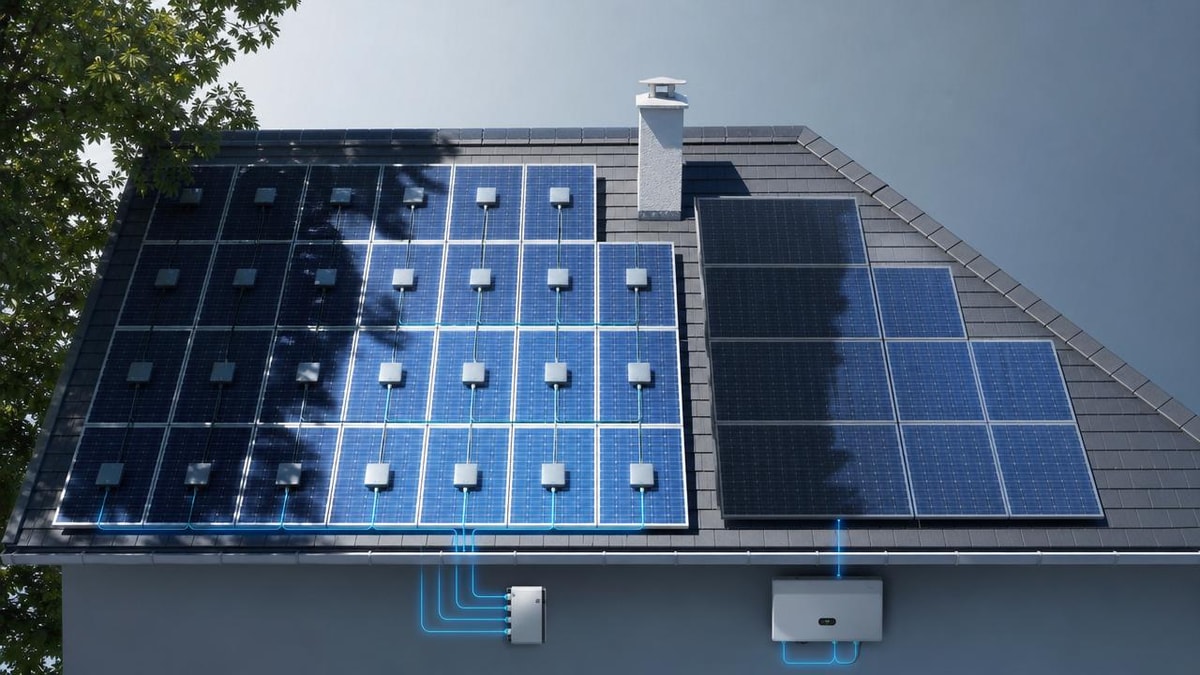
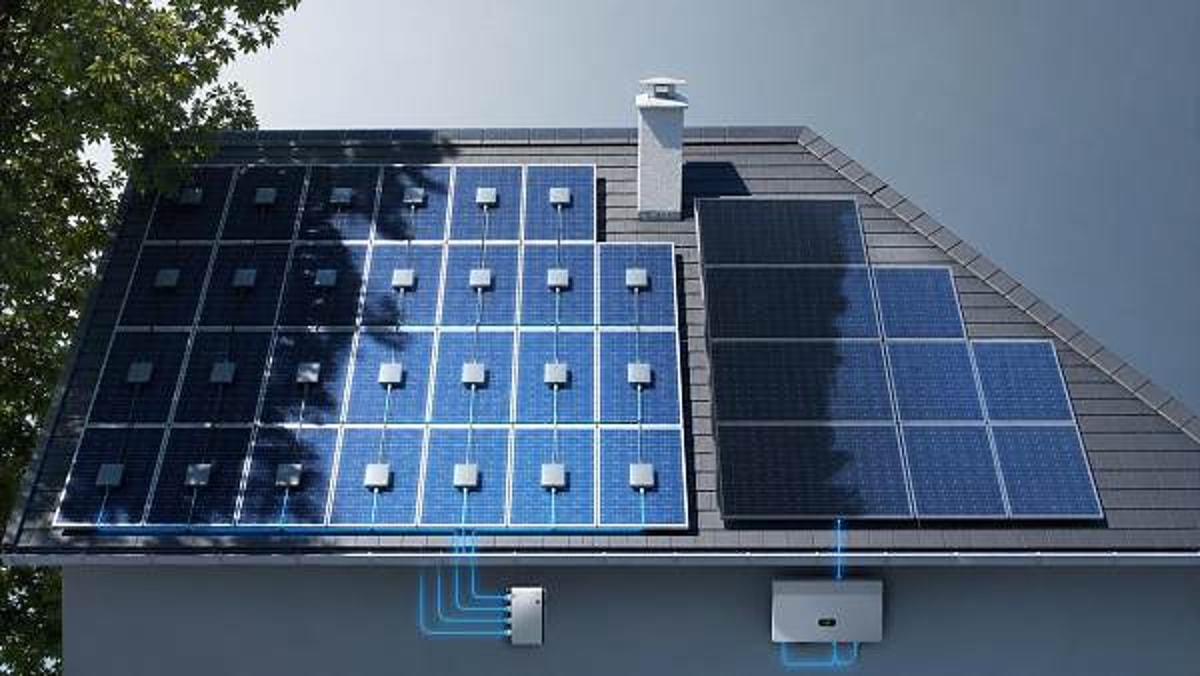
Solar microinverters respond to this shift because each panel operates more independently. If one panel is shaded, dirty, or temporarily underperforming, the rest of the array can continue producing closer to their potential. By contrast, traditional string inverters connect multiple panels together, so the weakest panel in a string can influence the output of others, depending on system design and shading severity.
This does not mean string inverters are outdated. For simple, unshaded roofs, they remain practical and economical. But on roofs with irregular sun patterns, the market increasingly values resilience against mismatch loss. That is one reason solar microinverters are often discussed more often in shaded-roof buying decisions.
What is driving the shift toward solar microinverters on shaded roofs
Several forces are shaping this change. First is simple roof reality. Not every homeowner has a large south-facing roof with zero shade. Urban and suburban homes often face orientation limits, aesthetic constraints, or partial obstructions. When available roof space is limited, performance losses from shade become more important.
Second is better consumer awareness. Homeowners now research system production in more detail before signing a contract. They understand that two systems with the same wattage may not deliver the same annual output on a shaded roof. This awareness encourages more interest in solar microinverters, especially when installers can show panel-level modeling.
Third is the growing value of diagnostics and maintenance transparency. If output drops unexpectedly, panel-level monitoring can make troubleshooting faster. On a shaded or mixed-orientation roof, this visibility helps distinguish temporary shade from equipment issues. For many consumers, the added confidence is part of the value proposition, not just the energy yield.
Fourth is future-proofing. Homeowners increasingly think about expansion, battery storage, and changing household loads such as heat pumps or electric vehicles. A system that is easier to scale across different roof sections may look more attractive, even if the upfront cost is higher.
How the two technologies perform when shade is part of everyday operation
For shaded roofs, the main difference is how production losses spread through the system. Solar microinverters convert power at each panel. That allows each module to work on its own operating conditions. If one panel is under a tree shadow for an hour, nearby panels are less affected. This can improve real-world energy harvest where shade moves during the day.
String inverters convert power from a group of panels connected in series. On clean, open roofs, this setup can be efficient and cost-effective. But on roofs with multiple shade zones, mismatched production may reduce the performance of the entire string. The effect depends on system layout, number of strings, panel placement, and whether some roof sections are more exposed than others.
Another practical difference is monitoring. Solar microinverters usually offer more granular visibility, which matters when homeowners want to verify that a shaded roof is still performing as expected. String inverters often provide system-level monitoring, though capabilities vary by model and design approach.
Reliability is often debated. String inverters place one main inverter in a more accessible location, which can simplify replacement. Solar microinverters distribute electronics across the roof, reducing the single-point-failure issue but increasing the number of components. In practice, homeowners should compare warranty terms, service response, installer support quality, and proven field track record rather than relying on simplified claims.
Cost is still important, but buyers are measuring value differently
String inverters usually win on upfront cost. For households with little to no shade and a straightforward roof, that advantage can be meaningful. Lower initial expense may improve payback, especially if the system layout is simple and annual production estimates are strong.
However, the market is moving beyond sticker price alone. On shaded roofs, the more relevant question is total value over the life of the system. If solar microinverters recover more usable energy year after year, provide clearer monitoring, and make future panel additions easier, the higher purchase price may be justified. This is particularly true when the roof is small and every panel must perform as well as possible.
That shift in buying behavior mirrors a broader clean-energy trend: homeowners are more willing to pay for system architecture that reduces uncertainty. Instead of choosing the cheapest configuration, many now choose the setup that best matches their roof conditions and long-term energy plan.
Who feels the impact most strongly
Not every homeowner will see the same benefit from solar microinverters. The impact depends on roof design, shading pattern, and expansion plans. The following comparison helps clarify where the decision matters most.
What signals homeowners should watch before making the final call
The most useful signal is not a generic efficiency claim. It is a shade-aware production estimate based on your actual roof. Ask whether the installer has modeled seasonal shading, panel grouping, and time-of-day losses. If two proposals use the same number of panels but assume very different annual output, the inverter design may be part of the reason.
Also look closely at monitoring and service. For shaded roofs, visibility is valuable. If a branch grows, debris accumulates, or one panel begins underperforming, panel-level insights can help. This is one reason solar microinverters continue to attract attention among homeowners who want more operational clarity.
Another signal is roof change over time. A roof that looks mostly clear today may become more shaded as trees grow or nearby construction changes light conditions. Buyers should think beyond the installation day and ask how the system will perform under less-than-perfect conditions several years from now.
A practical decision framework for the next stage of residential solar
If your roof is consistently open and uncomplicated, a string inverter may still be the smart choice. It can deliver strong value with lower upfront cost and proven performance. But if your roof has persistent partial shade, mixed angles, or limited usable area, solar microinverters deserve serious attention because they align with the current market shift toward roof-specific optimization.
A balanced decision usually comes down to five questions: How much shade occurs and when? How much does each roof section differ? How important is panel-level monitoring? Are you likely to expand the system later? And how do lifetime production gains compare with the extra upfront investment?
These questions reflect a larger trend in consumer energy decisions: personalization is replacing one-size-fits-all system design. The best inverter is no longer simply the one with the lowest price or the most familiar name. It is the one that matches the roof you actually have and the savings profile you actually want.
Final takeaway for homeowners comparing solar microinverters and string inverters
The shift in the solar market is clear. Shaded roofs are being evaluated with greater precision, and inverter choice is becoming a strategic part of that conversation. Solar microinverters are gaining momentum because they address a real need: preserving output when sun exposure is uneven. String inverters remain highly relevant, especially where shade is minimal and budget discipline matters most.
If you want to judge which direction fits your home, focus on evidence rather than assumptions. Review shade analysis, compare estimated annual production, ask about monitoring depth, and test whether the proposed design still makes sense if your roof conditions change over time. For homeowners seeking the strongest fit for a shaded roof, that process will usually reveal whether solar microinverters offer enough added value to justify the upgrade.
And if you are still narrowing your options, the smartest next step is to request two side-by-side proposals based on the same roof layout: one using solar microinverters and one using a string inverter. That comparison will show not just what each technology is, but how each one responds to the real-world shade patterns that shape your long-term savings.
Get weekly intelligence in your inbox.
No noise. No sponsored content. Pure intelligence.
 May 06, 2026Hydraulic Cylinder Fabrication Errors That Shorten Service LifeHydraulic Cylinder Fabrication Errors That Shorten Service Life
 May 06, 2026Surface Finishing Services That Reduce Warranty ComplaintsSurface Finishing Services That Reduce Warranty Complaints
 May 06, 2026Waterjet Cutting Is Better Than Laser for These MaterialsWaterjet Cutting Is Better Than Laser for These Materials
 May 06, 2026Custom Molded Rubber Choices That Affect Seal PerformanceCustom Molded Rubber Choices That Affect Seal Performance
 May 06, 2026Linear Motion Systems Fail Faster When Alignment Is OverlookedLinear Motion Systems Fail Faster When Alignment Is Overlooked
 May 06, 2026How Accurate Is Energy Forecasting When Weather Turns Volatile?How Accurate Is Energy Forecasting When Weather Turns Volatile?
 May 06, 2026Medical Device Manufacturing Delays Often Start in ValidationMedical Device Manufacturing Delays Often Start in Validation
 May 06, 2026Anodizing Services: Which Finish Holds Up Outdoors LongerAnodizing Services: Which Finish Holds Up Outdoors Longer
 May 06, 2026Solar Tracker Maintenance Issues That Hurt Long-Term OutputSolar Tracker Maintenance Issues That Hurt Long-Term Output
 May 06, 2026What Changes the Real Cost of Pneumatic Valves WholesaleWhat Changes the Real Cost of Pneumatic Valves Wholesale
 May 06, 2026Solar Microinverters vs String Inverters for Shaded RoofsSolar Microinverters vs String Inverters for Shaded Roofs
 May 06, 2026Bifacial Solar Panels: Do They Pay Off on Every Site?Bifacial Solar Panels: Do They Pay Off on Every Site?
 May 06, 2026Why Heavy Equipment Manufacturing Lead Times Keep SlippingWhy Heavy Equipment Manufacturing Lead Times Keep Slipping
 May 06, 2026Metal Stamping Parts: When Tooling Cost Stops Making SenseMetal Stamping Parts: When Tooling Cost Stops Making Sense
 May 06, 2026Energy Storage Battery Sizing Mistakes That Raise Project CostsEnergy Storage Battery Sizing Mistakes That Raise Project Costs
 May 06, 2026What Causes Revenue Gaps in a Solar Farm ProjectWhat Causes Revenue Gaps in a Solar Farm Project
 May 06, 2026Low Volume Manufacturing Works Best When Demand Is UnclearLow Volume Manufacturing Works Best When Demand Is Unclear
 May 06, 2026Automotive Parts Machining Costs That Grow With Late Design ChangesAutomotive Parts Machining Costs That Grow With Late Design Changes
 May 06, 2026AS9100 Aerospace Machining: What Fails an Audit Most OftenAS9100 Aerospace Machining: What Fails an Audit Most Often
 May 06, 2026Plastic Extrusion Tolerances That Affect Final Product FitPlastic Extrusion Tolerances That Affect Final Product Fit
 May 06, 2026Is Renewable Power Getting Easier to Finance for Industry?Is Renewable Power Getting Easier to Finance for Industry?
 May 06, 2026Ultrasonic Welding Defects That Are Easy to Miss at FirstUltrasonic Welding Defects That Are Easy to Miss at First
 May 06, 2026How to Compare Industrial Bearing Suppliers by Failure RiskHow to Compare Industrial Bearing Suppliers by Failure Risk
 May 06, 2026Custom Heatsinks: When a Standard Profile Stops WorkingCustom Heatsinks: When a Standard Profile Stops Working
 May 06, 2026Gear Manufacturing Problems That Show Up After AssemblyGear Manufacturing Problems That Show Up After Assembly
 May 06, 2026Why Thin Film Solar Cells Still Matter in 2026Why Thin Film Solar Cells Still Matter in 2026
 May 06, 2026Wire EDM Services or CNC Milling for Tight Tolerance Parts?Wire EDM Services or CNC Milling for Tight Tolerance Parts?