Automotive Parts Machining Costs That Grow With Late Design Changes
In automotive programs, late design revisions can quietly turn competitive quotes into costly production setbacks. For project managers and engineering leads, understanding how automotive parts machining costs escalate with geometry changes, tolerance updates, and tooling adjustments is essential to protecting budgets, timelines, and supplier performance. This article explains where the hidden cost drivers emerge and how to reduce risk before changes reach the shop floor.
Why do late design changes push automotive parts machining costs up so quickly?
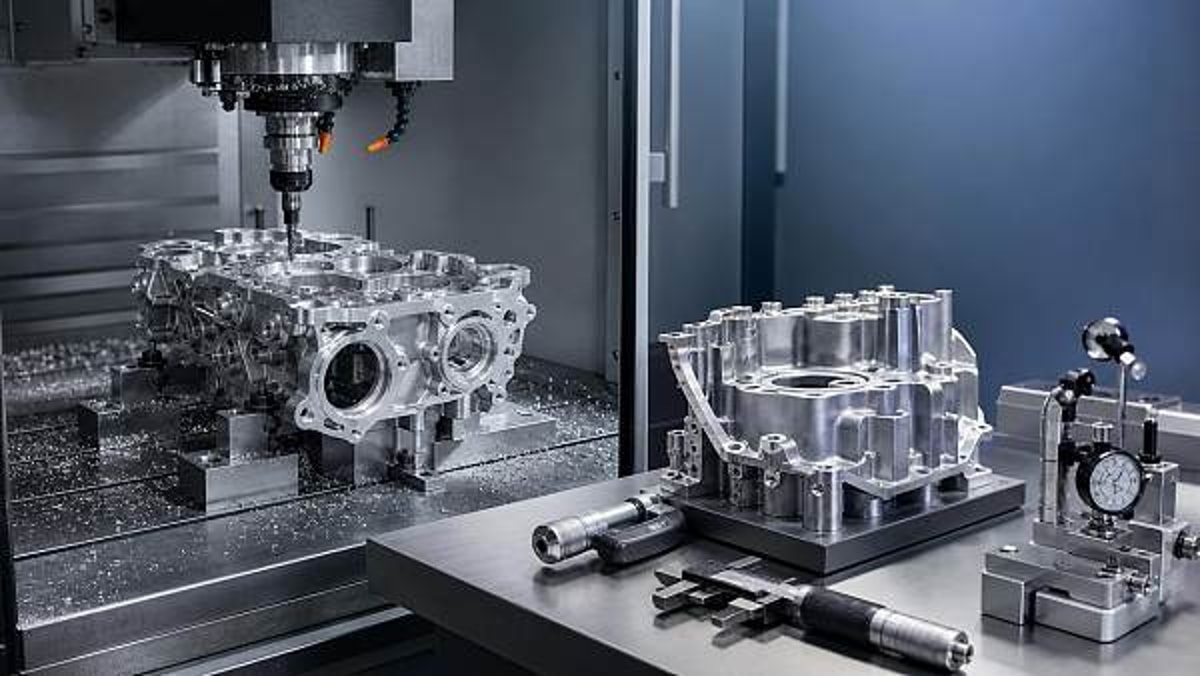
In automotive parts machining, the visible price of a component is only one layer of the total manufacturing burden. When a design changes late, the impact spreads across process planning, CNC programming, fixturing, inspection methods, capacity scheduling, scrap exposure, and supplier communication. What looked like a small CAD revision often triggers a chain reaction that project teams underestimate.
For project managers, the real challenge is timing. A feature change before supplier process validation may be manageable. The same change after first article approval, PPAP preparation, or low-volume ramp can multiply cost because the supplier has already invested in machining strategy, setup logic, gauges, and production sequencing.
This is especially relevant in cross-border sourcing programs, where automotive parts machining suppliers may be balancing multiple customer launches, material procurement windows, and constrained machine availability. Late changes do not only add direct machining cost. They also create indirect commercial risk: expedited freight, delayed qualification, premium overtime, and strained supplier relationships.
- Geometry changes can require new toolpaths, different cutting tools, or additional machining operations.
- Tolerance tightening can move a part from standard machining into high-precision processing with longer cycle times and more inspection points.
- Datum or feature relocation can invalidate fixtures, clamping references, and CMM programs already prepared by the supplier.
- Material or finish revisions can change chip behavior, tool wear rates, lead times, and secondary process routing.
Where do automotive parts machining cost increases usually come from?
Project teams often focus on unit price, but late engineering updates affect both one-time and recurring costs. The table below highlights the most common cost growth points in automotive parts machining after a late-stage design revision.
The important lesson is that automotive parts machining costs rarely rise because of only one issue. They rise because a revision touches several linked cost centers at the same time. That is why project leaders should ask suppliers for cost breakouts rather than accepting a single revised quote without explanation.
The hidden difference between direct and indirect cost
Direct cost includes additional tool wear, machining minutes, fixture work, and metrology effort. Indirect cost includes launch delay, change-management administration, premium logistics, extra supplier meetings, and the opportunity cost of lost machine capacity. In many automotive parts machining programs, indirect cost becomes more damaging than the visible unit-price increase.
Which design revisions are the most expensive in automotive parts machining?
Not every late revision creates the same financial burden. Some changes are absorbed through minor programming edits, while others disrupt the entire process route. For sourcing and engineering teams, it helps to classify design changes by cost sensitivity before release.
The comparison below can help teams prioritize which revisions need deeper supplier review in automotive parts machining projects.
The most expensive revisions are usually those that alter process stability, not just shape. If a change affects how the part is held, measured, or controlled across volume production, the cost impact can extend far beyond the drawing office.
Why tolerance changes deserve extra scrutiny
A tolerance update may look harmless because the part still appears visually similar. Yet in automotive parts machining, a tighter flatness, position, or cylindricity requirement can force slower feeds, additional finishing, thermal control, in-process probing, and more frequent calibration. Project managers should treat tolerance changes as process changes, not only drawing changes.
How should project managers evaluate supplier quotations after a revision?
When an updated quote arrives, the goal is not simply to negotiate the lowest number. The better objective is to verify whether the supplier has correctly mapped the revision into process, tooling, quality, and schedule consequences. A weakly structured quote can hide future claims and delivery instability.
A practical quotation review checklist
- Ask for separation between one-time engineering cost and recurring piece-price increase. This clarifies whether the revision mainly affects launch work or long-term production economics.
- Request cycle-time delta in minutes or percentage. In automotive parts machining, capacity pressure often matters more than the price delta alone.
- Confirm whether existing fixtures remain usable or need rework. Fixture changes often drive hidden lead-time extension.
- Review inspection plan changes, including CMM programming, gauge updates, and first article repetition needs.
- Check exposure on raw material, WIP, and finished inventory already in the pipeline before the engineering change cut-in date.
- Verify whether supplier assumptions depend on annual volume, batch size, or revised tolerance interpretation.
Teams using structured intelligence platforms such as TradeNexus Pro gain an advantage here. Instead of viewing quotes in isolation, they can compare supplier reasoning, benchmark common automotive parts machining responses across regions, and identify whether a revision cost is driven by technical necessity or by local capacity constraints.
How can teams reduce cost escalation before changes reach the machine shop?
The best savings in automotive parts machining do not come from late negotiation. They come from early cross-functional decision control. If purchasing, engineering, quality, and manufacturing review a change with the supplier before release, many avoidable cost amplifiers can be removed.
High-value prevention actions
- Run change-impact reviews by feature, not by drawing revision only. Focus on datums, tool access, chip evacuation, wall rigidity, and measurement strategy.
- Freeze critical machining features earlier than non-critical cosmetic details. This prevents repetitive fixture and probing changes.
- Use tolerance rationalization. Tighten only where assembly, sealing, NVH, or durability performance truly requires it.
- Confirm inspection feasibility alongside machining feasibility. Some dimensional requirements are expensive because of how they must be verified, not only how they are machined.
- Set formal cut-off points for no-cost, low-cost, and premium-cost changes according to program phase.
This is where market intelligence and supplier-network visibility matter. TradeNexus Pro helps project leaders assess how design choices intersect with real production capability, regional lead-time shifts, and supplier specialization. That perspective is useful when a part could be redesigned slightly to preserve function while avoiding a major machining penalty.
What standards, documentation, and change controls should be considered?
Automotive parts machining programs usually sit inside strict quality and traceability frameworks. Even when a late revision appears minor, the supporting documentation may need updates across manufacturing and quality systems. Ignoring this admin layer often leads to delayed approvals and shipment holds.
The table below summarizes the documentation areas that project managers should review after a design change affecting automotive parts machining.
Depending on customer and program stage, teams may need to revisit APQP-style deliverables, PPAP-related evidence, process FMEA inputs, or measurement system checks. The exact package varies, but the principle is consistent: every design change in automotive parts machining should be paired with a controlled documentation response.
Common mistakes that make automotive parts machining revisions more expensive
Mistake 1: treating drawing updates as isolated engineering tasks
A drawing change affects commercial planning, supplier loading, and quality release. If project management waits until the new file is issued before involving the machine shop, cost growth is almost guaranteed.
Mistake 2: assuming the old quote still applies with only a small surcharge
In automotive parts machining, a small feature change can alter the controlling operation. Once the bottleneck step changes, the original quote logic may no longer be valid.
Mistake 3: ignoring inventory cut-in strategy
If there is no clear plan for existing raw stock, WIP, and finished goods, teams can end up paying for duplicate production, emergency rework, or customer sorting activity.
Mistake 4: over-specifying precision without function-based review
Many machining costs rise because teams specify tighter values “just to be safe.” If the requirement is not tied to sealing, fit, motion control, thermal interface, or durability, it may be an avoidable cost driver.
FAQ: what do project leaders usually ask about automotive parts machining changes?
How late is too late for a design change?
A change becomes expensive once tooling, programming, inspection planning, and launch scheduling have been committed. After pilot builds or approval preparation, even minor revisions in automotive parts machining can create disproportionate delay and revalidation effort.
Which metric should I monitor besides revised unit price?
Monitor cycle-time delta, fixture impact, scrap exposure, and approval lead time. These indicators often reveal whether a revised quote is manageable or likely to trigger downstream cost leakage.
Can a different supplier reduce the increase?
Sometimes, but switching suppliers late can also create new qualification and ramp risks. The right move depends on part complexity, annual volume, current supplier flexibility, and whether the change requires niche automotive parts machining capability.
What should be included in a supplier change-impact review meeting?
Review feature-level design intent, tolerance rationale, affected operations, tooling status, measurement method, inventory exposure, revised timeline, and commercial assumptions. A structured agenda reduces misunderstanding and speeds up decision quality.
Why choose us when evaluating automotive parts machining cost risk?
TradeNexus Pro supports procurement directors, supply chain managers, and engineering decision-makers who need more than general market content. We focus on the operational reality behind supplier quotations, process changes, and industrial sourcing decisions across advanced manufacturing and connected sectors.
If your team is assessing automotive parts machining revisions, we can help you frame the right questions before cost increases become program problems. Our platform is suited for buyers and project leads who need deeper visibility into supplier capability, market movement, and production-side implications.
- Clarify whether a design update is likely to affect machining route, tooling, or inspection scope.
- Compare quotation logic across suppliers and regions to support better sourcing decisions.
- Discuss lead-time risk, sample planning, and revision cut-in strategy before launch disruption occurs.
- Review requirements related to documentation, approval timing, and quality control expectations.
- Explore alternative manufacturing approaches or feature rationalization opportunities when budgets tighten.
Contact TradeNexus Pro if you need support with parameter confirmation, supplier shortlisting, revised quote evaluation, delivery schedule analysis, custom sourcing strategy, sample coordination, or technical-commercial alignment for automotive parts machining programs.
Get weekly intelligence in your inbox.
No noise. No sponsored content. Pure intelligence.
 May 06, 2026Hydraulic Cylinder Fabrication Errors That Shorten Service LifeHydraulic Cylinder Fabrication Errors That Shorten Service Life
 May 06, 2026Surface Finishing Services That Reduce Warranty ComplaintsSurface Finishing Services That Reduce Warranty Complaints
 May 06, 2026Waterjet Cutting Is Better Than Laser for These MaterialsWaterjet Cutting Is Better Than Laser for These Materials
 May 06, 2026Custom Molded Rubber Choices That Affect Seal PerformanceCustom Molded Rubber Choices That Affect Seal Performance
 May 06, 2026Linear Motion Systems Fail Faster When Alignment Is OverlookedLinear Motion Systems Fail Faster When Alignment Is Overlooked
 May 06, 2026How Accurate Is Energy Forecasting When Weather Turns Volatile?How Accurate Is Energy Forecasting When Weather Turns Volatile?
 May 06, 2026Medical Device Manufacturing Delays Often Start in ValidationMedical Device Manufacturing Delays Often Start in Validation
 May 06, 2026Anodizing Services: Which Finish Holds Up Outdoors LongerAnodizing Services: Which Finish Holds Up Outdoors Longer
 May 06, 2026Solar Tracker Maintenance Issues That Hurt Long-Term OutputSolar Tracker Maintenance Issues That Hurt Long-Term Output
 May 06, 2026What Changes the Real Cost of Pneumatic Valves WholesaleWhat Changes the Real Cost of Pneumatic Valves Wholesale
 May 06, 2026Solar Microinverters vs String Inverters for Shaded RoofsSolar Microinverters vs String Inverters for Shaded Roofs
 May 06, 2026Bifacial Solar Panels: Do They Pay Off on Every Site?Bifacial Solar Panels: Do They Pay Off on Every Site?
 May 06, 2026Why Heavy Equipment Manufacturing Lead Times Keep SlippingWhy Heavy Equipment Manufacturing Lead Times Keep Slipping
 May 06, 2026Metal Stamping Parts: When Tooling Cost Stops Making SenseMetal Stamping Parts: When Tooling Cost Stops Making Sense
 May 06, 2026Energy Storage Battery Sizing Mistakes That Raise Project CostsEnergy Storage Battery Sizing Mistakes That Raise Project Costs
 May 06, 2026What Causes Revenue Gaps in a Solar Farm ProjectWhat Causes Revenue Gaps in a Solar Farm Project
 May 06, 2026Low Volume Manufacturing Works Best When Demand Is UnclearLow Volume Manufacturing Works Best When Demand Is Unclear
 May 06, 2026Automotive Parts Machining Costs That Grow With Late Design ChangesAutomotive Parts Machining Costs That Grow With Late Design Changes
 May 06, 2026AS9100 Aerospace Machining: What Fails an Audit Most OftenAS9100 Aerospace Machining: What Fails an Audit Most Often
 May 06, 2026Plastic Extrusion Tolerances That Affect Final Product FitPlastic Extrusion Tolerances That Affect Final Product Fit
 May 06, 2026Is Renewable Power Getting Easier to Finance for Industry?Is Renewable Power Getting Easier to Finance for Industry?
 May 06, 2026Ultrasonic Welding Defects That Are Easy to Miss at FirstUltrasonic Welding Defects That Are Easy to Miss at First
 May 06, 2026How to Compare Industrial Bearing Suppliers by Failure RiskHow to Compare Industrial Bearing Suppliers by Failure Risk
 May 06, 2026Custom Heatsinks: When a Standard Profile Stops WorkingCustom Heatsinks: When a Standard Profile Stops Working
 May 06, 2026Gear Manufacturing Problems That Show Up After AssemblyGear Manufacturing Problems That Show Up After Assembly
 May 06, 2026Why Thin Film Solar Cells Still Matter in 2026Why Thin Film Solar Cells Still Matter in 2026
 May 06, 2026Wire EDM Services or CNC Milling for Tight Tolerance Parts?Wire EDM Services or CNC Milling for Tight Tolerance Parts?