What Changes the Real Cost of Pneumatic Valves Wholesale
In pneumatic valves wholesale, the quoted unit price is only part of the real cost. For distributors, agents, and resellers, margins are shaped by material grades, certification requirements, order volume, customization, logistics, and supplier reliability. Understanding these cost drivers helps buyers compare offers more accurately, reduce sourcing risks, and build stronger long-term procurement strategies in a competitive industrial market.
Why the cost picture in pneumatic valves wholesale is changing now
The biggest shift in pneumatic valves wholesale is that buyers can no longer judge competitiveness by piece price alone. Across industrial distribution channels, the market is being reshaped by three visible signals: customers are asking for more documented quality, supply chains are less tolerant of delivery failure, and end users expect product consistency across larger and more specialized applications. For distributors and agents, this means the real cost of procurement now includes more than manufacturing expense. It also includes the cost of risk, the cost of inconsistency, and the cost of delayed revenue.
This change matters especially in sectors where pneumatic control components are integrated into automated lines, packaging systems, food processing equipment, medical support devices, electronics assembly, and general industrial motion systems. In these environments, a valve that arrives late, fails compliance review, or performs below specification can create losses that far exceed the original purchase discount. As a result, pneumatic valves wholesale has become a decision area where procurement teams are measuring total landed value rather than simple invoice totals.
Another reason the market feels different is that buyers are navigating a more segmented supply base. Some manufacturers compete on price, some on engineering support, some on certification depth, and others on fast replenishment. The result is a wider gap between nominal low-cost offers and truly economical sourcing options. That gap is what distributors need to understand if they want to protect margins while maintaining service quality for their own downstream customers.
The main forces pushing real costs upward or downward
The real cost in pneumatic valves wholesale is changing because the market is reacting to a combination of technical, commercial, and geopolitical pressures. Material volatility remains important, but it is no longer the only driver. Lead-time uncertainty, certification complexity, regional compliance expectations, and after-sales accountability now influence the final economics of each order. Distributors who fail to track these drivers often discover hidden costs only after the shipment has arrived or the product has entered customer use.
A key trend is that engineering standards are influencing wholesale economics more directly. In the past, many buyers could switch between general-purpose valves with limited concern. Today, application conditions such as pressure stability, cycle frequency, temperature range, chemical compatibility, and installation space are becoming more decisive. The more exact the operating requirement, the greater the risk of buying on headline price only.
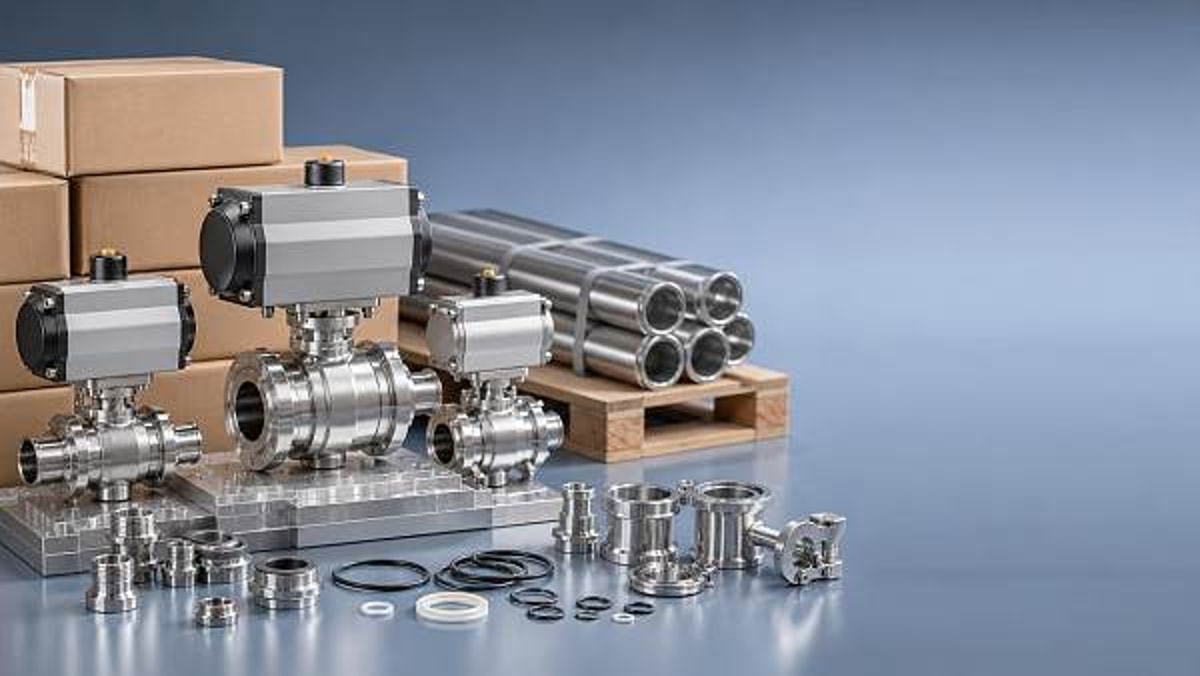
Why low quotes in pneumatic valves wholesale can become expensive later
For resellers and agents, a low quote may look attractive when competing for price-sensitive accounts. However, the market is increasingly showing that hidden downstream costs can erase the initial savings. These hidden costs usually appear in five places: quality disputes, delayed delivery, product mismatch, warranty handling, and inventory imbalance. Each of these areas can quietly turn a “good deal” into a margin drain.
Quality variation is often the first issue. Two valves may appear similar in catalog format, but differences in machining tolerance, coil durability, seal composition, and internal flow design can produce very different field performance. In pneumatic valves wholesale, this matters because distributors carry reputational risk. If failure rates rise, the distributor may absorb service costs, replacement freight, customer complaints, and lost future business.
Delivery risk is another major cost factor. In industries running lean inventories, even a few days of delay can affect machine assembly or maintenance schedules. Buyers are therefore assigning a premium to suppliers that can provide realistic production visibility, stable packaging quality, and dependable export documentation. This is one of the clearest market changes: reliability is now being priced as a value layer, not treated as a bonus.
Customization is also reshaping cost. More end users want special port sizes, voltage options, manifold configurations, media compatibility, or branding requirements. These requests can increase tooling, engineering review, minimum order thresholds, and approval time. Distributors that do not quantify these variables may underestimate the total procurement burden and overcommit on resale pricing.
How different market participants are affected
Not every participant in pneumatic valves wholesale experiences these changes in the same way. The effects vary by business model, customer base, and operating discipline. A stock-based distributor feels cost changes differently from a project-based agent, while an importer serving regulated sectors faces different pressure from a reseller focused on general industrial replacement parts.
For multi-market distributors, one emerging challenge is customer segmentation. Some customers still prioritize immediate price, while others prioritize life-cycle value, documentation, and predictable replenishment. This creates a need for more layered sourcing strategies. A single supplier strategy may no longer be enough. Many buyers in pneumatic valves wholesale now maintain a mix of approved suppliers: one for standardized volume, one for urgent supply, and one for specialized or certified products.
The trend toward total landed cost and supplier scoring
One of the strongest signals in pneumatic valves wholesale is the shift from unit-price comparison to structured supplier scoring. This is partly a response to tighter margins and partly a response to procurement digitalization. More organizations are evaluating suppliers not only on quote level, but also on defect rate, response speed, engineering capability, documentation accuracy, packaging quality, and delivery stability.
This trend is important because it changes how distributors should negotiate. Instead of asking only for lower prices, experienced buyers increasingly negotiate around payment terms, stocking support, shared forecast visibility, product substitution rules, warranty handling, and emergency replenishment commitments. In many cases, these terms have more impact on annual profitability than a small discount on catalog price.
Another related change is the growing use of landed cost thinking. Freight, customs handling, local storage, inspection time, and financing cost are now more carefully included in procurement models. For imported industrial components, the difference between FOB value and practical resale cost can be significant. In pneumatic valves wholesale, this means buyers who compare quotes without cost normalization may select the wrong supplier even when the arithmetic appears favorable.
What signals distributors and agents should monitor next
Looking ahead, several signals deserve continuous attention. First, monitor whether end users are moving toward higher-duty applications, cleaner operating environments, or more automation-intensive systems. These trends often raise specification requirements and narrow the acceptable supplier pool. Second, watch whether customer inquiries increasingly include documentation requests, test expectations, or installation-specific requirements. That usually indicates a shift from commodity buying to performance-based buying.
Third, pay attention to lead-time behavior over multiple quarters, not just one order cycle. A supplier that performs well during stable demand may struggle under sudden volume swings. Fourth, evaluate how often substitute models are accepted by your customer base. If substitution flexibility is shrinking, forecasting discipline becomes more important. Finally, observe whether regional trade conditions, shipping routes, or compliance expectations are affecting product flow. These external variables may change the cost structure of pneumatic valves wholesale faster than internal purchasing teams expect.
Practical response strategies for buyers in pneumatic valves wholesale
To respond effectively, distributors and resellers need a procurement model that balances price, resilience, and fit. The first step is to classify valve purchases by business importance. Fast-moving standard items should be managed differently from project-specific or compliance-sensitive products. This avoids applying the same sourcing logic to every category.
The second step is to build a clearer supplier scorecard. Even a simple framework can improve decisions if it measures consistent dimensions: delivered quality, lead-time accuracy, communication speed, document completeness, packaging protection, and claim resolution. In pneumatic valves wholesale, such scorecards help buyers explain why a slightly higher quote can still be the better commercial option.
Third, buyers should tighten cost visibility before quoting downstream customers. That means checking whether the offer includes the right seal material, coil configuration, pressure range, accessories, packaging method, and certification support. It also means accounting for realistic freight and inventory assumptions rather than using overly optimistic estimates. Better pre-quote discipline protects margin and reduces renegotiation later.
Fourth, develop a dual focus on standardization and selective flexibility. Standardization helps reduce stocking complexity and purchasing errors, while flexibility helps capture custom or higher-value opportunities. The most effective companies in pneumatic valves wholesale are usually not those with the lowest prices, but those that know when to standardize and when to differentiate.
A sharper decision framework for the months ahead
The market direction is clear: real cost is becoming more dynamic, and decision quality matters more than short-term quote comparisons. For distributors, agents, and resellers, the central question is no longer “Who offers the cheapest valve today?” but “Which sourcing choice creates the best commercial outcome over the full transaction cycle?” That includes procurement, logistics, inventory, customer service, and repeat business.
If your business is reviewing pneumatic valves wholesale opportunities, focus on a few essential questions. Are your current suppliers consistent enough to protect your brand? Are you tracking landed cost rather than invoice cost? Are documentation and compliance demands increasing in your target sectors? Are customized requests becoming more frequent? Are delivery delays or quality claims silently reducing your margin? These are the signals that reveal whether your sourcing model still fits the market.
For enterprise buyers and channel partners seeking more strategic market insight, platforms such as TradeNexus Pro help frame these shifts in a wider B2B context. The value is not only in seeing price movement, but in understanding why procurement conditions are changing and which decisions will remain durable. In an environment where pneumatic valves wholesale is influenced by quality expectations, application complexity, and supply resilience, better judgment is often the most important cost advantage of all.
Get weekly intelligence in your inbox.
No noise. No sponsored content. Pure intelligence.
 May 06, 2026Hydraulic Cylinder Fabrication Errors That Shorten Service LifeHydraulic Cylinder Fabrication Errors That Shorten Service Life
 May 06, 2026Surface Finishing Services That Reduce Warranty ComplaintsSurface Finishing Services That Reduce Warranty Complaints
 May 06, 2026Waterjet Cutting Is Better Than Laser for These MaterialsWaterjet Cutting Is Better Than Laser for These Materials
 May 06, 2026Custom Molded Rubber Choices That Affect Seal PerformanceCustom Molded Rubber Choices That Affect Seal Performance
 May 06, 2026Linear Motion Systems Fail Faster When Alignment Is OverlookedLinear Motion Systems Fail Faster When Alignment Is Overlooked
 May 06, 2026How Accurate Is Energy Forecasting When Weather Turns Volatile?How Accurate Is Energy Forecasting When Weather Turns Volatile?
 May 06, 2026Medical Device Manufacturing Delays Often Start in ValidationMedical Device Manufacturing Delays Often Start in Validation
 May 06, 2026Anodizing Services: Which Finish Holds Up Outdoors LongerAnodizing Services: Which Finish Holds Up Outdoors Longer
 May 06, 2026Solar Tracker Maintenance Issues That Hurt Long-Term OutputSolar Tracker Maintenance Issues That Hurt Long-Term Output
 May 06, 2026What Changes the Real Cost of Pneumatic Valves WholesaleWhat Changes the Real Cost of Pneumatic Valves Wholesale
 May 06, 2026Solar Microinverters vs String Inverters for Shaded RoofsSolar Microinverters vs String Inverters for Shaded Roofs
 May 06, 2026Bifacial Solar Panels: Do They Pay Off on Every Site?Bifacial Solar Panels: Do They Pay Off on Every Site?
 May 06, 2026Why Heavy Equipment Manufacturing Lead Times Keep SlippingWhy Heavy Equipment Manufacturing Lead Times Keep Slipping
 May 06, 2026Metal Stamping Parts: When Tooling Cost Stops Making SenseMetal Stamping Parts: When Tooling Cost Stops Making Sense
 May 06, 2026Energy Storage Battery Sizing Mistakes That Raise Project CostsEnergy Storage Battery Sizing Mistakes That Raise Project Costs
 May 06, 2026What Causes Revenue Gaps in a Solar Farm ProjectWhat Causes Revenue Gaps in a Solar Farm Project
 May 06, 2026Low Volume Manufacturing Works Best When Demand Is UnclearLow Volume Manufacturing Works Best When Demand Is Unclear
 May 06, 2026Automotive Parts Machining Costs That Grow With Late Design ChangesAutomotive Parts Machining Costs That Grow With Late Design Changes
 May 06, 2026AS9100 Aerospace Machining: What Fails an Audit Most OftenAS9100 Aerospace Machining: What Fails an Audit Most Often
 May 06, 2026Plastic Extrusion Tolerances That Affect Final Product FitPlastic Extrusion Tolerances That Affect Final Product Fit
 May 06, 2026Is Renewable Power Getting Easier to Finance for Industry?Is Renewable Power Getting Easier to Finance for Industry?
 May 06, 2026Ultrasonic Welding Defects That Are Easy to Miss at FirstUltrasonic Welding Defects That Are Easy to Miss at First
 May 06, 2026How to Compare Industrial Bearing Suppliers by Failure RiskHow to Compare Industrial Bearing Suppliers by Failure Risk
 May 06, 2026Custom Heatsinks: When a Standard Profile Stops WorkingCustom Heatsinks: When a Standard Profile Stops Working
 May 06, 2026Gear Manufacturing Problems That Show Up After AssemblyGear Manufacturing Problems That Show Up After Assembly
 May 06, 2026Why Thin Film Solar Cells Still Matter in 2026Why Thin Film Solar Cells Still Matter in 2026
 May 06, 2026Wire EDM Services or CNC Milling for Tight Tolerance Parts?Wire EDM Services or CNC Milling for Tight Tolerance Parts?