Energy Storage Battery Sizing Mistakes That Raise Project Costs
An energy storage battery project can look cost-effective on paper yet become expensive in execution when sizing assumptions miss real operating demands. For project managers and engineering leads, understanding the most common battery sizing mistakes is critical to avoiding overspecification, premature degradation, hidden balance-of-system costs, and long-term performance gaps that directly affect budget, reliability, and project ROI.
Understanding battery sizing in real project terms
In practical terms, sizing an energy storage battery means determining how much power and usable energy the system must deliver, for how long, under what site conditions, and across what operating life. Many teams simplify this into a single capacity figure, but a bankable design requires a broader view. Power rating, discharge duration, round-trip efficiency, depth of discharge, degradation curve, ambient temperature, inverter limits, safety margins, and expansion strategy all interact. If one of these inputs is wrong, the installed system may either cost too much upfront or fail to meet performance commitments later.
This matters more today because battery storage is no longer confined to pilot installations. It now supports commercial peak shaving, renewable integration, backup resilience, microgrids, industrial load management, EV charging support, and grid services. In each case, the same nominal energy storage battery capacity can perform very differently depending on duty cycle and control strategy. That is why experienced project teams move beyond nameplate values and evaluate the complete operating profile before locking in specifications.
Why the industry pays close attention to sizing errors
Across green energy and advanced industrial applications, project economics have become more sensitive to system design quality. Battery costs remain significant, but the larger risk often sits in downstream consequences: oversized enclosures, larger PCS units, more HVAC demand, additional fire protection, heavier civil works, and weaker asset utilization. Undersizing is equally damaging. It can create demand charge savings that fall short of the model, renewable curtailment that remains unresolved, or warranty stress from repeated deep cycling.
For project managers, the sizing discussion is therefore not just technical. It is a schedule, budget, compliance, and stakeholder issue. If a design team has to revise the energy storage battery specification late in the project, procurement lead times may be disrupted, permitting assumptions may change, and commissioning tests may need to be redefined. In a competitive capital environment, these errors reduce confidence in the business case and can delay approval decisions.
A practical overview of common sizing mistakes
The table above shows why sizing mistakes do not remain confined to battery modules. They ripple through the entire project system. A well-sized energy storage battery should align commercial objectives, site conditions, and lifecycle constraints instead of chasing a single headline capacity target.
Mistake 1: Confusing rated capacity with usable capacity
One of the most frequent errors is assuming that a 1 MWh system will always deliver 1 MWh in operation. In reality, usable energy is affected by minimum state of charge reserve, inverter efficiency, temperature effects, and the operating window permitted by the manufacturer. If the application requires guaranteed output during a contingency event, the system may need a larger installed capacity than the spreadsheet first suggests. Conversely, if reserves are already embedded elsewhere in the power system, overbuilding the energy storage battery may waste capital.
For engineering leads, the key is to define the required deliverable energy at the point of interconnection rather than the nominal DC capacity inside the battery container. That distinction often changes procurement decisions more than expected.
Mistake 2: Underestimating degradation and duty cycle stress
Battery degradation is not a secondary issue to review after contract award. It is central to right-sizing. A system used for daily peak shaving behaves differently from one supporting frequency response, renewable smoothing, or backup reserve. The number of cycles, average depth of discharge, charge rates, and temperature profile all influence how quickly available capacity declines.
Projects that size an energy storage battery for day-one performance only may encounter expensive outcomes: augmentation earlier than planned, reduced service availability, or contract penalties if guaranteed dispatch cannot be met. A stronger approach is to model beginning-of-life, mid-life, and end-of-life performance against the intended dispatch strategy. This helps teams decide whether to install more capacity initially, plan staged augmentation, or refine controls to reduce stress.
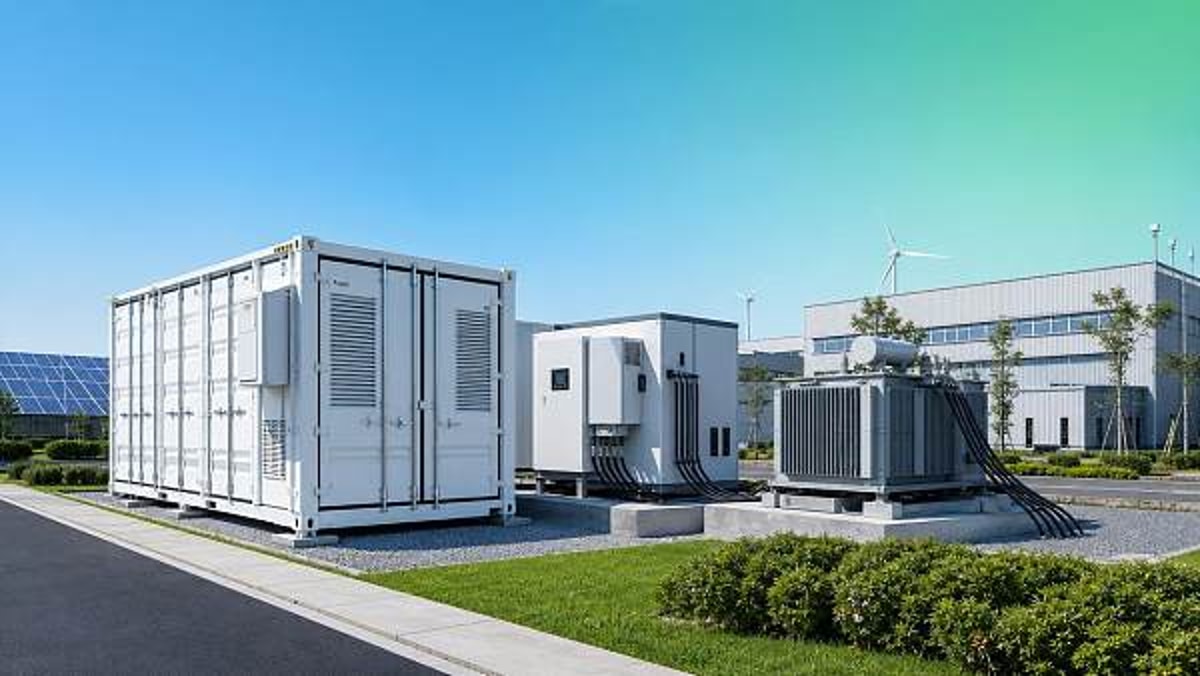
Mistake 3: Sizing for average conditions instead of operational extremes
Average load data is convenient, but storage projects are often justified by exceptional conditions: demand spikes, intermittent solar production, outage windows, or rapid load ramps. If sizing is based mainly on monthly averages, the energy storage battery may miss the moments that actually determine ROI. For a manufacturing site, a few high-penalty peaks each month may matter more than average consumption. For a microgrid, the critical issue may be the worst hour during a grid outage, not the typical daytime profile.
Project teams should examine interval data at a resolution relevant to the application, often 15-minute, 5-minute, or even sub-minute depending on the service. Scenario testing should include hot weather, low renewable output, partial equipment availability, and unexpected operational changes. This is where sizing transitions from a vendor assumption to a project-level engineering discipline.
Mistake 4: Ignoring the cost of balance-of-system impacts
An oversized battery does not simply add battery cost. It may trigger a larger inverter, more switchgear, greater thermal management demand, expanded fire suppression, larger pads or buildings, and more complex interconnection design. In some cases, land use and permitting constraints make these additions disproportionately expensive. This is why the true cost of an energy storage battery decision should always be examined at system level.
Experienced teams compare several integrated design options rather than increasing battery capacity in isolation. Sometimes a better control strategy, a hybrid arrangement with solar, or improved load scheduling can reduce required battery size while preserving commercial outcomes. The lowest module cost per kWh is not always the lowest project cost per delivered service.
Where sizing priorities differ by application
These differences explain why no single energy storage battery sizing rule works across all projects. What is right for a campus resilience design may be wrong for a renewable firming project. Clear use-case definition should come before equipment optimization.
A more reliable sizing workflow for project teams
A disciplined sizing process usually starts with operational objectives ranked by financial importance. Teams should define whether the project is meant to reduce peak charges, maintain uptime, absorb renewable variability, defer infrastructure upgrades, or support multiple stacked value streams. Once priorities are clear, the design can be tested against interval load data, site constraints, ambient conditions, warranty assumptions, and future growth scenarios.
Next, model the energy storage battery at the system boundary rather than the cell level alone. Include AC losses, auxiliary loads, inverter clipping, state-of-charge limits, and end-of-life performance. Then evaluate sensitivity cases. What happens if the facility expands by 15%? What if summer temperatures rise above expected levels? What if the dispatch frequency doubles? This type of structured analysis is especially valuable for procurement directors and project sponsors who need to compare design options on a normalized basis.
What decision-makers should ask before approving the design
Before final approval, project leaders should ask a focused set of questions. Is the specified energy storage battery sized for beginning-of-life or guaranteed end-of-life performance? Are load and generation inputs based on real interval data or generalized assumptions? Which operating scenarios produce the highest stress? How are HVAC loads, parasitic consumption, and round-trip losses reflected in the model? What augmentation strategy exists if the asset underperforms? Have EPC, O&M, and interconnection impacts been fully included?
These questions reduce the chance of treating battery sizing as a procurement line item rather than a strategic engineering decision. For organizations operating in fast-changing sectors such as green energy, smart electronics, and advanced manufacturing, this rigor supports more resilient capital planning and a more defensible ROI case.
Final perspective and next-step action
The most expensive energy storage battery mistake is rarely a dramatic technical failure. More often, it is a series of small sizing assumptions that collectively distort project cost, performance, and lifecycle value. Right-sizing requires more than selecting a capacity target. It requires understanding the duty cycle, system architecture, degradation path, and business objective in one integrated framework.
For project managers and engineering leads, the practical takeaway is clear: validate sizing with application-specific data, evaluate system-wide cost effects, and test performance at end of life as seriously as at commissioning. Organizations that apply this discipline are better positioned to control capex, protect asset reliability, and deliver storage projects that perform as promised. For teams seeking deeper market and technical insight, a specialized intelligence platform such as TradeNexus Pro can help benchmark assumptions, track sector-specific design trends, and support higher-confidence decision-making before specifications are finalized.
Get weekly intelligence in your inbox.
No noise. No sponsored content. Pure intelligence.
 May 06, 2026Hydraulic Cylinder Fabrication Errors That Shorten Service LifeHydraulic Cylinder Fabrication Errors That Shorten Service Life
 May 06, 2026Surface Finishing Services That Reduce Warranty ComplaintsSurface Finishing Services That Reduce Warranty Complaints
 May 06, 2026Waterjet Cutting Is Better Than Laser for These MaterialsWaterjet Cutting Is Better Than Laser for These Materials
 May 06, 2026Custom Molded Rubber Choices That Affect Seal PerformanceCustom Molded Rubber Choices That Affect Seal Performance
 May 06, 2026Linear Motion Systems Fail Faster When Alignment Is OverlookedLinear Motion Systems Fail Faster When Alignment Is Overlooked
 May 06, 2026How Accurate Is Energy Forecasting When Weather Turns Volatile?How Accurate Is Energy Forecasting When Weather Turns Volatile?
 May 06, 2026Medical Device Manufacturing Delays Often Start in ValidationMedical Device Manufacturing Delays Often Start in Validation
 May 06, 2026Anodizing Services: Which Finish Holds Up Outdoors LongerAnodizing Services: Which Finish Holds Up Outdoors Longer
 May 06, 2026Solar Tracker Maintenance Issues That Hurt Long-Term OutputSolar Tracker Maintenance Issues That Hurt Long-Term Output
 May 06, 2026What Changes the Real Cost of Pneumatic Valves WholesaleWhat Changes the Real Cost of Pneumatic Valves Wholesale
 May 06, 2026Solar Microinverters vs String Inverters for Shaded RoofsSolar Microinverters vs String Inverters for Shaded Roofs
 May 06, 2026Bifacial Solar Panels: Do They Pay Off on Every Site?Bifacial Solar Panels: Do They Pay Off on Every Site?
 May 06, 2026Why Heavy Equipment Manufacturing Lead Times Keep SlippingWhy Heavy Equipment Manufacturing Lead Times Keep Slipping
 May 06, 2026Metal Stamping Parts: When Tooling Cost Stops Making SenseMetal Stamping Parts: When Tooling Cost Stops Making Sense
 May 06, 2026Energy Storage Battery Sizing Mistakes That Raise Project CostsEnergy Storage Battery Sizing Mistakes That Raise Project Costs
 May 06, 2026What Causes Revenue Gaps in a Solar Farm ProjectWhat Causes Revenue Gaps in a Solar Farm Project
 May 06, 2026Low Volume Manufacturing Works Best When Demand Is UnclearLow Volume Manufacturing Works Best When Demand Is Unclear
 May 06, 2026Automotive Parts Machining Costs That Grow With Late Design ChangesAutomotive Parts Machining Costs That Grow With Late Design Changes
 May 06, 2026AS9100 Aerospace Machining: What Fails an Audit Most OftenAS9100 Aerospace Machining: What Fails an Audit Most Often
 May 06, 2026Plastic Extrusion Tolerances That Affect Final Product FitPlastic Extrusion Tolerances That Affect Final Product Fit
 May 06, 2026Is Renewable Power Getting Easier to Finance for Industry?Is Renewable Power Getting Easier to Finance for Industry?
 May 06, 2026Ultrasonic Welding Defects That Are Easy to Miss at FirstUltrasonic Welding Defects That Are Easy to Miss at First
 May 06, 2026How to Compare Industrial Bearing Suppliers by Failure RiskHow to Compare Industrial Bearing Suppliers by Failure Risk
 May 06, 2026Custom Heatsinks: When a Standard Profile Stops WorkingCustom Heatsinks: When a Standard Profile Stops Working
 May 06, 2026Gear Manufacturing Problems That Show Up After AssemblyGear Manufacturing Problems That Show Up After Assembly
 May 06, 2026Why Thin Film Solar Cells Still Matter in 2026Why Thin Film Solar Cells Still Matter in 2026
 May 06, 2026Wire EDM Services or CNC Milling for Tight Tolerance Parts?Wire EDM Services or CNC Milling for Tight Tolerance Parts?