Bluetooth speakers: why battery life claims often miss real use
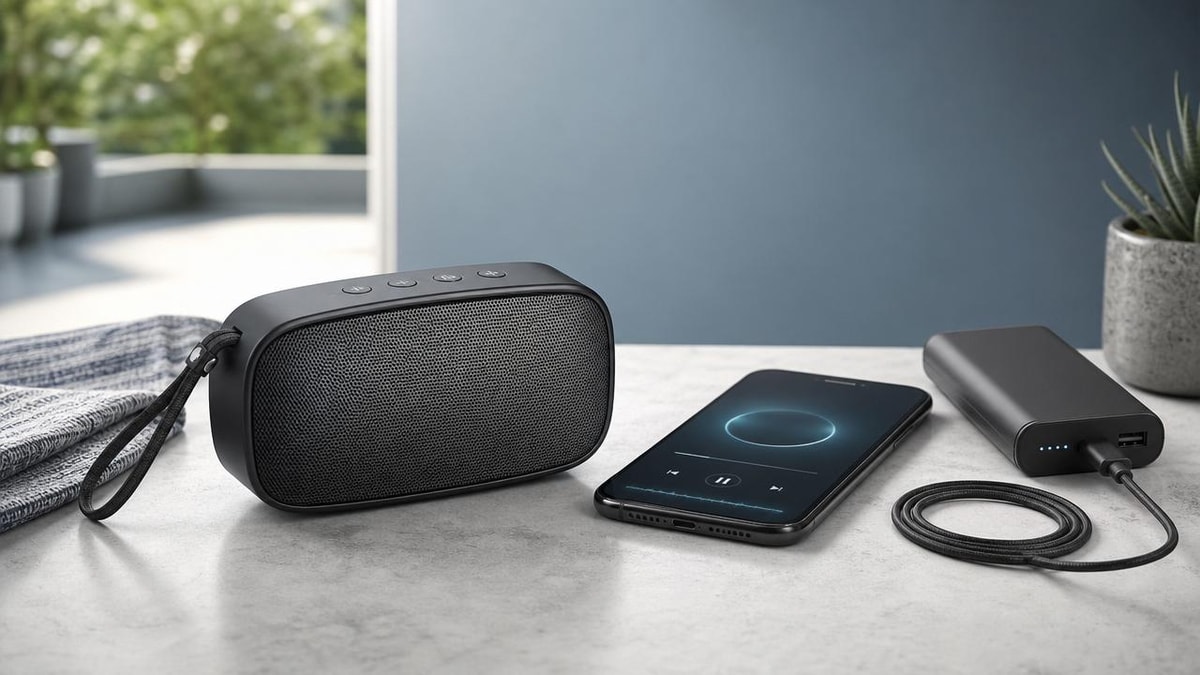
Many bluetooth speakers promise all-day playback, yet real-world use often tells a different story. Volume levels, bass output, Bluetooth version, battery age, and charging habits can dramatically change how long a speaker actually lasts. Before you trust the number on the box, it helps to understand why advertised battery life and everyday performance are often far apart.
A checklist approach is the fastest way to judge battery expectations realistically. Most buyers do not need a lab-style explanation first; they need to know what to check, what to compare, and what warning signs to notice before buying or while using bluetooth speakers. If you review the right factors in the right order, it becomes much easier to tell whether a claimed 20-hour speaker will actually survive your commute, patio session, beach trip, or workday playlist.
Start with the first question: what does the battery claim actually mean?
Battery life numbers on bluetooth speakers are usually based on controlled test conditions. That often means moderate volume, limited bass boost, a stable wireless connection, and sometimes no extra features such as voice assistant wake listening, lighting effects, or speakerphone use. In other words, the number on the packaging is not always false, but it may describe a narrow test scenario rather than your real use.
Before comparing models, prioritize these checks:
- Was the quoted battery life measured at 50% volume or lower?
- Was EQ set to flat rather than bass-heavy?
- Were extra functions such as RGB lighting, pairing mode, or microphone use turned off?
- Is the battery estimate based on newer Bluetooth efficiency standards?
- Does the brand specify a range, or only advertise the best possible number?
If a manufacturer gives only one bold headline number without context, treat it as an upper-limit estimate, not a guaranteed daily result.
Core checklist: the biggest factors that reduce real battery life
1. Volume level matters more than most buyers expect
This is usually the biggest gap between marketing claims and lived experience. Many bluetooth speakers can hit their advertised runtime at medium loudness, but battery draw rises sharply as you push the speaker harder. If you often listen outdoors, in a kitchen with lots of background noise, or at parties, your actual result may be far shorter than the box suggests.
As a practical rule, moving from moderate listening to high-volume playback can cut battery life by several hours. Buyers shopping for portable use should always ask themselves whether they listen quietly indoors or loudly in open spaces. That single habit changes battery expectations more than many spec sheet details.
2. Bass tuning and driver load drain power quickly
Deep bass is expensive in energy terms. Bluetooth speakers with stronger low-end tuning, larger passive radiators, or user-selected bass boost modes may sound fuller, but they often use more power to do it. A compact speaker that sounds surprisingly big may pay for that performance with shorter playback time, especially at higher volume.
This is why two bluetooth speakers with similar battery sizes can perform very differently. One may be optimized for balanced listening, while another is tuned to impress during short demos. The second option may seem better in-store but less efficient over a full day.
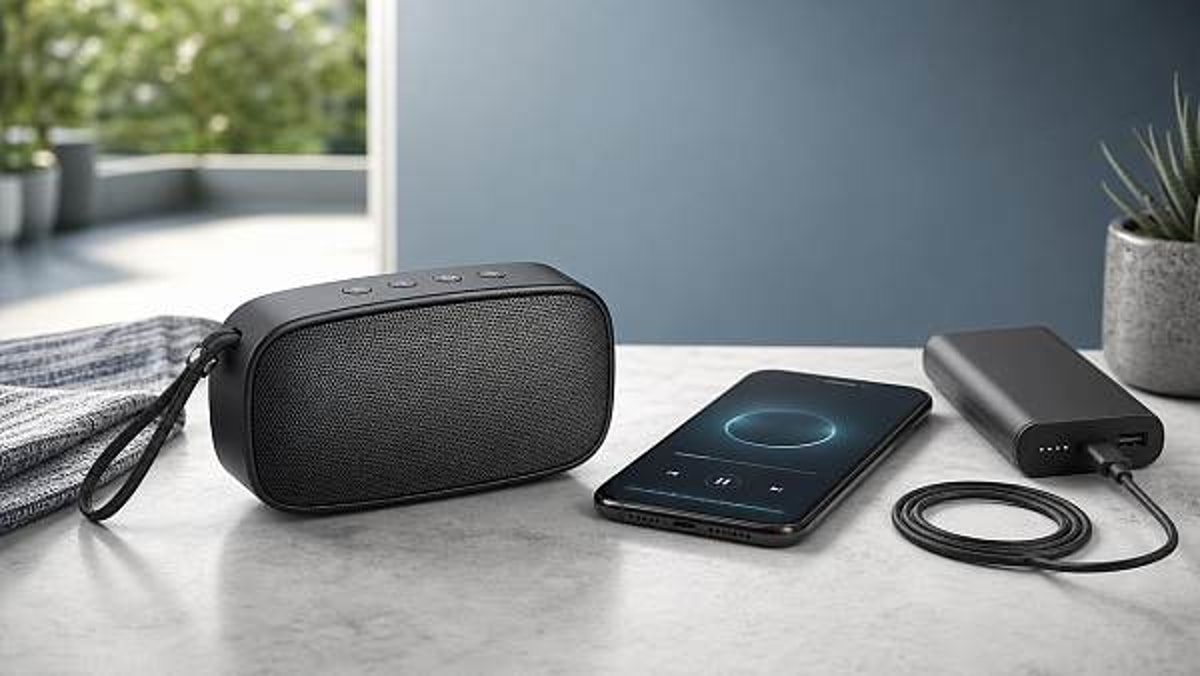
3. Bluetooth version and connection stability affect efficiency
Wireless efficiency is not just about sound quality. Newer Bluetooth versions generally handle data transfer more efficiently, especially when paired with newer phones. If the connection keeps dropping, reconnecting, or struggling through walls and interference, the speaker and source device both work harder, which can increase power use.
In real homes, this shows up when you leave your phone in another room, stream in crowded apartment buildings, or use multiple wireless gadgets nearby. A speaker tested in ideal conditions may not reproduce that efficiency in your environment.
4. Battery age changes the picture over time
Even excellent bluetooth speakers lose battery capacity as they age. After repeated charging cycles, the battery stores less energy than when new. This does not mean the product is defective; it is normal battery chemistry. The challenge is that many users remember the original runtime and assume a drop later is unusual, when in fact it is expected.
If a speaker is more than one or two years old and used frequently, lower runtime may reflect natural wear. For refurbished, older, or heavily discounted models, battery condition should be treated as a major buying factor.
5. Charging habits influence long-term endurance
The way you charge bluetooth speakers affects how well the battery holds up. Constantly draining to zero, leaving the speaker in very hot places, or using unreliable chargers can speed up battery wear. Frequent topping up is generally less harmful than repeated deep discharge, but heat remains one of the biggest hidden battery killers.
If you use your speaker in cars, near windows, outdoors in direct sun, or while charging from unstable power banks, battery decline may arrive earlier than expected.
Quick comparison guide: what to examine before buying bluetooth speakers
Use this decision table as a fast screening tool when product pages feel too vague.
Scenario-based checks: the right battery standard depends on how you listen
For home listening
If you mainly use bluetooth speakers at home, advertised battery life matters less than charging convenience and standby behavior. A speaker that lasts 12 real hours but charges quickly via USB-C may be more useful than one that claims 20 hours yet takes a long time to refill. Also check whether it can play while charging, especially for desk, kitchen, or bedroom use.
For outdoor trips and travel
Outdoor use is where battery claims are most likely to disappoint. Wind, open air, and environmental noise push listeners toward higher volume. Water resistance, rugged construction, and loud output are valuable, but they also often come with heavier power draw. If you want a weekend travel speaker, prioritize realistic endurance at louder settings, not just the highest claimed number.
For parties and social gatherings
Party users should expect lower battery life than almost any marketing estimate. Stereo pairing, stronger bass, and near-maximum volume all increase consumption. If social use is your main goal, a power bank-compatible model or a speaker with replaceable battery support may be smarter than chasing a single headline runtime figure.
For casual daily carry
For commuters and light users, compact bluetooth speakers can still meet daily needs even if the official claim is optimistic. The more important questions are how often you need to recharge, whether the speaker enters sleep mode efficiently, and how much battery is lost when idle in a bag.
Commonly ignored issues that distort battery expectations
- Cold weather and hot weather both reduce battery efficiency, especially during outdoor use.
- Streaming high-complexity audio for long periods may use more energy than local playback.
- Older phones or poorly optimized apps can create unstable wireless behavior that shortens speaker endurance.
- Battery percentage indicators are often approximate, not precision tools.
- Some bluetooth speakers reserve power near the end to protect battery health, so the last percentage may fall quickly.
- Firmware updates can improve or worsen efficiency depending on feature changes.
These details are easy to overlook because they are not always front and center in product marketing, yet they often explain the mismatch between expectation and actual use.
Practical steps to get better battery life from bluetooth speakers
- Keep volume lower when possible, especially indoors where reflective surfaces already amplify sound.
- Use balanced EQ instead of permanent bass boost.
- Disable lights, voice features, and unused pairing functions.
- Stay within a stable Bluetooth range and reduce interference.
- Avoid leaving the speaker fully discharged for long periods.
- Charge with reliable cables and adapters, preferably those recommended by the brand.
- Store the speaker away from excessive heat or freezing conditions.
None of these steps are complicated, but together they can noticeably improve how long bluetooth speakers last per session and over the life of the product.
FAQ: fast answers buyers often need
Do more expensive bluetooth speakers always have better battery life?
No. Premium models may offer better sound, stronger bass, and more features, but these can increase energy use. Price does not guarantee longer endurance.
Is a bigger speaker always better for battery runtime?
Not always. A larger unit may contain a bigger battery, but it may also power larger drivers and louder output. Efficiency matters as much as size.
Can software updates improve battery life?
Sometimes. Updates may optimize power management, but they can also add features that consume more energy. Check user feedback after major updates.
Final buying and evaluation checklist
Before choosing among bluetooth speakers, confirm five things in order: your typical volume level, your main listening environment, the importance of bass-heavy sound, whether extra features stay on often, and how long you realistically need playback between charges. Once those basics are clear, product claims become much easier to interpret.
For shoppers comparing options, it is smart to ask for more than the headline battery figure. Look for test conditions, real-user feedback, charging time, battery behavior at higher volume, and long-term durability comments. If you need to go further before making a final decision, prioritize questions around runtime at your usual loudness, compatibility with your devices, recharge cycle expectations, warranty support, replacement policy, and total value versus your budget. That approach gives you a far more reliable picture than trusting the box alone.
Get weekly intelligence in your inbox.
No noise. No sponsored content. Pure intelligence.
 May 04, 2026FDA AI Diagnostic Software Guidance: Continuous Validation for Overseas FirmsFDA AI Diagnostic Software Guidance: Continuous Validation for Overseas Firms
 May 04, 2026MIIT Launches Export Compliance Support for Warehouse RoboticsMIIT Launches Export Compliance Support for Warehouse Robotics
 May 04, 2026India BIS Mandates ISI Certification for Smart Home Devices from July 2026India BIS Mandates ISI Certification for Smart Home Devices from July 2026
 May 04, 2026Global Shipping Alliance Raises Heavy-Lift Surcharges from May 2026Global Shipping Alliance Raises Heavy-Lift Surcharges from May 2026
 May 04, 2026GCC EV Charging Certification Unified: 35% Cost Cut for Chinese ExportersGCC EV Charging Certification Unified: 35% Cost Cut for Chinese Exporters
 May 04, 2026TÜV Rheinland Updates IoT Security Standard with AI Voice Data AnonymizationTÜV Rheinland Updates IoT Security Standard with AI Voice Data Anonymization
 May 04, 2026Yangshan Port Launches Green Energy Equipment Express LaneYangshan Port Launches Green Energy Equipment Express Lane
 May 04, 2026Vietnam Enforces Local IoT Certification for Smart Home Devices from May 2026Vietnam Enforces Local IoT Certification for Smart Home Devices from May 2026
 May 04, 2026US CBP Launches Battery Cargo Inspection: ESS Export Delays to 7–12 DaysUS CBP Launches Battery Cargo Inspection: ESS Export Delays to 7–12 Days
 May 04, 2026EU SVHC Update Effective May 1, 2026: Impact on Electronic Components ExportsEU SVHC Update Effective May 1, 2026: Impact on Electronic Components Exports
 May 04, 2026Portable power stations: what matters more than wattage on paperPortable power stations: what matters more than wattage on paper
 May 04, 2026Automotive injection molding machines and the scrap rate problemAutomotive injection molding machines and the scrap rate problem
 May 04, 2026Smart thermostats save energy only when setup is done rightSmart thermostats save energy only when setup is done right
 May 04, 2026Why TWS earbuds sound great in ads but not on callsWhy TWS earbuds sound great in ads but not on calls
 May 04, 2026Industrial robotics for material handling: where downtime startsIndustrial robotics for material handling: where downtime starts
 May 04, 2026LiFePO4 battery lifespan drops faster under these conditionsLiFePO4 battery lifespan drops faster under these conditions
 May 04, 2026Solar grid systems: when storage changes the project mathSolar grid systems: when storage changes the project math
 May 04, 2026Smart manufacturing for pharma fails when data stays isolatedSmart manufacturing for pharma fails when data stays isolated
 May 04, 2026Wearable technology trends that are finally useful in 2026Wearable technology trends that are finally useful in 2026
 May 04, 2026Bluetooth speakers: why battery life claims often miss real useBluetooth speakers: why battery life claims often miss real use
 May 04, 2026Home automation systems that solve everyday annoyances firstHome automation systems that solve everyday annoyances first
 May 04, 2026Solar street lights that underperform after the first rainy seasonSolar street lights that underperform after the first rainy season
 May 04, 2026Why sheet metal bending services in Canada cost more than expectedWhy sheet metal bending services in Canada cost more than expected
 May 04, 2026Factory automation systems for electronics and the ROI gapFactory automation systems for electronics and the ROI gap
 May 04, 2026OEM machined parts supplier Vietnam: quality checks that matterOEM machined parts supplier Vietnam: quality checks that matter
 May 04, 2026What to check before choosing a 5 axis machine for defenseWhat to check before choosing a 5 axis machine for defense
 May 04, 2026Smart grid solutions that fix peak load without major rebuildsSmart grid solutions that fix peak load without major rebuilds