Smart thermostats save energy only when setup is done right
Smart thermostats can cut energy waste, but only when setup matches the building, schedule, and user habits. For operators and everyday users, small mistakes in calibration, zoning, or automation can erase the expected savings. This article explains why smart thermostats deliver better results when configured correctly and how practical setup choices turn smart control into measurable efficiency.
Why do smart thermostats save energy in some buildings but disappoint in others?
The short answer is that smart thermostats do not save energy by magic. They save energy by controlling heating and cooling more precisely than a manual thermostat, but that precision depends on correct installation, accurate sensing, sensible schedules, and realistic automation rules. If any of those pieces are wrong, the device may still look advanced while quietly running the HVAC system inefficiently.
Many users expect smart thermostats to reduce utility bills immediately after installation. In practice, savings usually come from a mix of occupancy setbacks, better temperature consistency, lower unnecessary runtime, and improved visibility into usage patterns. A thermostat that learns behavior, adjusts by time of day, or integrates with sensors can help, but only if the building and the people using it support those functions.
For example, a smart thermostat in a small apartment with regular daily routines may perform very well with simple scheduling. The same product in a mixed-use building, a home with multiple occupants, or a workspace with changing occupancy can perform poorly if users rely on default settings. In those environments, incorrect zoning assumptions, sensor placement, or overaggressive automation often create comfort complaints that lead people to override the settings. Once frequent manual overrides begin, expected energy savings usually shrink fast.
This is why experienced operators treat smart thermostats as a control tool rather than a plug-and-play guarantee. The device matters, but the setup matters more.
What setup mistakes most often erase the expected savings from smart thermostats?
Several common mistakes repeatedly appear across homes, offices, retail sites, and light commercial spaces. Most of them are small on their own, but together they can cancel out the advantages of smart thermostats.
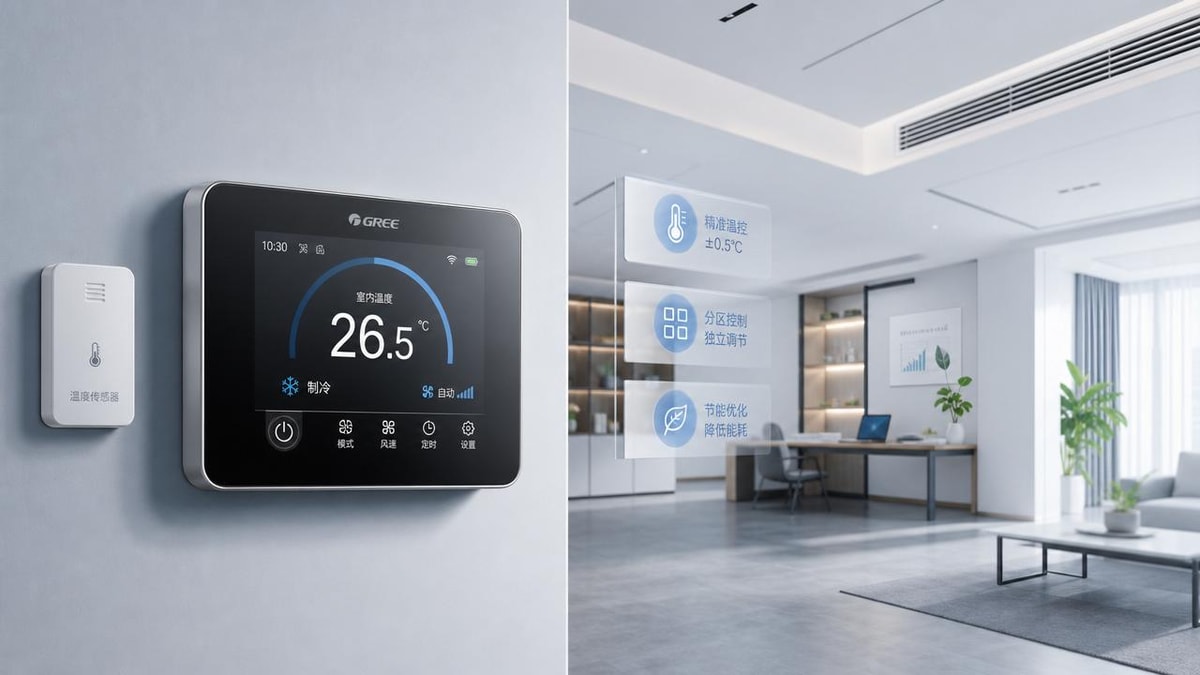
The first mistake is poor thermostat location. If the device is installed near sunlight, supply vents, exterior doors, kitchens, or heat-producing equipment, the temperature reading will not represent the occupied area accurately. The system may then heat or cool too much, increasing runtime without improving comfort.
The second mistake is using a generic schedule that does not fit real occupancy. A schedule should reflect when people are actually present, asleep, working, or away. If users set aggressive setbacks but return unpredictably, they often trigger manual recovery periods that consume more energy than a realistic schedule would.
The third mistake is ignoring HVAC system type. Heat pumps, multi-stage systems, radiant heating, and conventional forced-air systems do not all respond the same way. Smart thermostats need proper configuration for staging, cycle rate, auxiliary heat logic, and temperature recovery. If these settings are mismatched, the system may call expensive backup heat too often or cycle equipment in a way that reduces efficiency.
A fourth issue is overcomplicated automation. Geofencing, occupancy sensors, weather response, and voice control can be valuable, but layering too many automations at once often creates conflicting commands. One rule says “away,” another says “comfort,” and the result is unstable control. Good setup is usually simpler than people expect.
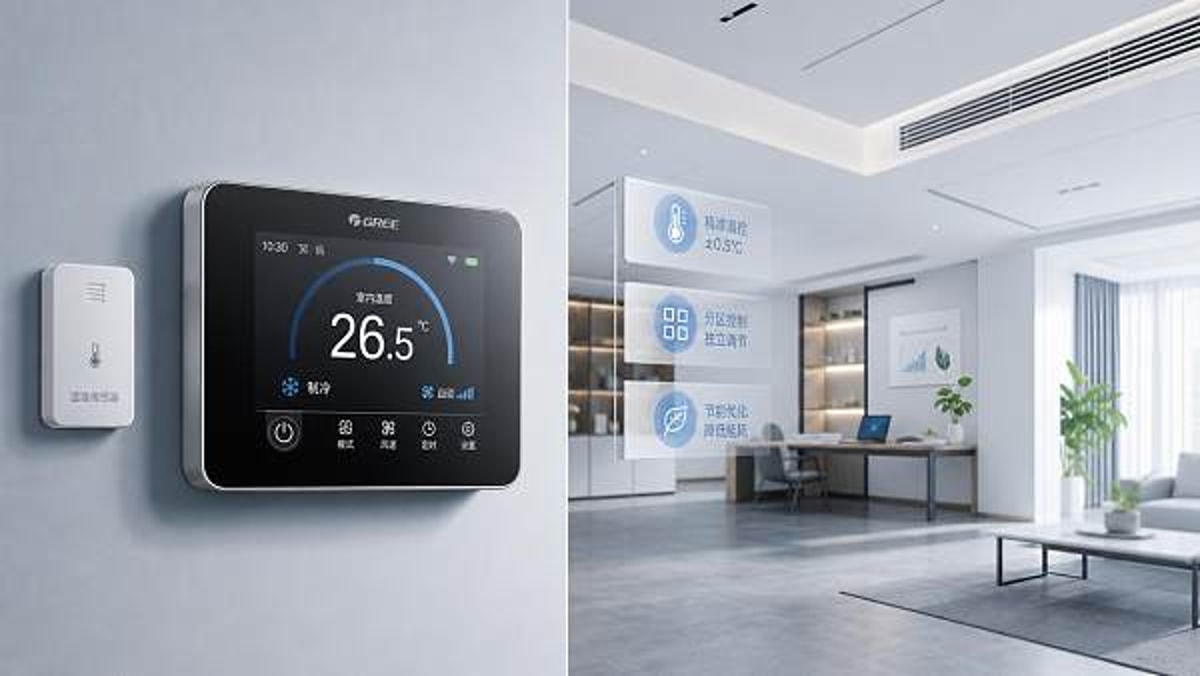
Finally, many users forget to review performance after installation. Smart thermostats generate data, but the data must be checked. If daily runtime spikes, if temperature recovery takes too long, or if comfort complaints increase, the settings need adjustment. Smart control works best as a tuning process, not a one-time event.
How should users and operators set up smart thermostats for real efficiency?
A practical setup starts with the building, not with the app. Before changing settings, users should understand insulation quality, room usage, sun exposure, equipment age, and whether some areas heat or cool faster than others. Smart thermostats cannot fully compensate for duct leakage, poor balancing, or oversized equipment, but they can be configured to reduce waste within those constraints.
The next step is to build a schedule around stable patterns. Instead of chasing every minor occupancy change, set broad operating periods that reflect normal life or business activity. For many users, the most effective schedules are predictable and conservative: occupied, unoccupied, sleep, and recovery. Extreme temperature setbacks may look efficient on paper but can increase consumption if recovery demands heavy HVAC output.
Sensor settings also deserve attention. If remote sensors are available, place them in the rooms that matter most during occupied periods. For example, a living room sensor may be more useful during evenings, while a bedroom sensor matters more overnight. Operators should verify whether the thermostat averages sensors, prioritizes one room, or switches by time block. These details affect comfort and energy use directly.
Users should also configure deadband and staging behavior appropriately where supported. A system that reacts too quickly to small temperature changes may short cycle. One that waits too long may overcorrect. The right balance depends on equipment type and the thermal behavior of the building. In other words, the most efficient smart thermostats are often the ones tuned patiently rather than programmed aggressively.
Routine review is essential. After one or two weeks, compare comfort, runtime, and energy bills if available. Then ask practical questions: Are there too many manual overrides? Does the system run during empty periods? Is one room always uncomfortable? Those observations are often more useful than any default “eco” mode.
Which settings and conditions should be checked before trusting the energy-saving claims?
Before assuming that smart thermostats will reduce costs, users should review a few key conditions. The table below summarizes the most common checkpoints and why they matter.
This checklist matters because the advertised benefits of smart thermostats often assume correct installation, stable occupancy patterns, and systems that are already functioning reasonably well. If those assumptions are missing, users should fix the basics before expecting major savings.
Are smart thermostats equally effective in homes, offices, and mixed-use spaces?
No, and that is one reason the setup question is so important. Smart thermostats can perform well in all three settings, but the path to savings looks different in each one.
In homes, savings often come from predictable sleep schedules, daytime setbacks, and remote adjustments during travel or changing routines. Occupancy-based automation can help, but only when household members move in consistent patterns. Large families, shift workers, or frequent guests make learning algorithms less reliable unless users actively refine them.
In offices, smart thermostats can reduce waste by aligning HVAC operation with business hours, meeting room usage, and weekend shutdowns. However, offices may have stronger internal heat gains from people, lighting, and equipment. That means sensor placement and zoning strategy become more important. A thermostat near a reception area may not reflect conference rooms, private offices, or sunlit perimeter spaces.
Mixed-use spaces are more challenging. Retail below and residential above, or office plus storage in one site, often involve different comfort expectations and occupancy windows. One thermostat strategy rarely fits every zone. In these cases, smart thermostats deliver value only when each area has control logic suited to its actual use. Trying to force a single schedule across unlike spaces usually undermines both comfort and efficiency.
For operators in any sector, the practical lesson is simple: evaluate the pattern of use first, then decide how much automation the space can support. The more complex the occupancy pattern, the more important proper setup becomes.
What are the biggest myths users believe about smart thermostats?
One common myth is that the smartest model always saves the most energy. In reality, a simpler thermostat configured properly often outperforms an advanced one left on default settings. Feature count does not equal efficiency.
Another myth is that lower setpoints in winter or higher setbacks in summer always create bigger savings. Extreme setbacks can backfire, especially with heat pumps or buildings that recover slowly. Efficiency depends on equipment behavior and building response, not just on dramatic temperature swings.
A third myth is that user intervention is a sign of failure. In fact, occasional adjustment is normal. The real problem is repeated override patterns that signal the schedule or automation rules do not fit reality. Smart thermostats should reduce manual intervention over time, but that only happens when users learn from the overrides and tune the system accordingly.
There is also a belief that energy savings can be judged after only a few days. Weather variation, occupancy changes, and seasonal transitions can distort the early picture. Meaningful evaluation usually requires trend review over time, along with attention to comfort outcomes. A lower bill is helpful, but not if the building becomes unusable or occupants constantly fight the controls.
If users want better results from smart thermostats, what should they discuss before implementation or adjustment?
Whether the goal is a first installation, a retrofit, or improving a disappointing setup, users should begin with a focused conversation around operational facts. First, confirm the HVAC system type, age, compatibility, and any known comfort issues. Second, define the actual occupancy pattern rather than the ideal one. Third, identify the rooms or zones that matter most during key hours. Fourth, decide which automation features are useful enough to keep and which ones may create confusion.
It is also wise to ask how performance will be reviewed. Will someone compare runtime data? Will comfort feedback be collected? Will sensor placement be tested and adjusted? These questions turn smart thermostats from a consumer gadget into an operational control strategy.
For procurement teams, site operators, and everyday users alike, the main takeaway is clear: smart thermostats save energy only when setup reflects the real building, the real schedule, and the real people using the space. If you need to confirm a specific solution, parameter range, implementation path, timeline, or supplier fit, start by discussing compatibility, zoning logic, occupancy behavior, sensor placement, and post-installation tuning. Those are the questions that lead to measurable efficiency instead of assumed savings.
Get weekly intelligence in your inbox.
No noise. No sponsored content. Pure intelligence.
 May 04, 2026FDA AI Diagnostic Software Guidance: Continuous Validation for Overseas FirmsFDA AI Diagnostic Software Guidance: Continuous Validation for Overseas Firms
 May 04, 2026MIIT Launches Export Compliance Support for Warehouse RoboticsMIIT Launches Export Compliance Support for Warehouse Robotics
 May 04, 2026India BIS Mandates ISI Certification for Smart Home Devices from July 2026India BIS Mandates ISI Certification for Smart Home Devices from July 2026
 May 04, 2026Global Shipping Alliance Raises Heavy-Lift Surcharges from May 2026Global Shipping Alliance Raises Heavy-Lift Surcharges from May 2026
 May 04, 2026GCC EV Charging Certification Unified: 35% Cost Cut for Chinese ExportersGCC EV Charging Certification Unified: 35% Cost Cut for Chinese Exporters
 May 04, 2026TÜV Rheinland Updates IoT Security Standard with AI Voice Data AnonymizationTÜV Rheinland Updates IoT Security Standard with AI Voice Data Anonymization
 May 04, 2026Yangshan Port Launches Green Energy Equipment Express LaneYangshan Port Launches Green Energy Equipment Express Lane
 May 04, 2026Vietnam Enforces Local IoT Certification for Smart Home Devices from May 2026Vietnam Enforces Local IoT Certification for Smart Home Devices from May 2026
 May 04, 2026US CBP Launches Battery Cargo Inspection: ESS Export Delays to 7–12 DaysUS CBP Launches Battery Cargo Inspection: ESS Export Delays to 7–12 Days
 May 04, 2026EU SVHC Update Effective May 1, 2026: Impact on Electronic Components ExportsEU SVHC Update Effective May 1, 2026: Impact on Electronic Components Exports
 May 04, 2026Portable power stations: what matters more than wattage on paperPortable power stations: what matters more than wattage on paper
 May 04, 2026Automotive injection molding machines and the scrap rate problemAutomotive injection molding machines and the scrap rate problem
 May 04, 2026Smart thermostats save energy only when setup is done rightSmart thermostats save energy only when setup is done right
 May 04, 2026Why TWS earbuds sound great in ads but not on callsWhy TWS earbuds sound great in ads but not on calls
 May 04, 2026Industrial robotics for material handling: where downtime startsIndustrial robotics for material handling: where downtime starts
 May 04, 2026LiFePO4 battery lifespan drops faster under these conditionsLiFePO4 battery lifespan drops faster under these conditions
 May 04, 2026Solar grid systems: when storage changes the project mathSolar grid systems: when storage changes the project math
 May 04, 2026Smart manufacturing for pharma fails when data stays isolatedSmart manufacturing for pharma fails when data stays isolated
 May 04, 2026Wearable technology trends that are finally useful in 2026Wearable technology trends that are finally useful in 2026
 May 04, 2026Bluetooth speakers: why battery life claims often miss real useBluetooth speakers: why battery life claims often miss real use
 May 04, 2026Home automation systems that solve everyday annoyances firstHome automation systems that solve everyday annoyances first
 May 04, 2026Solar street lights that underperform after the first rainy seasonSolar street lights that underperform after the first rainy season
 May 04, 2026Why sheet metal bending services in Canada cost more than expectedWhy sheet metal bending services in Canada cost more than expected
 May 04, 2026Factory automation systems for electronics and the ROI gapFactory automation systems for electronics and the ROI gap
 May 04, 2026OEM machined parts supplier Vietnam: quality checks that matterOEM machined parts supplier Vietnam: quality checks that matter
 May 04, 2026What to check before choosing a 5 axis machine for defenseWhat to check before choosing a 5 axis machine for defense
 May 04, 2026Smart grid solutions that fix peak load without major rebuildsSmart grid solutions that fix peak load without major rebuilds