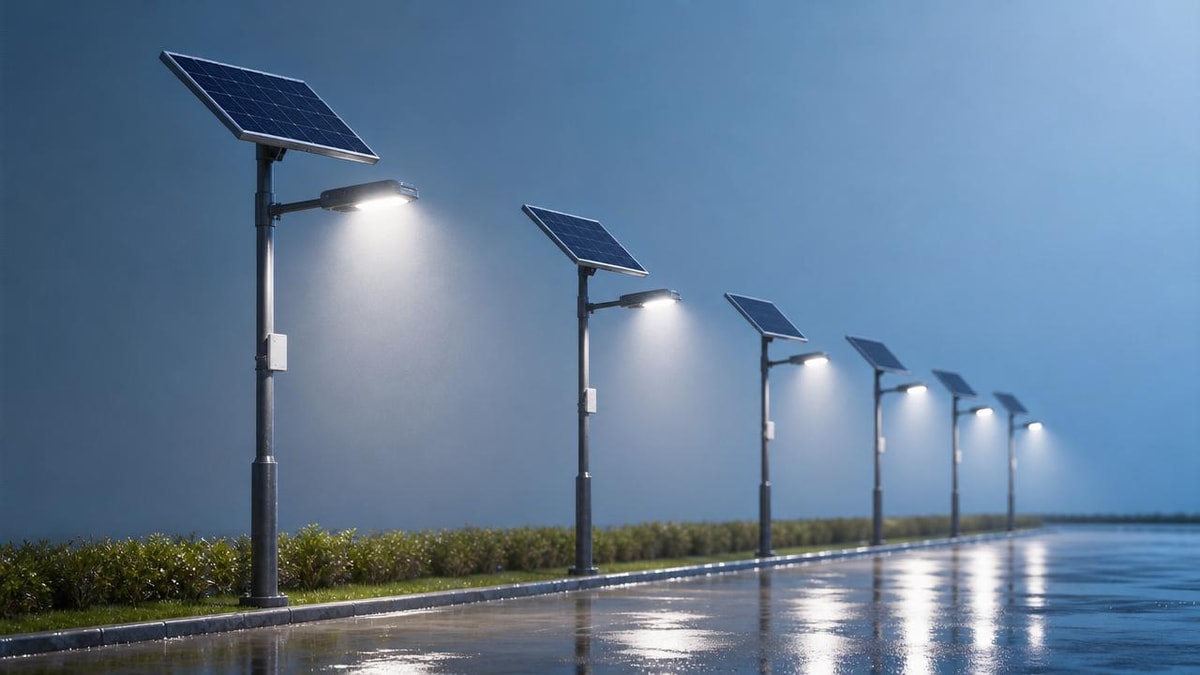
Solar street lights that underperform after the first rainy season
When solar street lights begin to dim, flicker, or fail after the first rainy season, after-sales maintenance teams face more than routine repairs—they face questions about component quality, drainage design, battery protection, and installation standards. This article examines the most common causes behind early performance loss and offers practical insights to help maintenance professionals diagnose issues faster and improve long-term system reliability.
Why do solar street lights often show problems after the first rainy season?
For many maintenance teams, the first rainy season acts like a real-world stress test. Solar street lights may perform well during dry months, yet hidden weaknesses become visible once panels face lower irradiance, batteries cycle more deeply, and moisture reaches seals, cable entries, or battery compartments. Rain does not usually create a single failure by itself; instead, it exposes design margins that were too narrow from the start.
The most common pattern is reduced charging combined with increased nightly demand. Consecutive cloudy or rainy days lower solar input, while the controller still attempts to maintain illumination hours. If the system was undersized, the battery state of charge falls below safe levels repeatedly. Over time, this can trigger dimming, shortened runtime, or complete shutdown. In parallel, poor waterproofing, bad drainage, and corrosion-prone connections accelerate electrical faults.
After-sales maintenance personnel should therefore treat early underperformance as a systems issue, not only a battery issue. In most cases, weak autonomy design, inferior lithium or gel batteries, poor ingress protection, incorrect tilt angle, and installation shortcuts all contribute to the same complaint: the solar street lights worked at first, but not after the rains arrived.
What are the first signs that underperforming solar street lights need structured diagnosis rather than basic repair?
A structured diagnosis is necessary when symptoms repeat across several poles or the same unit fails again shortly after service. Maintenance teams should pay special attention to five warning signs: dim light before dawn, flickering during startup, controller cut-off after multiple cloudy days, inconsistent lighting among adjacent units, and visible moisture or corrosion inside enclosures. These symptoms usually point to system imbalance rather than isolated lamp failure.
Another important sign is customer feedback that the lights “worked perfectly before the rainy season.” That phrase often indicates that panel capacity and battery reserve were adequate only under favorable weather. Once charging conditions worsened, the design reserve disappeared. In practical field service, this means replacing one part without checking the charging path, battery health, and waterproof condition may only delay the next complaint.
Maintenance teams should also distinguish between gradual degradation and abrupt failure. Gradual degradation usually suggests battery aging, dirt accumulation on panels, reduced charge acceptance, or wrong controller settings. Abrupt failure more often points to water ingress, connector loosening, surge damage, or short circuits. This distinction speeds up root-cause analysis and helps avoid unnecessary component swaps.
Which components of solar street lights fail most often in wet conditions?
The most failure-prone components in wet conditions are usually the battery pack, charge controller, cable joints, LED driver section, and the solar panel connection interface. Each part is exposed differently during rain, humidity, and prolonged cloudy weather, so the inspection approach should also differ.
1. Battery packs
Battery problems are frequently blamed first, and often for good reason. In low-cost solar street lights, the actual battery capacity may be below specification, or the battery chemistry may not tolerate repeated deep discharge. During the first rainy season, this becomes obvious because the battery must bridge several low-generation days in a row. If battery housing is poorly sealed, moisture can worsen contact resistance and create thermal instability.
2. Charge controllers
Controllers are the decision center of solar street lights. If they use inaccurate voltage thresholds, lack temperature compensation, or have weak waterproofing, they may over-discharge the battery or cut off the load too early. Some failures are electronic, while others are caused by condensation or corrosion on internal boards.
3. Cable entries and connectors
Even when the lamp housing appears sealed, water often enters through cable glands, poorly crimped connectors, or damaged insulation. Once moisture reaches terminals, oxidation increases resistance and causes intermittent operation. This is a common reason why solar street lights flicker or work unpredictably after storms.
4. LED modules and optics
LED chips themselves are durable, but heat management and enclosure sealing are critical. If thermal paths are poor and the rainy season is also humid and warm, trapped moisture can affect optics and internal driver boards. Light output drops, not always because LEDs fail, but because the entire electrical path becomes unstable.
How can after-sales teams quickly identify whether the main issue is design, installation, or component quality?
A fast diagnosis starts with pattern recognition. If multiple solar street lights in the same project show similar runtime loss after several cloudy days, suspect design sizing first. If only units in low-lying, poorly drained, or shaded areas fail, installation and site conditions become more likely. If failures are random but involve swelling batteries, rusted terminals, or broken seals, component quality deserves closer scrutiny.
Field teams can save time by checking four points in order: actual panel exposure, battery voltage trend, enclosure moisture condition, and load profile setting. A well-positioned panel with poor battery retention suggests battery or controller issues. A healthy battery with weak charging current suggests panel shading, dirt, wiring loss, or incorrect orientation. Moisture traces almost always indicate installation or sealing failures, though poor manufacturing can make them worse.
What installation mistakes make solar street lights vulnerable during rainy months?
Many early complaints about solar street lights can be traced back to installation details that looked minor on day one. One of the biggest mistakes is poor solar panel orientation. A panel installed at the wrong tilt angle or partially shaded by trees, signboards, or nearby structures may still charge acceptably in dry, sunny weeks, but not during overcast conditions when every watt matters.
Another common issue is improper cable routing. If cables form water traps, if glands are not tightened to specification, or if exposed joints are left without reliable sealing, rainwater can migrate inward over time. Ground conditions also matter. Pole foundations without effective drainage may lead to standing water, faster corrosion, and unstable support structures. In integrated all-in-one solar street lights, installers sometimes assume fewer components mean fewer risks, but compact design does not eliminate the need for strict sealing and ventilation control.
Maintenance staff should also watch for mismatched controller settings after replacement or commissioning. If the dimming schedule, cut-off threshold, or battery type setting does not match the actual hardware, rainy-season performance can decline sharply. In other words, installation quality is not limited to mechanical assembly; it includes commissioning accuracy.
How should maintenance teams inspect batteries, waterproofing, and drainage on solar street lights?
A useful rainy-season inspection routine should be practical, repeatable, and evidence-based. Start with battery testing under realistic conditions. Open-circuit voltage alone is not enough. Teams should review charge recovery after sunlight exposure, discharge behavior overnight, and whether the battery retains capacity over consecutive low-sun days. If available, compare field data with design autonomy claims.
For waterproofing, inspect all seal interfaces, not just the housing cover. Check cable entries, terminal blocks, vent points, adhesive degradation, and any signs of condensation. White residue, rust coloration, or green oxidation near copper parts often reveals slow moisture entry before catastrophic failure occurs. With solar street lights, prevention is cheaper than repeated callouts, so even minor moisture traces should trigger corrective action.
Drainage checks should include both the luminaire assembly and the surrounding civil environment. Ask whether water collects around the pole base, whether runoff from nearby surfaces is directed toward the foundation, and whether enclosure geometry allows water to sit near vulnerable seams. Some maintenance teams focus only on electronics, but drainage design has a direct influence on corrosion rate and long-term reliability.
- Measure battery performance over several charge-discharge cycles, not one reading.
- Inspect all sealing points after rain, not only during dry maintenance windows.
- Clean panel surfaces and verify no new shading has appeared since installation.
- Confirm controller parameters match battery chemistry and lighting schedule.
- Document moisture, corrosion, and site drainage with photos for trend analysis.
What purchasing or replacement mistakes lead to repeat failures in solar street lights?
Repeat failure often begins with replacement decisions made under pressure. When a customer reports dark roads or unsafe public spaces, teams may prioritize speed over fit. However, replacing a failed battery with a lower-grade unit, installing a non-matched controller, or using generic seals and connectors can create another rainy-season breakdown. For solar street lights, compatibility is as important as price.
Another mistake is buying by nominal wattage alone. Two systems labeled similarly may differ significantly in battery reserve, solar panel efficiency, controller logic, enclosure rating, and thermal design. After-sales teams working with procurement departments should push for verifiable data: cycle life under partial state of charge, ingress protection testing, temperature range, and actual days of autonomy. This is especially relevant for B2B operators, municipalities, contractors, and facility managers who need durable asset performance rather than short-term installation savings.
Platforms focused on industrial sourcing intelligence, such as TradeNexus Pro, are valuable because maintenance outcomes are increasingly tied to upstream supply chain transparency. Knowing whether the supplier controls battery sourcing, controller firmware quality, and testing procedures can reduce downstream service risk. For complex projects, after-sales teams benefit from working with procurement and technical decision-makers early, not only after failures occur.
What should after-sales maintenance teams ask before approving a fix, replacement, or new supplier?
Before approving corrective action for solar street lights, teams should ask a short set of high-impact questions. Was the original system sized for the local rainy-season profile? Has the battery chemistry and real capacity been verified? Are controller thresholds documented? Is the waterproof design validated beyond catalog claims? Has shading or drainage at the installation site changed since commissioning? These questions help separate symptom treatment from durable resolution.
If a supplier is being evaluated, ask for evidence of field performance after wet-season exposure, not just laboratory claims. Request details on enclosure sealing method, connector standards, battery protection strategy, and replacement-part consistency. For larger projects, it is also worth reviewing failure-rate data by component batch. The goal is not only to restore current solar street lights, but to reduce repeat service costs over the entire lifecycle.
In practical terms, the best next step is a combined technical and sourcing review. If you need to confirm the right repair strategy, replacement specifications, maintenance cycle, or supplier cooperation model, start by clarifying site weather conditions, autonomy requirements, battery protection logic, waterproof design details, spare-part traceability, and warranty response terms. Those questions create a stronger basis for reliable solar street lights and more predictable after-sales performance.
Get weekly intelligence in your inbox.
No noise. No sponsored content. Pure intelligence.
 May 04, 2026FDA AI Diagnostic Software Guidance: Continuous Validation for Overseas FirmsFDA AI Diagnostic Software Guidance: Continuous Validation for Overseas Firms
 May 04, 2026MIIT Launches Export Compliance Support for Warehouse RoboticsMIIT Launches Export Compliance Support for Warehouse Robotics
 May 04, 2026India BIS Mandates ISI Certification for Smart Home Devices from July 2026India BIS Mandates ISI Certification for Smart Home Devices from July 2026
 May 04, 2026Global Shipping Alliance Raises Heavy-Lift Surcharges from May 2026Global Shipping Alliance Raises Heavy-Lift Surcharges from May 2026
 May 04, 2026GCC EV Charging Certification Unified: 35% Cost Cut for Chinese ExportersGCC EV Charging Certification Unified: 35% Cost Cut for Chinese Exporters
 May 04, 2026TÜV Rheinland Updates IoT Security Standard with AI Voice Data AnonymizationTÜV Rheinland Updates IoT Security Standard with AI Voice Data Anonymization
 May 04, 2026Yangshan Port Launches Green Energy Equipment Express LaneYangshan Port Launches Green Energy Equipment Express Lane
 May 04, 2026Vietnam Enforces Local IoT Certification for Smart Home Devices from May 2026Vietnam Enforces Local IoT Certification for Smart Home Devices from May 2026
 May 04, 2026US CBP Launches Battery Cargo Inspection: ESS Export Delays to 7–12 DaysUS CBP Launches Battery Cargo Inspection: ESS Export Delays to 7–12 Days
 May 04, 2026EU SVHC Update Effective May 1, 2026: Impact on Electronic Components ExportsEU SVHC Update Effective May 1, 2026: Impact on Electronic Components Exports
 May 04, 2026Portable power stations: what matters more than wattage on paperPortable power stations: what matters more than wattage on paper
 May 04, 2026Automotive injection molding machines and the scrap rate problemAutomotive injection molding machines and the scrap rate problem
 May 04, 2026Smart thermostats save energy only when setup is done rightSmart thermostats save energy only when setup is done right
 May 04, 2026Why TWS earbuds sound great in ads but not on callsWhy TWS earbuds sound great in ads but not on calls
 May 04, 2026Industrial robotics for material handling: where downtime startsIndustrial robotics for material handling: where downtime starts
 May 04, 2026LiFePO4 battery lifespan drops faster under these conditionsLiFePO4 battery lifespan drops faster under these conditions
 May 04, 2026Solar grid systems: when storage changes the project mathSolar grid systems: when storage changes the project math
 May 04, 2026Smart manufacturing for pharma fails when data stays isolatedSmart manufacturing for pharma fails when data stays isolated
 May 04, 2026Wearable technology trends that are finally useful in 2026Wearable technology trends that are finally useful in 2026
 May 04, 2026Bluetooth speakers: why battery life claims often miss real useBluetooth speakers: why battery life claims often miss real use
 May 04, 2026Home automation systems that solve everyday annoyances firstHome automation systems that solve everyday annoyances first
 May 04, 2026Solar street lights that underperform after the first rainy seasonSolar street lights that underperform after the first rainy season
 May 04, 2026Why sheet metal bending services in Canada cost more than expectedWhy sheet metal bending services in Canada cost more than expected
 May 04, 2026Factory automation systems for electronics and the ROI gapFactory automation systems for electronics and the ROI gap
 May 04, 2026OEM machined parts supplier Vietnam: quality checks that matterOEM machined parts supplier Vietnam: quality checks that matter
 May 04, 2026What to check before choosing a 5 axis machine for defenseWhat to check before choosing a 5 axis machine for defense
 May 04, 2026Smart grid solutions that fix peak load without major rebuildsSmart grid solutions that fix peak load without major rebuilds