GCC EV Charging Certification Unified: 35% Cost Cut for Chinese Exporters
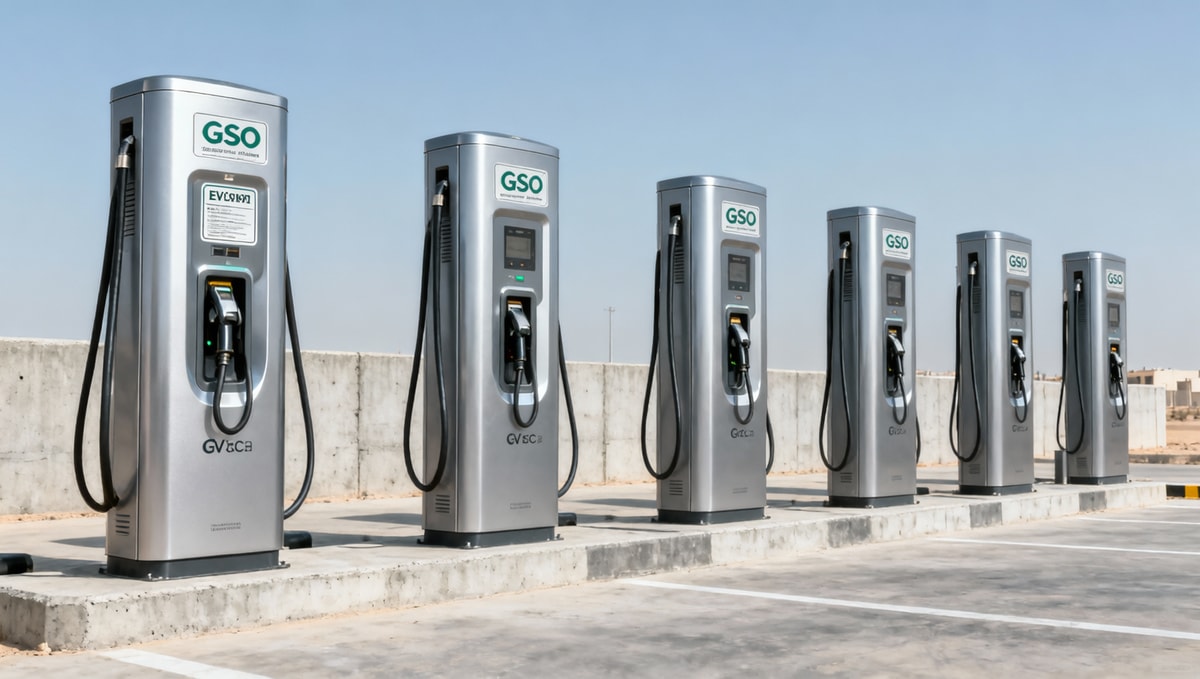
On May 1, 2026, the Gulf Standardization Organization (GSO) fully implemented the unified GCC Type Approval for EV Infrastructure, streamlining certification across six Gulf Cooperation Council (GCC) countries — Saudi Arabia, UAE, Qatar, Kuwait, Oman, and Bahrain. This development directly impacts manufacturers and exporters of EV charging equipment, particularly those based in China, by reducing certification costs by 35% and cutting average approval time from 14 to 6 weeks.
Event Overview
The Gulf Standardization Organization (GSO) launched the revised GCC Type Approval for EV Charging Equipment standard on May 1, 2026. The new framework replaces previously separate national certification processes in the six GCC member states. Under the updated system, Chinese manufacturers may obtain regional market access by submitting a single GSO-recognized type test report and completing local representative office registration — eliminating redundant testing and documentation per country.
Industries Affected
Direct Exporters of EV Charging Equipment
These companies face reduced administrative burden and lower compliance expenditure when entering GCC markets. Impact manifests as faster time-to-market, lower upfront certification investment, and simplified documentation workflows across multiple jurisdictions.
Manufacturers with GCC-Focused Production Lines
Producers aligning product design or quality control specifically for GCC requirements now benefit from standardized technical criteria. Impact includes reduced need for variant-specific engineering adjustments and more predictable conformity assessment outcomes.
Supply Chain & Certification Service Providers
Third-party labs, local representative agencies, and certification consultants must adapt service offerings to the single-report model. Impact involves shifting capacity from multi-country submission support toward centralized GSO test coordination and local registration facilitation.
What Relevant Companies or Practitioners Should Focus On
Monitor official GSO guidance updates on scope interpretation
The current standard applies to EV charging equipment — not auxiliary systems (e.g., energy management software, grid integration modules). Companies should track GSO’s published clarifications on product coverage boundaries to avoid misalignment in test planning.
Prioritize GSO-accredited laboratories for type testing
Only test reports issued by GSO-recognized labs are accepted under the unified scheme. Exporters should verify lab accreditation status before initiating testing — especially given that non-accredited reports will not support the streamlined process.
Distinguish policy rollout from operational readiness
While the standard took effect May 1, 2026, national market surveillance authorities may require transitional alignment periods. Firms should confirm with local customs or standards bodies whether legacy approvals remain valid during Q3 2026, rather than assuming immediate full enforcement.
Update internal compliance checklists and export documentation templates
Export teams should revise internal SOPs to reflect the new requirement: one GSO test report + local representative registration confirmation. This includes updating commercial invoices, packing lists, and customs declarations to reference the unified approval pathway.
Editorial Perspective / Industry Observation
Observably, this is less a sudden regulatory shift and more the formalization of an ongoing harmonization effort within the GCC. Analysis shows the move consolidates prior bilateral agreements and pilot programs into a binding, region-wide framework — signaling long-term institutional commitment to interoperable EV infrastructure standards. From an industry perspective, it better reflects a structural simplification than a temporary incentive; however, actual adoption velocity across all six national ports and customs checkpoints remains subject to local implementation capacity. Current monitoring should focus on early enforcement patterns — not just the standard’s publication.
Conclusion: The unified GCC EV charging certification represents a material reduction in non-tariff barriers for qualified exporters, but its value depends on consistent application across member states. It is best understood not as a one-time opportunity, but as a step toward deeper regional regulatory convergence — requiring sustained attention to both technical compliance and local procedural execution.
Information Sources: Gulf Standardization Organization (GSO) official announcement, effective May 1, 2026. Ongoing enforcement practices across individual GCC member states remain subject to observation and verification.
Get weekly intelligence in your inbox.
No noise. No sponsored content. Pure intelligence.
 May 04, 2026FDA AI Diagnostic Software Guidance: Continuous Validation for Overseas FirmsFDA AI Diagnostic Software Guidance: Continuous Validation for Overseas Firms
 May 04, 2026MIIT Launches Export Compliance Support for Warehouse RoboticsMIIT Launches Export Compliance Support for Warehouse Robotics
 May 04, 2026India BIS Mandates ISI Certification for Smart Home Devices from July 2026India BIS Mandates ISI Certification for Smart Home Devices from July 2026
 May 04, 2026Global Shipping Alliance Raises Heavy-Lift Surcharges from May 2026Global Shipping Alliance Raises Heavy-Lift Surcharges from May 2026
 May 04, 2026GCC EV Charging Certification Unified: 35% Cost Cut for Chinese ExportersGCC EV Charging Certification Unified: 35% Cost Cut for Chinese Exporters
 May 04, 2026TÜV Rheinland Updates IoT Security Standard with AI Voice Data AnonymizationTÜV Rheinland Updates IoT Security Standard with AI Voice Data Anonymization
 May 04, 2026Yangshan Port Launches Green Energy Equipment Express LaneYangshan Port Launches Green Energy Equipment Express Lane
 May 04, 2026Vietnam Enforces Local IoT Certification for Smart Home Devices from May 2026Vietnam Enforces Local IoT Certification for Smart Home Devices from May 2026
 May 04, 2026US CBP Launches Battery Cargo Inspection: ESS Export Delays to 7–12 DaysUS CBP Launches Battery Cargo Inspection: ESS Export Delays to 7–12 Days
 May 04, 2026EU SVHC Update Effective May 1, 2026: Impact on Electronic Components ExportsEU SVHC Update Effective May 1, 2026: Impact on Electronic Components Exports
 May 04, 2026Portable power stations: what matters more than wattage on paperPortable power stations: what matters more than wattage on paper
 May 04, 2026Automotive injection molding machines and the scrap rate problemAutomotive injection molding machines and the scrap rate problem
 May 04, 2026Smart thermostats save energy only when setup is done rightSmart thermostats save energy only when setup is done right
 May 04, 2026Why TWS earbuds sound great in ads but not on callsWhy TWS earbuds sound great in ads but not on calls
 May 04, 2026Industrial robotics for material handling: where downtime startsIndustrial robotics for material handling: where downtime starts
 May 04, 2026LiFePO4 battery lifespan drops faster under these conditionsLiFePO4 battery lifespan drops faster under these conditions
 May 04, 2026Solar grid systems: when storage changes the project mathSolar grid systems: when storage changes the project math
 May 04, 2026Smart manufacturing for pharma fails when data stays isolatedSmart manufacturing for pharma fails when data stays isolated
 May 04, 2026Wearable technology trends that are finally useful in 2026Wearable technology trends that are finally useful in 2026
 May 04, 2026Bluetooth speakers: why battery life claims often miss real useBluetooth speakers: why battery life claims often miss real use
 May 04, 2026Home automation systems that solve everyday annoyances firstHome automation systems that solve everyday annoyances first
 May 04, 2026Solar street lights that underperform after the first rainy seasonSolar street lights that underperform after the first rainy season
 May 04, 2026Why sheet metal bending services in Canada cost more than expectedWhy sheet metal bending services in Canada cost more than expected
 May 04, 2026Factory automation systems for electronics and the ROI gapFactory automation systems for electronics and the ROI gap
 May 04, 2026OEM machined parts supplier Vietnam: quality checks that matterOEM machined parts supplier Vietnam: quality checks that matter
 May 04, 2026What to check before choosing a 5 axis machine for defenseWhat to check before choosing a 5 axis machine for defense
 May 04, 2026Smart grid solutions that fix peak load without major rebuildsSmart grid solutions that fix peak load without major rebuilds