TÜV Rheinland Updates IoT Security Standard with AI Voice Data Anonymization
On May 1, 2026, Germany’s TÜV Rheinland launched the revised TR-03082 IoT security certification specification — introducing mandatory on-device AI voice interaction data anonymization for all IoT devices seeking the TÜV mark, including smart speakers, conferencing systems, and voice-controlled home appliances. This update directly impacts manufacturers, OEMs, and supply chain stakeholders operating in the global smart device market.
Event Overview
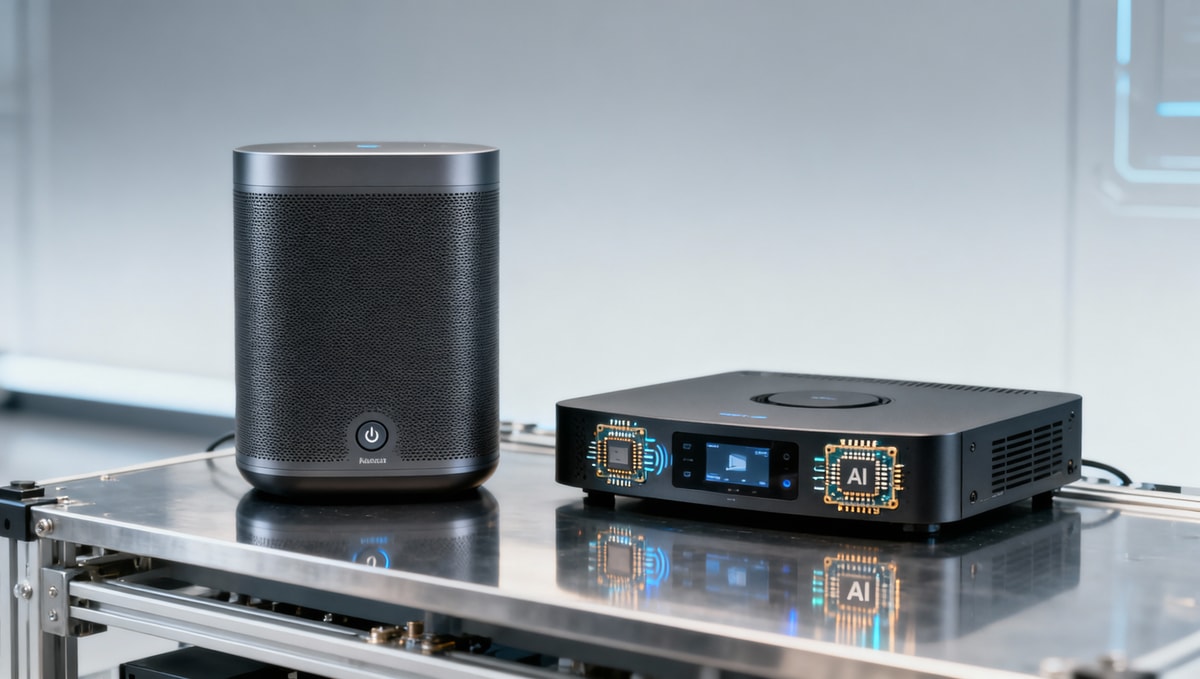
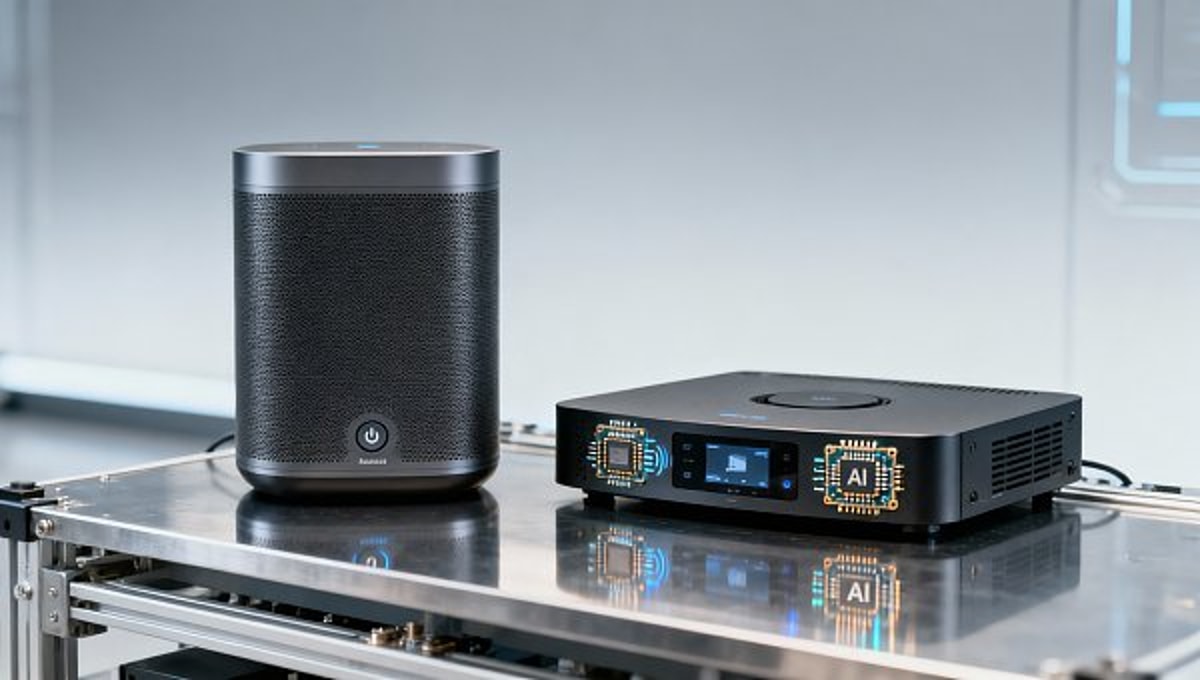
Effective May 1, 2026, TÜV Rheinland formally implemented the updated TR-03082 specification for IoT device security certification. The revision introduces a new mandatory requirement: ‘zero upload of AI voice command data from the local device’. To comply, certified devices must implement both a hardware-level physical microphone switch and edge-based voice vector anonymization — verified through dual-layer technical validation. The requirement applies to all IoT devices applying for the TÜV mark, specifically naming smart speakers, meeting systems, and voice-controlled household appliances. Chinese OEMs are explicitly noted as needing to restructure firmware architecture to meet the standard.
Industries Affected
IoT Device OEMs (especially China-based)
OEMs supplying white-label or contract-manufactured voice-enabled IoT products face direct compliance pressure. The requirement for hardware-level microphone switches and edge-only voice vector processing necessitates changes to board-level design, firmware logic, and secure boot workflows — not just software updates.
Smart Home & Enterprise Conferencing Hardware Manufacturers
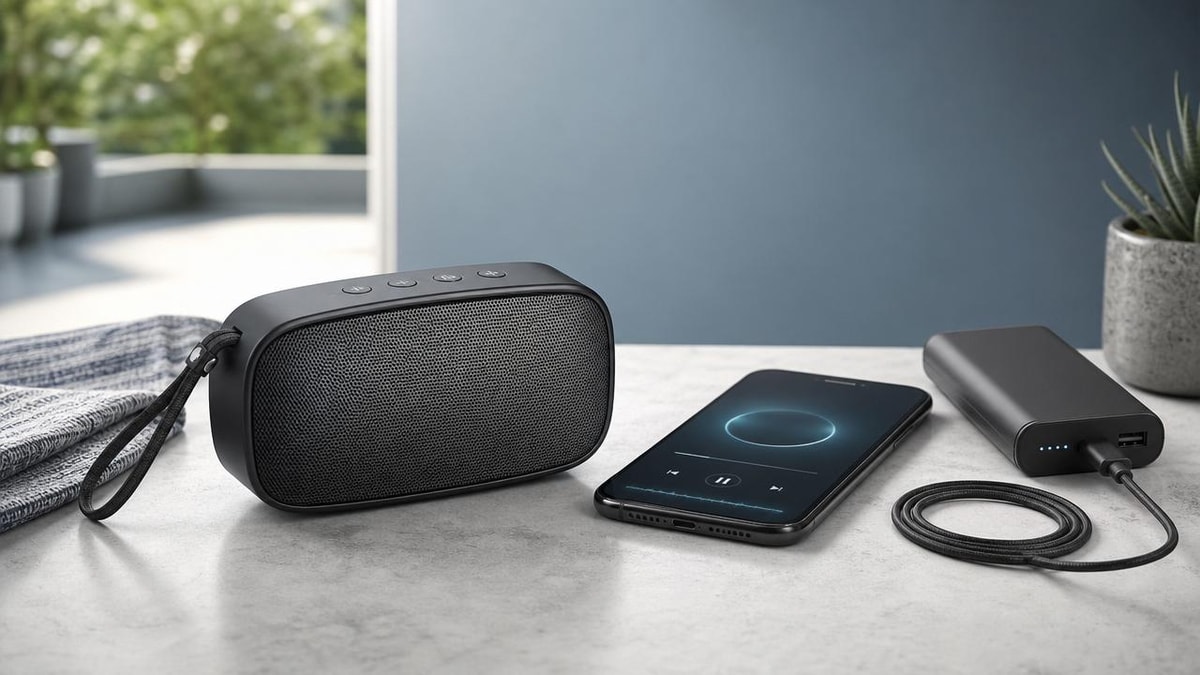
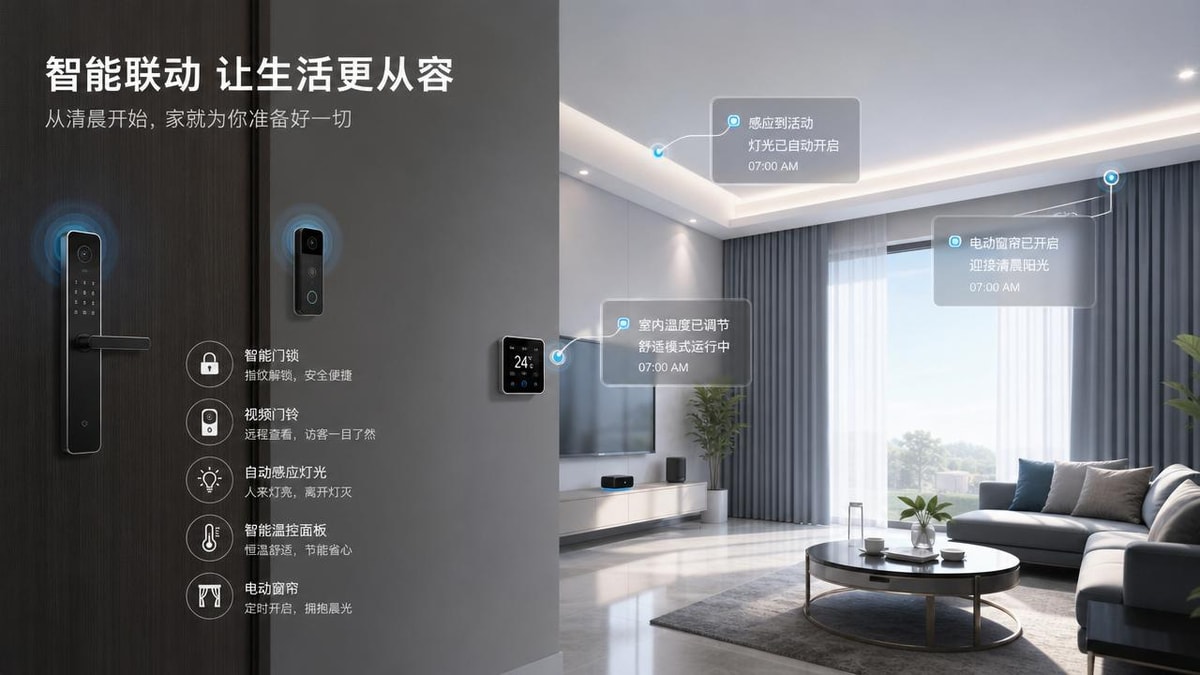
Manufacturers of certified smart speakers, video conferencing endpoints, and voice-integrated HVAC/lighting controllers must now validate that no raw or reconstructable voice features leave the device. Legacy cloud-dependent ASR pipelines no longer satisfy the standard — even if anonymized server-side.
Firmware Development & Embedded Security Service Providers
Vendors offering firmware customization, secure element integration, or edge AI inference optimization services will see increased demand for TR-03082-aligned architecture reviews, secure voice preprocessing modules, and hardware-software co-validation support.
Global Certification & Compliance Consultancies
Consultancies supporting IoT vendors in EU market access must now incorporate TR-03082’s new physical switch + edge anonymization verification into pre-assessment checklists and test planning — particularly for devices previously certified under older TR-03082 versions.
What Enterprises and Practitioners Should Monitor and Do Now
Track official interpretation documents from TÜV Rheinland
The current specification release includes high-level requirements but lacks publicly available implementation guidance on acceptable anonymization methods (e.g., spectral masking thresholds, vector dimensionality limits) or physical switch verification criteria. Monitoring TÜV Rheinland’s technical bulletins and accredited lab announcements is essential before committing to redesign timelines.
Prioritize assessment of voice-centric product lines for immediate impact
Products relying on always-on microphones and cloud-based speech recognition — especially those targeting EU distribution — require urgent gap analysis. Devices using wake-word detection only (without continuous streaming) may be less affected, but confirmation depends on how TÜV defines ‘voice command data’ in practice.
Distinguish between certification signal and near-term enforcement reality
Analysis shows that while the standard took effect May 1, 2026, transition periods for existing certified models are not specified in the publicly released summary. Companies should assume new applications and major revisions will be assessed under TR-03082 v2.0 immediately, but legacy certifications may remain valid until renewal — pending formal TÜV communication.
Initiate cross-functional alignment on hardware-software co-design
Because compliance requires coordinated changes across PCB layout (for physical switch), bootloader security, real-time OS configuration, and ML inference stack, engineering, compliance, and procurement teams should convene now to map dependencies — especially where third-party SDKs or silicon vendors (e.g., voice AI SoC suppliers) control critical anonymization components.
Editorial Perspective / Industry Observation
Observably, this update signals a hardening of EU-aligned IoT trust frameworks around ambient AI — shifting emphasis from ‘data minimization in transit’ to ‘data non-generation at source’. It reflects growing regulatory attention to inferential privacy risks in voice interfaces, where even anonymized embeddings can potentially leak speaker identity or health indicators. From an industry perspective, it is best understood not as a standalone certification change, but as a forward-looking alignment with upcoming EU AI Act provisions on high-risk system transparency and local processing. Current relevance lies less in immediate market exclusion and more in its role as an early operational benchmark for embedded AI governance — one that will likely influence other certification bodies and regional requirements over the next 12–24 months.
Conclusion
This update marks a structural shift in IoT security expectations — moving beyond software-defined safeguards to enforce hardware-rooted data control for voice interfaces. For affected enterprises, it is neither a short-term compliance hurdle nor a distant policy signal; rather, it represents a tangible inflection point in how voice-enabled devices must be architected for international markets. The most pragmatic understanding is that TR-03082 v2.0 sets a de facto design baseline for next-generation consumer and enterprise voice products targeting regulatory maturity — making early technical scoping and vendor engagement materially consequential.
Information Sources
Main source: Official announcement and specification summary published by TÜV Rheinland on May 1, 2026.
Note: Implementation guidelines, test methodologies, and transition rules for legacy-certified devices remain pending official publication and are subject to ongoing observation.
Get weekly intelligence in your inbox.
No noise. No sponsored content. Pure intelligence.
 May 04, 2026FDA AI Diagnostic Software Guidance: Continuous Validation for Overseas FirmsFDA AI Diagnostic Software Guidance: Continuous Validation for Overseas Firms
 May 04, 2026MIIT Launches Export Compliance Support for Warehouse RoboticsMIIT Launches Export Compliance Support for Warehouse Robotics
 May 04, 2026India BIS Mandates ISI Certification for Smart Home Devices from July 2026India BIS Mandates ISI Certification for Smart Home Devices from July 2026
 May 04, 2026Global Shipping Alliance Raises Heavy-Lift Surcharges from May 2026Global Shipping Alliance Raises Heavy-Lift Surcharges from May 2026
 May 04, 2026GCC EV Charging Certification Unified: 35% Cost Cut for Chinese ExportersGCC EV Charging Certification Unified: 35% Cost Cut for Chinese Exporters
 May 04, 2026TÜV Rheinland Updates IoT Security Standard with AI Voice Data AnonymizationTÜV Rheinland Updates IoT Security Standard with AI Voice Data Anonymization
 May 04, 2026Yangshan Port Launches Green Energy Equipment Express LaneYangshan Port Launches Green Energy Equipment Express Lane
 May 04, 2026Vietnam Enforces Local IoT Certification for Smart Home Devices from May 2026Vietnam Enforces Local IoT Certification for Smart Home Devices from May 2026
 May 04, 2026US CBP Launches Battery Cargo Inspection: ESS Export Delays to 7–12 DaysUS CBP Launches Battery Cargo Inspection: ESS Export Delays to 7–12 Days
 May 04, 2026EU SVHC Update Effective May 1, 2026: Impact on Electronic Components ExportsEU SVHC Update Effective May 1, 2026: Impact on Electronic Components Exports
 May 04, 2026Portable power stations: what matters more than wattage on paperPortable power stations: what matters more than wattage on paper
 May 04, 2026Automotive injection molding machines and the scrap rate problemAutomotive injection molding machines and the scrap rate problem
 May 04, 2026Smart thermostats save energy only when setup is done rightSmart thermostats save energy only when setup is done right
 May 04, 2026Why TWS earbuds sound great in ads but not on callsWhy TWS earbuds sound great in ads but not on calls
 May 04, 2026Industrial robotics for material handling: where downtime startsIndustrial robotics for material handling: where downtime starts
 May 04, 2026LiFePO4 battery lifespan drops faster under these conditionsLiFePO4 battery lifespan drops faster under these conditions
 May 04, 2026Solar grid systems: when storage changes the project mathSolar grid systems: when storage changes the project math
 May 04, 2026Smart manufacturing for pharma fails when data stays isolatedSmart manufacturing for pharma fails when data stays isolated
 May 04, 2026Wearable technology trends that are finally useful in 2026Wearable technology trends that are finally useful in 2026
 May 04, 2026Bluetooth speakers: why battery life claims often miss real useBluetooth speakers: why battery life claims often miss real use
 May 04, 2026Home automation systems that solve everyday annoyances firstHome automation systems that solve everyday annoyances first
 May 04, 2026Solar street lights that underperform after the first rainy seasonSolar street lights that underperform after the first rainy season
 May 04, 2026Why sheet metal bending services in Canada cost more than expectedWhy sheet metal bending services in Canada cost more than expected
 May 04, 2026Factory automation systems for electronics and the ROI gapFactory automation systems for electronics and the ROI gap
 May 04, 2026OEM machined parts supplier Vietnam: quality checks that matterOEM machined parts supplier Vietnam: quality checks that matter
 May 04, 2026What to check before choosing a 5 axis machine for defenseWhat to check before choosing a 5 axis machine for defense
 May 04, 2026Smart grid solutions that fix peak load without major rebuildsSmart grid solutions that fix peak load without major rebuilds