MIIT Launches Export Compliance Support for Warehouse Robotics
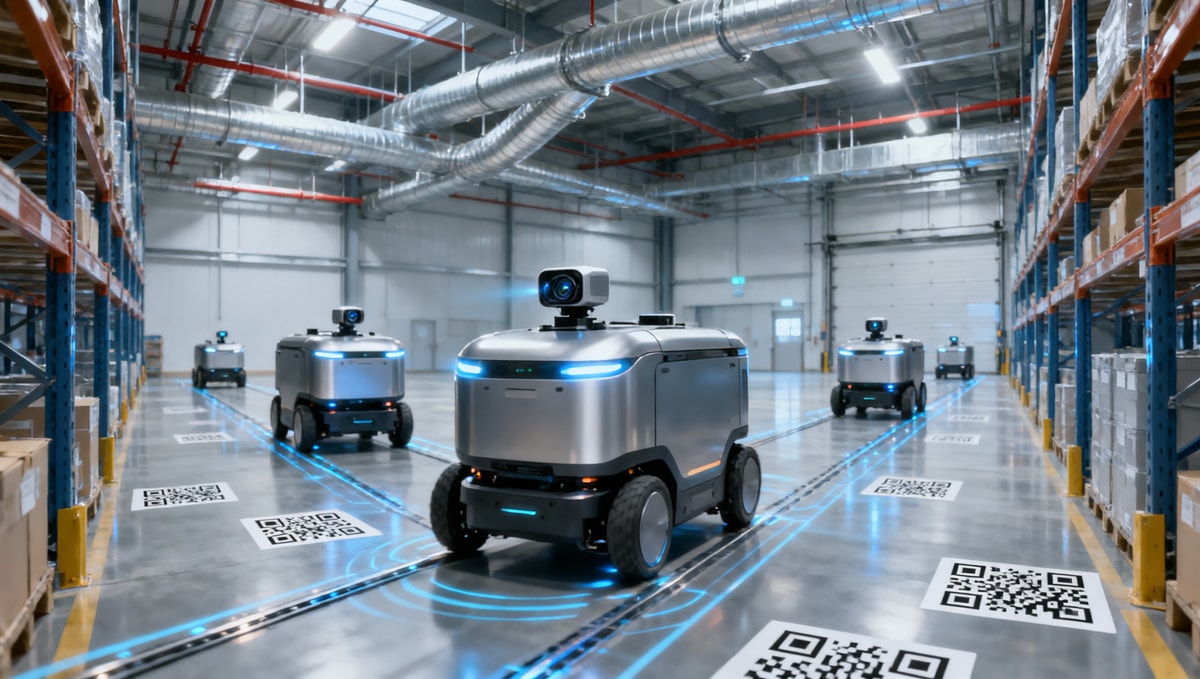
On May 1, 2026, the Ministry of Industry and Information Technology (MIIT) of China, in collaboration with the China Chamber of Commerce for Import and Export of Machinery and Electronic Products, launched the ‘Warehouse Robotics Export Technical Compliance Support Program’. This initiative directly affects companies exporting automated guided vehicles (AGVs), autonomous mobile robots (AMRs), and intelligent sorting systems — particularly those targeting regulated markets including the EU, US, and Japan.
Event Overview
On May 1, 2026, MIIT and the China Chamber of Commerce for Import and Export of Machinery and Electronic Products jointly initiated the ‘Warehouse Robotics Export Technical Compliance Support Program’. The program offers a free technical compliance toolkit covering regulatory standards from 12 countries, including EU CE/MDR, US ANSI/RIA R15.06, and Japan JIS B 8433, along with pre-submission review services. The first phase supports up to 300 enterprises, with applications open until May 15, 2026.
Industries Affected by Segment
Direct Exporters of Warehouse Robotics Systems
Companies that ship AGVs, AMRs, or integrated sorting systems abroad are directly subject to conformity requirements in destination markets. The program reduces upfront uncertainty in meeting technical documentation, risk assessment, and labeling obligations — especially where harmonized standards differ across jurisdictions.
System Integrators and OEMs Serving Export Channels
Integrators embedding third-party robotic modules into turnkey logistics solutions face cascading compliance responsibilities. Under this program, access to standardized cross-country comparisons helps align sub-system specifications early in design and procurement — reducing rework during certification phases.
Component Suppliers Supporting Export-Certified Assemblies
Suppliers of motors, safety controllers, navigation modules, or human-machine interface units may be asked to provide evidence of conformity (e.g., EMC test reports, functional safety assessments). While not direct beneficiaries of the toolkit, their documentation readiness becomes more critical as end-product exporters adopt stricter upstream vendor qualification practices.
Logistics Automation Solution Providers with Global Clients
Firms offering cloud-connected or AI-orchestrated warehouse robotics platforms must ensure both hardware and software-related safety functions meet jurisdiction-specific definitions — for example, how ‘collaborative operation’ is interpreted under ANSI/RIA R15.06 versus ISO/TS 15066. The toolkit’s comparative framework aids internal alignment across engineering, regulatory, and sales teams.
What Enterprises and Practitioners Should Focus On Now
Monitor official rollout details beyond the initial announcement
The program’s scope — such as eligibility criteria (e.g., revenue thresholds, export volume, or technology maturity level), exact deliverables per enterprise, and whether support includes translation or liaison services — remains unspecified. Enterprises should track updates issued by MIIT and the Chamber through official notice channels.
Prioritize target markets when preparing documentation
The toolkit covers 12 countries, but not all standards apply equally to every product category. For instance, medical-grade robot integration may trigger MDR requirements only if deployed in EU healthcare logistics; similarly, certain ANSI/RIA clauses apply specifically to industrial robot arms, not floor-based AMRs. Firms should map applicable clauses to their actual use cases before submission.
Distinguish between policy signal and operational readiness
This initiative signals growing institutional attention to robotics export governance — but does not replace formal conformity assessment by notified bodies or accredited labs. Companies should treat the toolkit as a preparatory aid, not a certification substitute, and retain independent verification timelines.
Align internal technical documentation workflows ahead of application
Eligible firms will likely need to submit product architecture diagrams, risk assessment summaries, and preliminary test records during the application process. Preparing these materials now — using the referenced standards as a checklist — improves chances of selection and accelerates downstream compliance execution.
Editorial Perspective / Industry Observation
Observably, this program reflects an institutional effort to reduce friction in high-potential export segments where technical regulation complexity has historically constrained market entry. Analysis shows it is primarily a capacity-building measure — not a regulatory relaxation — and its immediate impact depends on uptake rate, quality of pre-review feedback, and whether participating firms integrate findings into product development cycles. From an industry perspective, the initiative is best understood as an early-stage coordination mechanism rather than a de facto compliance pathway. Continued monitoring is warranted to assess whether it evolves into a sustained service or remains a time-bound pilot.
Conclusion
This program marks a concrete step toward structured technical support for warehouse robotics exporters — but its practical value hinges on implementation fidelity and enterprise-level adoption discipline. It is more accurately interpreted as a procedural enabler than a regulatory milestone. Current understanding should emphasize preparation over presumption: firms benefit most by treating it as a diagnostic tool to identify gaps, not as a shortcut to market access.
Information Sources
Main source: Official joint announcement by the Ministry of Industry and Information Technology (MIIT) and the China Chamber of Commerce for Import and Export of Machinery and Electronic Products, released May 1, 2026.
Note: Details regarding application procedures, evaluation criteria, and post-submission support mechanisms remain pending official publication and are subject to ongoing observation.
Get weekly intelligence in your inbox.
No noise. No sponsored content. Pure intelligence.
 May 04, 2026FDA AI Diagnostic Software Guidance: Continuous Validation for Overseas FirmsFDA AI Diagnostic Software Guidance: Continuous Validation for Overseas Firms
 May 04, 2026MIIT Launches Export Compliance Support for Warehouse RoboticsMIIT Launches Export Compliance Support for Warehouse Robotics
 May 04, 2026India BIS Mandates ISI Certification for Smart Home Devices from July 2026India BIS Mandates ISI Certification for Smart Home Devices from July 2026
 May 04, 2026Global Shipping Alliance Raises Heavy-Lift Surcharges from May 2026Global Shipping Alliance Raises Heavy-Lift Surcharges from May 2026
 May 04, 2026GCC EV Charging Certification Unified: 35% Cost Cut for Chinese ExportersGCC EV Charging Certification Unified: 35% Cost Cut for Chinese Exporters
 May 04, 2026TÜV Rheinland Updates IoT Security Standard with AI Voice Data AnonymizationTÜV Rheinland Updates IoT Security Standard with AI Voice Data Anonymization
 May 04, 2026Yangshan Port Launches Green Energy Equipment Express LaneYangshan Port Launches Green Energy Equipment Express Lane
 May 04, 2026Vietnam Enforces Local IoT Certification for Smart Home Devices from May 2026Vietnam Enforces Local IoT Certification for Smart Home Devices from May 2026
 May 04, 2026US CBP Launches Battery Cargo Inspection: ESS Export Delays to 7–12 DaysUS CBP Launches Battery Cargo Inspection: ESS Export Delays to 7–12 Days
 May 04, 2026EU SVHC Update Effective May 1, 2026: Impact on Electronic Components ExportsEU SVHC Update Effective May 1, 2026: Impact on Electronic Components Exports
 May 04, 2026Portable power stations: what matters more than wattage on paperPortable power stations: what matters more than wattage on paper
 May 04, 2026Automotive injection molding machines and the scrap rate problemAutomotive injection molding machines and the scrap rate problem
 May 04, 2026Smart thermostats save energy only when setup is done rightSmart thermostats save energy only when setup is done right
 May 04, 2026Why TWS earbuds sound great in ads but not on callsWhy TWS earbuds sound great in ads but not on calls
 May 04, 2026Industrial robotics for material handling: where downtime startsIndustrial robotics for material handling: where downtime starts
 May 04, 2026LiFePO4 battery lifespan drops faster under these conditionsLiFePO4 battery lifespan drops faster under these conditions
 May 04, 2026Solar grid systems: when storage changes the project mathSolar grid systems: when storage changes the project math
 May 04, 2026Smart manufacturing for pharma fails when data stays isolatedSmart manufacturing for pharma fails when data stays isolated
 May 04, 2026Wearable technology trends that are finally useful in 2026Wearable technology trends that are finally useful in 2026
 May 04, 2026Bluetooth speakers: why battery life claims often miss real useBluetooth speakers: why battery life claims often miss real use
 May 04, 2026Home automation systems that solve everyday annoyances firstHome automation systems that solve everyday annoyances first
 May 04, 2026Solar street lights that underperform after the first rainy seasonSolar street lights that underperform after the first rainy season
 May 04, 2026Why sheet metal bending services in Canada cost more than expectedWhy sheet metal bending services in Canada cost more than expected
 May 04, 2026Factory automation systems for electronics and the ROI gapFactory automation systems for electronics and the ROI gap
 May 04, 2026OEM machined parts supplier Vietnam: quality checks that matterOEM machined parts supplier Vietnam: quality checks that matter
 May 04, 2026What to check before choosing a 5 axis machine for defenseWhat to check before choosing a 5 axis machine for defense
 May 04, 2026Smart grid solutions that fix peak load without major rebuildsSmart grid solutions that fix peak load without major rebuilds