Global Shipping Alliance Raises Heavy-Lift Surcharges from May 2026
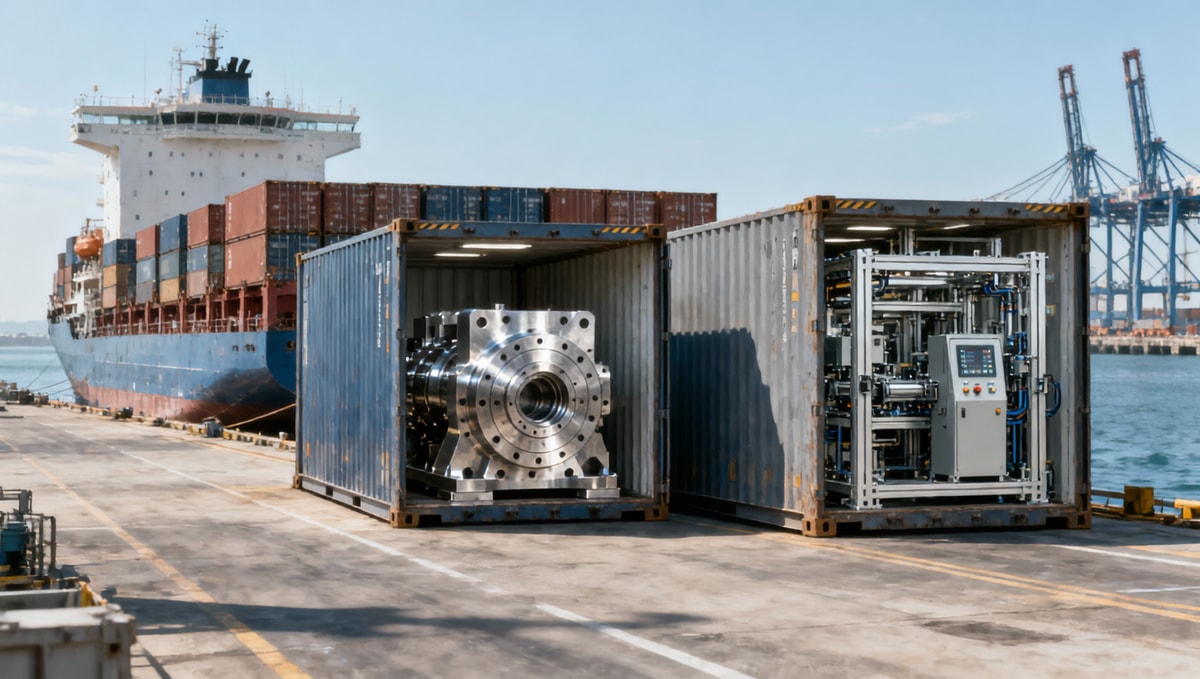
Effective May 1, 2026, the Global Shipping Alliance (GSA)—a coalition of 11 major carriers including Maersk, CMA CGM, and Hapag-Lloyd—has increased its Heavy-Lift & Project Cargo Surcharges for CNC-machined large structural components and automated production line modules. This adjustment directly impacts manufacturers, project exporters, and logistics providers engaged in transatlantic, transpacific, and Middle East infrastructure and industrial projects.
Event Overview
On May 1, 2026, the Global Shipping Alliance (GSA) implemented a coordinated increase to its ‘Heavy-Lift & Project Cargo Surcharges’. The surcharge now applies to cargo items exceeding 8 metric tons per piece and 12 meters in length—including precision CNC-machined structural parts and modular automation equipment. The fee rose from USD 1,200 per TEU to a range of USD 1,420–1,470 per TEU. The change affects shipments primarily destined for Europe, North America, and the Middle East.
Industries Affected by Segment
Direct Exporting Manufacturers (e.g., CNC Machining Facilities)
These firms ship oversized, high-precision fabricated parts internationally. The surcharge applies directly to their containerized exports, increasing landed cost per unit. Since many such shipments are tied to fixed-price engineering, procurement, and construction (EPC) contracts, margin compression is immediate where freight terms are FOB or EXW.
Project-Based Equipment Integrators & System Suppliers
Companies assembling automated production lines—or delivering turnkey industrial modules—often consolidate multiple heavy components into single TEUs. The new surcharge applies per TEU, not per item, meaning consolidated loads still incur the full uplift. This affects bid competitiveness and delivery scheduling for overseas infrastructure tenders.
International Procurement & Sourcing Offices
Buyers sourcing large-scale capital equipment from Asia (especially China, Vietnam, and South Korea) face higher landed costs for inbound heavy-lift consignments. Cost-plus or CIF-based procurement frameworks may require renegotiation; cost allocation across departments (engineering, finance, logistics) becomes more complex.
Freight Forwarders & Project Logistics Providers
Forwarders managing heavy-lift cargo must update rate cards, revise quoting templates, and clarify surcharge applicability with clients. Since GSA members jointly enforce the charge, cross-carrier consistency reduces negotiation leverage—but also limits substitution options for time-sensitive shipments.
What Stakeholders Should Monitor and Do Now
Track official tariff bulletins and carrier-specific implementation notes
GSA’s announcement is a framework agreement; individual carriers may issue supplementary notices on effective dates for specific trade lanes or documentation requirements. Stakeholders should verify whether the surcharge applies to all GSA member vessels on a given route—or only those operating under alliance-coordinated services.
Review current and upcoming shipments against the dimensional and weight thresholds
The surcharge triggers only for items >8 tons and >12 meters. Some CNC-machined structures can be reconfigured (e.g., disassembled frames or segmented housings) to remain below threshold—without compromising functionality. Engineering and packaging teams should assess feasibility ahead of final shipment planning.
Distinguish between surcharge application and actual cost pass-through
While the surcharge is published at USD 1,420–1,470/TEU, forwarders or NVOCCs may apply additional handling or documentation fees. Contractual terms (e.g., Incoterms® 2020) determine who bears the cost—so procurement and legal teams should audit existing agreements for freight cost allocation clauses.
Reassess lead-time buffers and contingency budgets for Q2–Q3 2026 deliveries
Given the May 1 start date, shipments confirmed in April 2026 but departing after May 1 fall under the new rate. Finance and supply chain functions should adjust freight budget forecasts and revise delivery timelines for projects scheduled between May and August 2026—particularly those with tight EPC milestones.
Editorial Observation / Industry Perspective
Observably, this surcharge adjustment is less a standalone cost shift and more a signal of tightening capacity and rising operational complexity in the heavy-lift segment. GSA’s coordinated action suggests growing alignment among carriers on pricing discipline for non-standard cargo—especially as vessel utilization for standard dry containers remains volatile. Analysis shows the 18–22% increase aligns closely with reported rises in specialized crane labor, port handling certifications, and inland transport insurance premiums since late 2025. It is best understood not as an isolated fee hike, but as a structural recalibration reflecting higher baseline costs for oversized, high-value industrial freight. Continued monitoring is warranted—not just for further adjustments, but for how non-GSA carriers respond in competing trade corridors.
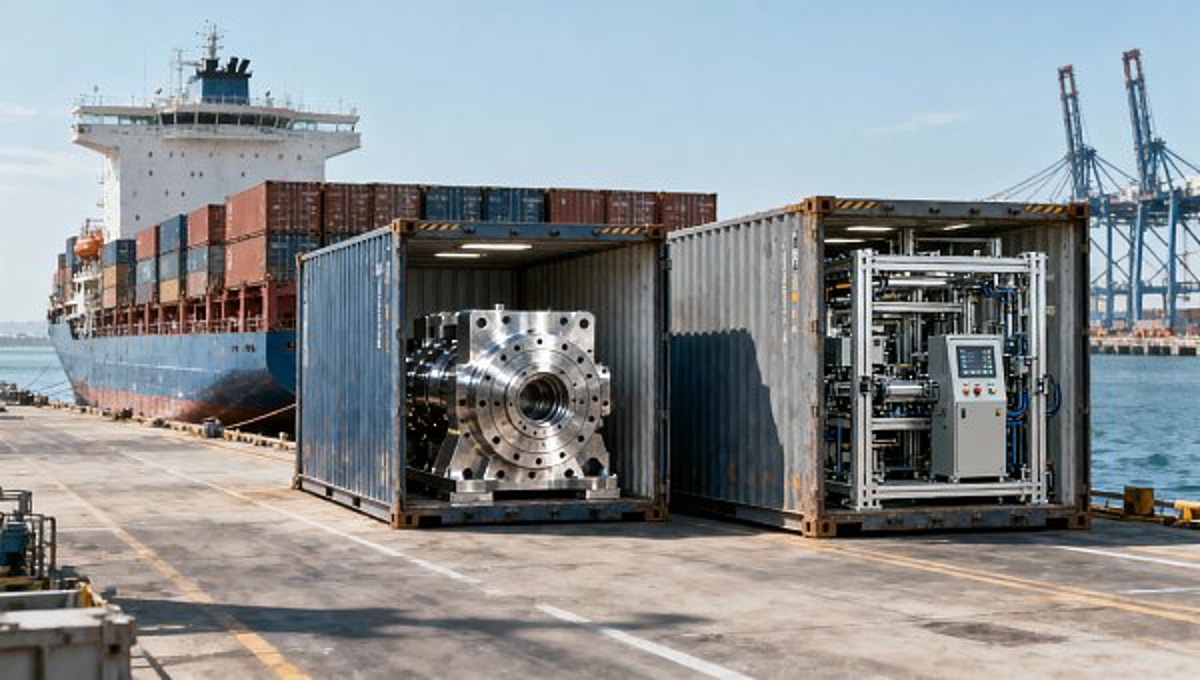
In summary, the GSA’s May 2026 surcharge revision marks a measurable inflection point for global industrial logistics—not because it introduces a new category of charge, but because it formalizes and scales cost pressures already embedded in heavy-lift operations. For affected stakeholders, the event is neither temporary nor negotiable in the short term; it is better understood as a durable input cost adjustment requiring proactive operational and contractual adaptation.
Source: Official joint announcement by the Global Shipping Alliance (GSA), issued April 2026; publicly confirmed surcharge rates and scope published by Maersk, CMA CGM, and Hapag-Lloyd tariff portals as of April 15, 2026. Ongoing implementation details (e.g., lane-specific applicability, documentation validation protocols) remain subject to carrier-level updates and will be monitored through Q2 2026.
Get weekly intelligence in your inbox.
No noise. No sponsored content. Pure intelligence.
 May 04, 2026FDA AI Diagnostic Software Guidance: Continuous Validation for Overseas FirmsFDA AI Diagnostic Software Guidance: Continuous Validation for Overseas Firms
 May 04, 2026MIIT Launches Export Compliance Support for Warehouse RoboticsMIIT Launches Export Compliance Support for Warehouse Robotics
 May 04, 2026India BIS Mandates ISI Certification for Smart Home Devices from July 2026India BIS Mandates ISI Certification for Smart Home Devices from July 2026
 May 04, 2026Global Shipping Alliance Raises Heavy-Lift Surcharges from May 2026Global Shipping Alliance Raises Heavy-Lift Surcharges from May 2026
 May 04, 2026GCC EV Charging Certification Unified: 35% Cost Cut for Chinese ExportersGCC EV Charging Certification Unified: 35% Cost Cut for Chinese Exporters
 May 04, 2026TÜV Rheinland Updates IoT Security Standard with AI Voice Data AnonymizationTÜV Rheinland Updates IoT Security Standard with AI Voice Data Anonymization
 May 04, 2026Yangshan Port Launches Green Energy Equipment Express LaneYangshan Port Launches Green Energy Equipment Express Lane
 May 04, 2026Vietnam Enforces Local IoT Certification for Smart Home Devices from May 2026Vietnam Enforces Local IoT Certification for Smart Home Devices from May 2026
 May 04, 2026US CBP Launches Battery Cargo Inspection: ESS Export Delays to 7–12 DaysUS CBP Launches Battery Cargo Inspection: ESS Export Delays to 7–12 Days
 May 04, 2026EU SVHC Update Effective May 1, 2026: Impact on Electronic Components ExportsEU SVHC Update Effective May 1, 2026: Impact on Electronic Components Exports
 May 04, 2026Portable power stations: what matters more than wattage on paperPortable power stations: what matters more than wattage on paper
 May 04, 2026Automotive injection molding machines and the scrap rate problemAutomotive injection molding machines and the scrap rate problem
 May 04, 2026Smart thermostats save energy only when setup is done rightSmart thermostats save energy only when setup is done right
 May 04, 2026Why TWS earbuds sound great in ads but not on callsWhy TWS earbuds sound great in ads but not on calls
 May 04, 2026Industrial robotics for material handling: where downtime startsIndustrial robotics for material handling: where downtime starts
 May 04, 2026LiFePO4 battery lifespan drops faster under these conditionsLiFePO4 battery lifespan drops faster under these conditions
 May 04, 2026Solar grid systems: when storage changes the project mathSolar grid systems: when storage changes the project math
 May 04, 2026Smart manufacturing for pharma fails when data stays isolatedSmart manufacturing for pharma fails when data stays isolated
 May 04, 2026Wearable technology trends that are finally useful in 2026Wearable technology trends that are finally useful in 2026
 May 04, 2026Bluetooth speakers: why battery life claims often miss real useBluetooth speakers: why battery life claims often miss real use
 May 04, 2026Home automation systems that solve everyday annoyances firstHome automation systems that solve everyday annoyances first
 May 04, 2026Solar street lights that underperform after the first rainy seasonSolar street lights that underperform after the first rainy season
 May 04, 2026Why sheet metal bending services in Canada cost more than expectedWhy sheet metal bending services in Canada cost more than expected
 May 04, 2026Factory automation systems for electronics and the ROI gapFactory automation systems for electronics and the ROI gap
 May 04, 2026OEM machined parts supplier Vietnam: quality checks that matterOEM machined parts supplier Vietnam: quality checks that matter
 May 04, 2026What to check before choosing a 5 axis machine for defenseWhat to check before choosing a 5 axis machine for defense
 May 04, 2026Smart grid solutions that fix peak load without major rebuildsSmart grid solutions that fix peak load without major rebuilds