What to check before choosing a 5 axis machine for defense
Choosing a 5 axis milling machine for defense requires more than comparing speed or price. Technical evaluators must verify machining accuracy, material compatibility, cybersecurity readiness, traceability, and long-term service support before approval. A careful assessment helps reduce production risk, maintain compliance, and ensure the machine can meet the strict standards demanded by high-precision defense manufacturing.
Understanding the role of a 5 axis milling machine for defense
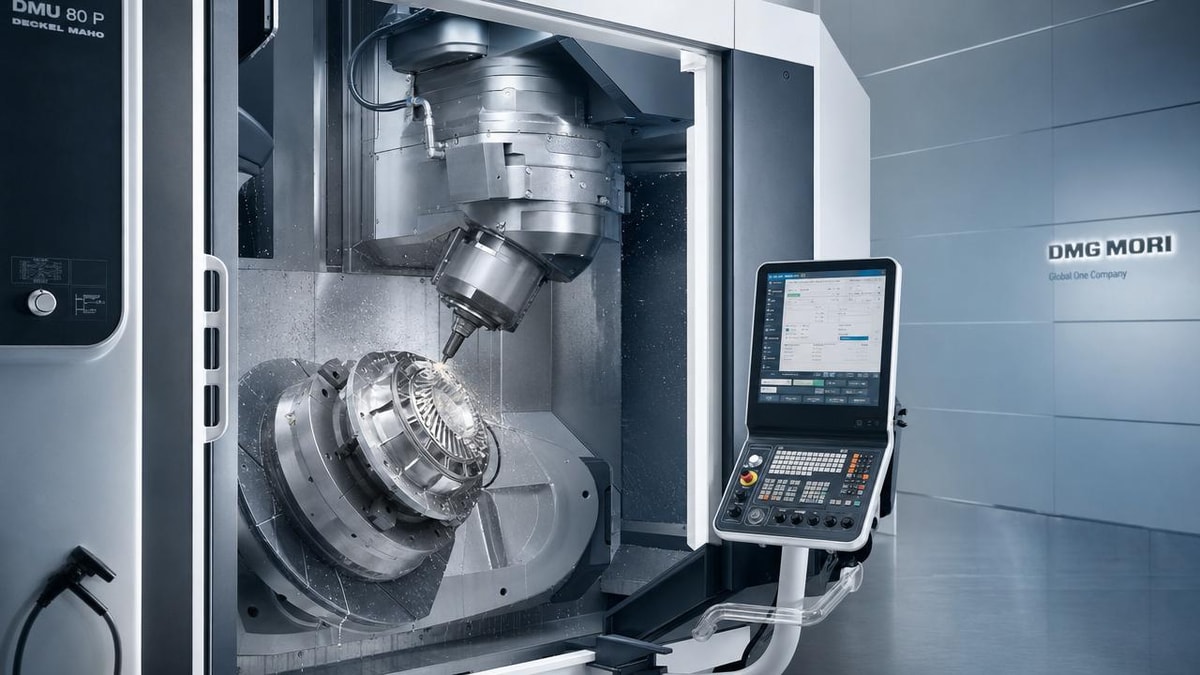
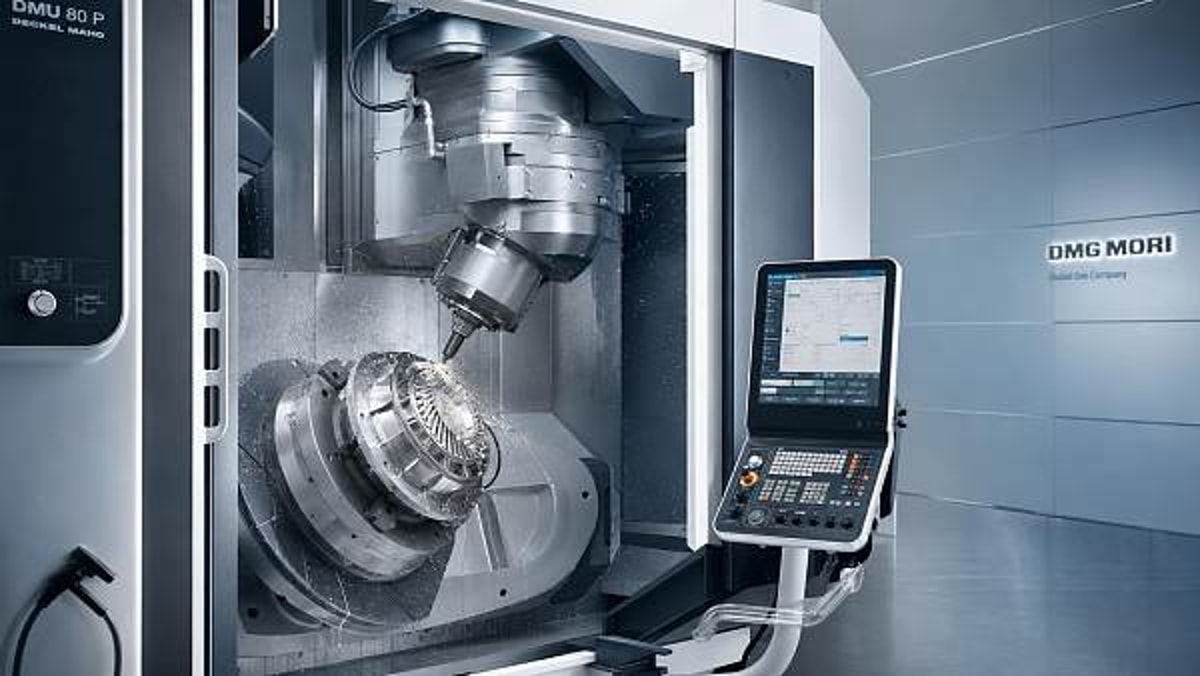
A 5 axis milling machine for defense is not simply a more advanced version of a standard machining center. It is a production asset expected to manufacture mission-critical parts with tight tolerances, complex geometries, and repeatable quality across long production cycles. In defense environments, these machines are often used for structural airframe components, radar housings, optics mounts, turbine parts, missile subsystems, naval components, and complex brackets where multi-face machining in one setup improves consistency.
The reason the industry pays close attention to 5-axis capability is clear: defense parts are increasingly lightweight, geometrically complex, and made from difficult materials. Traditional 3-axis or even indexed 4-axis processes may still be useful for simpler work, but they can introduce more setups, more manual handling, and a higher chance of variation. For technical evaluators, the decision is therefore less about whether 5-axis machining is beneficial and more about whether a specific platform is robust enough for defense-grade performance.
This is where structured assessment matters. Platforms such as TradeNexus Pro highlight a growing market reality: buyers are no longer looking only at machine brochures. They are validating the entire operating environment around the machine, including software architecture, quality controls, digital security, service reliability, and future scalability within regulated manufacturing networks.
Why defense manufacturing places different demands on machine selection
Defense production differs from general industrial machining because nonconformance may have strategic, operational, and contractual consequences. In many commercial sectors, a machine that performs well under average shop conditions may be acceptable. In defense, however, the standard is much higher. Precision must be stable, documentation must be complete, and process integrity must hold under audits, qualification reviews, and production ramp-up.
A 5 axis milling machine for defense should therefore be evaluated as part of a controlled manufacturing system. It must support traceable process data, maintain consistent geometry on long-cycle parts, and integrate with secure digital workflows. The machine should also be capable of handling low-volume prototypes and repeatable production lots, since many defense programs move through development, qualification, and sustainment phases over many years.
Another factor is material diversity. Defense suppliers frequently machine titanium alloys, Inconel, stainless steels, armor-grade metals, aluminum-lithium alloys, and advanced composites or hybrid assemblies. Each material family creates different demands on spindle power, thermal stability, chip evacuation, vibration control, and tooling strategies. A machine that is fast on aluminum may not be the right machine for heat-resistant alloys or thin-wall precision work.
Core technical checks before approval
Before approving a 5 axis milling machine for defense, technical evaluators should verify several foundational capabilities. The first is volumetric accuracy. Published axis travel numbers are not enough. The machine should demonstrate real-world positional accuracy, repeatability, rotary axis calibration quality, and thermal compensation effectiveness under extended operation. Independent test cuts, ball-bar data, laser calibration reports, and sample part measurement records all help confirm whether performance is reliable beyond the showroom.
The second check is structural rigidity. Defense parts can involve heavy roughing followed by delicate finishing on the same platform. This requires a machine frame, spindle assembly, and rotary trunnion or swivel head that remain stable under changing loads. Chatter, deflection, and micro-movement may not be obvious in early demos, but they become critical when machining thin walls, deep cavities, or long-reach features.
The third check is control system maturity. A defense-ready machine should support high-end toolpath execution, collision avoidance, kinematic compensation, secure data exchange, and diagnostic transparency. Evaluators should ask whether the controller can integrate with CAM post-processors already validated in the organization and whether the machine supports stable unattended or lightly supervised operation when required.
A practical overview of key evaluation areas
The table below summarizes the most relevant dimensions to review when assessing a 5 axis milling machine for defense applications.
Material compatibility and process stability
Material capability is one of the most underestimated selection criteria. In defense production, the machine may need to move between aerospace aluminum, hardened steels, titanium billets, and nickel-based superalloys. This is not only a spindle question. It affects table loading, workholding, thermal growth, chip management, and the machine’s ability to maintain stable cutting conditions over long cycle times.
Technical evaluators should review sample applications that closely match their own part family. If the target program includes deep-pocket titanium housings or complex Inconel turbine parts, the supplier should provide process evidence for similar workloads. Look at surface finish consistency, bore geometry, wall deflection control, and achieved cycle reliability. A machine that performs well in generic demo cuts may still struggle with real defense geometries that combine high removal rates and fine finishing in one process window.
Coolant delivery, tool monitoring, and chip evacuation are also operational quality issues. Difficult materials generate heat, stringy chips, and tool wear patterns that can undermine repeatability if machine design is not optimized. For this reason, evaluating the complete process ecosystem is more useful than focusing on spindle speed alone.
Cybersecurity, software integrity, and digital readiness
As machining centers become more connected, cybersecurity becomes a serious factor in defense procurement. A 5 axis milling machine for defense may exchange programs, inspection data, maintenance logs, and production records across internal networks. If access control is weak or software update procedures are unclear, the machine can become a vulnerable endpoint inside a sensitive manufacturing environment.
Evaluators should confirm whether the OEM supports role-based access, secure remote diagnostics, controlled firmware updates, and network isolation options. It is also useful to understand how the control system handles logs, user actions, and alarm history. In regulated production, digital transparency is not only an IT concern; it directly affects incident investigation, process accountability, and confidence in production continuity.
Software integrity also extends to post-processing and simulation. The machine should fit into a validated digital thread where CAM output, machine kinematics, probing logic, and quality verification are synchronized. Misalignment between digital planning and actual machine behavior can create rework, scrap, or undetected dimensional risk.
Traceability and compliance as decision criteria
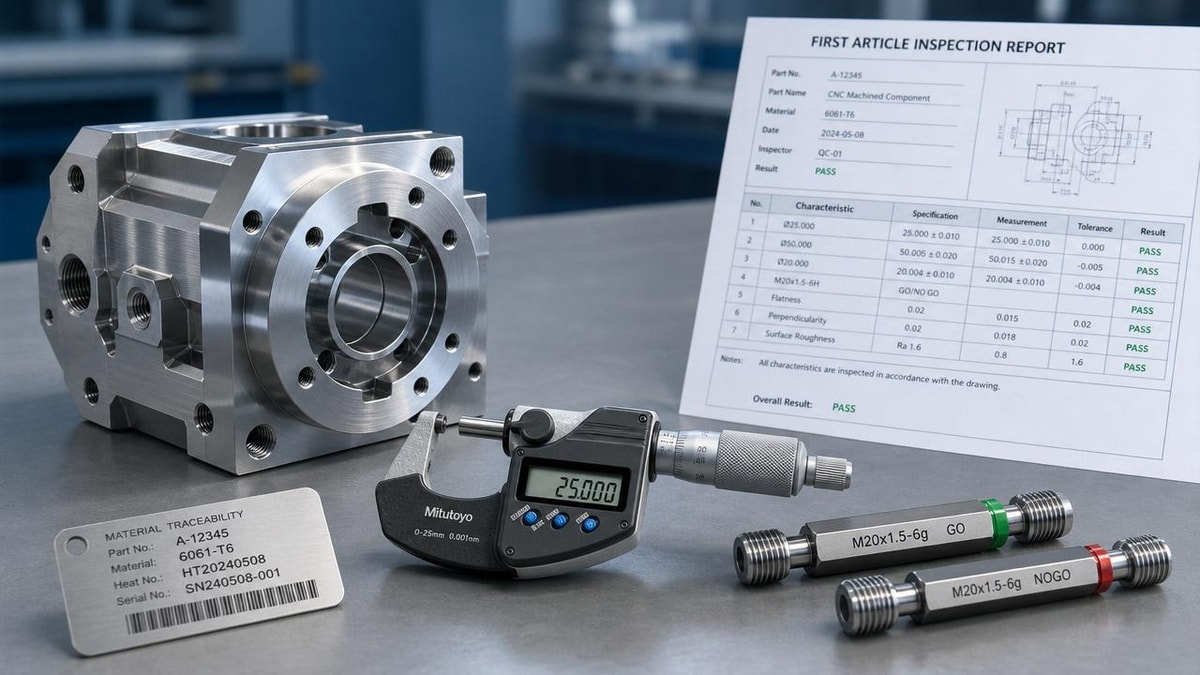
Defense manufacturing often requires a higher level of traceability than standard industrial work. The selected machine should support process documentation that can be connected to operators, tooling, NC program versions, offset history, and in-process inspection results. This is especially important for qualified parts, first article inspection support, and long-term sustainment programs where records may need to be revisited years later.
A strong evaluation process asks not only whether the machine can cut the part, but whether it can prove how the part was made. Machines that integrate well with quality management systems, MES environments, and probe-based verification workflows provide more than convenience. They reduce the burden of compliance and make root-cause analysis faster when deviations occur.
For technical teams, this means looking beyond machine hardware into data architecture, operator authentication, calibration record handling, and inspection compatibility. These factors are often decisive when a program moves from engineering trials to audited serial production.
Typical defense use cases and what they imply
Different defense applications place different demands on the machine. The selection process should therefore map machine capability to the dominant part category rather than assuming one configuration suits all needs.
Service support and lifecycle confidence
Even a technically strong 5 axis milling machine for defense can become a weak investment if support is uncertain. Defense programs often outlast standard commercial product cycles, so evaluators should examine the OEM’s parts strategy, control system roadmap, field service capability, and training resources. A low initial price has limited value if the machine becomes difficult to maintain three or five years into the program.
Ask practical questions: How quickly can critical components be replaced? Are rotary assemblies supported locally? Is preventive maintenance documented in a way that fits controlled production? Can the supplier train operators, programmers, and maintenance teams to a level suitable for high-mix, high-precision work? Service quality often determines whether a machine remains a strategic asset or becomes a production bottleneck.
A disciplined evaluation approach for technical teams
The most effective assessment process combines specification review with evidence from realistic production conditions. Start by defining the defense part families, target materials, tolerance bands, expected batch sizes, and compliance needs. Then compare candidate machines against those realities, not against generic brochure claims.
Request application-specific test cuts, metrology reports, software architecture details, and maintenance documentation. Involve manufacturing engineering, quality, IT security, and operations early in the review. This cross-functional method helps prevent a narrow decision based only on machining speed while overlooking traceability, digital risk, or long-term support.
For organizations monitoring global supply chain shifts, a platform such as TradeNexus Pro can also add value by surfacing broader market intelligence around machine tool suppliers, integration partners, and technology trends across advanced manufacturing. That context supports better decisions when qualification timelines, sourcing resilience, and technology maturity all matter.
Final perspective
Selecting a 5 axis milling machine for defense is ultimately a risk-management decision as much as a production decision. The right machine should deliver verified accuracy, stable performance across demanding materials, secure digital operation, strong traceability, and dependable support over the life of the program. When technical evaluators assess these dimensions in a structured way, they improve the odds of choosing equipment that not only machines complex parts well, but also fits the operational and compliance realities of defense manufacturing. If your team is building a shortlist, the best next step is to align machine evidence with real part requirements, audit expectations, and long-term manufacturing strategy.
Get weekly intelligence in your inbox.
No noise. No sponsored content. Pure intelligence.
 May 04, 2026FDA AI Diagnostic Software Guidance: Continuous Validation for Overseas FirmsFDA AI Diagnostic Software Guidance: Continuous Validation for Overseas Firms
 May 04, 2026MIIT Launches Export Compliance Support for Warehouse RoboticsMIIT Launches Export Compliance Support for Warehouse Robotics
 May 04, 2026India BIS Mandates ISI Certification for Smart Home Devices from July 2026India BIS Mandates ISI Certification for Smart Home Devices from July 2026
 May 04, 2026Global Shipping Alliance Raises Heavy-Lift Surcharges from May 2026Global Shipping Alliance Raises Heavy-Lift Surcharges from May 2026
 May 04, 2026GCC EV Charging Certification Unified: 35% Cost Cut for Chinese ExportersGCC EV Charging Certification Unified: 35% Cost Cut for Chinese Exporters
 May 04, 2026TÜV Rheinland Updates IoT Security Standard with AI Voice Data AnonymizationTÜV Rheinland Updates IoT Security Standard with AI Voice Data Anonymization
 May 04, 2026Yangshan Port Launches Green Energy Equipment Express LaneYangshan Port Launches Green Energy Equipment Express Lane
 May 04, 2026Vietnam Enforces Local IoT Certification for Smart Home Devices from May 2026Vietnam Enforces Local IoT Certification for Smart Home Devices from May 2026
 May 04, 2026US CBP Launches Battery Cargo Inspection: ESS Export Delays to 7–12 DaysUS CBP Launches Battery Cargo Inspection: ESS Export Delays to 7–12 Days
 May 04, 2026EU SVHC Update Effective May 1, 2026: Impact on Electronic Components ExportsEU SVHC Update Effective May 1, 2026: Impact on Electronic Components Exports
 May 04, 2026Portable power stations: what matters more than wattage on paperPortable power stations: what matters more than wattage on paper
 May 04, 2026Automotive injection molding machines and the scrap rate problemAutomotive injection molding machines and the scrap rate problem
 May 04, 2026Smart thermostats save energy only when setup is done rightSmart thermostats save energy only when setup is done right
 May 04, 2026Why TWS earbuds sound great in ads but not on callsWhy TWS earbuds sound great in ads but not on calls
 May 04, 2026Industrial robotics for material handling: where downtime startsIndustrial robotics for material handling: where downtime starts
 May 04, 2026LiFePO4 battery lifespan drops faster under these conditionsLiFePO4 battery lifespan drops faster under these conditions
 May 04, 2026Solar grid systems: when storage changes the project mathSolar grid systems: when storage changes the project math
 May 04, 2026Smart manufacturing for pharma fails when data stays isolatedSmart manufacturing for pharma fails when data stays isolated
 May 04, 2026Wearable technology trends that are finally useful in 2026Wearable technology trends that are finally useful in 2026
 May 04, 2026Bluetooth speakers: why battery life claims often miss real useBluetooth speakers: why battery life claims often miss real use
 May 04, 2026Home automation systems that solve everyday annoyances firstHome automation systems that solve everyday annoyances first
 May 04, 2026Solar street lights that underperform after the first rainy seasonSolar street lights that underperform after the first rainy season
 May 04, 2026Why sheet metal bending services in Canada cost more than expectedWhy sheet metal bending services in Canada cost more than expected
 May 04, 2026Factory automation systems for electronics and the ROI gapFactory automation systems for electronics and the ROI gap
 May 04, 2026OEM machined parts supplier Vietnam: quality checks that matterOEM machined parts supplier Vietnam: quality checks that matter
 May 04, 2026What to check before choosing a 5 axis machine for defenseWhat to check before choosing a 5 axis machine for defense
 May 04, 2026Smart grid solutions that fix peak load without major rebuildsSmart grid solutions that fix peak load without major rebuilds