LiFePO4 battery lifespan drops faster under these conditions
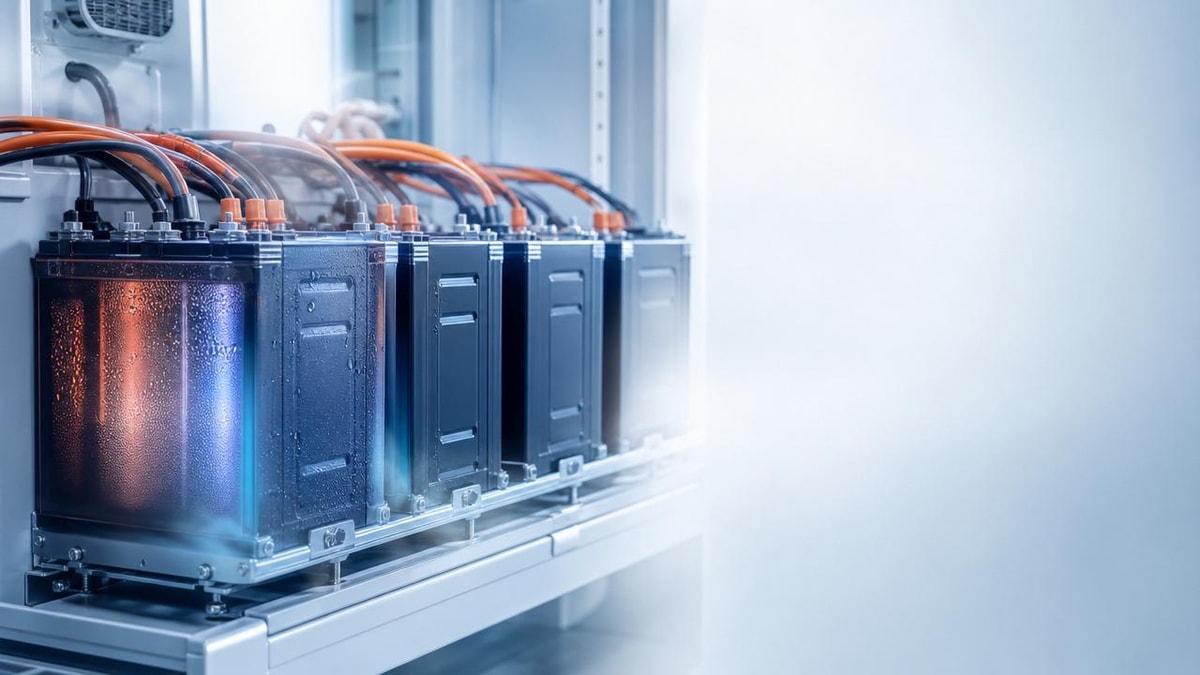
A LiFePO4 battery is known for long service life, but certain operating conditions can accelerate wear far more quickly than many users expect. From extreme temperatures and improper charging habits to deep discharge and sustained overload, these factors directly affect performance, safety, and replacement costs. Understanding where lifespan loss begins helps operators protect battery health and avoid preventable downtime.
Why lifespan loss is becoming a bigger operational issue
The conversation around the LiFePO4 battery has changed. A few years ago, most users focused on headline advantages: long cycle life, stable chemistry, and lower maintenance than many legacy battery types. Today, the more urgent question is different: why do some packs deliver years of reliable service while others decline much earlier in the same market?
This shift matters because battery systems are now used in more demanding environments. Operators rely on LiFePO4 packs in mobile equipment, backup power, solar storage, industrial electronics, logistics tools, and fleet support systems. As use cases become faster, hotter, more automated, and more power-intensive, the gap between rated lifespan and real-world lifespan becomes harder to ignore.
The trend is clear: battery failure is less often caused by chemistry alone and more often by operating conditions. In other words, the market is moving from simply buying a battery to actively managing battery health. For users and operators, this means lifespan is now an operational discipline, not just a product specification.
The operating signals showing faster LiFePO4 battery wear
Several recurring signals indicate that a LiFePO4 battery is aging faster than expected. These signals often appear gradually, which is why they are frequently missed until runtime drops or voltage behavior becomes unstable. In current field use, the most important warning signs are reduced usable capacity, longer charging times, stronger heat buildup under load, earlier low-voltage cutoffs, and inconsistent performance between similar packs.
These symptoms are increasingly relevant in sectors where uptime matters. A battery that still functions but delivers only part of its expected range can disrupt routing, work shifts, backup duration, and charging schedules. That makes lifespan decline not just a technical issue, but a scheduling, cost, and reliability issue as well.
Temperature is now the most important trend driver
Among all factors affecting a LiFePO4 battery, temperature has become the most visible driver of lifespan variation. This is not only because heat damages batteries faster, but because more battery-powered systems now operate outdoors, in enclosed cabinets, on fast duty cycles, or near power electronics that raise internal temperature.
High temperature tends to produce hidden aging. A battery may appear normal for months while internal resistance rises and active material slowly loses efficiency. By the time the operator notices shorter runtime, the damage has often been accumulating for a long period. Cold conditions create a different pattern. The battery may seem weak immediately, especially during startup or charging, but repeated charging in low temperatures can also reduce long-term health.
This is why thermal management is no longer a premium feature only for large systems. Even smaller packs now benefit from better enclosure ventilation, charger temperature logic, and operating schedules that avoid peak thermal stress.

Charging habits are changing lifespan outcomes more than expected
Another important market signal is that users are asking more detailed questions about charging behavior. The old assumption was simple: if the charger is compatible, battery life will take care of itself. In practice, charging habits strongly influence how long a LiFePO4 battery lasts.
The biggest issues include charging immediately after heavy discharge when the pack is still hot, leaving the battery at full state of charge for extended periods, using chargers with poor voltage control, and repeatedly applying fast charging where slower charging would be operationally acceptable. None of these conditions may cause immediate failure, but together they compress service life.
As energy systems become more connected, charging is becoming smarter. Operators increasingly expect battery management systems, chargers, and monitoring software to work together. That trend reflects a larger industry move: protecting battery lifespan now depends on system-level coordination, not just on the battery cell itself.
Deep discharge and overload are rising in high-demand applications
A LiFePO4 battery is often selected because it handles demanding cycles better than other chemistries. That strength, however, can lead to overconfidence. In many real-world applications, users run packs down too far, draw current peaks too often, or connect loads that were not properly matched to the battery design.
This trend is especially visible where battery systems are replacing fuel-based or lead-acid setups. Users expect the new battery to improve uptime, reduce weight, and support more electronics at once. But if the discharge pattern becomes too aggressive, lifespan falls faster. Frequent deep discharge does not always destroy a battery quickly, yet it reduces the margin that supports long cycle life. Sustained overload adds heat and accelerates wear on both cells and protective electronics.
For operators, the practical lesson is simple: a long-life battery still needs the right duty profile. Using a LiFePO4 battery outside recommended current and depth-of-discharge limits turns a lifecycle advantage into a replacement problem.
Who is affected most by these lifespan changes
The impact of faster battery aging is not evenly distributed. Some users feel it through direct maintenance costs, while others experience it through missed schedules, lower equipment availability, or customer service risk. In a broader business environment, the consequences often spread across procurement, operations, service teams, and asset planning.
Why this matters beyond the battery itself
The decline of a LiFePO4 battery affects more than replacement budgets. It changes how systems are planned, how spare inventory is managed, and how equipment reliability is measured. In many operations, a battery that underperforms creates hidden costs: more frequent charging windows, lower daily output, extra backup units, technician callouts, and earlier-than-planned capital spend.
This broader impact explains why battery health is gaining strategic attention across multiple sectors. As electrification expands, users are no longer evaluating batteries only by purchase price or nominal capacity. They are assessing total operational fit: how the pack behaves under local climate, actual load patterns, and real charging discipline. That is a more mature market signal, and it points to a future where battery selection and battery usage cannot be separated.
What users and operators should prioritize now
The most effective response is not complicated, but it does require discipline. Users who want a LiFePO4 battery to reach its expected lifespan should prioritize a small set of high-impact controls instead of trying to optimize everything at once.
- Track operating temperature during both use and charging, especially in enclosed or outdoor installations.
- Avoid routine deep discharge unless the application is specifically designed for it.
- Match charger settings to battery specifications and replace low-quality chargers that create unstable charging behavior.
- Limit unnecessary high-current peaks by checking load sizing and startup demand.
- Review storage practices, especially when packs sit fully charged for long periods between uses.
- Use battery management data where available instead of relying only on visible runtime changes.
These measures reflect a broader trend in energy use: battery life is best protected through routine monitoring and operating discipline, not after-the-fact troubleshooting.
How to judge future risk before lifespan loss becomes expensive
Looking ahead, operators should pay attention to a few practical signals that help predict whether a LiFePO4 battery fleet is entering a higher-risk stage. If charging windows are getting longer, if thermal alarms are becoming more common, if similar packs are aging unevenly, or if runtime falls sharply in hot or cold periods, these are not isolated inconveniences. They are indicators that operating conditions may be misaligned with battery expectations.
It is also useful to think in stages. Early-stage lifespan loss usually shows up as subtle performance drift. Mid-stage decline becomes visible in scheduling and maintenance. Late-stage decline affects reliability and safety margins. Acting early is far less costly than replacing multiple packs after performance has already become inconsistent.
A practical direction for better battery decisions
The market is moving toward a more realistic understanding of battery life. A LiFePO4 battery can still offer excellent longevity, but only when operating conditions support that outcome. The key change is that users can no longer treat lifespan as a fixed number printed on a datasheet. It is the result of environment, charging logic, load behavior, and daily operating discipline.
For businesses and operators trying to judge what these trends mean for their own use case, the most important questions are straightforward: Are batteries regularly exposed to heat or cold during charging? Are loads exceeding intended current patterns? Are packs stored at full charge too often? Is battery data being reviewed before visible failures appear? The organizations that answer these questions early are more likely to protect uptime, reduce replacement costs, and get the full value a LiFePO4 battery is designed to deliver.
Get weekly intelligence in your inbox.
No noise. No sponsored content. Pure intelligence.
 May 04, 2026FDA AI Diagnostic Software Guidance: Continuous Validation for Overseas FirmsFDA AI Diagnostic Software Guidance: Continuous Validation for Overseas Firms
 May 04, 2026MIIT Launches Export Compliance Support for Warehouse RoboticsMIIT Launches Export Compliance Support for Warehouse Robotics
 May 04, 2026India BIS Mandates ISI Certification for Smart Home Devices from July 2026India BIS Mandates ISI Certification for Smart Home Devices from July 2026
 May 04, 2026Global Shipping Alliance Raises Heavy-Lift Surcharges from May 2026Global Shipping Alliance Raises Heavy-Lift Surcharges from May 2026
 May 04, 2026GCC EV Charging Certification Unified: 35% Cost Cut for Chinese ExportersGCC EV Charging Certification Unified: 35% Cost Cut for Chinese Exporters
 May 04, 2026TÜV Rheinland Updates IoT Security Standard with AI Voice Data AnonymizationTÜV Rheinland Updates IoT Security Standard with AI Voice Data Anonymization
 May 04, 2026Yangshan Port Launches Green Energy Equipment Express LaneYangshan Port Launches Green Energy Equipment Express Lane
 May 04, 2026Vietnam Enforces Local IoT Certification for Smart Home Devices from May 2026Vietnam Enforces Local IoT Certification for Smart Home Devices from May 2026
 May 04, 2026US CBP Launches Battery Cargo Inspection: ESS Export Delays to 7–12 DaysUS CBP Launches Battery Cargo Inspection: ESS Export Delays to 7–12 Days
 May 04, 2026EU SVHC Update Effective May 1, 2026: Impact on Electronic Components ExportsEU SVHC Update Effective May 1, 2026: Impact on Electronic Components Exports
 May 04, 2026Portable power stations: what matters more than wattage on paperPortable power stations: what matters more than wattage on paper
 May 04, 2026Automotive injection molding machines and the scrap rate problemAutomotive injection molding machines and the scrap rate problem
 May 04, 2026Smart thermostats save energy only when setup is done rightSmart thermostats save energy only when setup is done right
 May 04, 2026Why TWS earbuds sound great in ads but not on callsWhy TWS earbuds sound great in ads but not on calls
 May 04, 2026Industrial robotics for material handling: where downtime startsIndustrial robotics for material handling: where downtime starts
 May 04, 2026LiFePO4 battery lifespan drops faster under these conditionsLiFePO4 battery lifespan drops faster under these conditions
 May 04, 2026Solar grid systems: when storage changes the project mathSolar grid systems: when storage changes the project math
 May 04, 2026Smart manufacturing for pharma fails when data stays isolatedSmart manufacturing for pharma fails when data stays isolated
 May 04, 2026Wearable technology trends that are finally useful in 2026Wearable technology trends that are finally useful in 2026
 May 04, 2026Bluetooth speakers: why battery life claims often miss real useBluetooth speakers: why battery life claims often miss real use
 May 04, 2026Home automation systems that solve everyday annoyances firstHome automation systems that solve everyday annoyances first
 May 04, 2026Solar street lights that underperform after the first rainy seasonSolar street lights that underperform after the first rainy season
 May 04, 2026Why sheet metal bending services in Canada cost more than expectedWhy sheet metal bending services in Canada cost more than expected
 May 04, 2026Factory automation systems for electronics and the ROI gapFactory automation systems for electronics and the ROI gap
 May 04, 2026OEM machined parts supplier Vietnam: quality checks that matterOEM machined parts supplier Vietnam: quality checks that matter
 May 04, 2026What to check before choosing a 5 axis machine for defenseWhat to check before choosing a 5 axis machine for defense
 May 04, 2026Smart grid solutions that fix peak load without major rebuildsSmart grid solutions that fix peak load without major rebuilds