Industrial robotics for material handling: where downtime starts
In industrial robotics for material handling, downtime rarely begins with a full system failure. It often starts with small signs that after-sales maintenance teams see first—irregular cycle times, sensor drift, gripping errors, or conveyor misalignment. Understanding where these issues originate is critical to preventing costly interruptions, extending equipment life, and keeping high-throughput operations stable under growing production pressure.
Why industrial robotics for material handling downtime usually starts at the edges, not the core

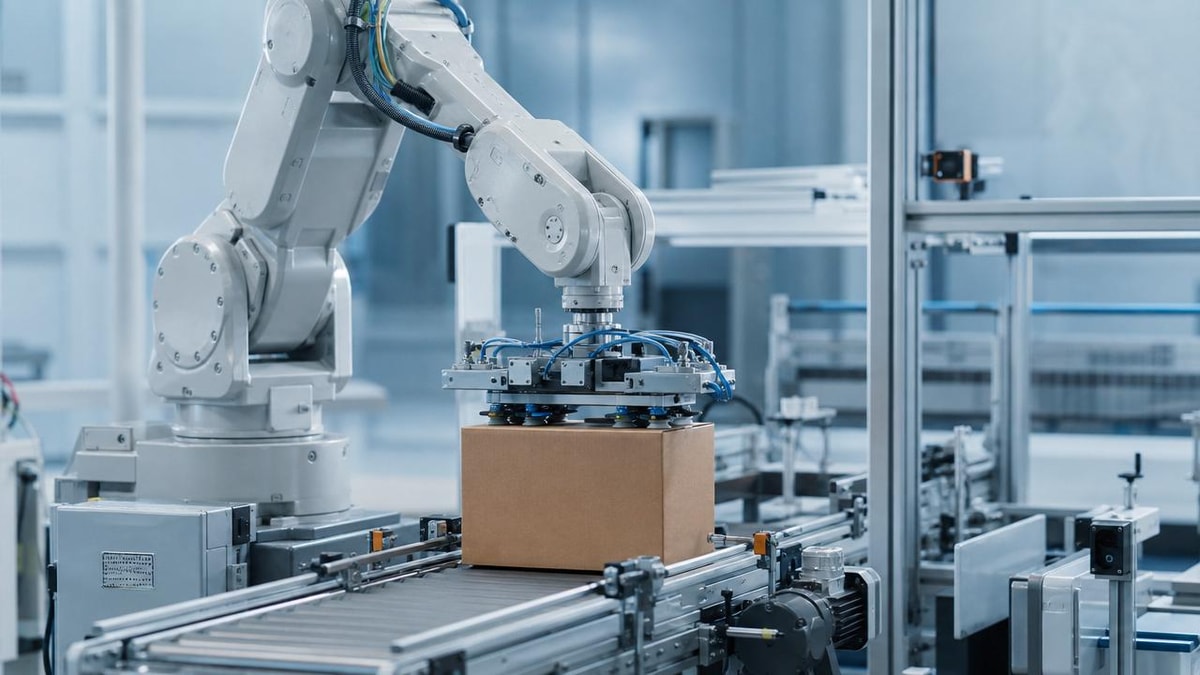
For after-sales maintenance personnel, the biggest mistake is treating downtime as a sudden event. In most industrial robotics for material handling environments, stoppages begin at the interfaces: robot-to-gripper, gripper-to-part, robot-to-conveyor, vision-to-controller, or PLC-to-safety logic. The robot arm itself may still be functional, but the production cell is already losing stability.
This matters across mixed industrial settings, where one facility may combine palletizing, case picking, bin handling, carton transfer, tray loading, and end-of-line packaging. Maintenance teams are expected to restore uptime fast, often with incomplete documentation, changing SKUs, and pressure from operations to avoid missed shipments.
TradeNexus Pro closely tracks these cross-sector patterns because the same downtime logic appears in advanced manufacturing, healthcare device assembly, smart electronics packaging, and logistics software-connected warehouse cells. The weak point is rarely a single component. It is the coordination layer between mechanics, controls, sensors, and production variability.
- Mechanical drift appears first as repeatability loss, uneven gripping force, or slight position offsets that operators compensate for manually.
- Electrical issues show up as intermittent sensor feedback, unstable communication, I/O lag, or unexplained fault resets.
- Software and integration problems emerge when recipes, part dimensions, scan tolerances, or timing windows change faster than validation procedures.
- Environmental factors such as dust, temperature swings, vibration, and inconsistent inbound packaging gradually degrade industrial robotics for material handling performance.
What maintenance teams should look at before a hard stop happens
A useful approach is to track pre-failure behavior instead of waiting for fault codes alone. A robot can still complete its cycle while already generating hidden losses. Small increases in cycle time, a rise in near-miss pick attempts, or more operator interventions per shift are early signs that material handling automation is moving toward downtime.
Where failures begin in real material handling cells
The table below maps common failure origins in industrial robotics for material handling to what after-sales maintenance staff actually observe on site. This helps separate root causes from symptoms and supports faster troubleshooting during service calls or internal escalation.
For maintenance teams, this comparison shows why the first visible symptom is often misleading. A gripping error may be caused by a mechanical jaw issue, but it can also come from poor part presentation, late sensor triggering, or a vision tolerance that no longer matches incoming material variation.
High-risk zones across mixed-industry operations
Different sectors create different stress points. Smart electronics lines often struggle with precision and static-sensitive handling. Healthcare technology cells require stricter cleanliness and traceability. Advanced manufacturing applications may push payload and cycle speed harder. Green energy assemblies tend to involve larger, more variable components. In each case, industrial robotics for material handling downtime starts where process assumptions no longer match operating reality.
- High-mix production increases recipe and tooling changeover risk.
- Heavier payloads amplify wear on reducers, bearings, and grippers.
- Faster takt times reduce tolerance for communication delays and sensor lag.
- Digital integration with MES, WMS, or SCADA adds value but also creates more fault pathways.
How to diagnose industrial robotics for material handling problems before parts replacement
After-sales teams often face pressure to replace components quickly, but part swapping without a diagnostic sequence can extend downtime. The better method is to isolate whether the issue is mechanical, electrical, logical, or process-driven. This reduces repeat visits and lowers spare-parts waste.
A practical maintenance sequence
- Confirm the failure pattern. Check whether it occurs on one SKU, one shift, one lane, or one robot path only.
- Review recent changes. Look for tooling adjustments, recipe edits, firmware updates, conveyor speed changes, or new packaging formats.
- Inspect interface wear points. Focus on gripper pads, vacuum lines, cable flex zones, sensor mounts, and locator surfaces.
- Measure timing, not just status. A device can report “ready” while still responding slower than the programmed sequence expects.
- Validate upstream conditions. Many industrial robotics for material handling faults originate in poor part presentation, inconsistent pallet quality, or damaged containers.
This structured process is especially important in facilities that have multiple vendors, legacy equipment, and partial retrofits. TNP’s sector intelligence is useful here because maintenance leaders increasingly need more than repair instructions. They need context on component availability, upgrade paths, and integration dependencies across the supply chain.
What to check when selecting service parts, upgrades, or replacement modules
Industrial robotics for material handling support is no longer just about fixing what failed. After-sales personnel are often asked to recommend replacement modules, spare strategies, or retrofit decisions. The challenge is balancing speed, compatibility, compliance, and budget without creating a second failure point.
The following selection table is designed for maintenance-driven procurement decisions, especially when teams must justify why a low-cost substitute may not be the right operational choice.
A good service decision considers total restoration effort, not purchase price alone. A cheaper sensor with longer setup time, weaker contamination resistance, or poor signal stability can increase downtime cost far beyond the initial savings. That is a frequent issue in industrial robotics for material handling cells running multiple shifts.
When a retrofit makes more sense than repeated repair
Repeated failures in the same zone often indicate that the original design margin is too small for the current process. Examples include suction tools applied to increasingly porous packaging, conveyors asked to handle wider SKU variation, or vision systems installed before lighting conditions changed. In these cases, the question is not “which part failed?” but “which assumption is no longer valid?”
Cost, compliance, and service risk: what maintenance teams should not ignore
Downtime cost in industrial robotics for material handling is usually measured in lost throughput, labor disruption, missed dispatch windows, and quality risk. But after-sales personnel also need to consider hidden cost drivers: rushed air freight for spare parts, temporary bypass measures, repeat service visits, and production instability after restart.
Common hidden costs
- Emergency replacement without root-cause correction often leads to recurring stoppages within the same maintenance cycle.
- Unverified substitute components may fit physically but create signal timing, sealing, or durability problems.
- Poor restart validation can trigger downstream scrap, traceability gaps, or safety interlock issues.
- Missing documentation during handover forces operators to create informal workarounds that hide developing faults.
Relevant standards and compliance checks
While exact requirements depend on the installation, maintenance teams should be familiar with common robot safety, machine guarding, electrical safety, and sector-specific hygiene or traceability expectations. In material handling cells, service actions should not compromise risk assessments, safety circuits, lockout procedures, or validated operating windows. If the site serves regulated or quality-sensitive sectors, even minor changes to sensing, guarding, or gripper materials may require formal review.
FAQ: practical questions about industrial robotics for material handling support
How do I know whether downtime is caused by the robot or by the handling process around it?
Start by separating motion faults from process faults. If axes move consistently in manual mode but failures occur only in automatic production, the issue is often linked to part presentation, timing, sensors, or recipe logic. In industrial robotics for material handling, the robot is frequently blamed first even when the upstream conveyor or gripper condition is the true cause.
Which components usually deserve preventive replacement before they fail?
High-cycle wear items typically include vacuum cups, soft jaws, cable flex sections, pneumatic fittings, sensor brackets, filters, and end-of-arm consumables. The right interval depends on cycle count, contamination, payload stress, and product variation. Maintenance history should guide these decisions more than calendar age alone.
What should after-sales teams request before approving a replacement or retrofit?
Request the current fault log, recent change history, robot program revision, I/O list, part drawings or packaging specs, line speed targets, and photos of the failed zone. If possible, also ask for cycle-time data before and after the issue began. This makes industrial robotics for material handling support far more accurate than relying on verbal fault descriptions.
How long should a service decision take when production is already down?
For a live outage, the goal is not a perfect redesign but a controlled recovery path. Teams should first decide whether the failure is safe to isolate, whether a known spare can restore baseline function, and whether a temporary measure creates compliance or quality risk. A fast decision is useful only if it prevents repeat stoppage on the next shift.
Why choose us for industrial robotics for material handling insight and decision support
TradeNexus Pro helps maintenance leaders, sourcing teams, and technical decision-makers move beyond fragmented vendor claims. Our platform focuses on the sectors where industrial robotics for material handling performance matters most, combining market intelligence, integration awareness, and practical procurement context.
If your team is facing recurring downtime, difficult spare-part choices, or uncertain retrofit decisions, you can consult us on specific, operationally relevant topics:
- Parameter confirmation for payload, cycle time, sensing method, and environmental fit.
- Replacement and upgrade selection for grippers, sensors, conveyors, and integration-related modules.
- Lead-time assessment and sourcing risk review for critical service parts across global supply chains.
- Evaluation of retrofit options when repeated repairs no longer protect uptime or cost control.
- Discussion of compliance-sensitive changes involving safety, cleanliness, traceability, or production validation.
- Quote-stage alignment support for service scope, configuration assumptions, and delivery expectations.
For after-sales maintenance personnel, the real value of industrial robotics for material handling support lies in seeing failure patterns early, choosing the right corrective path, and preventing the next interruption before it starts. That is where better intelligence becomes practical uptime.
Get weekly intelligence in your inbox.
No noise. No sponsored content. Pure intelligence.
 May 04, 2026FDA AI Diagnostic Software Guidance: Continuous Validation for Overseas FirmsFDA AI Diagnostic Software Guidance: Continuous Validation for Overseas Firms
 May 04, 2026MIIT Launches Export Compliance Support for Warehouse RoboticsMIIT Launches Export Compliance Support for Warehouse Robotics
 May 04, 2026India BIS Mandates ISI Certification for Smart Home Devices from July 2026India BIS Mandates ISI Certification for Smart Home Devices from July 2026
 May 04, 2026Global Shipping Alliance Raises Heavy-Lift Surcharges from May 2026Global Shipping Alliance Raises Heavy-Lift Surcharges from May 2026
 May 04, 2026GCC EV Charging Certification Unified: 35% Cost Cut for Chinese ExportersGCC EV Charging Certification Unified: 35% Cost Cut for Chinese Exporters
 May 04, 2026TÜV Rheinland Updates IoT Security Standard with AI Voice Data AnonymizationTÜV Rheinland Updates IoT Security Standard with AI Voice Data Anonymization
 May 04, 2026Yangshan Port Launches Green Energy Equipment Express LaneYangshan Port Launches Green Energy Equipment Express Lane
 May 04, 2026Vietnam Enforces Local IoT Certification for Smart Home Devices from May 2026Vietnam Enforces Local IoT Certification for Smart Home Devices from May 2026
 May 04, 2026US CBP Launches Battery Cargo Inspection: ESS Export Delays to 7–12 DaysUS CBP Launches Battery Cargo Inspection: ESS Export Delays to 7–12 Days
 May 04, 2026EU SVHC Update Effective May 1, 2026: Impact on Electronic Components ExportsEU SVHC Update Effective May 1, 2026: Impact on Electronic Components Exports
 May 04, 2026Portable power stations: what matters more than wattage on paperPortable power stations: what matters more than wattage on paper
 May 04, 2026Automotive injection molding machines and the scrap rate problemAutomotive injection molding machines and the scrap rate problem
 May 04, 2026Smart thermostats save energy only when setup is done rightSmart thermostats save energy only when setup is done right
 May 04, 2026Why TWS earbuds sound great in ads but not on callsWhy TWS earbuds sound great in ads but not on calls
 May 04, 2026Industrial robotics for material handling: where downtime startsIndustrial robotics for material handling: where downtime starts
 May 04, 2026LiFePO4 battery lifespan drops faster under these conditionsLiFePO4 battery lifespan drops faster under these conditions
 May 04, 2026Solar grid systems: when storage changes the project mathSolar grid systems: when storage changes the project math
 May 04, 2026Smart manufacturing for pharma fails when data stays isolatedSmart manufacturing for pharma fails when data stays isolated
 May 04, 2026Wearable technology trends that are finally useful in 2026Wearable technology trends that are finally useful in 2026
 May 04, 2026Bluetooth speakers: why battery life claims often miss real useBluetooth speakers: why battery life claims often miss real use
 May 04, 2026Home automation systems that solve everyday annoyances firstHome automation systems that solve everyday annoyances first
 May 04, 2026Solar street lights that underperform after the first rainy seasonSolar street lights that underperform after the first rainy season
 May 04, 2026Why sheet metal bending services in Canada cost more than expectedWhy sheet metal bending services in Canada cost more than expected
 May 04, 2026Factory automation systems for electronics and the ROI gapFactory automation systems for electronics and the ROI gap
 May 04, 2026OEM machined parts supplier Vietnam: quality checks that matterOEM machined parts supplier Vietnam: quality checks that matter
 May 04, 2026What to check before choosing a 5 axis machine for defenseWhat to check before choosing a 5 axis machine for defense
 May 04, 2026Smart grid solutions that fix peak load without major rebuildsSmart grid solutions that fix peak load without major rebuilds